Canon
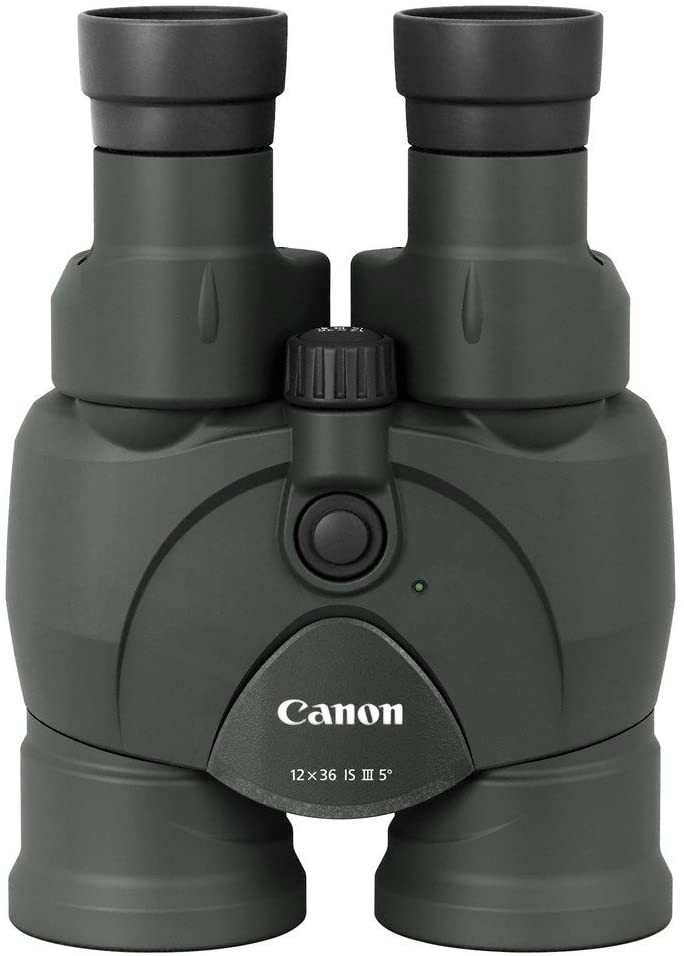
Canon 12x36 IS III
The Canon 12x36 IS III delivers tripod-steady 12x views handheld, using Vari-Angle Prism stabilization powered by two AA batteries. Porro II prisms, a field-flattener doublet, and Super Spectra coatings keep the 262 ft @ 1000 yds view sharp edge to edge. Note it is not waterproof, so it is best for dry-weather wildlife watching, sports, and astronomy.
We may earn a commission. Price and availability on Amazon may differ.
Specifications
What do these mean? →Field of view, to scale
Why FOV matters →Top-down view · drawn to true scale — no exaggeration
Key Features
Owner Insights(60 discussions)
The Canon 12x36 IS III is the sweet spot of Canon's stabilized lineup for a lot of people: enough magnification to feel telescopic, light enough to actually carry, and an IS system that finally behaves. Reviewers who tested it against the older IS II consistently call the third generation a genuine upgrade - stabilization locks in within a second, panning no longer stutters, and the mechanism is nearly silent. The consistent refrain from owners and testers alike is that pressing the button is transformative: fine detail that hand shake normally destroys simply appears, which is why these get recommended for everything from warbler scanning to picking structure out of the Orion Nebula.
Optically it's a sharp, bright porro design with Canon's Super Spectra coatings, but there's no ED glass, and it shows - high-contrast scenes like birds against a bright sky or sunlit water produce noticeable color fringing, which is the most common optical complaint in forum discussions. The practical gripes are just as real: it's not waterproof, close focus is a distant ~20 feet, eye relief is a tight 14.5mm with dated fold-down eyecups, and the 262 ft field of view is narrow enough that finding your target takes practice. Longer-term owners flag two durability issues worth knowing about: the rubber coating can degrade into a sticky mess after a few years, and cold weather slashes AA battery life from nine hours to as little as one.
These are best for stargazers who want a grab-and-go instrument alongside a telescope, and for birders who mostly watch at distance in fair weather - several astronomy reviewers call it the best value in stabilized glass, period. At around $800 it undercuts the waterproof, ED-equipped Canon 10x42 L IS WP by roughly half while weighing 12 oz less, and it makes more sense than the 18x50 IS AW for anyone who values portability over maximum reach. If you need weather sealing and close focus for serious birding, a conventional Nikon Monarch HG or Zeiss Conquest HD serves better - but neither can hold a 12x image still.
Pros
- +Image stabilization settles within about a second and runs almost silently - a major upgrade over the jerky, chattering IS II, with dramatically smoother panning
- +Pressing the IS button transforms resolved detail - reviewers say no unstabilized hand-held binocular comes as close to a telescopic view, rivaling hand-held 12x50s on deep-sky objects
- +Porro Type II prisms with Canon's Super Spectra coatings deliver sharp, bright, high-contrast views that punch above the 36mm aperture
- +Remarkably light for stabilized 12x glass at 23.3 oz - genuinely all-day portable where the 15x50 and 18x50 Canons are not
- +Excellent lunar and deep-sky performer - testers pulled structural detail out of the Orion Nebula that hand shake would normally erase
- +Superb for long-range bird scanning - owners report spotting detail on distant birds that would be lost to shake with conventional 12x glass
- +Runs on two cheap AA batteries rather than a proprietary pack, easy to carry spares
- +Proven in heavy use - one owner logged 180-200 days of field use in the first year and called them their most-used binocular
Cons
- −Not waterproof or even weather-resistant - a real limitation for birders and a surprising omission at this price
- −No ED glass, so chromatic aberration shows on high-contrast subjects - birds against bright sky, snow, and glinting water all produce purple-green fringing
- −14.5mm eye relief is tight for eyeglass wearers, and the old-style fold-down rubber eyecups make it worse
- −Narrow 262 ft field of view makes initially finding a bird or star field harder than with conventional 12x glass
- −Close focus is poor at roughly 20 feet, ruling out butterflies and feeder-distance birding
- −Multiple owners report the rubberized coating degrading into sticky goo over time, sometimes on replacement units too
- −Battery life collapses in cold weather - rated nine hours at room temperature but as little as one hour at 14F, an issue for winter astronomy
- −Repairs and parts are pricey - one owner was quoted over $300 just to replace the battery door, which pops off more easily than it should
Common Questions
Compare the Canon 12x36 IS III
Related binoculars
Canon
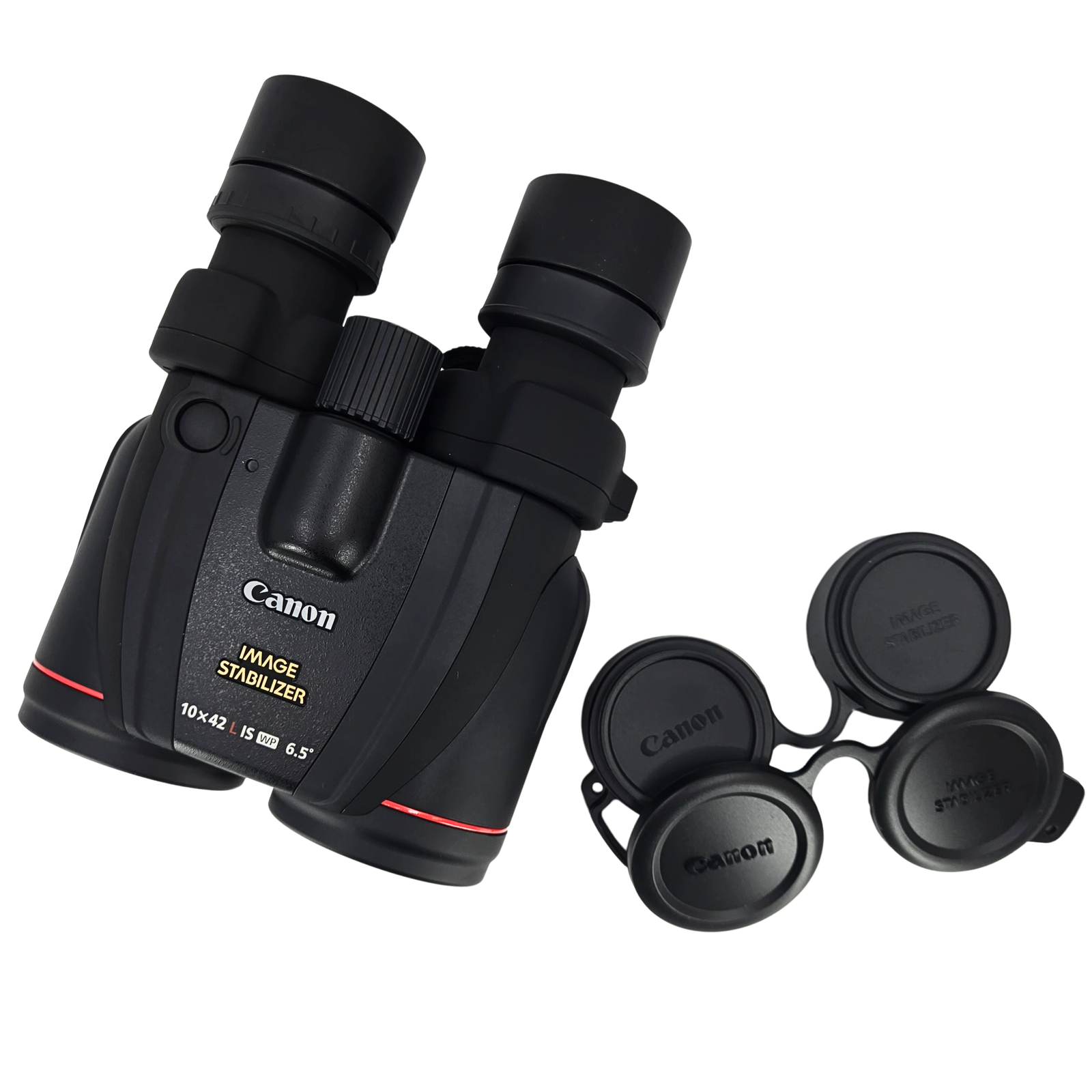
Canon 10x42 L IS WP
- Optic
- 10x×42
- FOV
- 315 ft
- Weight
- 35.6 oz