Canon
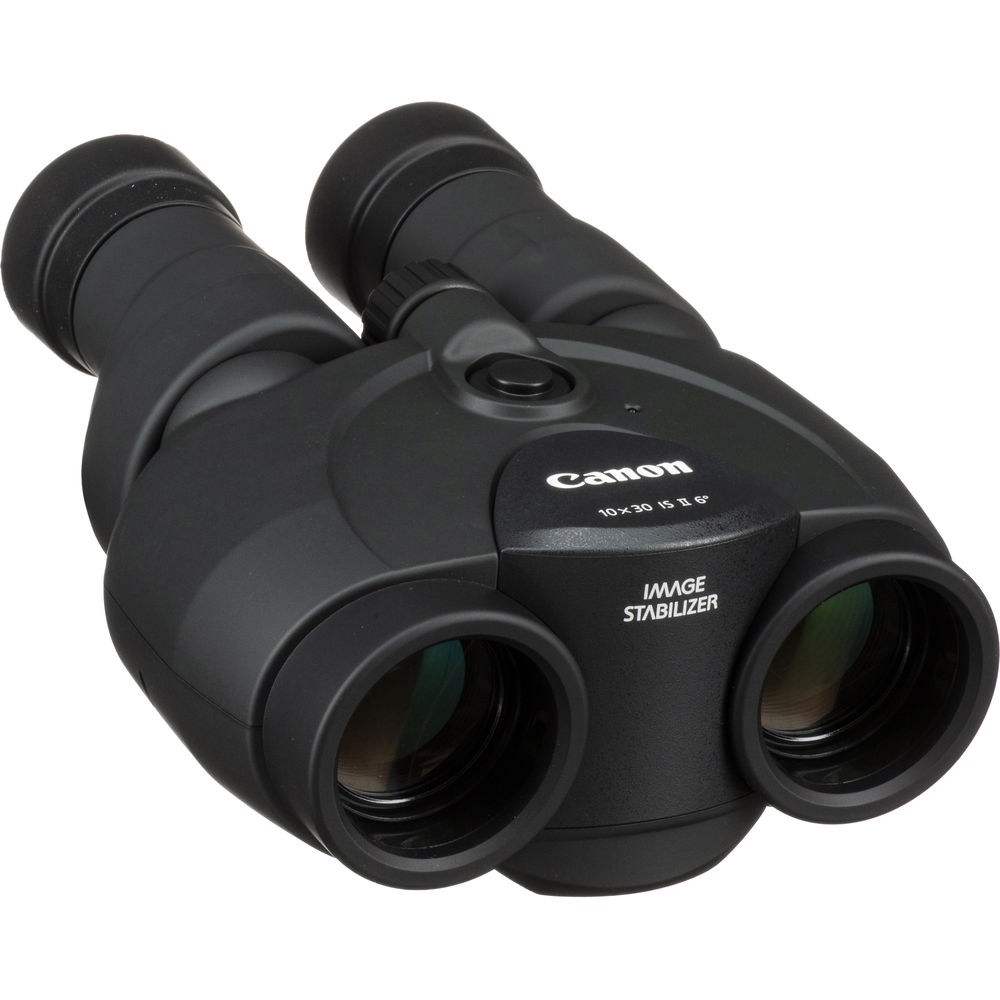
Canon 10x30 IS II
The Canon 10x30 IS II is the most affordable entry into Canon's image-stabilized lineup. Push-button stabilization removes hand shake entirely at 10x, running about 9 hours on two AA batteries. Weather-resistant but not fully waterproof.
We may earn a commission. Price and availability on Amazon may differ.
Specifications
What do these mean? →Field of view, to scale
Why FOV matters →Top-down view · drawn to true scale — no exaggeration
Wondering about the format itself? 10x30 vs 10x42 · 8x42 vs 10x30
Key Features
Owner Insights
The Canon 10x30 IS II is the binocular that converts skeptics to image stabilization. Press the button, hold it, and about a second later the fine tremor that normally eats 10x detail simply drains away — text becomes readable, star pairs split, and feather detail snaps into focus. Astronomy writer-tested and forum-approved, it's the cheapest entry point into stabilized optics that doesn't compromise the underlying glass, and the most common owner sentiment is some version of 'I didn't realize how much my hands were costing me.'
The optics deserve the electronics: independent lab testing placed it among the best 30mm binoculars, period, with near edge-to-edge sharpness and exceptional coma correction that makes it a stargazing favorite. The compromises are practical rather than optical. You must hold the IS button down the entire time, the focus wheel on many units has a loose, plasticky feel, eye relief is a tight 14.5mm, and it is not waterproof — this is a fair-weather instrument. Transmission is a modest 87.5%, and the 2-year electronics warranty looks thin beside the no-fault lifetime coverage conventional binoculars offer.
It's best for stargazers, birders with any hand tremor, boaters glassing from a moving deck, and anyone who's concluded that a stabilized 10x shows more real-world detail than an unstabilized 12x — because it does. At $500-550 it dramatically undercuts the SIG Zulu6 HDX 10x30 (about $900), which counters with waterproofing and a toggle-style stabilizer, and Canon's own 12x36 IS III (about $750) for those wanting more reach. If you can live with fair-weather use and the hold-to-stabilize button, nothing under $900 shows you more detail per dollar.
Pros
- +Image stabilization genuinely transforms what 10x shows you — a veteran astronomy reviewer calls it 'a happy marriage of excellent image quality and stabilization' and kept it as a personal favorite for years
- +Stabilization now engages in about 1 second versus roughly 3 seconds on the original 10x30 IS — press the button and the jitter simply drains out of the view
- +Independent lab testing scored it among the best in the entire 30mm class (73.8%), with sharpness holding nearly edge to edge and minimal astigmatism
- +Exceptional coma correction (9.3/10 in lab tests) keeps stars point-like across the field — a big reason it's a stargazing-forum staple
- +Runs about 9 hours on two ordinary AA batteries, so a spare set in the pocket covers a whole trip
- +At around $500-550 it undercuts every other stabilized binocular of comparable quality — competitors run $900 and up
- +Porro-prism optical path delivers pleasing depth and a natural image at a weight (about 21 oz) that carries all day
- +Still works as a normal, optically strong 10x30 with the stabilizer off — the electronics are a bonus, not a crutch
Cons
- −The IS button must be held down continuously — it is not a toggle, and thumb fatigue on long sessions is a common owner complaint
- −Lab testers found the focus wheel loose with excessive play, the most cited build flaw on an otherwise solid unit
- −Not waterproof — Canon's IS electronics rule out the sealed, nitrogen-purged construction birders expect at this price
- −Only 14.5mm of eye relief, tight for eyeglass wearers trying to see the full field
- −87.5% measured transmission is modest for a porro — the view is a touch dimmer than the best conventional 30mm glass
- −Noticeable pincushion distortion (scored just 4/10 in lab testing) and chromatic aberration rises toward the field edges
- −Only a 2-year warranty because of the electronics — a fraction of the 25-year-to-lifetime coverage standard on conventional binoculars
- −Lab reviewers noted slightly truncated exit pupils and interior dust on a test sample — quality control is good but not premium-tier
Common Questions
Compare the Canon 10x30 IS II
Related binoculars
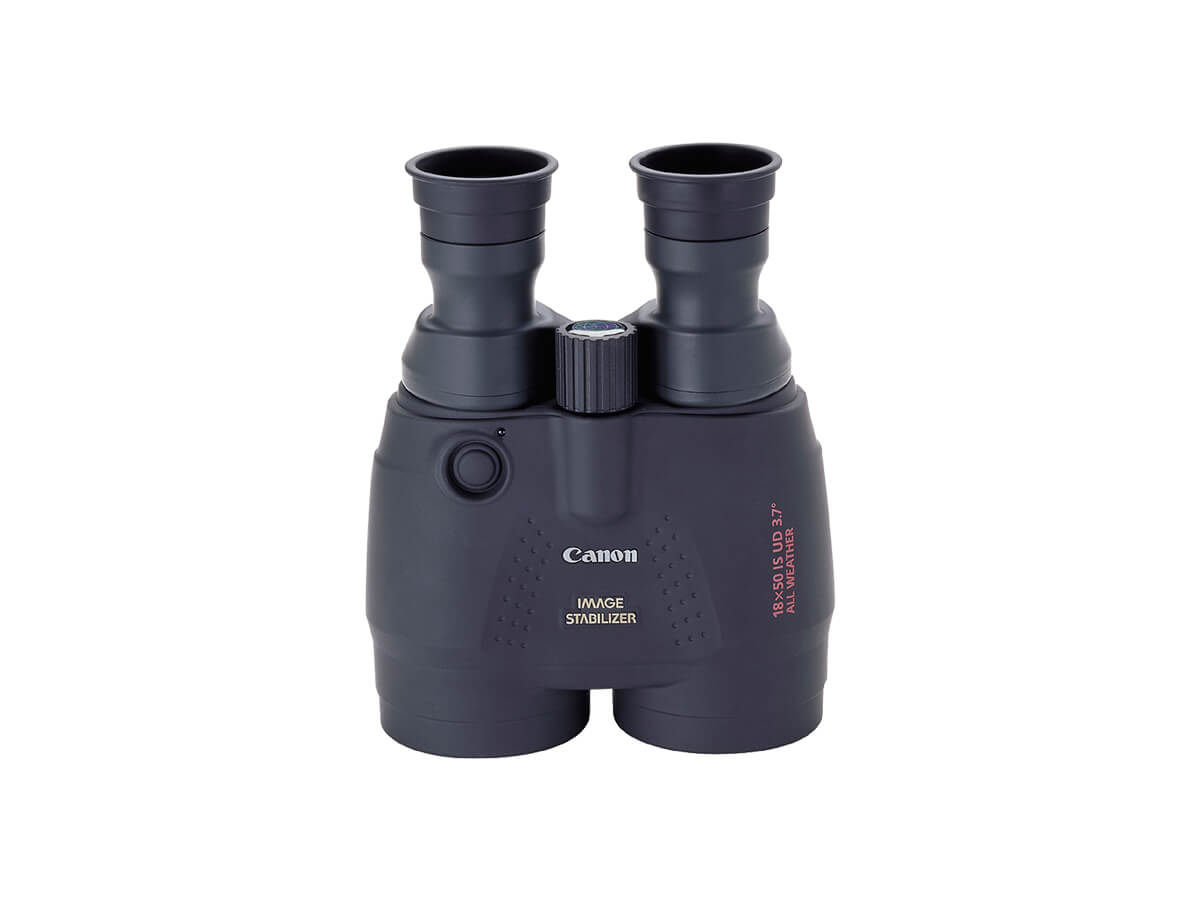
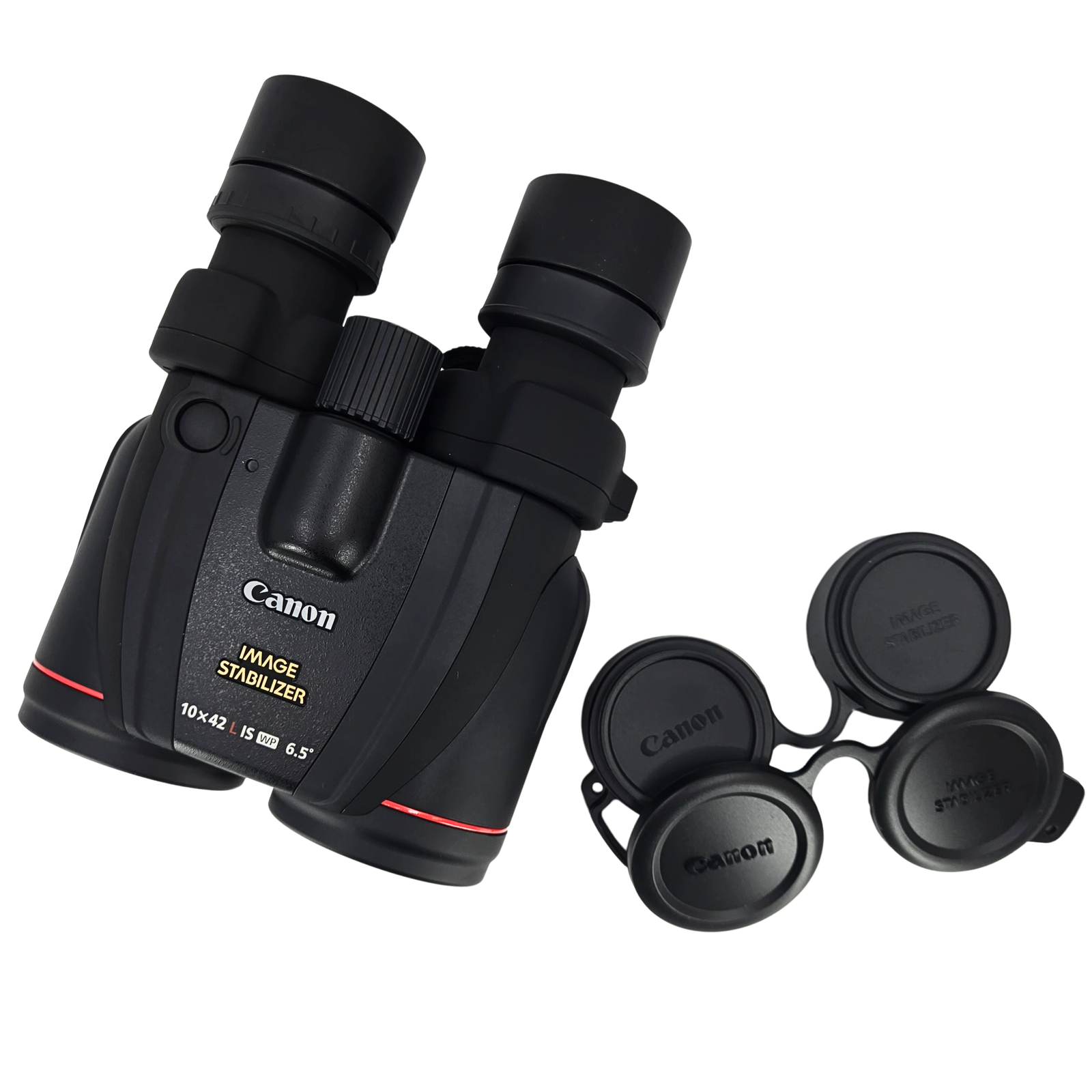
Canon
Canon 10x42 L IS WP
- Optic
- 10x×42
- FOV
- 340 ft
- Weight
- 39.2 oz
Nikon
Nikon Monarch M7 10x30
- Optic
- 10x×30
- FOV
- 351 ft
- Weight
- 16.6 oz