Canon
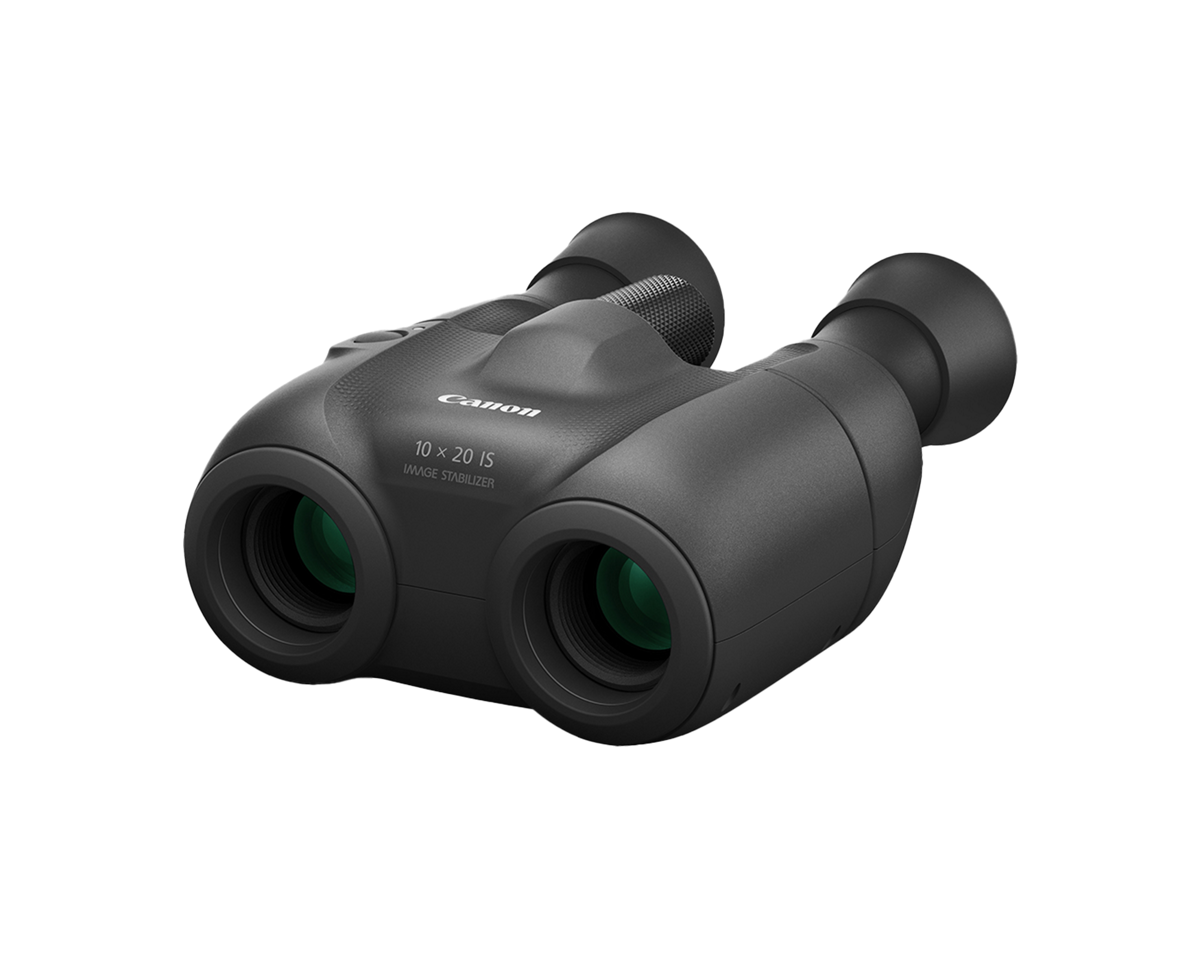
Canon 10x20 IS
The Canon 10x20 IS is the lightest image-stabilized binocular in Canon's lineup at 15.2 oz, using a gyro-driven lens-shift IS system powered by a single CR123A battery. Porro I optics with Super Spectra coatings hold a steady 10x view for travel, sports, and casual stargazing.
We may earn a commission. Price and availability on Amazon may differ.
Specifications
What do these mean? →Field of view, to scale
Why FOV matters →Top-down view · drawn to true scale — no exaggeration
Key Features
Owner Insights
The Canon 10x20 IS is a niche gadget that does one trick no conventional binocular can: press a button and the 10x image freezes, revealing detail that normally requires a tripod. Reviewers who tested it rigorously came away conflicted in an interesting way - the optics themselves are far better than the pocket-binocular norm, with a flat field, tight spike-free star images from its Porro II prisms, and crisp bright daytime views, while the stabilization resolves things like a clock face at a mile. A hiker who's carried one for three years says the steady view on demand, short of breath on a mountainside, is the single feature that makes the purchase worth it.
But honest owner sentiment is equally clear about the costs. There's no waterproofing whatsoever, which reviewers call a dealbreaker for serious birding. The measured 10-12mm of eye relief and crude two-position rubber eyecups draw the harshest words - effectively unusable with glasses, and prone to blackouts even without them. The 2mm exit pupil demands precise eye placement and dies at dusk, the 49.5-degree apparent field feels like a corridor next to modern glass, and the plastic body reads more camera accessory than optical instrument. Add a price that hovers around $550 while stocks last and the recurring reviewer refrain is that Canon's own 10x30 IS II costs less and does almost everything better except fit in a pocket.
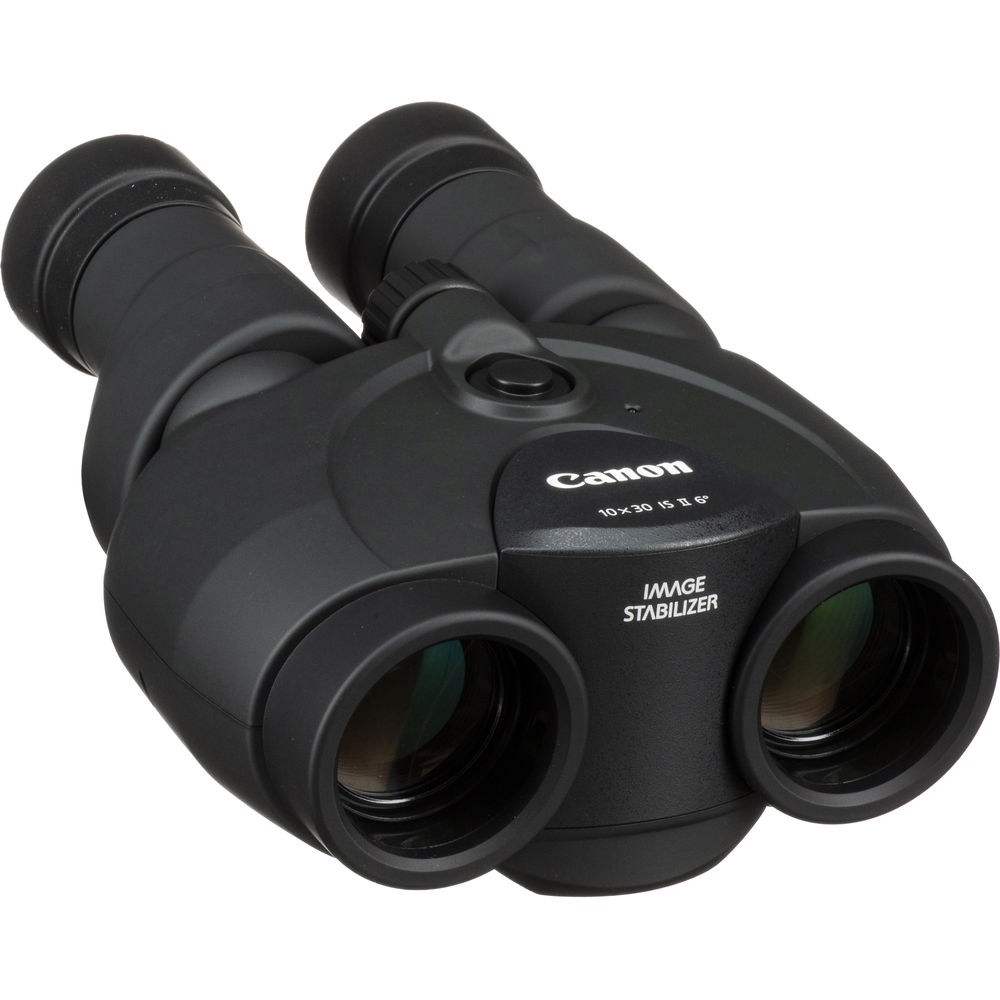
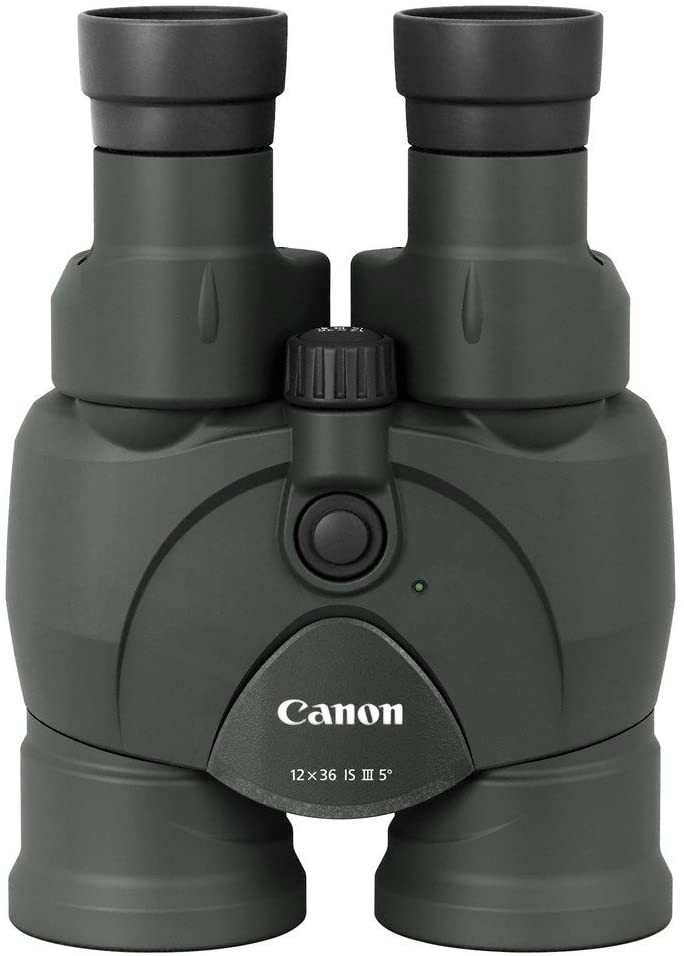
So who's it for? Travelers, hikers, and casual astronomers who prioritize maximum handheld resolution in minimum space, don't wear glasses, and stay out of the rain - for them it's easy to like, and stabilized views of Jupiter's moons from a jacket pocket still feel like magic. Birders and glasses wearers should look at a Swarovski Curio or Zeiss SFL 8x30 for a wider, more beautiful (if less detailed) view, or Canon's 10x30 IS II and 12x36 IS III for more capable stabilized glass at similar or lower cost. As one veteran reviewer framed the whole category: a fine conventional binocular gives a more immersive view, but IS simply reveals more detail - decide which you value and buy accordingly.
Pros
- +The stabilization genuinely delivers detail no conventional binocular can match handheld - one reviewer read a clock face a mile away and identified aircraft types overhead, concluding no normal binocular shows this level of detail without a support
- +A three-year owner who hikes mountains calls the IS button 'like a dream' - winded and on the move, one press produces a steady view for spotting animals kilometers away
- +The core optics surprised skeptical reviewers: crisp, bright, sharp daytime views with excellent color rendition, when many 20mm pocket binoculars are dim and fuzzy
- +Built-in field flatteners keep the field flat with stars pinpoint almost to the field stop - only a trace of astigmatism in the last 20%
- +Porro II prisms produce tight, spike-free star images and impressively controlled ghosting - even bright streetlights throw up almost no artifacts
- +Genuinely packable at 430g - light enough that hikers actually bring it, and long-term owners report the Canon IS line lasts well with careful handling
- +Smooth, well-weighted focuser reaching infinity in about 1.5 turns, with a wheel large enough to find in gloves
- +Punches above its aperture for casual astronomy - stabilized views showed the Galilean moons, M31, the Orion Nebula's structure, and multiple star clusters in one reviewer's dark-sky session
Cons
- −The value equation is the core criticism: you're paying a steep IS premium for tiny 20mm, non-waterproof optics - reviewers note you sacrifice more optical and low-light performance than a typical compact while carrying mid-size bulk, and many point to Canon's 10x30 IS II as the better buy
- −No waterproofing or weather sealing at all - reviewers call this a big disadvantage for birding, and a long day in the rain could kill them
- −Eye relief measures only 10-12mm against the claimed 13.5mm, and the two-position fold-down eyecups are widely disliked - reviewers say they're effectively unusable with glasses and cause blackouts and kidney-beaning even without
- −The 2mm exit pupil is unforgiving: exact eye placement is required, beginners find them harder to use than a 7x50, and performance collapses at dusk
- −Narrow 49.5-degree apparent field feels constricted next to modern binoculars
- −False color shows on high-contrast subjects and the moon, and some owners notice chromatic smearing when panning with IS active
- −Hinge-less plastic body feels more like an electronic gadget than fine optics, and the discontinued status plus 1-year warranty raise long-term repair questions
- −Uses a pricier CR123A battery rather than the AAs of larger Canon IS models, and the IS button is hard to operate with gloves
Common Questions
Compare the Canon 10x20 IS
Related binoculars
Canon
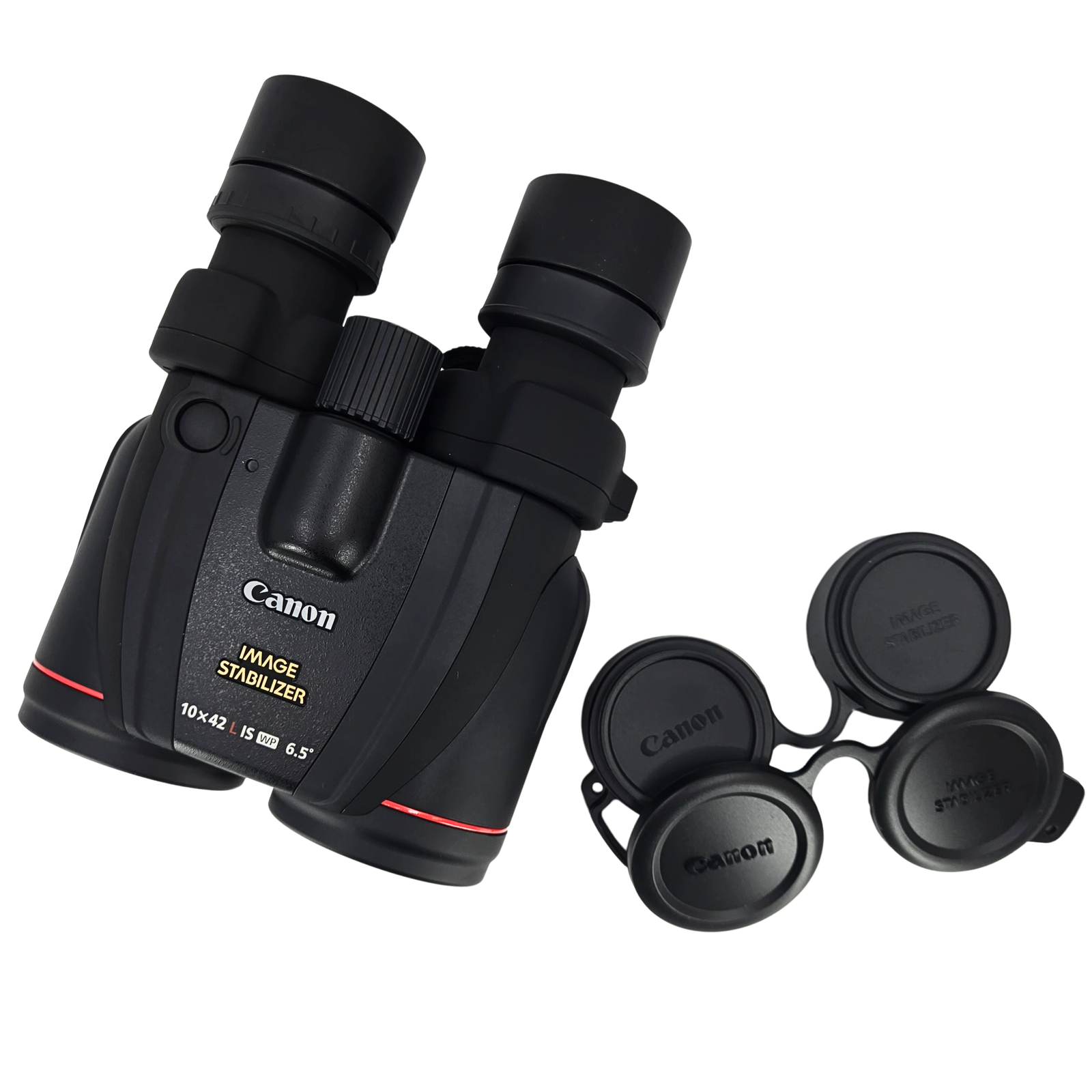
Canon 10x42 L IS WP
- Optic
- 10x×42
- FOV
- 340 ft
- Weight
- 39.2 oz
Nikon
Nikon Monarch M7 10x30
- Optic
- 10x×30
- FOV
- 351 ft
- Weight
- 16.6 oz