Canon 12x36 IS III vs Canon 10x30 IS II
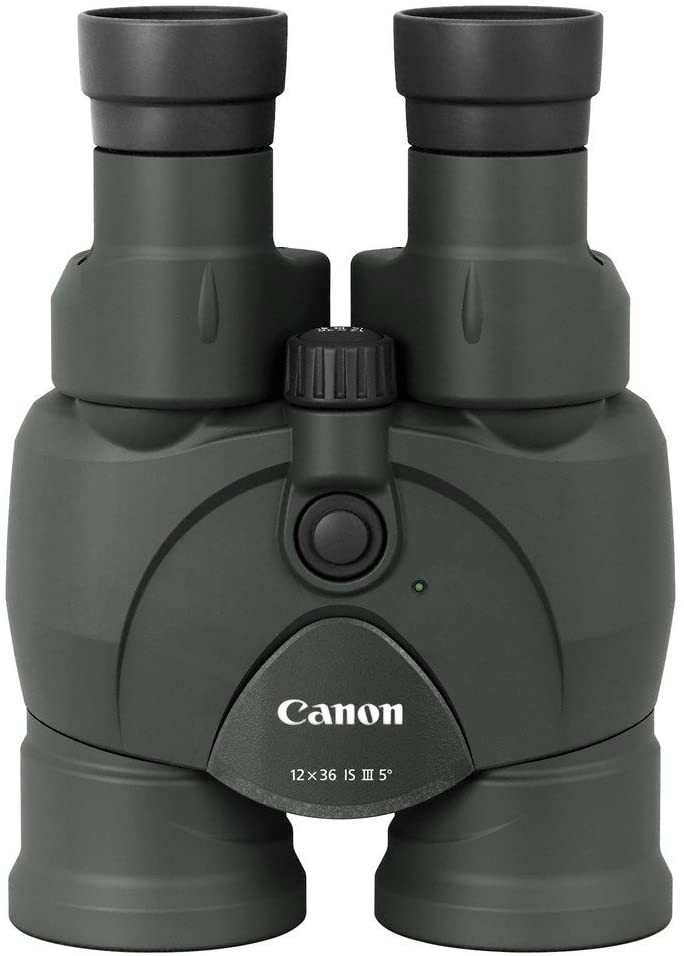
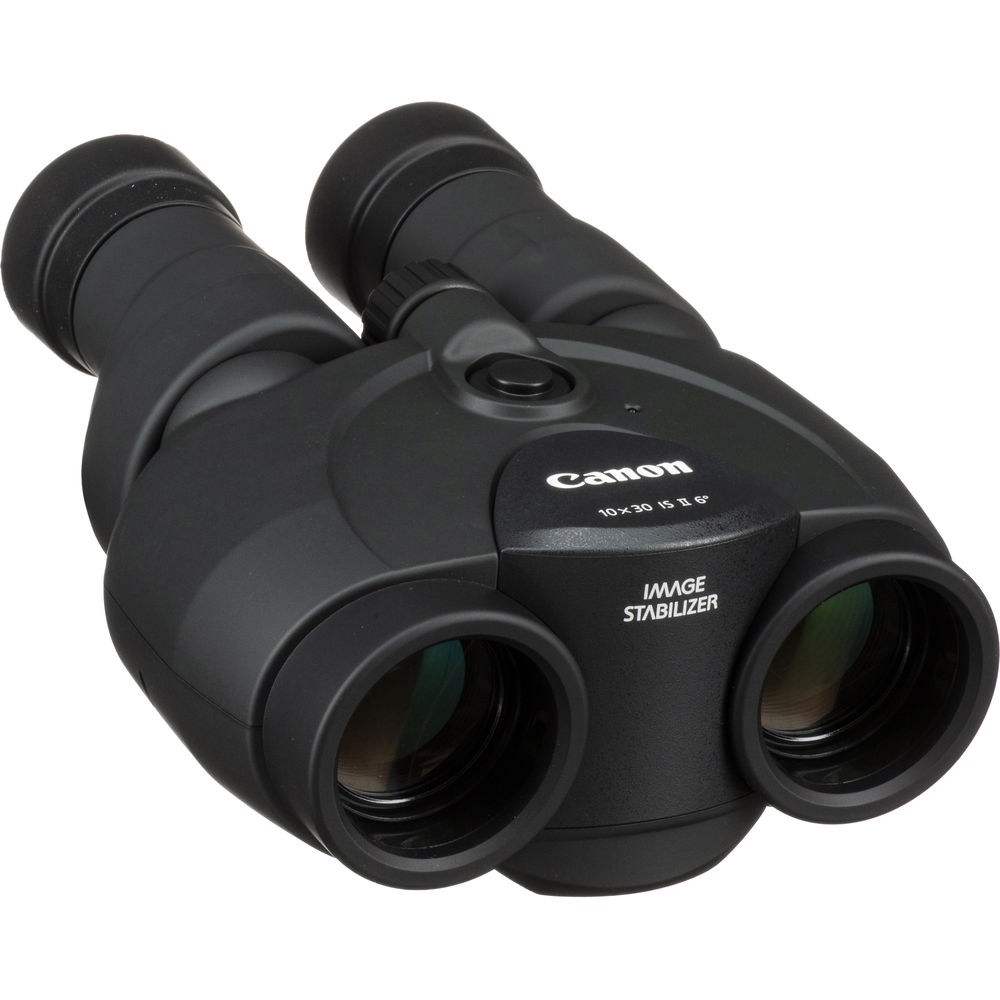
Quick take: The Canon 10x30 IS II costs $250 less; the Canon 12x36 IS III reaches farther (12x vs 10x); the Canon 10x30 IS II has a wider field of view (315 vs 262 ft @ 1000 yds).
Field of view, to scale
Top-down view · drawn to true scale — no exaggeration
Which one to buy
Extra magnification is only part of what $250 buys here. Owners of the Canon 12x36 IS III say its stabilization settles in about a second, runs almost silently and pans without stutter, and that pressing the button brings views close to telescopic, with structure in the Orion Nebula and detail on distant birds that hand shake would erase. The Canon 10x30 IS II also locks in within about a second, and its owners are just as enthusiastic: near edge-to-edge sharpness, coma correction that keeps stars pointlike, and a view that converts skeptics.
What separates them is reach against ease. The 12x36 shows a 262 ft field against the 10x30's 315 ft, so owners say finding a bird or star field takes practice, and its 19.7 ft close focus rules out butterflies and feeder birds, while the 10x30 focuses to 13.8 ft. Both have a 3.0mm exit pupil, 14.5mm of eye relief that is tight for glasses, AA batteries and no waterproofing, and the 12x36 weighs barely more, 23.3 oz against 21.2 oz.
Their failure patterns differ. 12x36 owners report fringing on high-contrast subjects with no ED glass, rubber coating that can degrade into sticky goo over the years, battery life that falls to as little as one hour at 14F, and a costly battery door repair. 10x30 owners report a button that must be held down the whole time, loose focus wheels on some units and modest transmission.
For mixed use, travel and anyone new to stabilization, the 10x30 IS II is the better value. The 12x36 earns its premium for stargazers and distance birders in fair weather who want more reach without stepping up to a heavier model.
Canon 12x36 IS III
Worth the extra $250 for stargazers and distance birders in dry weather who want more reach in a body still light enough to carry.
Canon 10x30 IS II
The better value for travel, mixed use and first-time stabilized buyers: a wider view, closer focus and a lower price.
| Spec | Canon 12x36 IS III | Canon 10x30 IS II |
|---|---|---|
| Approx. price | ~$800 | ~$550 |
| Use case | General Purpose | General Purpose |
| Magnification | 12x | 10x |
| Objective | 36mm | 30mm |
| Exit pupil | 3.0mm | 3.0mm |
| Field of view | 262 ft @ 1000 yds | 315 ft @ 1000 yds |
| Eye relief | 14.5mm | 14.5mm |
| Close focus | 19.7 ft | 13.8 ft |
| Prism | Porro | Porro |
| Glass | Standard | Standard |
| Coating | Super Spectra Multi-Coated | Fully Multi-Coated |
| Weight | 23.3 oz | 21.2 oz |
| Dimensions | 5.0 x 6.9 in | 5.9 x 5.0 in |
| Warranty | 1 Year | 1 Year |
Feature comparison
Canon 12x36 IS III
- ✗ED Glass
- ✗Phase-Corrected
- ✗Dielectric Coating
- ✗Waterproof
- ✗Fogproof
- ✓Image Stabilized
- ✗Tripod Adaptable
- ✗Magnesium Body
- ✗Locking Diopter
Canon 10x30 IS II
- ✗ED Glass
- ✗Phase-Corrected
- ✗Dielectric Coating
- ✗Waterproof
- ✗Fogproof
- ✓Image Stabilized
- ✗Tripod Adaptable
- ✗Magnesium Body
- ✗Locking Diopter
What birders say
Canon 12x36 IS III
- ✓Image stabilization settles within about a second and runs almost silently - a major upgrade over the jerky, chattering IS II, with dramatically smoother panning
- ✓Pressing the IS button transforms resolved detail - reviewers say no unstabilized hand-held binocular comes as close to a telescopic view, rivaling hand-held 12x50s on deep-sky objects
- ✓Porro Type II prisms with Canon's Super Spectra coatings deliver sharp, bright, high-contrast views that punch above the 36mm aperture
- ✓Remarkably light for stabilized 12x glass at 23.3 oz - genuinely all-day portable where the 15x50 and 18x50 Canons are not
- ✓Excellent lunar and deep-sky performer - testers pulled structural detail out of the Orion Nebula that hand shake would normally erase
- ✓Superb for long-range bird scanning - owners report spotting detail on distant birds that would be lost to shake with conventional 12x glass
- ✓Runs on two cheap AA batteries rather than a proprietary pack, easy to carry spares
- ✓Proven in heavy use - one owner logged 180-200 days of field use in the first year and called them their most-used binocular
- ✗Not waterproof or even weather-resistant - a real limitation for birders and a surprising omission at this price
- ✗No ED glass, so chromatic aberration shows on high-contrast subjects - birds against bright sky, snow, and glinting water all produce purple-green fringing
- ✗14.5mm eye relief is tight for eyeglass wearers, and the old-style fold-down rubber eyecups make it worse
- ✗Narrow 262 ft field of view makes initially finding a bird or star field harder than with conventional 12x glass
- ✗Close focus is poor at roughly 20 feet, ruling out butterflies and feeder-distance birding
- ✗Multiple owners report the rubberized coating degrading into sticky goo over time, sometimes on replacement units too
- ✗Battery life collapses in cold weather - rated nine hours at room temperature but as little as one hour at 14F, an issue for winter astronomy
- ✗Repairs and parts are pricey - one owner was quoted over $300 just to replace the battery door, which pops off more easily than it should
Canon 10x30 IS II
- ✓Image stabilization genuinely transforms what 10x shows you — a veteran astronomy reviewer calls it 'a happy marriage of excellent image quality and stabilization' and kept it as a personal favorite for years
- ✓Stabilization now engages in about 1 second versus roughly 3 seconds on the original 10x30 IS — press the button and the jitter simply drains out of the view
- ✓Independent lab testing scored it among the best in the entire 30mm class (73.8%), with sharpness holding nearly edge to edge and minimal astigmatism
- ✓Exceptional coma correction (9.3/10 in lab tests) keeps stars point-like across the field — a big reason it's a stargazing-forum staple
- ✓Runs about 9 hours on two ordinary AA batteries, so a spare set in the pocket covers a whole trip
- ✓At around $500-550 it undercuts every other stabilized binocular of comparable quality — competitors run $900 and up
- ✓Porro-prism optical path delivers pleasing depth and a natural image at a weight (about 21 oz) that carries all day
- ✓Still works as a normal, optically strong 10x30 with the stabilizer off — the electronics are a bonus, not a crutch
- ✗The IS button must be held down continuously — it is not a toggle, and thumb fatigue on long sessions is a common owner complaint
- ✗Lab testers found the focus wheel loose with excessive play, the most cited build flaw on an otherwise solid unit
- ✗Not waterproof — Canon's IS electronics rule out the sealed, nitrogen-purged construction birders expect at this price
- ✗Only 14.5mm of eye relief, tight for eyeglass wearers trying to see the full field
- ✗87.5% measured transmission is modest for a porro — the view is a touch dimmer than the best conventional 30mm glass
- ✗Noticeable pincushion distortion (scored just 4/10 in lab testing) and chromatic aberration rises toward the field edges
- ✗Only a 2-year warranty because of the electronics — a fraction of the 25-year-to-lifetime coverage standard on conventional binoculars
- ✗Lab reviewers noted slightly truncated exit pupils and interior dust on a test sample — quality control is good but not premium-tier
Canon 12x36 IS III vs Canon 10x30 IS II: common questions
Is the Canon 12x36 IS III worth $250 more than the 10x30 IS II?▾
For astronomy and distant birds, owners say the extra reach and smooth stabilization pay off. For mixed use, the 10x30 IS II's wider 315 ft field and closer focus make it the easier, cheaper choice, and its owners lean that way for travel.
Which is better for stargazing, the Canon 12x36 IS III or the 10x30 IS II?▾
Owners who mostly stargaze lean toward the 12x36 IS III, which testers say rivals handheld 12x50s on deep-sky objects. The 10x30 IS II is also praised for coma correction that keeps stars pointlike, and its wider field makes star fields easier to find.
Are the Canon 12x36 IS III and 10x30 IS II weatherproof?▾
No. Owners of each treat them as fair-weather instruments without weather sealing. 12x36 owners also warn that cold weather can cut AA battery life to as little as one hour, so carry spares on winter nights.