Leica Ultravid 10x25 vs Canon 12x36 IS III
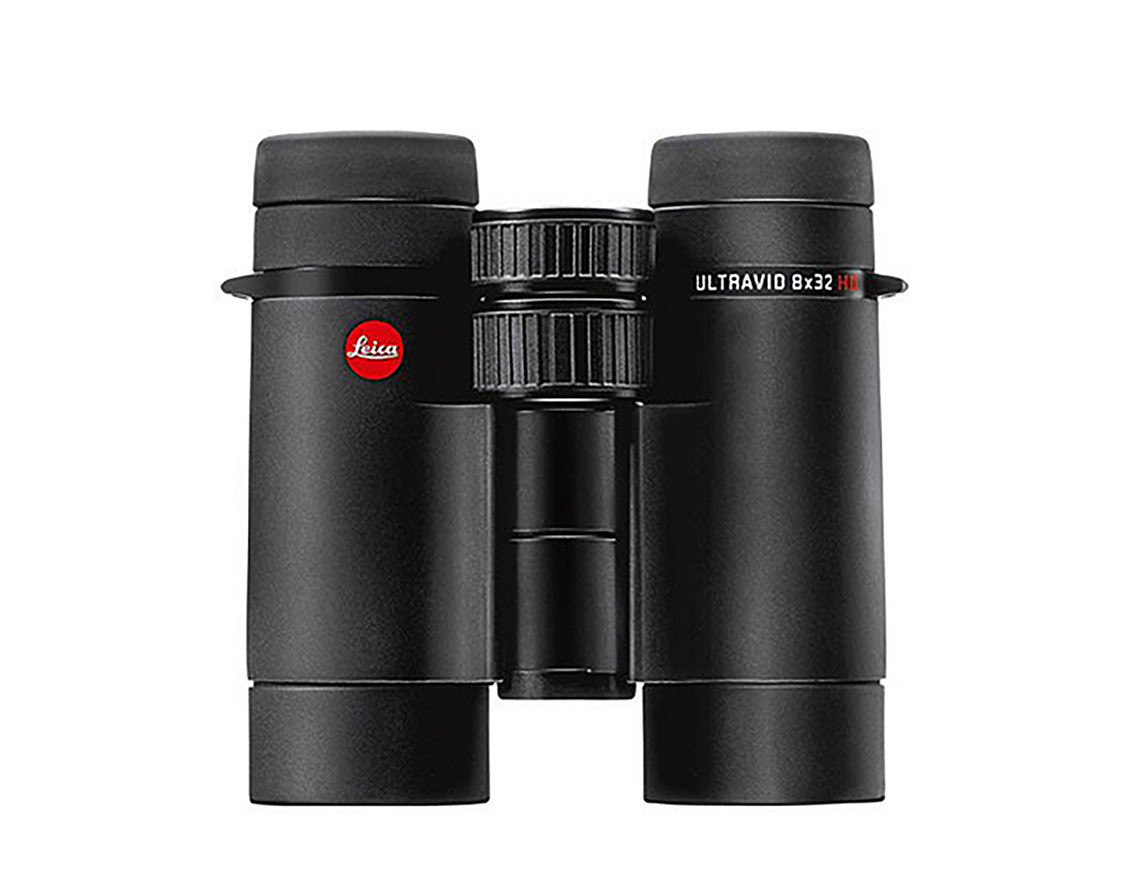
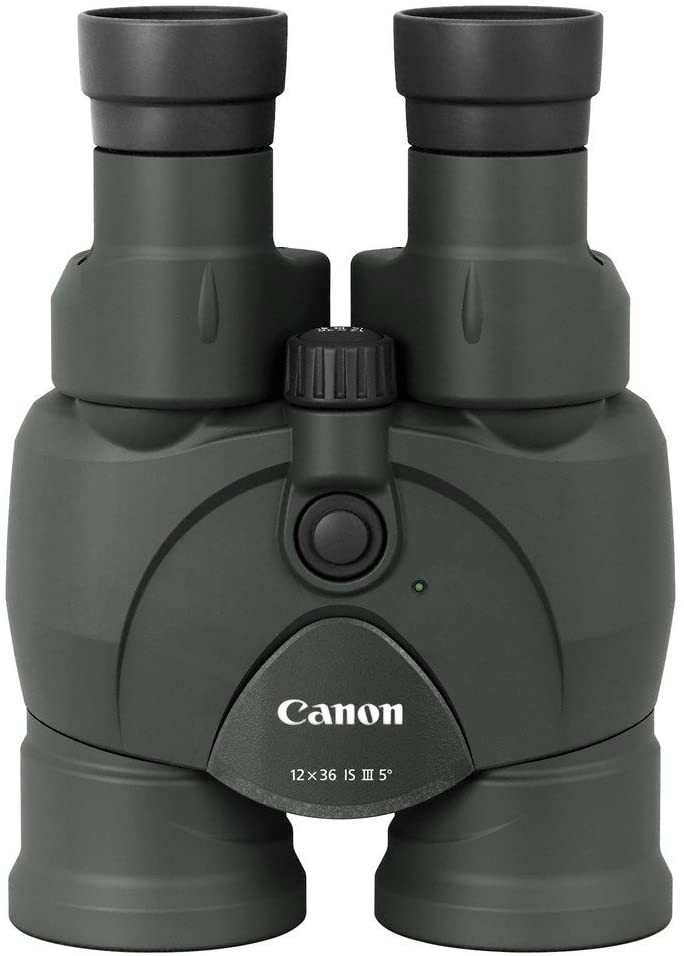
Quick take: The Canon 12x36 IS III costs $200 less; the Canon 12x36 IS III reaches farther (12x vs 10x); the Leica Ultravid 10x25 has a wider field of view (273 vs 262 ft @ 1000 yds).
Field of view, to scale
Top-down view · drawn to true scale — no exaggeration
Which one to buy
Rain is the first thing to think about here. The Leica Ultravid 10x25 is fully sealed and nitrogen purged, which its owners call rare in the pocket class. The Canon 12x36 IS III is not waterproof or even weather-resistant, which its owners list among its biggest criticisms, and its warranty runs 1 year against Leica's 10. If your binocular goes out in weather, that narrows things quickly.
Beyond that, they attack the shake problem in opposite ways. The Canon uses image stabilization, which owners say settles in about a second and transforms the detail you can resolve at 12x: distant birds, lunar craters, even structure in the Orion Nebula. It costs $200 less, runs on two AAs, and has a 3.0mm exit pupil against the Leica's 2.5mm. The trade is size and fragility. At 23.3 oz it is a mid-size you carry rather than pocket, it focuses no closer than 19.7 ft, it has no ED glass, so birds against bright sky show fringing, and owners report the rubber coating turning sticky over time and battery life collapsing in the cold.
The Ultravid goes the other way: 8.8 oz, alpha-class sharpness to the edge with almost no fringing, and a body that fits a jacket pocket. Its owners are frank about the physics, though. Ten power in so little mass shakes visibly, the small exit pupil makes eye placement fussy, and it is a daylight binocular that dims fast at dusk. Both have narrow fields, 273 ft for the Leica and 262 for the Canon, and both are tight for glasses at 15mm and 14.5mm.
For fair-weather wildlife watching from one spot, or as a stargazing companion to a telescope, the Canon shows more for less money. For travel, hiking and anything wet, the Ultravid is the one you can carry everywhere and stop worrying about.
Leica Ultravid 10x25
For travel, hiking and wet weather: a sealed, alpha-sharp binocular that disappears into a jacket pocket.
Canon 12x36 IS III
Worth it for fair-weather wildlife watching and stargazing, where stabilized 12x shows detail a handheld binocular can't, for $200 less.
| Spec | Leica Ultravid 10x25 | Canon 12x36 IS III |
|---|---|---|
| Approx. price | ~$1,000 | ~$800 |
| Use case | General Purpose | General Purpose |
| Magnification | 10x | 12x |
| Objective | 25mm | 36mm |
| Exit pupil | 2.5mm | 3.0mm |
| Field of view | 273 ft @ 1000 yds | 262 ft @ 1000 yds |
| Eye relief | 15mm | 14.5mm |
| Close focus | 8.2 ft | 19.7 ft |
| Prism | Roof | Porro |
| Glass | HD | Standard |
| Coating | Fully Multi-Coated | Super Spectra Multi-Coated |
| Weight | 8.8 oz | 23.3 oz |
| Dimensions | 4.4 x 4.1 in | 5.0 x 6.9 in |
| Warranty | 10 Years | 1 Year |
Feature comparison
Leica Ultravid 10x25
- ✓ED Glass
- ✓Phase-Corrected
- ✗Dielectric Coating
- ✓Waterproof
- ✓Fogproof
- ✗Image Stabilized
- ✗Tripod Adaptable
- ✗Magnesium Body
- ✗Locking Diopter
Canon 12x36 IS III
- ✗ED Glass
- ✗Phase-Corrected
- ✗Dielectric Coating
- ✗Waterproof
- ✗Fogproof
- ✓Image Stabilized
- ✗Tripod Adaptable
- ✗Magnesium Body
- ✗Locking Diopter
What birders say
Leica Ultravid 10x25
- ✓Forum regulars call it 'probably the best pocket binocular on the market' - genuine alpha-class optics that folds into a coat pocket
- ✓Very bright for a 25mm with next to no chromatic aberration and sharpness that holds to the edge - owners are consistently startled that a pocket glass resolves this well
- ✓At under 9 ounces it disappears in a jacket pocket, which owners say is the whole point: the binocular you actually have with you sees more birds than the alpha at home
- ✓Genuinely weather-sealed and nitrogen purged - rare in the pocket class, where most rivals are splash-resistant at best
- ✓10x reach in a pocket format is unique among true premium compacts - great for travel, safaris, stadium use, and scanning from a scenic overlook
- ✓Outperforms cheaper compacts like Nikon's in mixed and difficult lighting despite the size handicap
- ✓Leica build quality in miniature - machined metal chassis and a precise focus action that owners describe as jewel-like
- ✓Holds value well; owners describe it as the 'first alpha-class pocketable binocular' worth keeping for decades
- ✗The 2.5mm exit pupil makes eye placement genuinely fussy - owners report it takes practice to avoid blackouts, and it's unforgiving for beginners
- ✗10x magnification in a sub-9-ounce package is hard to hold steady - the lack of mass works against you, and even experienced users notice the shake
- ✗Owners who've had both frequently prefer the 8x20 Ultravid: same exit pupil, steadier view, even smaller package
- ✗That small exit pupil means it dims quickly at dusk - this is a daylight binocular, full stop
- ✗273 ft field of view is narrow, making it harder to find and follow birds than a full-size glass
- ✗The dual-hinge fold design must be unfolded and repositioned to your interpupillary distance every time you pull it out
- ✗Some owners have reported diopter problems on Leica's pocket models
- ✗Around $1,000 for a second/travel binocular is a hard swallow when the Swarovski CL Pocket 10x25 undercuts it
Canon 12x36 IS III
- ✓Image stabilization settles within about a second and runs almost silently - a major upgrade over the jerky, chattering IS II, with dramatically smoother panning
- ✓Pressing the IS button transforms resolved detail - reviewers say no unstabilized hand-held binocular comes as close to a telescopic view, rivaling hand-held 12x50s on deep-sky objects
- ✓Porro Type II prisms with Canon's Super Spectra coatings deliver sharp, bright, high-contrast views that punch above the 36mm aperture
- ✓Remarkably light for stabilized 12x glass at 23.3 oz - genuinely all-day portable where the 15x50 and 18x50 Canons are not
- ✓Excellent lunar and deep-sky performer - testers pulled structural detail out of the Orion Nebula that hand shake would normally erase
- ✓Superb for long-range bird scanning - owners report spotting detail on distant birds that would be lost to shake with conventional 12x glass
- ✓Runs on two cheap AA batteries rather than a proprietary pack, easy to carry spares
- ✓Proven in heavy use - one owner logged 180-200 days of field use in the first year and called them their most-used binocular
- ✗Not waterproof or even weather-resistant - a real limitation for birders and a surprising omission at this price
- ✗No ED glass, so chromatic aberration shows on high-contrast subjects - birds against bright sky, snow, and glinting water all produce purple-green fringing
- ✗14.5mm eye relief is tight for eyeglass wearers, and the old-style fold-down rubber eyecups make it worse
- ✗Narrow 262 ft field of view makes initially finding a bird or star field harder than with conventional 12x glass
- ✗Close focus is poor at roughly 20 feet, ruling out butterflies and feeder-distance birding
- ✗Multiple owners report the rubberized coating degrading into sticky goo over time, sometimes on replacement units too
- ✗Battery life collapses in cold weather - rated nine hours at room temperature but as little as one hour at 14F, an issue for winter astronomy
- ✗Repairs and parts are pricey - one owner was quoted over $300 just to replace the battery door, which pops off more easily than it should
Leica Ultravid 10x25 vs Canon 12x36 IS III: common questions
Which is steadier, the Leica Ultravid 10x25 or the Canon 12x36 IS III?▾
The Canon, by a wide margin once its stabilization is on; owners say it settles in about a second and reveals detail that hand shake normally erases. Ultravid owners report visible shake at 10x in such a light body, which bracing or shorter sessions only partly fix.
Can the Canon 12x36 IS III go out in the rain like the Leica Ultravid 10x25?▾
No. The Canon has no weather sealing at all, and owners call that one of its biggest weaknesses for birding. The Ultravid is fully sealed and nitrogen purged, so its owners treat it as all-weather glass.
Is the Canon 12x36 IS III better for astronomy than the Leica Ultravid 10x25?▾
Much better. Testers report the stabilized Canon pulling structure out of the Orion Nebula and showing striking lunar crater detail, and its 3.0mm exit pupil beats the Leica's 2.5mm. Ultravid owners call theirs a daylight binocular, though Canon owners warn that cold nights drain the AA batteries quickly.