Canon 10x30 IS II vs Canon 10x20 IS
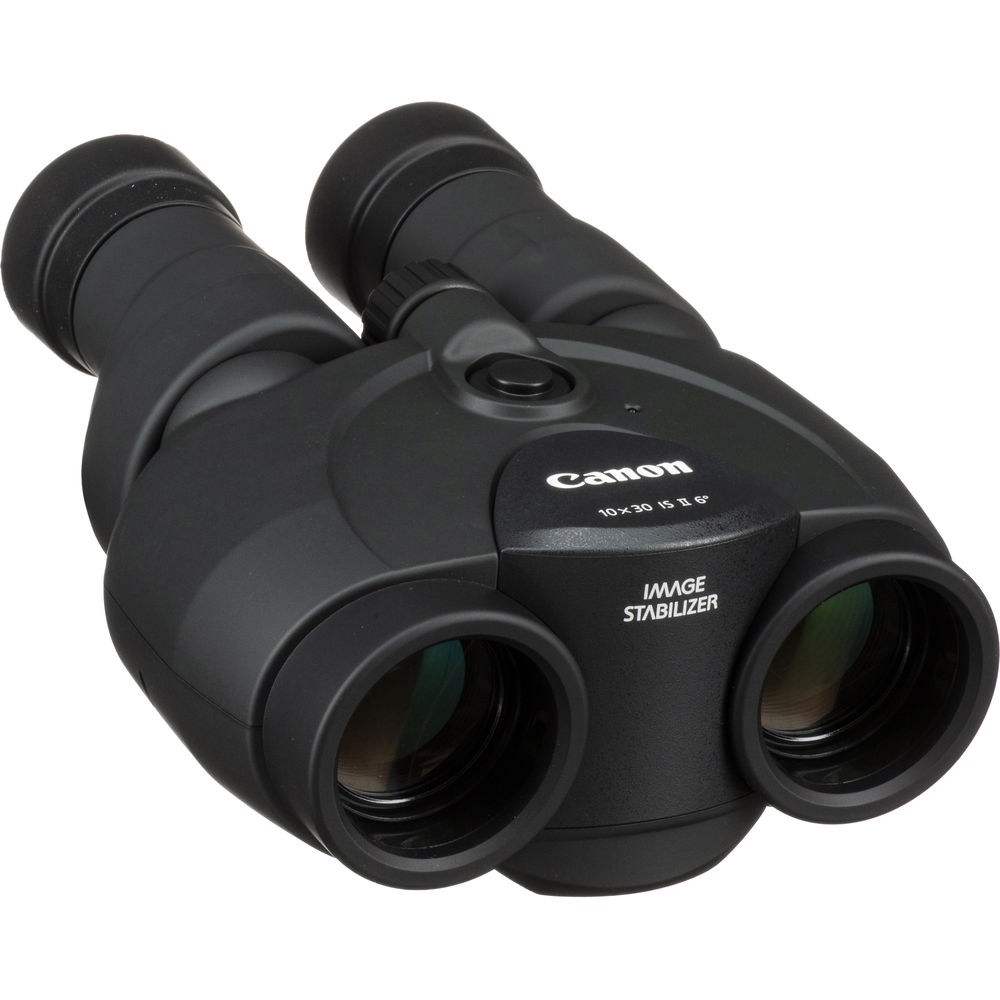
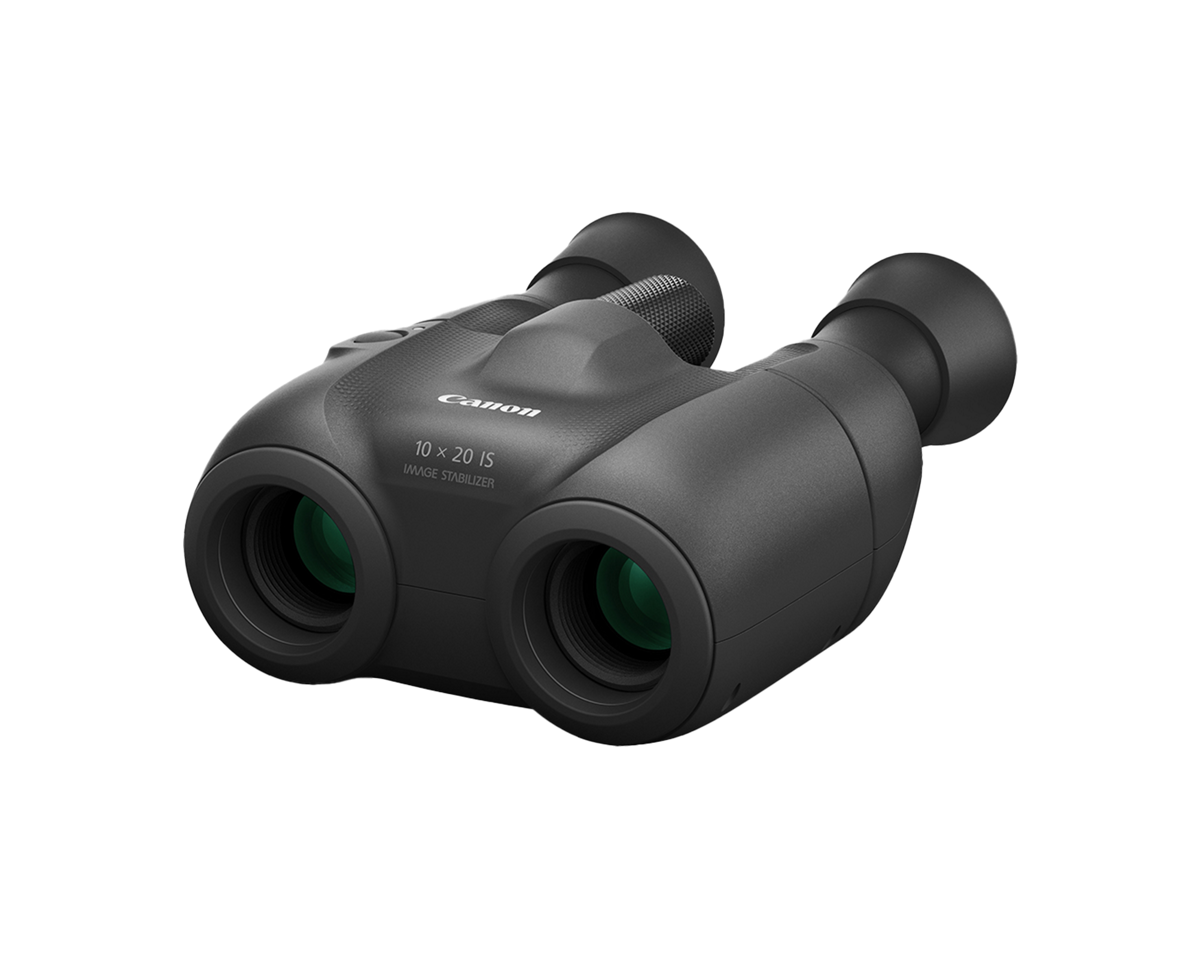
Quick take: The Canon 10x30 IS II has a wider field of view (315 vs 278 ft @ 1000 yds); the Canon 10x30 IS II gathers more light with a larger 30mm objective.
Field of view, to scale
Top-down view · drawn to true scale — no exaggeration
Which one to buy
Same $550, same 10x, same push-button stabilization from Canon, so the only real question is whether pocket size is worth giving up almost everything else. Owners of the Canon 10x20 IS mostly say it isn't, and many point to the Canon 10x30 IS II as the better buy.
The 10x30's advantages are practical. Its 3.0mm exit pupil against 2.0mm works deeper into dusk and is far more forgiving of eye placement, its 315 ft field against 278 ft feels less like a corridor, and its 14.5mm of eye relief, while tight, beats a 10x20 whose owners measure 10-12mm and call it effectively unusable with glasses. It runs about 9 hours on two AA batteries rather than a pricier CR123A. Owners praise near edge-to-edge sharpness and coma correction that makes it a stargazing staple. Their complaints are a button you must hold down the whole time, a loose focus wheel on some units, modest transmission and pincushion distortion.
The 10x20's case is 15.2 oz against 21.2 oz, a body small enough that hikers bring it, and 6.6 ft close focus against 13.8 ft. Its owners like the optics more than they expected from 20mm: a flat field, tight star images and crisp daytime views. But its two-position eyecups cause blackouts even without glasses, and false color shows on high-contrast subjects.
Neither is waterproof, and both carry a 1 Year warranty, so treat either as a fair-weather instrument. For nearly everyone, stargazers and glasses wearers included, the 10x30 IS II is the stronger buy; the 10x20 suits a traveler who needs stabilization in the smallest possible package and doesn't wear glasses.
Canon 10x30 IS II
For stargazers, glasses wearers and anyone using it at dusk: the brighter, wider, more forgiving stabilized 10x at the same price.
Canon 10x20 IS
Only for travelers and hikers who need stabilization in the lightest package, don't wear glasses and stay out of the rain.
| Spec | Canon 10x30 IS II | Canon 10x20 IS |
|---|---|---|
| Approx. price | ~$550 | ~$550 |
| Use case | General Purpose | General Purpose |
| Magnification | 10x | 10x |
| Objective | 30mm | 20mm |
| Exit pupil | 3.0mm | 2.0mm |
| Field of view | 315 ft @ 1000 yds | 278 ft @ 1000 yds |
| Eye relief | 14.5mm | 13.5mm |
| Close focus | 13.8 ft | 6.6 ft |
| Prism | Porro | Porro |
| Glass | Standard | Standard |
| Coating | Fully Multi-Coated | Super Spectra Multi-Coated |
| Weight | 21.2 oz | 15.2 oz |
| Dimensions | 5.9 x 5.0 in | 4.6 x 5.6 in |
| Warranty | 1 Year | 1 Year |
Feature comparison
Canon 10x30 IS II
- ✗ED Glass
- ✗Phase-Corrected
- ✗Dielectric Coating
- ✗Waterproof
- ✗Fogproof
- ✓Image Stabilized
- ✗Tripod Adaptable
- ✗Magnesium Body
- ✗Locking Diopter
Canon 10x20 IS
- ✗ED Glass
- ✗Phase-Corrected
- ✗Dielectric Coating
- ✗Waterproof
- ✗Fogproof
- ✓Image Stabilized
- ✗Tripod Adaptable
- ✗Magnesium Body
- ✗Locking Diopter
What birders say
Canon 10x30 IS II
- ✓Image stabilization genuinely transforms what 10x shows you — a veteran astronomy reviewer calls it 'a happy marriage of excellent image quality and stabilization' and kept it as a personal favorite for years
- ✓Stabilization now engages in about 1 second versus roughly 3 seconds on the original 10x30 IS — press the button and the jitter simply drains out of the view
- ✓Independent lab testing scored it among the best in the entire 30mm class (73.8%), with sharpness holding nearly edge to edge and minimal astigmatism
- ✓Exceptional coma correction (9.3/10 in lab tests) keeps stars point-like across the field — a big reason it's a stargazing-forum staple
- ✓Runs about 9 hours on two ordinary AA batteries, so a spare set in the pocket covers a whole trip
- ✓At around $500-550 it undercuts every other stabilized binocular of comparable quality — competitors run $900 and up
- ✓Porro-prism optical path delivers pleasing depth and a natural image at a weight (about 21 oz) that carries all day
- ✓Still works as a normal, optically strong 10x30 with the stabilizer off — the electronics are a bonus, not a crutch
- ✗The IS button must be held down continuously — it is not a toggle, and thumb fatigue on long sessions is a common owner complaint
- ✗Lab testers found the focus wheel loose with excessive play, the most cited build flaw on an otherwise solid unit
- ✗Not waterproof — Canon's IS electronics rule out the sealed, nitrogen-purged construction birders expect at this price
- ✗Only 14.5mm of eye relief, tight for eyeglass wearers trying to see the full field
- ✗87.5% measured transmission is modest for a porro — the view is a touch dimmer than the best conventional 30mm glass
- ✗Noticeable pincushion distortion (scored just 4/10 in lab testing) and chromatic aberration rises toward the field edges
- ✗Only a 2-year warranty because of the electronics — a fraction of the 25-year-to-lifetime coverage standard on conventional binoculars
- ✗Lab reviewers noted slightly truncated exit pupils and interior dust on a test sample — quality control is good but not premium-tier
Canon 10x20 IS
- ✓The stabilization genuinely delivers detail no conventional binocular can match handheld - one reviewer read a clock face a mile away and identified aircraft types overhead, concluding no normal binocular shows this level of detail without a support
- ✓A three-year owner who hikes mountains calls the IS button 'like a dream' - winded and on the move, one press produces a steady view for spotting animals kilometers away
- ✓The core optics surprised skeptical reviewers: crisp, bright, sharp daytime views with excellent color rendition, when many 20mm pocket binoculars are dim and fuzzy
- ✓Built-in field flatteners keep the field flat with stars pinpoint almost to the field stop - only a trace of astigmatism in the last 20%
- ✓Porro II prisms produce tight, spike-free star images and impressively controlled ghosting - even bright streetlights throw up almost no artifacts
- ✓Genuinely packable at 430g - light enough that hikers actually bring it, and long-term owners report the Canon IS line lasts well with careful handling
- ✓Smooth, well-weighted focuser reaching infinity in about 1.5 turns, with a wheel large enough to find in gloves
- ✓Punches above its aperture for casual astronomy - stabilized views showed the Galilean moons, M31, the Orion Nebula's structure, and multiple star clusters in one reviewer's dark-sky session
- ✗The value equation is the core criticism: you're paying a steep IS premium for tiny 20mm, non-waterproof optics - reviewers note you sacrifice more optical and low-light performance than a typical compact while carrying mid-size bulk, and many point to Canon's 10x30 IS II as the better buy
- ✗No waterproofing or weather sealing at all - reviewers call this a big disadvantage for birding, and a long day in the rain could kill them
- ✗Eye relief measures only 10-12mm against the claimed 13.5mm, and the two-position fold-down eyecups are widely disliked - reviewers say they're effectively unusable with glasses and cause blackouts and kidney-beaning even without
- ✗The 2mm exit pupil is unforgiving: exact eye placement is required, beginners find them harder to use than a 7x50, and performance collapses at dusk
- ✗Narrow 49.5-degree apparent field feels constricted next to modern binoculars
- ✗False color shows on high-contrast subjects and the moon, and some owners notice chromatic smearing when panning with IS active
- ✗Hinge-less plastic body feels more like an electronic gadget than fine optics, and the discontinued status plus 1-year warranty raise long-term repair questions
- ✗Uses a pricier CR123A battery rather than the AAs of larger Canon IS models, and the IS button is hard to operate with gloves
Canon 10x30 IS II vs Canon 10x20 IS: common questions
Should I buy the Canon 10x30 IS II or the 10x20 IS at the same price?▾
Owners of the 10x20 often steer buyers to the 10x30 IS II unless pocket size is essential. The 10x30 has a bigger exit pupil, a wider field, more usable eye relief and cheaper AA batteries, while the 10x20's wins are size and weight.
Can I use the Canon 10x20 IS or the 10x30 IS II with glasses?▾
The 10x30 IS II is workable but tight at 14.5mm, and owners say glasses wearers may lose part of the field. The 10x20 IS is worse: owners measure 10-12mm against its rated 13.5mm and call it effectively unusable with glasses.
Are the Canon 10x30 IS II and 10x20 IS waterproof?▾
No. Owners of each treat them as fair-weather instruments, fine in light drizzle with care but not sealed against rain. If you need stabilization in wet conditions, look at a fully waterproof stabilized model instead.