Canon 10x30 IS II vs Maven B.7 8x25
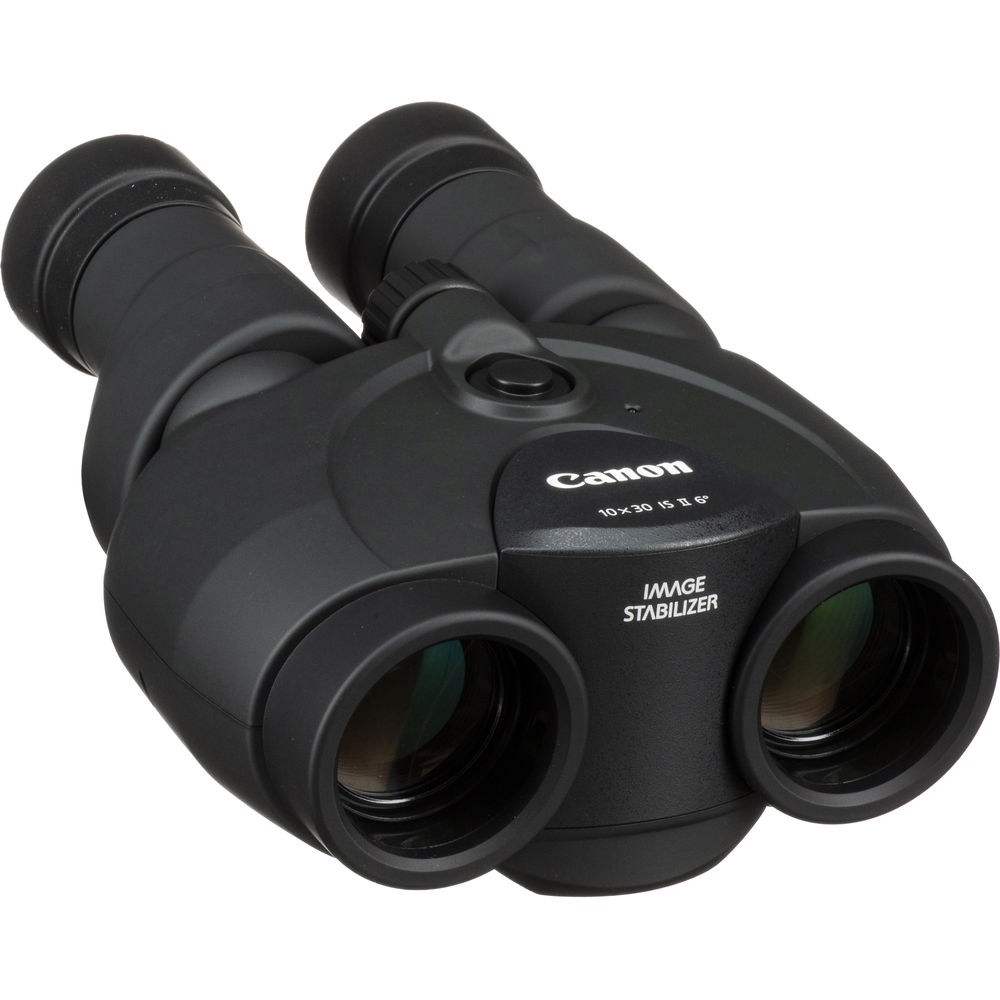
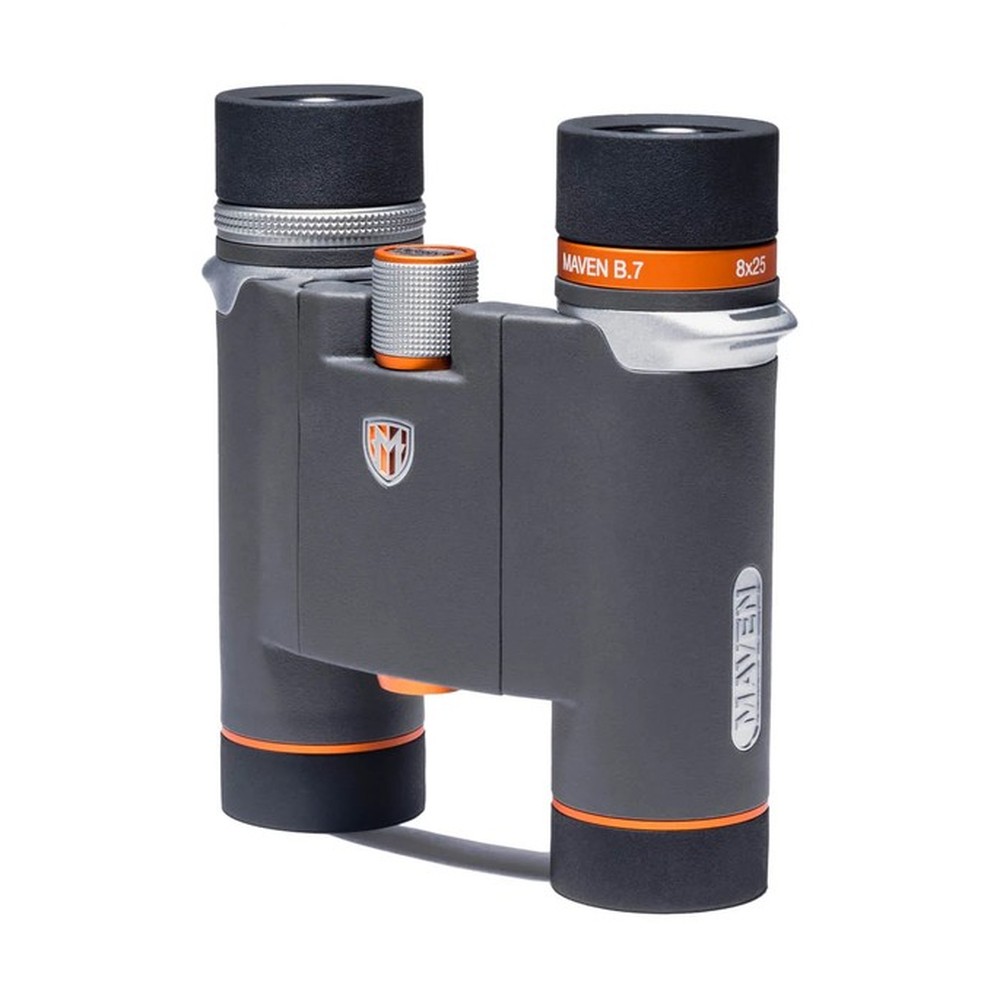
Quick take: The Canon 10x30 IS II costs $50 less; the Canon 10x30 IS II reaches farther (10x vs 8x); the Maven B.7 8x25 has a wider field of view (356 vs 315 ft @ 1000 yds).
Field of view, to scale
Top-down view · drawn to true scale — no exaggeration
Which one to buy
Stabilization or sealing is the trade here. The Canon 10x30 IS II holds a 10x image steady at the press of a button, and its owners say even steady-handed users see visibly more detail with it engaged, with sharpness nearly edge to edge and coma correction good enough for stargazing. The Maven B.7 8x25 is a conventional pocket binocular, $50 more, with ED glass, dielectric-coated phase-corrected prisms, a magnesium body and full waterproofing and fogproofing.
The Maven wins on everything around the image. It folds into a compact double-hinge package at 12.4 oz against the Canon's 21.2 oz, shows a wider 356 ft field against 315 ft, has slightly more eye relief at 15mm against 14.5mm, and carries Maven's Lifetime warranty against Canon's 1 Year.
Canon owners are frank about its limits: you must hold the button down the whole time, the focus wheel is loose on some units, it is not waterproof, and eye relief is tight for glasses. The Canon shows more detail, and that is the reason to accept its weight, its short warranty and its fair-weather limits. The Maven rides in a jacket pocket through rain without batteries, which for travel matters more than a steadier view.
Canon 10x30 IS II
Worth it if seeing the most detail matters, for stargazing, boating or distant birds, and you can live with batteries and fair-weather use.
Maven B.7 8x25
Best as a weatherproof pocket binocular for travel and hiking, with a lifetime warranty and no batteries to think about.
| Spec | Canon 10x30 IS II | Maven B.7 8x25 |
|---|---|---|
| Approx. price | ~$550 | ~$600 |
| Use case | General Purpose | General Purpose |
| Magnification | 10x | 8x |
| Objective | 30mm | 25mm |
| Exit pupil | 3.0mm | 3.1mm |
| Field of view | 315 ft @ 1000 yds | 356 ft @ 1000 yds |
| Eye relief | 14.5mm | 15mm |
| Close focus | 13.8 ft | 9.8 ft |
| Prism | Porro | Roof |
| Glass | Standard | ED |
| Coating | Fully Multi-Coated | Fully Multi-Coated |
| Weight | 21.2 oz | 12.4 oz |
| Dimensions | 5.9 x 5.0 in | 4.8 x 4.6 in |
| Warranty | 1 Year | Lifetime |
Feature comparison
Canon 10x30 IS II
- ✗ED Glass
- ✗Phase-Corrected
- ✗Dielectric Coating
- ✗Waterproof
- ✗Fogproof
- ✓Image Stabilized
- ✗Tripod Adaptable
- ✗Magnesium Body
- ✗Locking Diopter
Maven B.7 8x25
- ✓ED Glass
- ✓Phase-Corrected
- ✓Dielectric Coating
- ✓Waterproof
- ✓Fogproof
- ✗Image Stabilized
- ✗Tripod Adaptable
- ✓Magnesium Body
- ✗Locking Diopter
What birders say
Canon 10x30 IS II
- ✓Image stabilization genuinely transforms what 10x shows you — a veteran astronomy reviewer calls it 'a happy marriage of excellent image quality and stabilization' and kept it as a personal favorite for years
- ✓Stabilization now engages in about 1 second versus roughly 3 seconds on the original 10x30 IS — press the button and the jitter simply drains out of the view
- ✓Independent lab testing scored it among the best in the entire 30mm class (73.8%), with sharpness holding nearly edge to edge and minimal astigmatism
- ✓Exceptional coma correction (9.3/10 in lab tests) keeps stars point-like across the field — a big reason it's a stargazing-forum staple
- ✓Runs about 9 hours on two ordinary AA batteries, so a spare set in the pocket covers a whole trip
- ✓At around $500-550 it undercuts every other stabilized binocular of comparable quality — competitors run $900 and up
- ✓Porro-prism optical path delivers pleasing depth and a natural image at a weight (about 21 oz) that carries all day
- ✓Still works as a normal, optically strong 10x30 with the stabilizer off — the electronics are a bonus, not a crutch
- ✗The IS button must be held down continuously — it is not a toggle, and thumb fatigue on long sessions is a common owner complaint
- ✗Lab testers found the focus wheel loose with excessive play, the most cited build flaw on an otherwise solid unit
- ✗Not waterproof — Canon's IS electronics rule out the sealed, nitrogen-purged construction birders expect at this price
- ✗Only 14.5mm of eye relief, tight for eyeglass wearers trying to see the full field
- ✗87.5% measured transmission is modest for a porro — the view is a touch dimmer than the best conventional 30mm glass
- ✗Noticeable pincushion distortion (scored just 4/10 in lab testing) and chromatic aberration rises toward the field edges
- ✗Only a 2-year warranty because of the electronics — a fraction of the 25-year-to-lifetime coverage standard on conventional binoculars
- ✗Lab reviewers noted slightly truncated exit pupils and interior dust on a test sample — quality control is good but not premium-tier
Canon 10x30 IS II vs Maven B.7 8x25: common questions
Does the Canon 10x30 IS II show more detail than the Maven B.7 8x25?▾
In the hand, Canon owners say yes: stabilization removes the tremor that blurs fine detail at 10x, so text, star pairs and feathers resolve better. The Maven is a conventional 8x, so what it shows depends on how steady you hold it.
Which is better in the rain, the Canon 10x30 IS II or the Maven B.7 8x25?▾
The Maven, which is waterproof, fogproof and nitrogen purged. The Canon is not waterproof, and its owners treat it as a fair-weather instrument because its electronics rule out a sealed body.