Celestron
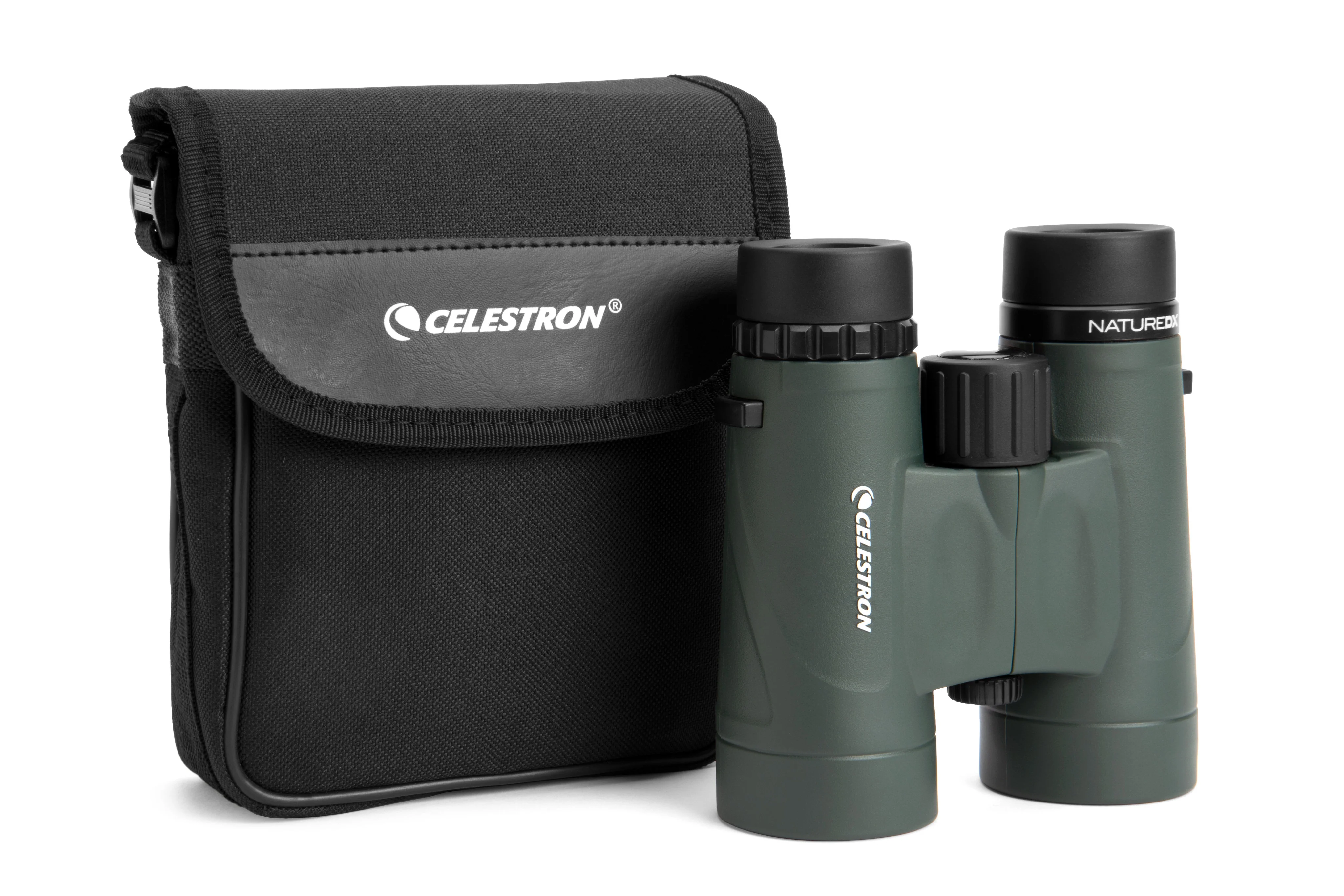
Celestron Nature DX ED 10x42
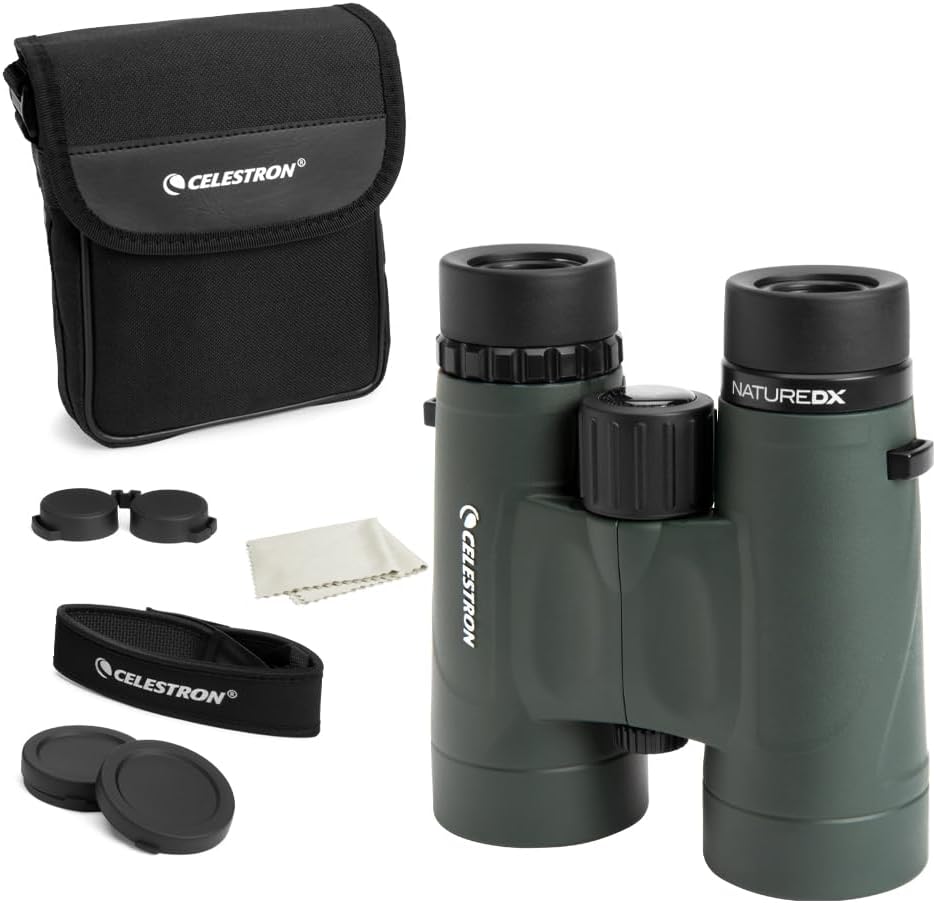
The Celestron Nature DX ED 10x42 is a mid-range 10x42 full-size binocular designed for general outdoor use. It features extra-low dispersion glass to minimize chromatic aberration with fully multi-coated surfaces and a 304 ft @ 1000 yds field of view. Backed by Celestron's Limited Lifetime warranty.
We may earn a commission. Price and availability on Amazon may differ.
Specifications
What do these mean? →Field of view, to scale
Why FOV matters →Top-down view · drawn to true scale — no exaggeration
Wondering about the format itself? 8x42 vs 10x42 · 10x42 vs 10x50
Key Features
Owner Insights(75 discussions)
The 10x42 Nature DX ED is the budget reach option in Celestron's ED line, and it often undercuts even its 8x42 sibling on street price — which makes 'real ED glass at 10x for about $170' a genuinely rare offer. The optical core earned the line strong expert reviews: Cornell's testers rated it a Solid Choice with sharp, contrasty, colorful rendering, and a gear lab concluded the optics rival binoculars at twice the price. ED glass arguably matters more here than on the 8x42, since chromatic aberration grows with magnification and this keeps high-contrast edges clean.
But this configuration concentrates the line's weaknesses. Eye relief plunges to 14mm, and eyeglass wearers should treat that as disqualifying — the clipped-field complaints are consistent. The 304-foot field is tight for finding birds at 10x, the notorious Nature DX ED eyecups (narrow, hard, collapse-prone) are unchanged, and the sluggish focus wheel is more irritating at 10x where depth of field is thinner and you're refocusing constantly. Dusk performance also gives up ground to the 8x42 thanks to the smaller 4.2mm exit pupil. In bright daylight at distance, though — hillsides, shorelines, open water — owners find it delivers detail the price has no business buying.
Best fit: a non-eyeglass-wearing buyer on a hard budget who specifically needs reach — open-country wildlife, travel, casual stargazing — and who'd rather spend $170 than $300. Birders working woods or anyone with glasses should take the 8x42 Nature DX ED instead, full stop. Against the Athlon Argos G2 HD 10x42 at similar money it wins on glass (real ED) and loses on eye relief, eyecups, and warranty strength; against the standard Nature DX 10x42 it's a modest premium for meaningfully cleaner edges. If your budget can reach the Athlon Midas G2 UHD 10x42, that's a different league — but it's also double the price.
Pros
- +Cheapest mainstream path to ED glass at 10x — frequently street-priced at or below the 8x42, making it a standout deal on paper
- +Same optical package Cornell's testers rated a 'Solid Choice' in the line: sharp, contrasty, with accurate colorful rendering in good light
- +ED elements keep fringing under control at 10x, where chromatic aberration is normally more visible than at 8x
- +One test lab said the line's BAK-4 optics rival models costing more than twice as much
- +Lighter than most 10x42s at under 23 ounces, easy for all-day carry
- +Fully waterproof, nitrogen purged, and phase-coated — the complete feature checklist under $200
- +6.5-foot close focus is excellent for a 10x binocular
- +Extra reach makes it a flexible budget choice for open-country wildlife, travel, and casual astronomy
Cons
- −14mm of eye relief is the dealbreaker spec — eyeglass wearers consistently report clipped, vignetted views, a steep drop from the 8x42's 17.8mm
- −304-foot field of view is narrow, and at 10x that makes finding and tracking birds noticeably harder for beginners
- −Same widely criticized eyecups as the rest of the line — narrow, hard, loose, and prone to collapsing
- −Sluggish focus wheel that takes effort to start and stop precisely — more annoying at 10x where focus depth is shallower
- −4.2mm exit pupil plus budget coatings means dusk performance falls off faster than the 8x42's
- −Backlit subjects lose fine detail, per expert testing of the line
- −Polycarbonate chassis, budget rubber armor, and hinges that reviewers rate below sturdier mid-tier rivals
- −Basic unpadded webbing strap and lightly padded case continue the line's weak accessory story
Common Questions
Compare the Celestron Nature DX ED 10x42
Related binoculars
Celestron
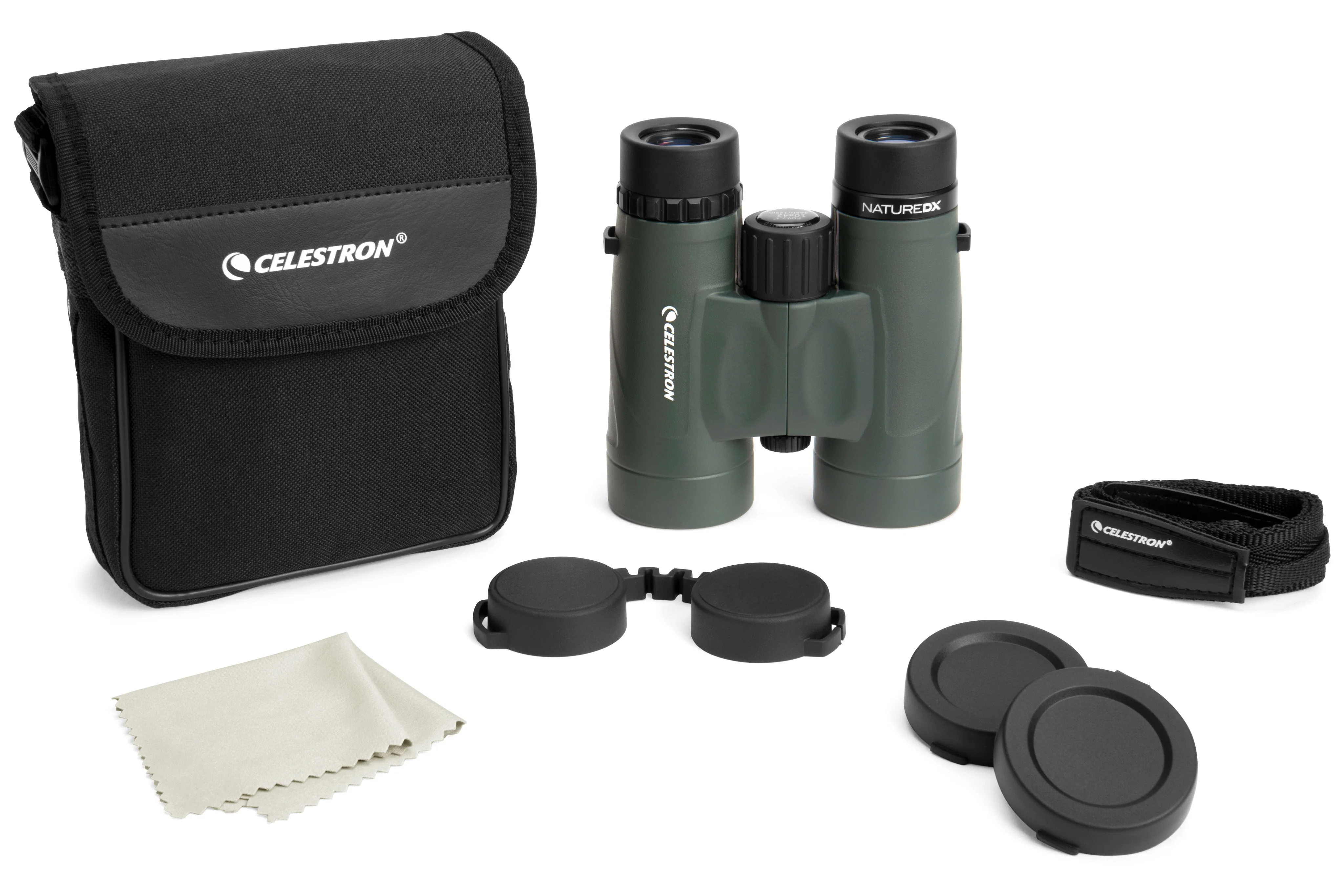
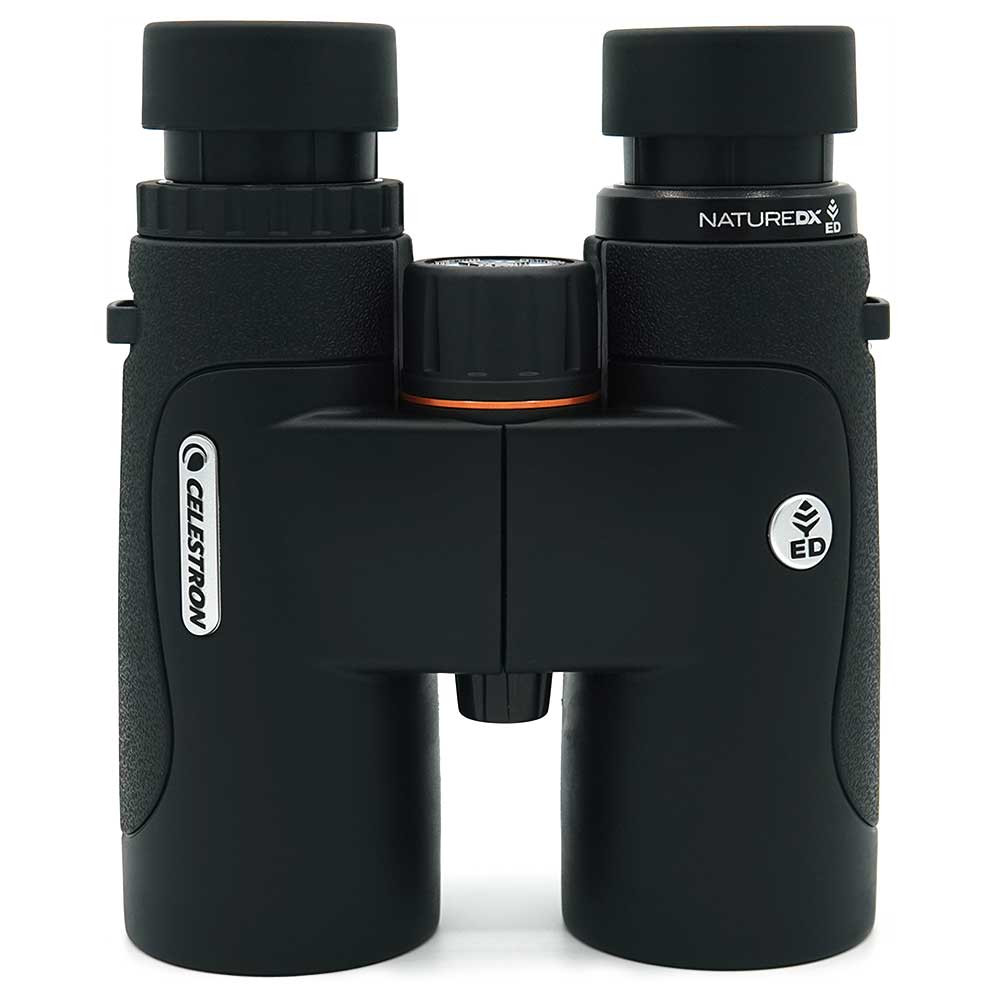
Celestron Nature DX ED 8x42
- Optic
- 8x×42
- FOV
- 393 ft
- Weight
- 24.9 oz
Celestron
Celestron TrailSeeker ED 8x42
- Optic
- 8x×42
- FOV
- 426 ft
- Weight
- 23.5 oz