Celestron Nature DX ED 8x42 vs Celestron Nature DX ED 10x42
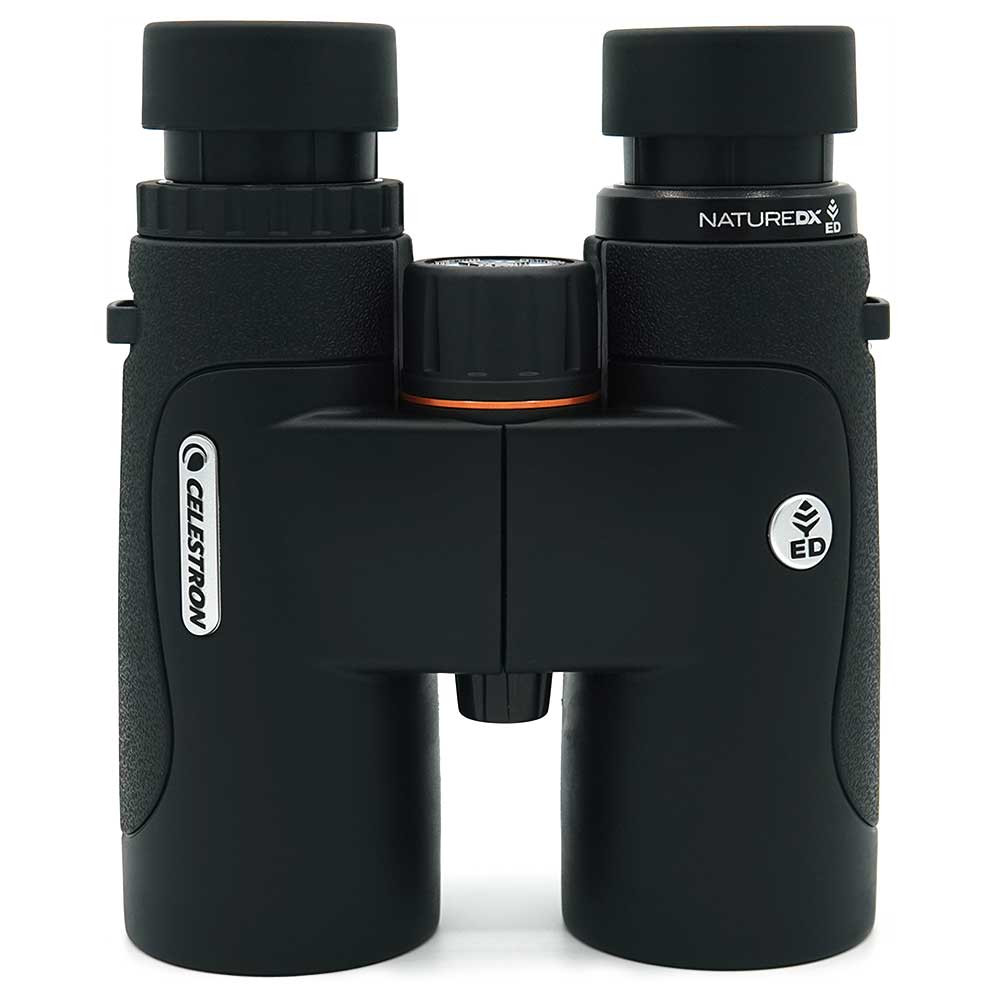
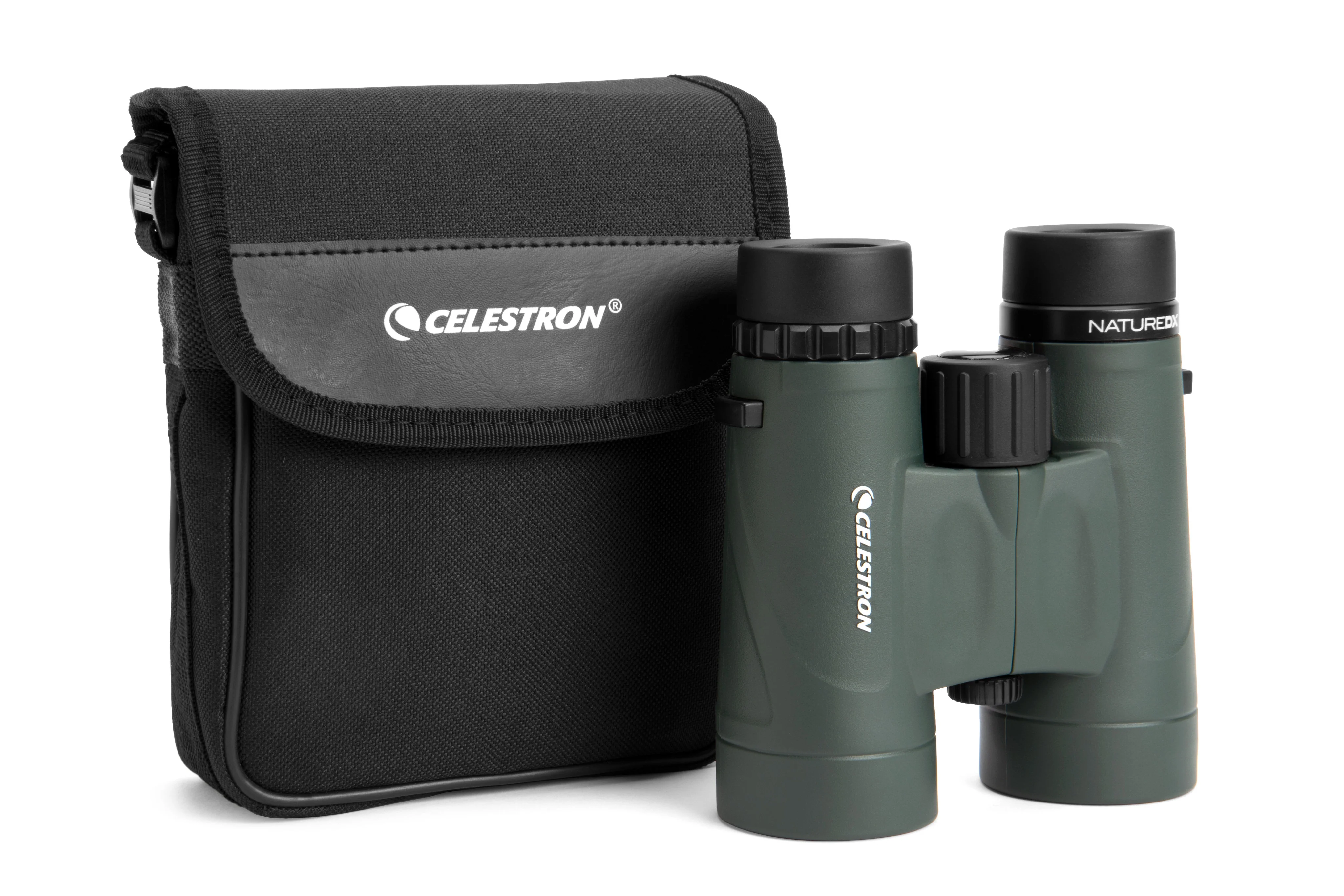
Quick take: The Celestron Nature DX ED 8x42 costs $10 less; the Celestron Nature DX ED 10x42 reaches farther (10x vs 8x); the Celestron Nature DX ED 8x42 has a wider field of view (393 vs 309 ft @ 1000 yds).
Field of view, to scale
Top-down view · drawn to true scale — no exaggeration
Which one to buy
Celestron put the same ED glass, phase-coated prisms, waterproof body and 24.9 oz weight into each of these, so the only real choice is magnification, and it favors the 8x42 at $10 less. The Celestron Nature DX ED 8x42 shows 393 ft against the 10x's 309 ft, has 17.8mm of eye relief against 14.3mm, and a 5.25mm exit pupil against 4.2mm.
Owners of the Celestron Nature DX ED 10x42 call that 14.3mm the dealbreaker spec, with glasses wearers consistently reporting clipped views, and they say the narrow field makes birds harder to find at 10x. Its sluggish focus wheel is also more annoying at 10x, where depth of field is shallower. What it gives back is reach, and its ED glass matters more at 10x because fringing grows with magnification; owners find it delivers real detail at distance over hillsides, shorelines and open water.
The weaknesses they share are the eyecups, which owners describe as narrow, hard, loose and prone to collapsing, a sluggish focus wheel, and detail lost on backlit subjects. 8x42 owners call theirs one of the most eyeglass-friendly budget binoculars around, and 10x42 owners send glasses wearers and woodland birders to it. For most buyers the 8x42 is the right Nature DX ED; the 10x only earns its place in open country for someone who doesn't wear glasses.
Celestron Nature DX ED 8x42
The right choice for birders, beginners and anyone in glasses: a wider view, more eye relief and a brighter dusk image for $10 less.
Celestron Nature DX ED 10x42
Worth it only for open-country wildlife, travel or casual astronomy, and only if you don't wear glasses.
| Spec | Celestron Nature DX ED 8x42 | Celestron Nature DX ED 10x42 |
|---|---|---|
| Approx. price | ~$230 | ~$240 |
| Use case | Birding | General Purpose |
| Magnification | 8x | 10x |
| Objective | 42mm | 42mm |
| Exit pupil | 5.25mm | 4.2mm |
| Field of view | 393 ft @ 1000 yds | 309 ft @ 1000 yds |
| Eye relief | 17.8mm | 14.3mm |
| Close focus | 6.5 ft | 6.5 ft |
| Prism | Roof | Roof |
| Glass | ED | ED |
| Coating | Fully Multi-Coated | Fully Multi-Coated |
| Weight | 24.9 oz | 24.9 oz |
| Dimensions | 5.6 x 5.0 in | 5.5 x 5.0 in |
| Warranty | Limited Lifetime | Limited Lifetime |
Feature comparison
Celestron Nature DX ED 8x42
- ✓ED Glass
- ✓Phase-Corrected
- ✗Dielectric Coating
- ✓Waterproof
- ✓Fogproof
- ✗Image Stabilized
- ✓Tripod Adaptable
- ✗Magnesium Body
- ✗Locking Diopter
Celestron Nature DX ED 10x42
- ✓ED Glass
- ✓Phase-Corrected
- ✗Dielectric Coating
- ✓Waterproof
- ✓Fogproof
- ✗Image Stabilized
- ✓Tripod Adaptable
- ✗Magnesium Body
- ✗Locking Diopter
What birders say
Celestron Nature DX ED 8x42
- ✓One of the cheapest routes to genuine ED glass — the standard forum answer to 'best binocular under $200' alongside the Vortex Crossfire HD
- ✓Cornell's All About Birds testers rated it a 'Solid Choice,' describing a very sharp image with good contrast and colorful, accurate rendering
- ✓Resolved subtle field marks in testing — warm yellow throat and fine contrasts on a Northern Parula — the kind of detail budget glass usually smears
- ✓BAK-4 prisms and optics that one test lab said rival models costing more than twice as much
- ✓Wide-ish 393-foot field of view and 17.8mm of eye relief — one of the most eyeglass-friendly budget binoculars around
- ✓Close focus measured around 7.6 feet in independent testing, fine for butterflies and feeder birds
- ✓Lighter than the average 8x42 despite the ED upgrade
- ✓Waterproof, nitrogen purged, and phase-coated — the full checklist at a price where corners usually get cut
- ✗Eyecups are the recurring complaint: testers found them narrow, hard against the eye, very loose in action, and prone to collapsing under pressure
- ✗Focus wheel described as sluggish — takes effort to get moving and to stop exactly where you want
- ✗Detail visibly suffers in backlit conditions; testers struggled with fine markings on backlit warblers
- ✗Low-light performance still trails mid-tier glass — one lab measured it noticeably dimmer than premium competitors at dusk
- ✗Unergonomic balance point and average construction feel noted by reviewers, with hinges less sturdy than higher-end options
- ✗Rubber armor feels lower-grade than pricier models
- ✗Included neck strap is basic non-padded webbing that testers called uncomfortable
- ✗Some testers found the body a bit narrow for larger faces, adding to daily-use discomfort
Celestron Nature DX ED 10x42
- ✓Cheapest mainstream path to ED glass at 10x — frequently street-priced at or below the 8x42, making it a standout deal on paper
- ✓Same optical package Cornell's testers rated a 'Solid Choice' in the line: sharp, contrasty, with accurate colorful rendering in good light
- ✓ED elements keep fringing under control at 10x, where chromatic aberration is normally more visible than at 8x
- ✓One test lab said the line's BAK-4 optics rival models costing more than twice as much
- ✓About 25 ounces, typical for a full-size 10x42
- ✓Fully waterproof, nitrogen purged, and phase-coated — the complete feature checklist under $200
- ✓6.5-foot close focus is excellent for a 10x binocular
- ✓Extra reach makes it a flexible budget choice for open-country wildlife, travel, and casual astronomy
- ✗14.3mm of eye relief is the dealbreaker spec — eyeglass wearers consistently report clipped, vignetted views, a steep drop from the 8x42's 17.8mm
- ✗309-foot field of view is narrow, and at 10x that makes finding and tracking birds noticeably harder for beginners
- ✗Same widely criticized eyecups as the rest of the line — narrow, hard, loose, and prone to collapsing
- ✗Sluggish focus wheel that takes effort to start and stop precisely — more annoying at 10x where focus depth is shallower
- ✗4.2mm exit pupil plus budget coatings means dusk performance falls off faster than the 8x42's
- ✗Backlit subjects lose fine detail, per expert testing of the line
- ✗Polycarbonate chassis, budget rubber armor, and hinges that reviewers rate below sturdier mid-tier rivals
- ✗Basic unpadded webbing strap and lightly padded case continue the line's weak accessory story
Celestron Nature DX ED 8x42 vs Celestron Nature DX ED 10x42: common questions
Should I buy the Celestron Nature DX ED 8x42 or the 10x42?▾
Owners of the 10x42 steer woodland birders and glasses wearers to the 8x42. It has a 393 ft field against 309 ft, 17.8mm of eye relief against 14.3mm, and costs $10 less. The 10x42 suits open-country viewing at distance.
Does the ED glass matter more on the Nature DX ED 10x42 than on the 8x42?▾
Owners of the 10x42 say yes, because chromatic aberration grows with magnification and the ED elements keep high-contrast edges clean at 10x. The 8x42 uses the same ED glass, so it benefits too, just less visibly.