Celestron SkyMaster 15x70 vs Celestron SkyMaster 25x70
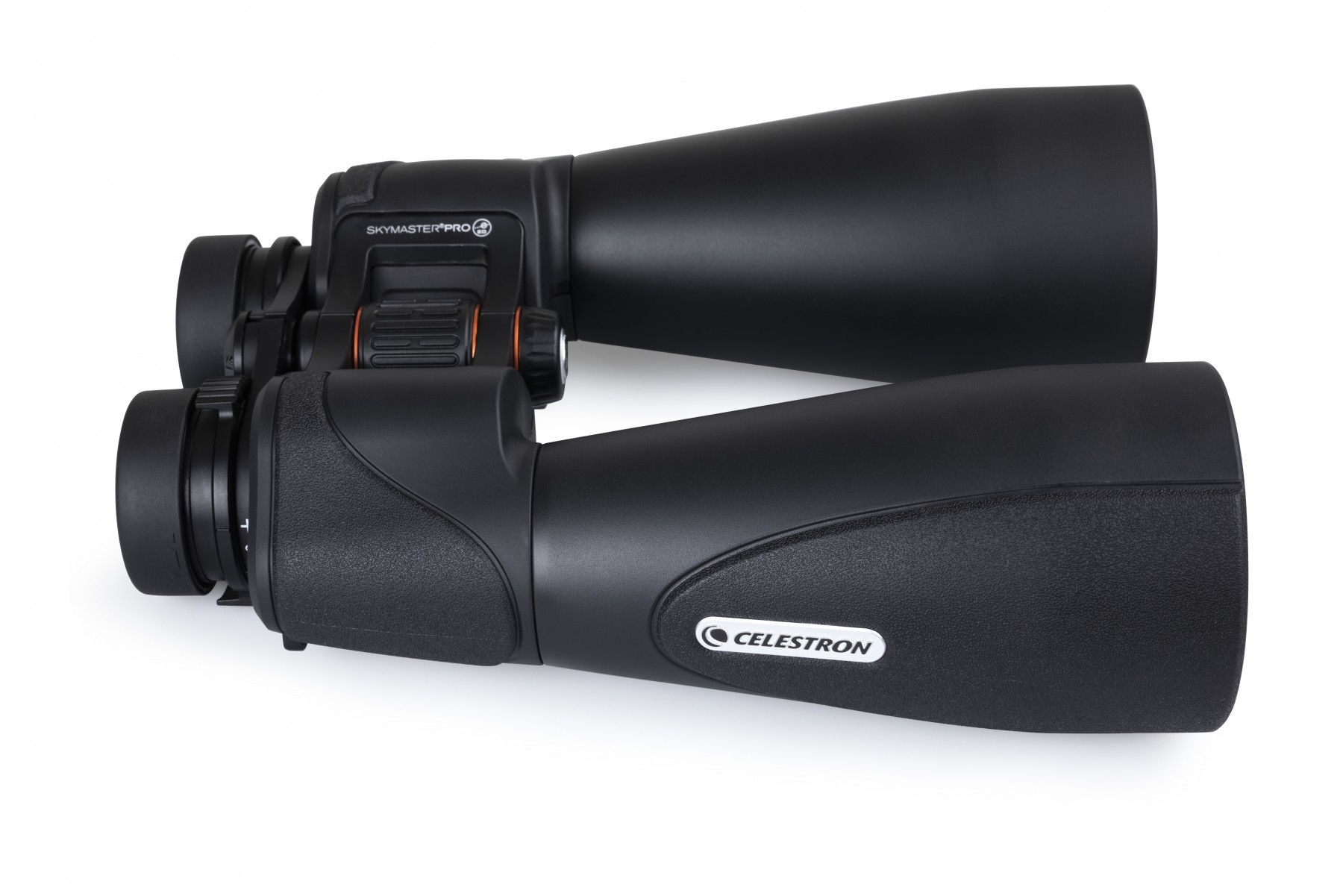
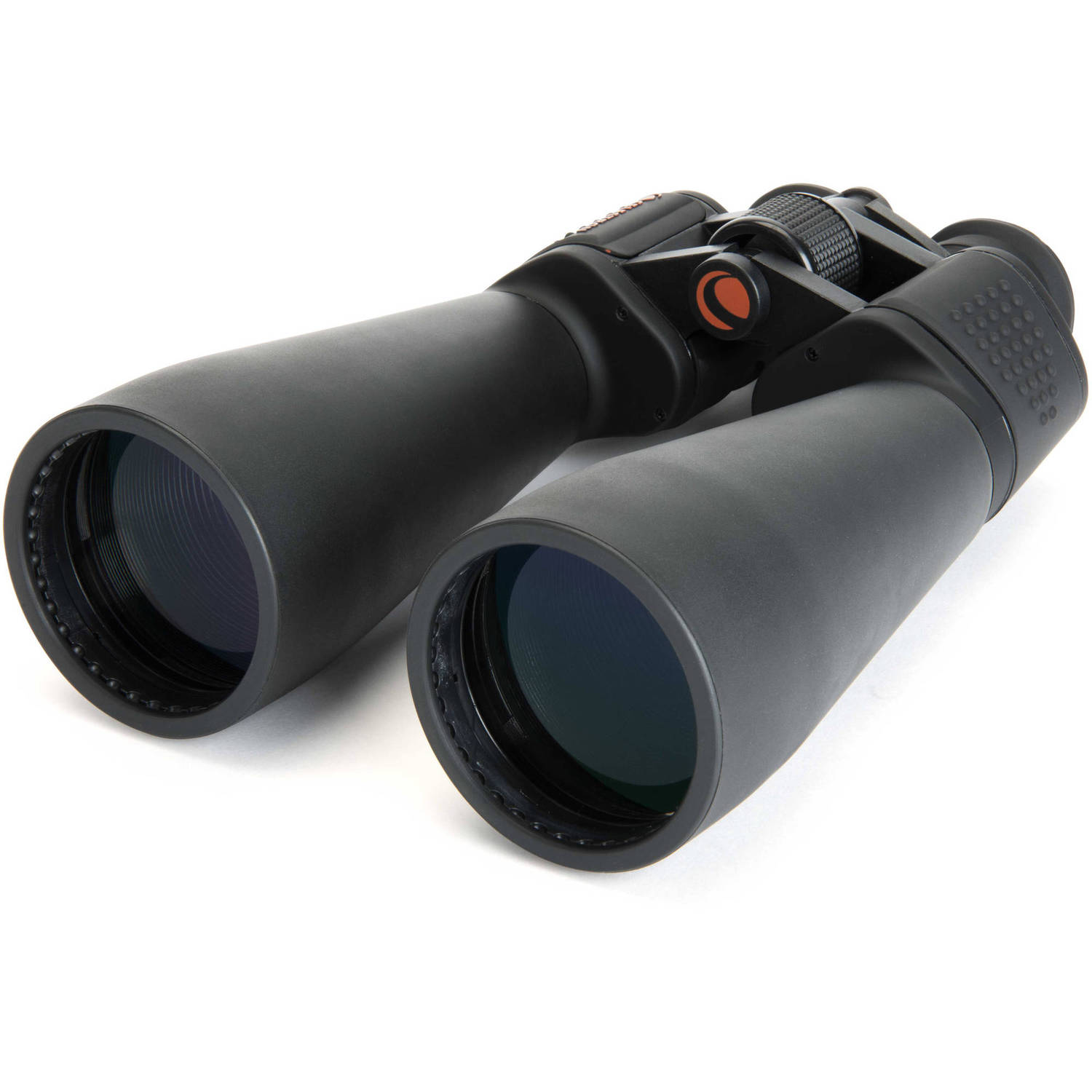
Quick take: The Celestron SkyMaster 15x70 costs $10 less; the Celestron SkyMaster 25x70 reaches farther (25x vs 15x); the Celestron SkyMaster 15x70 has a wider field of view (230 vs 141 ft @ 1000 yds).
Field of view, to scale
Top-down view · drawn to true scale — no exaggeration
Which one to buy
Ten dollars buys you 25x instead of 15x, and nearly everyone who has owned these tells you not to spend it. The bodies share 70mm objectives, BaK-4 porro prisms, multi-coating and an included tripod adapter, so the real question is what the extra power costs. On the SkyMaster 25x70 the exit pupil shrinks to 2.8mm from 4.7mm, the field narrows to 141 ft at 1000 yards from 230, and eye relief drops to 13mm from 18mm. At night that adds up to a dimmer view, fussier eye placement and a harder time finding anything, which is why the advice to beginners is so consistent: start with the SkyMaster 15x70.
The 25x70 earns its place in daylight and on the Moon. Owners use it as a two-eyed spotting scope for harbors, ridgelines and plane spotting, and on a solid mount crater walls and terminator shadows show detail a lower-power binocular can't match. It also resolves tight double stars the 15x70 can't quite split. Heat haze gets magnified along with everything else, so warm-day views often shimmer.
Both carry the same SkyMaster baggage. Collimation is a lottery on either, with Celestron warranting it for only 30 days, so test on a star the first night. Edges go soft, and the caps and case are throwaway. The 15x70 tolerates a braced handheld peek; the 25x70 needs a sturdy tripod every single time, and a slightly misaligned unit gives you eye strain far sooner at 25x.
Celestron SkyMaster 15x70
The safer first big binocular for the night sky: brighter, wider and more forgiving, and owners say it shows Jupiter's moons, the Pleiades and the Andromeda galaxy well from a dark site.
Celestron SkyMaster 25x70
Worth the extra $10 only with a sturdy tripod already in hand and a plan centered on the Moon, double stars or long-range daytime viewing.
| Spec | Celestron SkyMaster 15x70 | Celestron SkyMaster 25x70 |
|---|---|---|
| Approx. price | ~$130 | ~$140 |
| Use case | Astronomy | Astronomy |
| Magnification | 15x | 25x |
| Objective | 70mm | 70mm |
| Exit pupil | 4.7mm | 2.8mm |
| Field of view | 230 ft @ 1000 yds | 141 ft @ 1000 yds |
| Eye relief | 18mm | 13mm |
| Close focus | 43 ft | 75 ft |
| Prism | Porro | Porro |
| Glass | BaK-4 | BaK-4 |
| Coating | Multi-Coated | Multi-Coated |
| Weight | 48 oz | 52 oz |
| Dimensions | 8.7 x 11.0 in | 8.7 x 11.0 in |
| Warranty | Limited Lifetime | Limited Lifetime |
Feature comparison
Celestron SkyMaster 15x70
- ✗ED Glass
- ✗Phase-Corrected
- ✗Dielectric Coating
- ✗Waterproof
- ✗Fogproof
- ✗Image Stabilized
- ✗Tripod Adaptable
- ✗Magnesium Body
- ✗Locking Diopter
Celestron SkyMaster 25x70
- ✗ED Glass
- ✗Phase-Corrected
- ✗Dielectric Coating
- ✗Waterproof
- ✗Fogproof
- ✗Image Stabilized
- ✗Tripod Adaptable
- ✗Magnesium Body
- ✗Locking Diopter
What birders say
Celestron SkyMaster 15x70
- ✓Legendary bang-for-buck for astronomy - owners routinely say no other purchase under $150 shows you Jupiter's moons, the Pleiades, and the Andromeda galaxy this well
- ✓70mm objectives pull in serious light, making Milky Way sweeps from a dark site genuinely jaw-dropping for first-time big-binocular users
- ✓15x magnification hits a sweet spot for star clusters and the Moon - enough power to resolve detail without needing an equatorial mount
- ✓BaK-4 porro prisms and multi-coated optics deliver contrast that surprises owners coming from cheap roof-prism binoculars
- ✓Easy DIY collimation - the adjustment screws sit under the soft rubber armor, and long-time users say a slightly-off pair can be tuned to perfection in ten minutes
- ✓Included tripod adapter means you can mount it on any photo tripod out of the box
- ✓Frequently on sale for $70-90, at which point stargazers on forums call it a no-brainer even as a beater pair
- ✓Doubles surprisingly well for long-range terrestrial viewing - ships, wildlife across a valley, distant ridgelines
- ✗Quality control is a well-documented lottery - astronomy forums have twenty years of threads about pairs arriving out of collimation, and some owners went through multiple exchanges
- ✗Celestron only warranties collimation for 30 days, which tells you they know it drifts
- ✗Effective aperture is really closer to 63mm than the advertised 70mm due to internal baffling - a famous finding among binocular astronomers
- ✗At about 3.3 pounds, handheld viewing gets shaky fast - nearly everyone agrees a tripod or monopod is mandatory for astronomy
- ✗Outer 25-30% of the field goes soft, with stars stretching into seagull shapes near the edge
- ✗Noticeable chromatic aberration (purple fringing) on the Moon and bright planets
- ✗The included case, strap, and objective caps are flimsy afterthoughts - caps fall off in the bag constantly
- ✗The plastic center-post tripod adapter flexes and can vibrate in wind; many owners replace it with a metal aftermarket one
Celestron SkyMaster 25x70
- ✓25x magnification is genuinely telescope-adjacent - owners are stunned by lunar crater detail and the ability to read boat names across a harbor
- ✓Highest power in Celestron's fixed-magnification SkyMaster line for barely more money than the 15x70
- ✓70mm BaK-4 porro prism optics with multi-coatings produce contrasty, punchy center-field views when mounted solidly
- ✓Excellent long-range terrestrial tool - wildlife watchers and coastal observers use it as a poor-man's spotting scope
- ✓Tripod adapter included in the box, so mounting on a photo tripod costs nothing extra
- ✓Resolves tight double stars and compact clusters that a 15x70 can't quite split
- ✓Rubber-armored chassis shrugs off knocks, and the collimation screws are reachable under the armor for DIY tune-ups
- ✓Often found under $120 on sale, making it the cheapest path to 25x magnification with 70mm of aperture
- ✗The 2.8mm exit pupil makes night-sky views noticeably dimmer than the 15x70 - a frequent 'wish I'd known' from first-time buyers
- ✗Completely unusable handheld - at 25x even heartbeat tremor smears the image, so a sturdy tripod is non-negotiable
- ✗Narrow 2.7-degree field of view makes finding objects in the night sky genuinely frustrating for beginners
- ✗Tiny exit pupil demands precise eye placement - blackouts and kidney-beaning annoy owners until they learn the sweet spot
- ✗Same collimation lottery as the rest of the budget SkyMaster line, and at 25x even slight misalignment causes instant eye strain
- ✗25x amplifies atmospheric shimmer, so daytime long-range views often boil and wobble in heat haze
- ✗Effective aperture falls short of the advertised 70mm due to internal vignetting, just like its 15x70 sibling
- ✗Included accessories are throwaway quality - loose objective caps, thin strap, and a soft case that protects nothing
Celestron SkyMaster 15x70 vs Celestron SkyMaster 25x70: common questions
Should a beginner get the SkyMaster 15x70 or the SkyMaster 25x70 for stargazing?▾
The 15x70. Owners of each steer beginners to it almost without exception, because its 4.7mm exit pupil and 230 ft field give brighter, wider views that make objects easier to find. The 25x70's 2.8mm exit pupil and narrow field make the night sky harder work.
Can the SkyMaster 15x70 or 25x70 be used handheld?▾
Only briefly, and only the 15x70. Owners manage quick looks at the Moon with it by bracing against a wall or lying back in a chair. At 25x even a heartbeat shakes the view, so a solid tripod is required, and owners say light travel tripods wobble too much.
Is the SkyMaster 25x70 better than the 15x70 for daytime viewing?▾
For distant, static subjects like boats across a harbor or wildlife across a valley, yes, and owners treat it as a budget spotting scope. The catch is that 25x magnifies heat shimmer on warm days, and it won't focus closer than 75 ft against the 15x70's 43 ft.