Celestron Nature DX ED 10x42 vs Celestron SkyMaster 25x70
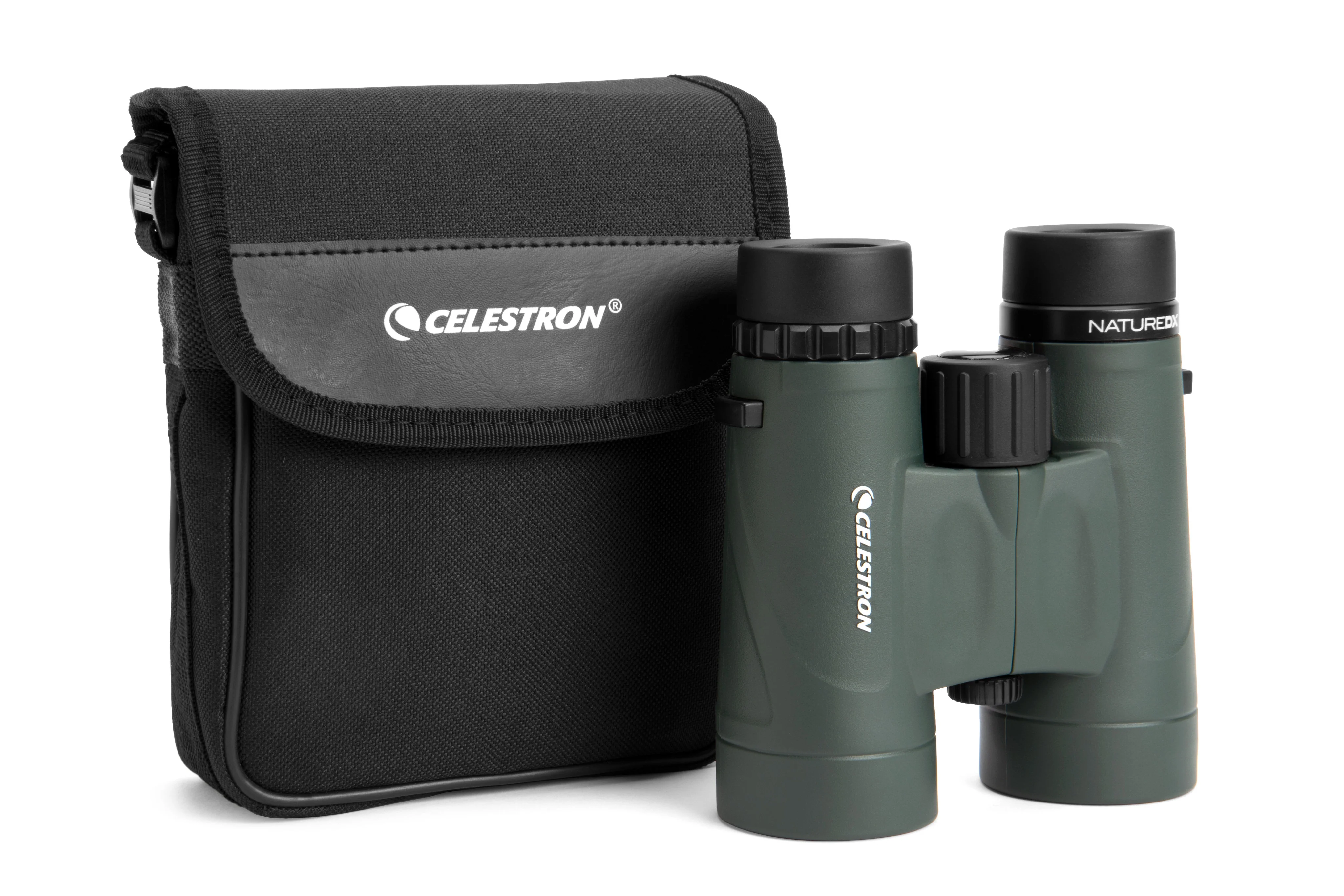
vs
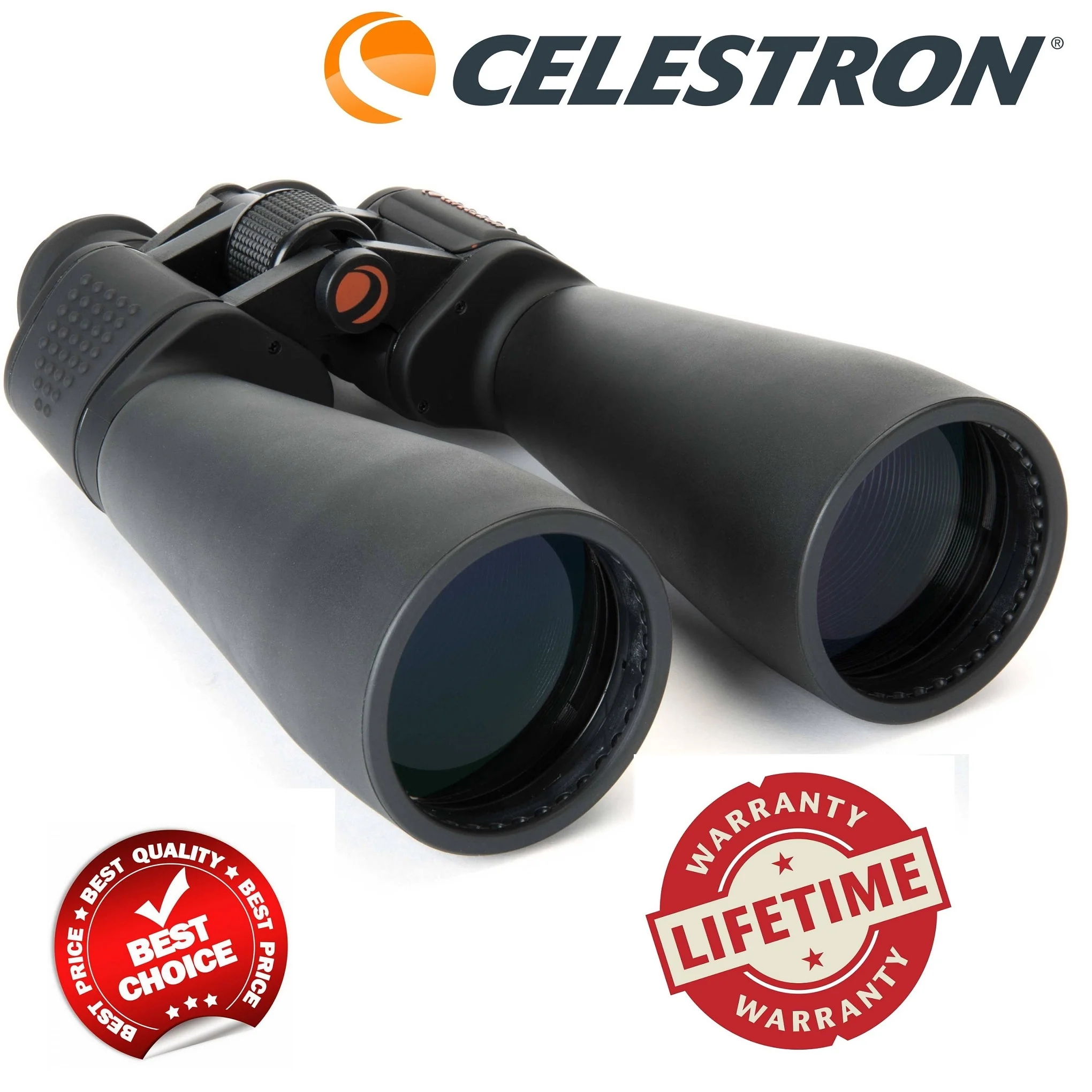
Quick take: The Celestron SkyMaster 25x70 costs $30 less; the Celestron SkyMaster 25x70 reaches farther (25x vs 10x); the Celestron Nature DX ED 10x42 has a wider field of view (304 vs 141 ft @ 1000 yds).
Field of view, to scale
you2505007501000 yds
Distance200 yds
Celestron Nature DX ED 10x425.8°
61 ft wide at 200 yds ≈ 1.5 school buses
Celestron SkyMaster 25x702.7°
28 ft wide at 200 yds
Top-down view · drawn to true scale — no exaggeration
| Spec | Celestron Nature DX ED 10x42 | Celestron SkyMaster 25x70 |
|---|---|---|
| Approx. price | ~$170 | ~$140 |
| Rating | — | — |
| Use case | General Purpose | Astronomy |
| Magnification | 10x | 25x |
| Objective | 42mm | 70mm |
| Exit pupil | 4.2mm | 2.8mm |
| Field of view | 304 ft @ 1000 yds | 141 ft @ 1000 yds |
| Eye relief | 14mm | 13mm |
| Close focus | 6.5 ft | 75 ft |
| Prism | Roof | Porro |
| Glass | ED | BaK-4 |
| Coating | Fully Multi-Coated | Multi-Coated |
| Weight | 22.7 oz | 52 oz |
| Dimensions | 5.5 x 5.0 in | 8.7 x 11.0 in |
| Warranty | Limited Lifetime | Limited Lifetime |
Feature comparison
Celestron Nature DX ED 10x42
- ✓ED Glass
- ✓Phase-Corrected
- ✗Dielectric Coating
- ✓Waterproof
- ✓Fogproof
- ✗Image Stabilized
- ✓Tripod Adaptable
- ✗Magnesium Body
- ✗Locking Diopter
Celestron SkyMaster 25x70
- ✗ED Glass
- ✗Phase-Corrected
- ✗Dielectric Coating
- ✗Waterproof
- ✗Fogproof
- ✗Image Stabilized
- ✗Tripod Adaptable
- ✗Magnesium Body
- ✗Locking Diopter
What birders say
Celestron Nature DX ED 10x42
- ✓Cheapest mainstream path to ED glass at 10x — frequently street-priced at or below the 8x42, making it a standout deal on paper
- ✓Same optical package Cornell's testers rated a 'Solid Choice' in the line: sharp, contrasty, with accurate colorful rendering in good light
- ✓ED elements keep fringing under control at 10x, where chromatic aberration is normally more visible than at 8x
- ✓One test lab said the line's BAK-4 optics rival models costing more than twice as much
- ✓Lighter than most 10x42s at under 23 ounces, easy for all-day carry
- ✓Fully waterproof, nitrogen purged, and phase-coated — the complete feature checklist under $200
- ✓6.5-foot close focus is excellent for a 10x binocular
- ✓Extra reach makes it a flexible budget choice for open-country wildlife, travel, and casual astronomy
- ✗14mm of eye relief is the dealbreaker spec — eyeglass wearers consistently report clipped, vignetted views, a steep drop from the 8x42's 17.8mm
- ✗304-foot field of view is narrow, and at 10x that makes finding and tracking birds noticeably harder for beginners
- ✗Same widely criticized eyecups as the rest of the line — narrow, hard, loose, and prone to collapsing
- ✗Sluggish focus wheel that takes effort to start and stop precisely — more annoying at 10x where focus depth is shallower
- ✗4.2mm exit pupil plus budget coatings means dusk performance falls off faster than the 8x42's
- ✗Backlit subjects lose fine detail, per expert testing of the line
- ✗Polycarbonate chassis, budget rubber armor, and hinges that reviewers rate below sturdier mid-tier rivals
- ✗Basic unpadded webbing strap and lightly padded case continue the line's weak accessory story
Celestron SkyMaster 25x70
- ✓25x magnification is genuinely telescope-adjacent - owners are stunned by lunar crater detail and the ability to read boat names across a harbor
- ✓Highest power in Celestron's fixed-magnification SkyMaster line for barely more money than the 15x70
- ✓70mm BaK-4 porro prism optics with multi-coatings produce contrasty, punchy center-field views when mounted solidly
- ✓Excellent long-range terrestrial tool - wildlife watchers and coastal observers use it as a poor-man's spotting scope
- ✓Tripod adapter included in the box, so mounting on a photo tripod costs nothing extra
- ✓Resolves tight double stars and compact clusters that a 15x70 can't quite split
- ✓Rubber-armored chassis shrugs off knocks, and the collimation screws are reachable under the armor for DIY tune-ups
- ✓Often found under $120 on sale, making it the cheapest path to 25x magnification with 70mm of aperture
- ✗The 2.8mm exit pupil makes night-sky views noticeably dimmer than the 15x70 - a frequent 'wish I'd known' from first-time buyers
- ✗Completely unusable handheld - at 25x even heartbeat tremor smears the image, so a sturdy tripod is non-negotiable
- ✗Narrow 2.7-degree field of view makes finding objects in the night sky genuinely frustrating for beginners
- ✗Tiny exit pupil demands precise eye placement - blackouts and kidney-beaning annoy owners until they learn the sweet spot
- ✗Same collimation lottery as the rest of the budget SkyMaster line, and at 25x even slight misalignment causes instant eye strain
- ✗25x amplifies atmospheric shimmer, so daytime long-range views often boil and wobble in heat haze
- ✗Effective aperture falls short of the advertised 70mm due to internal vignetting, just like its 15x70 sibling
- ✗Included accessories are throwaway quality - loose objective caps, thin strap, and a soft case that protects nothing