Pentax SP 10x50 WP vs Celestron SkyMaster 25x70
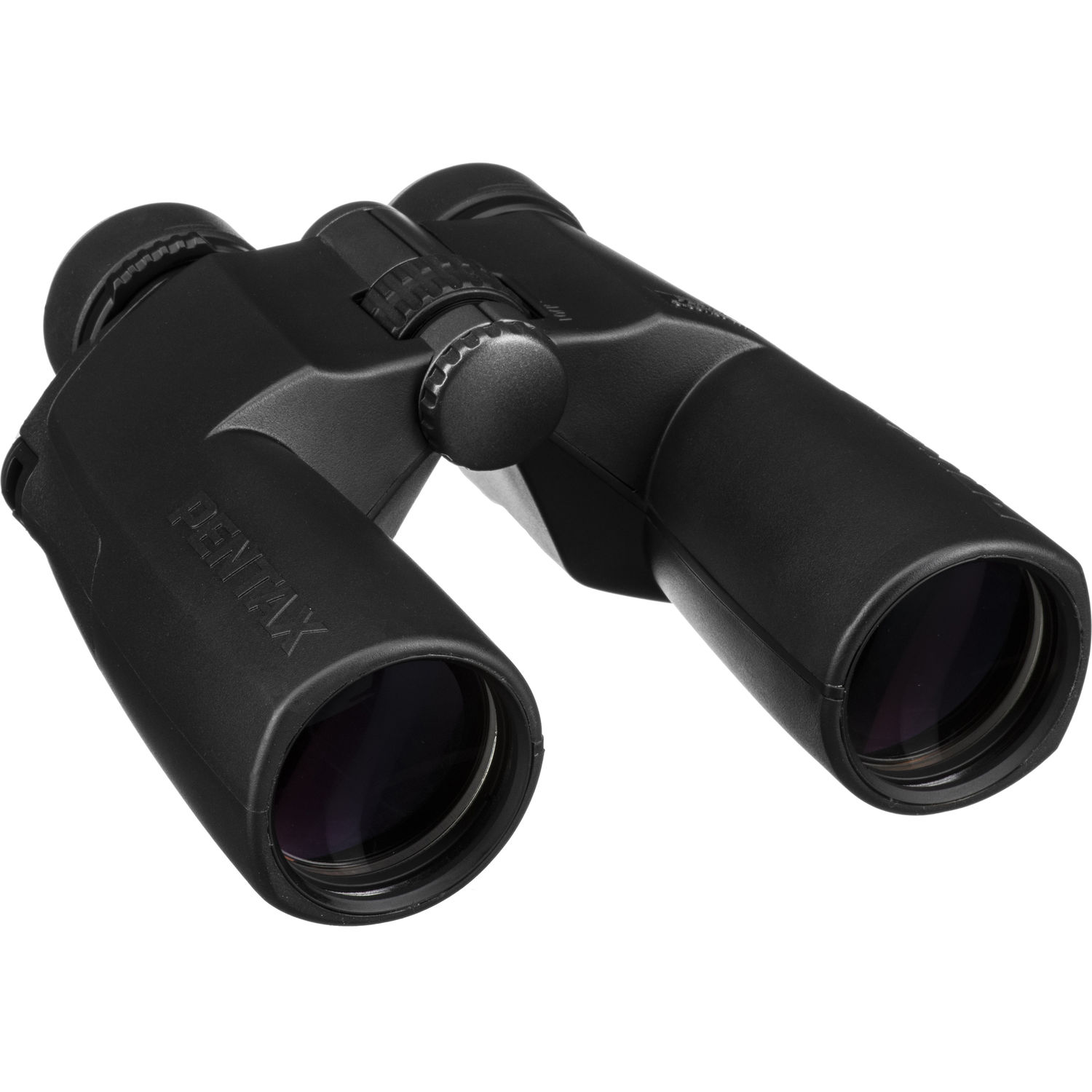
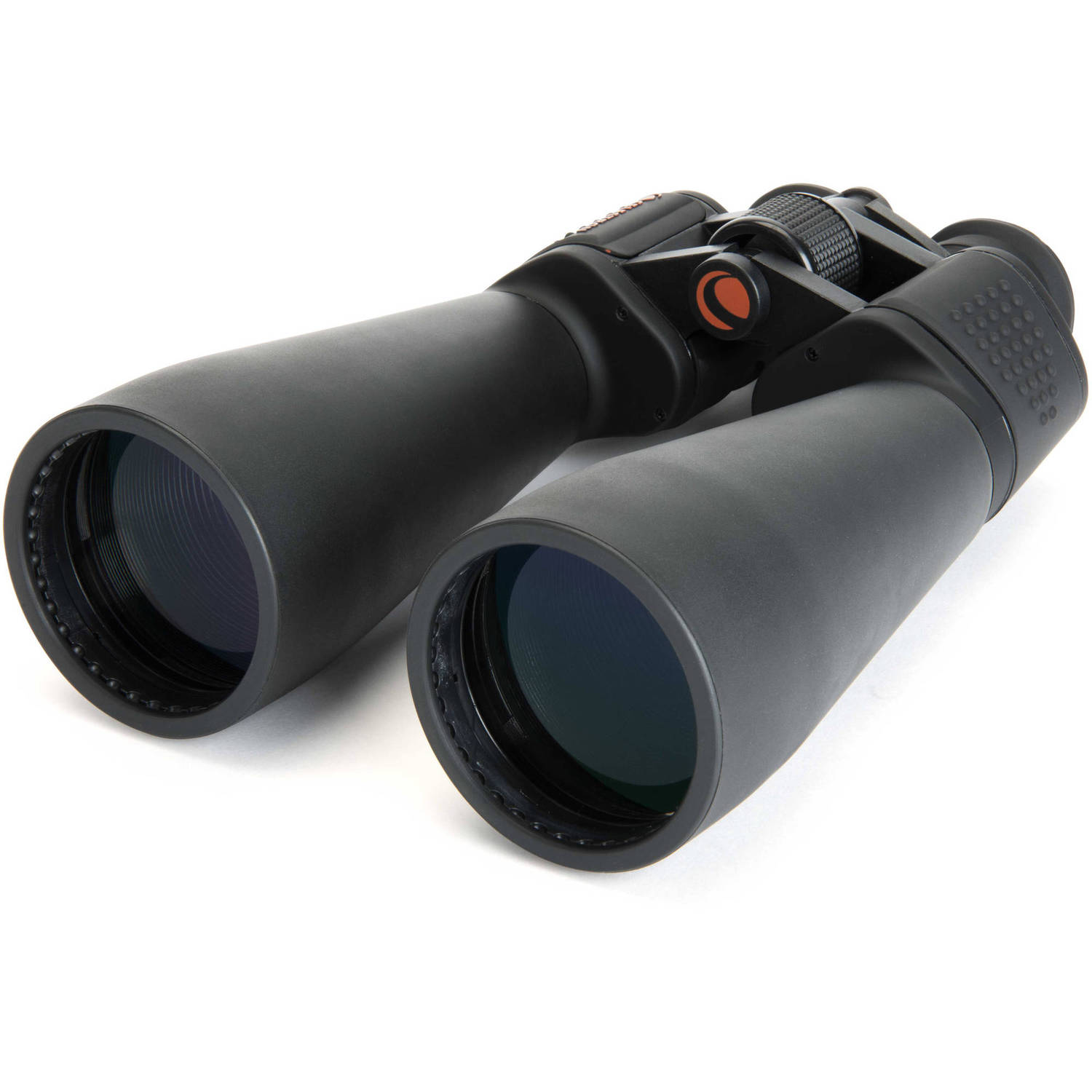
Quick take: The Celestron SkyMaster 25x70 costs $59 less; the Celestron SkyMaster 25x70 reaches farther (25x vs 10x); the Pentax SP 10x50 WP has a wider field of view (262 vs 141 ft @ 1000 yds).
Field of view, to scale
Top-down view · drawn to true scale — no exaggeration
Which one to buy
A 25x binocular for $140 sounds like a telescope bargain, and owners of the SkyMaster 25x70 say it can be one: on a sturdy tripod, for the Moon, double stars and boats across a harbor. Everything else about it asks more of you than the Pentax SP 10x50 WP does. At 52 oz and 25x it is unusable handheld, its 141 ft field makes finding objects frustrating, and its 2.8mm exit pupil gives dimmer night-sky views than buyers expect. Eye relief is 13mm, which shuts out most glasses wearers. Owners also describe a collimation lottery, where a misaligned unit causes eye strain within minutes, and they advise checking alignment the day it arrives.
The Pentax costs $59 more and is the instrument most people should own first. Owners report pinpoint stars, very little ghosting on the Moon, and light transmission measured around 85%. Its 5.0mm exit pupil suits dark skies, its 20mm of eye relief suits glasses, and its internal-focus design lets it be fully sealed and nitrogen purged, which the SkyMaster is not. Its weak spots are a narrow 262 ft field for a 10x50, a stiff focus wheel, 37.4 oz that still wants a tripod on long sessions, and loose lens caps.
These two are not substitutes. The SP 10x50 WP is a general astronomy and fixed-viewpoint binocular you can pick up and use. The SkyMaster 25x70 is a specialist for high-power lunar and long-range daytime viewing, and its own owners steer most beginners elsewhere. With a solid tripod already in hand it delivers Moon detail for little money, but as a first stargazing binocular the Pentax is the safer choice.
Pentax SP 10x50 WP
The better first astronomy binocular: bright, sealed, glasses-friendly, and usable without a tripod for short looks.
Celestron SkyMaster 25x70
Only with a sturdy tripod and a taste for high power on the Moon, double stars or distant shorelines; check collimation the day it arrives.
| Spec | Pentax SP 10x50 WP | Celestron SkyMaster 25x70 |
|---|---|---|
| Approx. price | ~$199 | ~$140 |
| Use case | Astronomy | Astronomy |
| Magnification | 10x | 25x |
| Objective | 50mm | 70mm |
| Exit pupil | 5.0mm | 2.8mm |
| Field of view | 262 ft @ 1000 yds | 141 ft @ 1000 yds |
| Eye relief | 20mm | 13mm |
| Close focus | 18 ft | 75 ft |
| Prism | Porro | Porro |
| Glass | BaK-4 | BaK-4 |
| Coating | Fully Multi-Coated | Multi-Coated |
| Weight | 37.4 oz | 52 oz |
| Dimensions | 7.2 x 7.0 in | 8.7 x 11.0 in |
| Warranty | 25-Year Limited | Limited Lifetime |
Feature comparison
Pentax SP 10x50 WP
- ✗ED Glass
- ✗Phase-Corrected
- ✗Dielectric Coating
- ✓Waterproof
- ✓Fogproof
- ✗Image Stabilized
- ✓Tripod Adaptable
- ✗Magnesium Body
- ✗Locking Diopter
Celestron SkyMaster 25x70
- ✗ED Glass
- ✗Phase-Corrected
- ✗Dielectric Coating
- ✗Waterproof
- ✗Fogproof
- ✗Image Stabilized
- ✗Tripod Adaptable
- ✗Magnesium Body
- ✗Locking Diopter
What birders say
Pentax SP 10x50 WP
- ✓Pinpoint star sharpness - an expert astronomy review found stars like Vega rendered as clean points with no secondary spectrum, and rated it very highly recommended
- ✓Genuinely waterproof porro: the unusual internal-focus design lets Pentax fully O-ring seal and nitrogen-purge it, which conventional porros can't easily do
- ✓Excellent stray-light control - very little ghosting on bright sources, making it a strong moon and bright-planet binocular
- ✓Class-leading 20mm eye relief lets eyeglass wearers see the whole field comfortably
- ✓Measured light transmission around 85% with strong contrast and color - solid performance for the price
- ✓Side-by-side forum comparisons found it sharper across the field than the Nikon Action Extreme
- ✓Lockable focuser plus rugged aluminum chassis and deeply recessed objectives - built for real outdoor abuse
- ✓Repeatedly called exceptional value for money by astronomy reviewers
- ✗Narrow 262 ft (5 degree) field of view - the roughly 50-degree apparent field is the most common complaint and feels tunnel-like next to wide-angle rivals
- ✗Heavy at 37.4 oz - reviewers say extended sessions really want a tripod
- ✗Stiff, deliberate focus wheel is wrong for birding or anything needing rapid refocusing
- ✗18 ft close focus rules out close-range nature watching entirely
- ✗Loose-fitting lens caps that fall off constantly - a repeated gripe
- ✗Flimsy soft case offers minimal protection for a $229 instrument
- ✗Center sharpness is a slight notch behind premium porros like the Pentax ZD and Opticron DBA in direct comparisons
- ✗Too specialized for a first do-everything binocular - it's best at stationary viewing
Celestron SkyMaster 25x70
- ✓25x magnification is genuinely telescope-adjacent - owners are stunned by lunar crater detail and the ability to read boat names across a harbor
- ✓Highest power in Celestron's fixed-magnification SkyMaster line for barely more money than the 15x70
- ✓70mm BaK-4 porro prism optics with multi-coatings produce contrasty, punchy center-field views when mounted solidly
- ✓Excellent long-range terrestrial tool - wildlife watchers and coastal observers use it as a poor-man's spotting scope
- ✓Tripod adapter included in the box, so mounting on a photo tripod costs nothing extra
- ✓Resolves tight double stars and compact clusters that a 15x70 can't quite split
- ✓Rubber-armored chassis shrugs off knocks, and the collimation screws are reachable under the armor for DIY tune-ups
- ✓Often found under $120 on sale, making it the cheapest path to 25x magnification with 70mm of aperture
- ✗The 2.8mm exit pupil makes night-sky views noticeably dimmer than the 15x70 - a frequent 'wish I'd known' from first-time buyers
- ✗Completely unusable handheld - at 25x even heartbeat tremor smears the image, so a sturdy tripod is non-negotiable
- ✗Narrow 2.7-degree field of view makes finding objects in the night sky genuinely frustrating for beginners
- ✗Tiny exit pupil demands precise eye placement - blackouts and kidney-beaning annoy owners until they learn the sweet spot
- ✗Same collimation lottery as the rest of the budget SkyMaster line, and at 25x even slight misalignment causes instant eye strain
- ✗25x amplifies atmospheric shimmer, so daytime long-range views often boil and wobble in heat haze
- ✗Effective aperture falls short of the advertised 70mm due to internal vignetting, just like its 15x70 sibling
- ✗Included accessories are throwaway quality - loose objective caps, thin strap, and a soft case that protects nothing
Pentax SP 10x50 WP vs Celestron SkyMaster 25x70: common questions
Can you hand-hold the Celestron SkyMaster 25x70 like the Pentax SP 10x50 WP?▾
No. Owners say that at 25x even your heartbeat shakes the image, so a sturdy tripod is non-negotiable. The Pentax SP 10x50 WP is fine handheld for brief views, though owners still recommend mounting it for long astronomy sessions.
Which shows brighter star fields, the Pentax SP 10x50 WP or the SkyMaster 25x70?▾
The Pentax. Its 5.0mm exit pupil is much larger than the SkyMaster's 2.8mm, and SkyMaster owners say night-sky views are noticeably dimmer than they expected. The 25x70 trades that brightness for more detail on bright targets like the Moon.
Does the SkyMaster 25x70 work with glasses as well as the Pentax SP 10x50 WP?▾
No. The SkyMaster's 13mm of eye relief is short, and owners say its small exit pupil demands precise eye placement. The Pentax offers 20mm, which owners describe as letting glasses wearers see the whole field comfortably.