Nikon Prostaff P3 8x42 vs Nikon Prostaff P3 10x30
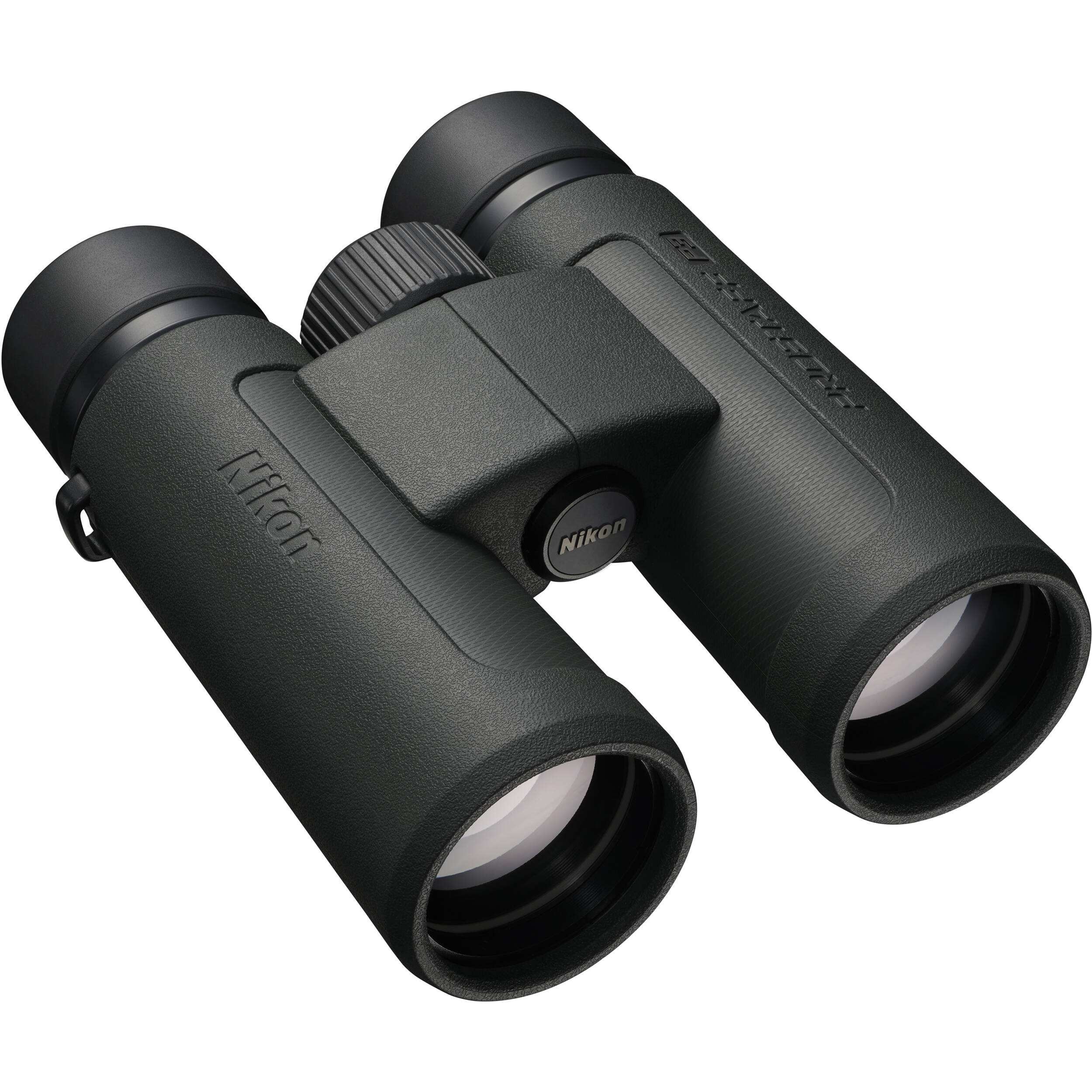
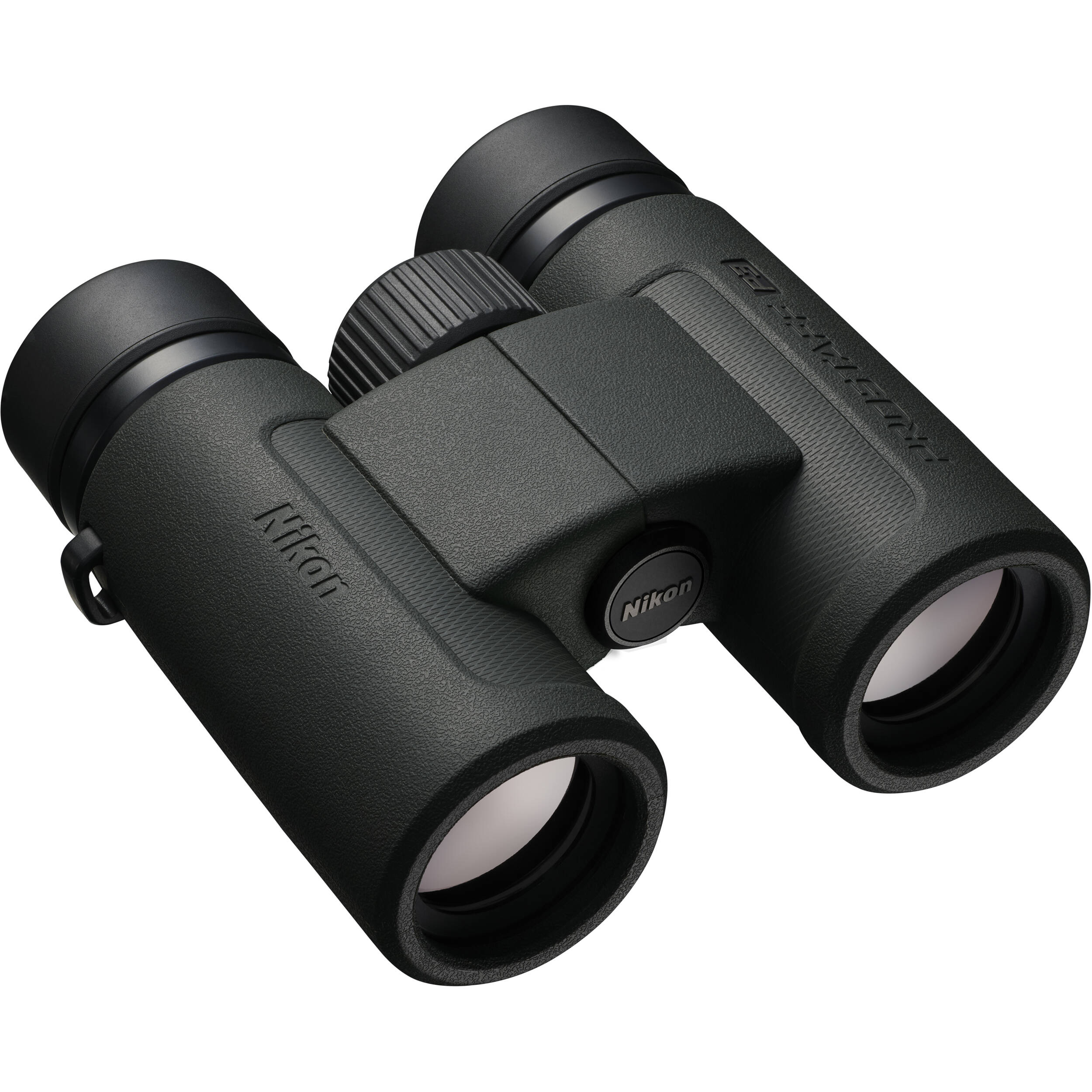
Quick take: The Nikon Prostaff P3 10x30 reaches farther (10x vs 8x); the Nikon Prostaff P3 8x42 has a wider field of view (377 vs 346 ft @ 1000 yds); the Nikon Prostaff P3 8x42 gathers more light with a larger 42mm objective.
Field of view, to scale
Top-down view · drawn to true scale — no exaggeration
Which one to buy
Will it come with you? That is the real question between two Nikons that both cost $160. The Prostaff P3 10x30 weighs 16.4 oz and is built to vanish into a daypack; the Prostaff P3 8x42 weighs 20.3 oz and is a full-size binocular, light for its class but still something you wear.
On the view, the 8x42 wins almost everywhere. Its 5.25mm exit pupil against the 10x30's 3.0mm is the gap that matters: 10x30 owners say the image dims noticeably in forest shade, heavy overcast and dusk, exactly when a 42mm keeps working. The 8x42 also shows a wider 377 ft field against 346 ft, is steadier in the hand, takes a tripod adapter, and its 20.2mm of eye relief beats 15.4mm for glasses. Its owners praise the sharp center and mostly complain about fringing on backlit birds and cheap accessories.
The 10x30 earns its place on size and reach. Owners use one pair for travel, concerts, sports and hikes, and say it is light enough that bringing it is never a debate. They also warn that 10x in a body this light shows hand shake, that there's no tripod socket, and that the small 30mm objectives black out with imperfect eye placement. Its 8.2 ft close focus does edge the 8x42's 9.8 ft.
The 10x30's own owners point beginners to the 8x42 unless packability is the specific need, and the numbers agree. The compact is the second binocular, the one that lives in the glovebox.
Nikon Prostaff P3 8x42
The better first binocular for most people: brighter at dusk, steadier, wider and kinder to glasses.
Nikon Prostaff P3 10x30
Best as the always-in-the-bag pair for travel, stadiums and daylight hikes, where 16.4 oz matters more than low-light brightness.
| Spec | Nikon Prostaff P3 8x42 | Nikon Prostaff P3 10x30 |
|---|---|---|
| Approx. price | ~$160 | ~$160 |
| Use case | General Purpose | General Purpose |
| Magnification | 8x | 10x |
| Objective | 42mm | 30mm |
| Exit pupil | 5.25mm | 3.0mm |
| Field of view | 377 ft @ 1000 yds | 346 ft @ 1000 yds |
| Eye relief | 20.2mm | 15.4mm |
| Close focus | 9.8 ft | 8.2 ft |
| Prism | Roof | Roof |
| Glass | Standard | Standard |
| Coating | Fully Multi-Coated | Fully Multi-Coated |
| Weight | 20.3 oz | 16.4 oz |
| Dimensions | 5.7 x 5.1 in | 4.8 x 4.5 in |
| Warranty | Limited Lifetime | Limited Lifetime |
Feature comparison
Nikon Prostaff P3 8x42
- ✗ED Glass
- ✗Phase-Corrected
- ✗Dielectric Coating
- ✓Waterproof
- ✓Fogproof
- ✗Image Stabilized
- ✓Tripod Adaptable
- ✗Magnesium Body
- ✗Locking Diopter
Nikon Prostaff P3 10x30
- ✗ED Glass
- ✗Phase-Corrected
- ✗Dielectric Coating
- ✓Waterproof
- ✓Fogproof
- ✗Image Stabilized
- ✗Tripod Adaptable
- ✗Magnesium Body
- ✗Locking Diopter
What birders say
Nikon Prostaff P3 8x42
- ✓Class-leading on-axis sharpness - forum reviewers call it probably the sharpest roof prism you can buy near $100
- ✓Remarkably lightweight for a full-size 42mm roof - one of the lightest phase-coated 8x42s made, great for all-day carry
- ✓Generous 20mm+ eye relief with click-stop eyecups makes it one of the most eyeglass-friendly budget binoculars available
- ✓Fully waterproof and nitrogen-purged fogproof - a huge step over porro-prism rivals like the Aculon A211 at similar money
- ✓Wide 7.2-degree field of view, unusually generous for a budget roof and a clear upgrade over the old Prostaff 3s
- ✓Phase-corrected prisms at a price point where many competitors skip them - contrast and resolution punch above the price
- ✓Comfortable, grippy rubber armor and a simple, snag-free body that owners describe as 'disappearing in the hand'
- ✓Widely regarded on forums as a significant optical improvement over its Prostaff 3s predecessor for barely more money
- ✗Silver-coated (not dielectric) prisms mean the image is a touch dimmer than the Prostaff P7 or Monarch M5 - noticeable at dusk
- ✗No ED glass, so chromatic aberration shows as color fringing on backlit birds and high-contrast edges
- ✗Accessories are bare-bones: unpadded webbing strap, a foam pouch, and lens covers that don't attach and famously get lost
- ✗Edge sharpness falls off in the outer portion of the field - fine for spotting, less fine for panning landscapes
- ✗Some eyeglass wearers report slight vignetting at certain eyecup positions - worth testing before the return window closes
- ✗Focus wheel is functional but not luxurious; a few owners describe slight stiffness in cold weather
- ✗Close focus is unremarkable, so butterfly and dragonfly watchers often look elsewhere
- ✗Plastic-heavy chassis keeps weight down but doesn't feel as substantial as the Monarch M5's build
Nikon Prostaff P3 10x30
- ✓Outstanding price-to-quality ratio - it topped a major 'best binoculars' roundup as the overall pick, with testers calling the value unmatched at around $90-100
- ✓Genuinely light and packable - at 16.4 ounces it was among the lightest models in comparative testing, disappearing into a daypack or hanging all day without neck strain
- ✓Real 10x reach in a compact body - unusual at this size and price, and the main reason people pick it over 8x25-class pocket binoculars
- ✓Nikon's multilayer coatings deliver clarity that reviewers describe as spectacular for the class - clearly better than typical gas-station compacts
- ✓Comfortable eye relief for a budget compact - testers specifically noted eyeglass wearers can use it comfortably with the eyecups down, an upgrade-tier feature at this price
- ✓Fully waterproof, fogproof, and drop-resistant - most sub-$100 compacts skip real sealing entirely
- ✓Versatile across use cases - owners use the same pair for birding, concerts, sports, and travel, and reviewers highlight it as a do-most-things binocular
- ✓Grippy rubber armor makes it secure in hand despite the small frame
- ✗The 3mm exit pupil is the fundamental trade-off - the image dims noticeably in forest shade, heavy overcast, and dusk, when a 42mm binocular is still working fine
- ✗Minimum focus distance is a recurring criticism in reviews - it limits usefulness for butterflies, insects, and close-range nature observation
- ✗10x magnification in a 15-ounce body is hard to hold steady - hand shake is more visible than beginners expect, and there's no tripod socket to fix it
- ✗No ED glass or phase-corrected prisms, so contrast and color fringing lag behind step-up compacts like the Monarch M7 8x30
- ✗Reviewers note advanced birders will quickly want more brightness and a bigger window than this configuration can offer
- ✗Small 30mm objectives punish imperfect eye placement - the view blacks out more easily than with a full-size binocular
- ✗Stiff focus action out of the box is a family trait of the P3 line, and it matters more when tracking birds at 10x
- ✗No tripod adaptability, unlike its full-size P3 siblings
Nikon Prostaff P3 8x42 vs Nikon Prostaff P3 10x30: common questions
Is the Prostaff P3 10x30 or the 8x42 better for a beginner?▾
The 8x42 for most beginners. Even 10x30 owners advise that new buyers who don't specifically need packability should take the 8x42's brighter, steadier view, and its wider field makes birds easier to find.
How much brighter is the Prostaff P3 8x42 than the 10x30 at dusk?▾
Noticeably. The 8x42's 5.25mm exit pupil is far larger than the 10x30's 3.0mm, and 10x30 owners say their image dims in shade and at dusk while a 42mm binocular is still working fine.
Can the Prostaff P3 10x30 go on a tripod like the 8x42?▾
No. The 10x30 has no tripod socket, which owners list as a drawback because 10x in a light body shows hand shake. The 8x42 is tripod adaptable, though at 8x most people never need the adapter.