Nikon Monarch M7 10x30 vs Canon 10x30 IS II
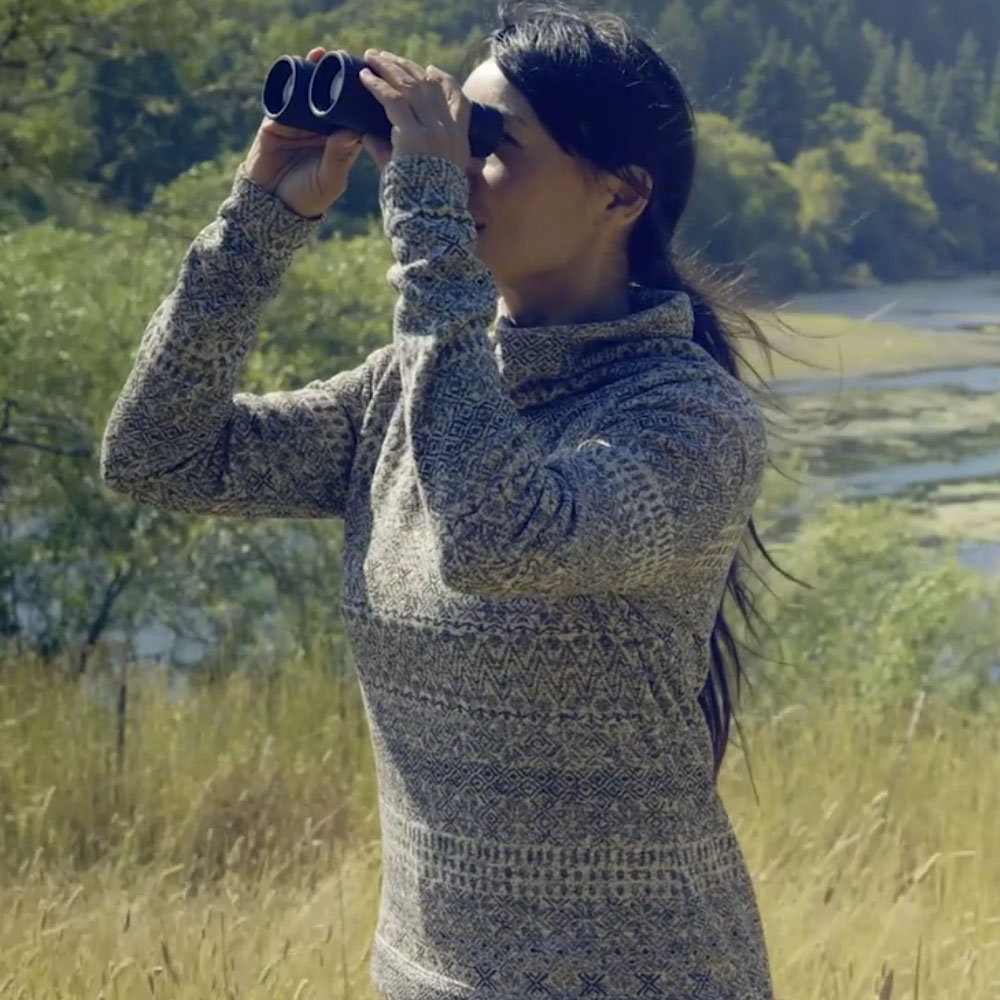
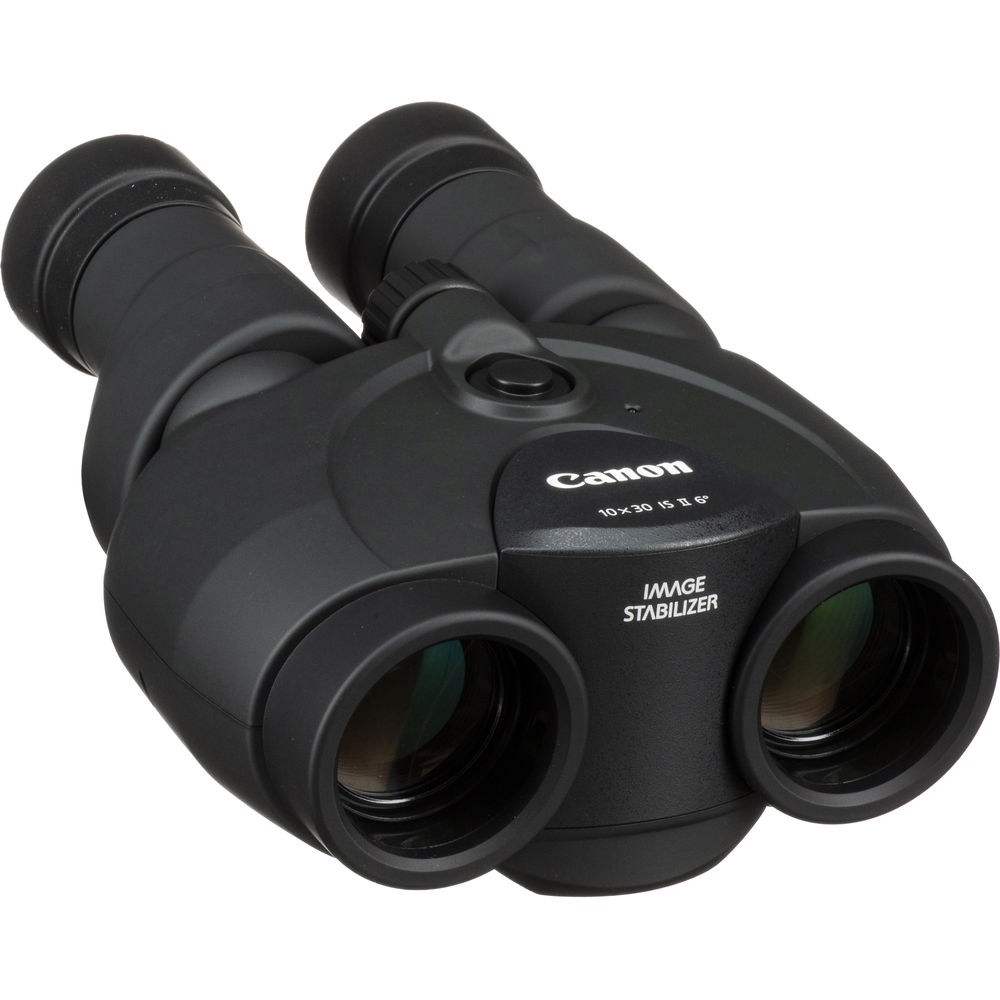
Quick take: The Nikon Monarch M7 10x30 costs $10 less; the Nikon Monarch M7 10x30 has a wider field of view (351 vs 315 ft @ 1000 yds).
Field of view, to scale
Top-down view · drawn to true scale — no exaggeration
Which one to buy
Ten power in a 30mm body shakes, and this pair takes two very different routes around that. The Canon 10x30 IS II stabilizes: hold the button and, owners say, the tremor drains out of the view in about a second, so stars split, text becomes readable and feather detail snaps into place. The Nikon Monarch M7 10x30 relies on being light, 16.6 oz against the Canon's 21.2 oz, and owners say it shows less shake than they expected for a 10x. The two cost within $10 of each other and share a 3.0mm exit pupil.
The Canon's owners rate its optics highly too, with sharpness holding nearly to the edge and stars staying point-like, which makes it a stargazing favorite. The costs are practical. The stabilizer button must be held the whole time, which tires thumbs on long sessions. Owners call the focus wheel loose, eye relief is a tight 14.5mm, it runs about 9 hours on two AA batteries, and it is not waterproof, so treat it as fair-weather gear. Its warranty is short, 1 year by Canon's terms, though owners describe 2.
The Nikon is the weatherproof, carry-anywhere option. It is waterproof and fogproof, its 351 ft field is wide for a 10x against the Canon's 315 ft, it focuses to 6.6 ft against 13.8 ft, and it has ED glass and a locking diopter. Its owners flag fussy eye placement, average glare control, soft edges, 15.8mm of eye relief that is snug for glasses, and dim views at dawn and dusk.
For travel, hiking and anywhere wet, the Nikon is the better buy. The Canon wins for stargazers, birders with shaky hands, and anyone who wants the most detail from 10x in good weather.
Nikon Monarch M7 10x30
For hikers and travelers who need a light, waterproof 10x with a wide view, it's the binocular that goes everywhere.
Canon 10x30 IS II
Worth it for stargazers and anyone with unsteady hands who wants stabilized 10x detail and can keep it dry.
| Spec | Nikon Monarch M7 10x30 | Canon 10x30 IS II |
|---|---|---|
| Approx. price | ~$540 | ~$550 |
| Use case | General Purpose | General Purpose |
| Magnification | 10x | 10x |
| Objective | 30mm | 30mm |
| Exit pupil | 3.0mm | 3.0mm |
| Field of view | 351 ft @ 1000 yds | 315 ft @ 1000 yds |
| Eye relief | 15.8mm | 14.5mm |
| Close focus | 6.6 ft | 13.8 ft |
| Prism | Roof | Porro |
| Glass | ED | Standard |
| Coating | Fully Multi-Coated | Fully Multi-Coated |
| Weight | 16.6 oz | 21.2 oz |
| Dimensions | 4.9 x 4.4 in | 5.9 x 5.0 in |
| Warranty | Limited Lifetime | 1 Year |
Feature comparison
Nikon Monarch M7 10x30
- ✓ED Glass
- ✓Phase-Corrected
- ✓Dielectric Coating
- ✓Waterproof
- ✓Fogproof
- ✗Image Stabilized
- ✗Tripod Adaptable
- ✗Magnesium Body
- ✓Locking Diopter
Canon 10x30 IS II
- ✗ED Glass
- ✗Phase-Corrected
- ✗Dielectric Coating
- ✗Waterproof
- ✗Fogproof
- ✓Image Stabilized
- ✗Tripod Adaptable
- ✗Magnesium Body
- ✗Locking Diopter
What birders say
Nikon Monarch M7 10x30
- ✓Remarkably wide 351 ft field of view for a 10x - about as wide as many 8x binoculars, so you get real reach without the tunnel-vision feeling
- ✓Outstanding image quality for the size - one birding-forum owner called it "an engineering success" for how much Nikon squeezed into a 30mm binocular
- ✓Bright for a 10x30 - owners consistently report it punches above what the small objectives suggest in daylight
- ✓Only 16.6 oz, making it one of the very few serious 10x binoculars you can carry all day or stuff in a travel bag without thinking about it
- ✓Easy to hold steady for a 10x thanks to the light weight and good rubber armor - reviewers note less apparent shake than expected
- ✓ED glass keeps chromatic aberration well controlled, with phase-corrected, dielectric-coated prisms - a full premium coating stack at a midrange price
- ✓The earlier-generation 10x30 topped OutdoorGearLab's 13-binocular test, and the M7 refines that formula with a smoother focus wheel and locking diopter
- ✓Waterproof, fogproof, and oil-repellent lens coatings make it a worry-free grab-and-go binocular
- ✗Tiny 3.0mm exit pupil - the first thing that suffers is dusk and dawn performance, where any 42mm binocular will clearly outperform it
- ✗15.8mm eye relief is on the tight side for eyeglass wearers - some spectacled users will lose part of the field
- ✗The same eye-placement fussiness as its 8x30 sibling, arguably amplified by the smaller exit pupil - blackouts come easy with sloppy technique
- ✗Glare control is only average; bright overhead skies can wash the bottom of the view like on the 8x30
- ✗10x magnification on a 1-pound binocular still shows hand tremor - people coming from 8x will notice
- ✗Much less owner feedback out there than for the popular 8x30 - it is the niche pick of the line
- ✗Edge softness in the outer field, like the rest of the M7 line - not a flat-field design
- ✗At $470 it creeps close to used prices for the optically superior Monarch HG 10x30
Canon 10x30 IS II
- ✓Image stabilization genuinely transforms what 10x shows you — a veteran astronomy reviewer calls it 'a happy marriage of excellent image quality and stabilization' and kept it as a personal favorite for years
- ✓Stabilization now engages in about 1 second versus roughly 3 seconds on the original 10x30 IS — press the button and the jitter simply drains out of the view
- ✓Independent lab testing scored it among the best in the entire 30mm class (73.8%), with sharpness holding nearly edge to edge and minimal astigmatism
- ✓Exceptional coma correction (9.3/10 in lab tests) keeps stars point-like across the field — a big reason it's a stargazing-forum staple
- ✓Runs about 9 hours on two ordinary AA batteries, so a spare set in the pocket covers a whole trip
- ✓At around $500-550 it undercuts every other stabilized binocular of comparable quality — competitors run $900 and up
- ✓Porro-prism optical path delivers pleasing depth and a natural image at a weight (about 21 oz) that carries all day
- ✓Still works as a normal, optically strong 10x30 with the stabilizer off — the electronics are a bonus, not a crutch
- ✗The IS button must be held down continuously — it is not a toggle, and thumb fatigue on long sessions is a common owner complaint
- ✗Lab testers found the focus wheel loose with excessive play, the most cited build flaw on an otherwise solid unit
- ✗Not waterproof — Canon's IS electronics rule out the sealed, nitrogen-purged construction birders expect at this price
- ✗Only 14.5mm of eye relief, tight for eyeglass wearers trying to see the full field
- ✗87.5% measured transmission is modest for a porro — the view is a touch dimmer than the best conventional 30mm glass
- ✗Noticeable pincushion distortion (scored just 4/10 in lab testing) and chromatic aberration rises toward the field edges
- ✗Only a 2-year warranty because of the electronics — a fraction of the 25-year-to-lifetime coverage standard on conventional binoculars
- ✗Lab reviewers noted slightly truncated exit pupils and interior dust on a test sample — quality control is good but not premium-tier
Nikon Monarch M7 10x30 vs Canon 10x30 IS II: common questions
Does the Canon 10x30 IS II show more detail than the Nikon Monarch M7 10x30?▾
With the stabilizer engaged, owners say yes, even for people with steady hands, because small tremors blur fine detail at 10x. The Nikon's owners say its light weight keeps shake lower than expected, but it cannot remove it.
Is the Canon 10x30 IS II waterproof like the Nikon Monarch M7 10x30?▾
No. Canon owners treat it as fair-weather gear because its electronics rule out sealed, nitrogen-purged construction. The Nikon is waterproof and fogproof, which makes it the safer choice for rain, boats and travel.
Which is better with glasses, the Nikon Monarch M7 10x30 or the Canon 10x30 IS II?▾
Neither is ideal. The Nikon has 15.8mm of eye relief and the Canon 14.5mm, and owners of both report glasses wearers losing part of the field. The Nikon has a little more margin.