Celestron Nature DX ED 8x42 vs Celestron TrailSeeker ED 8x42
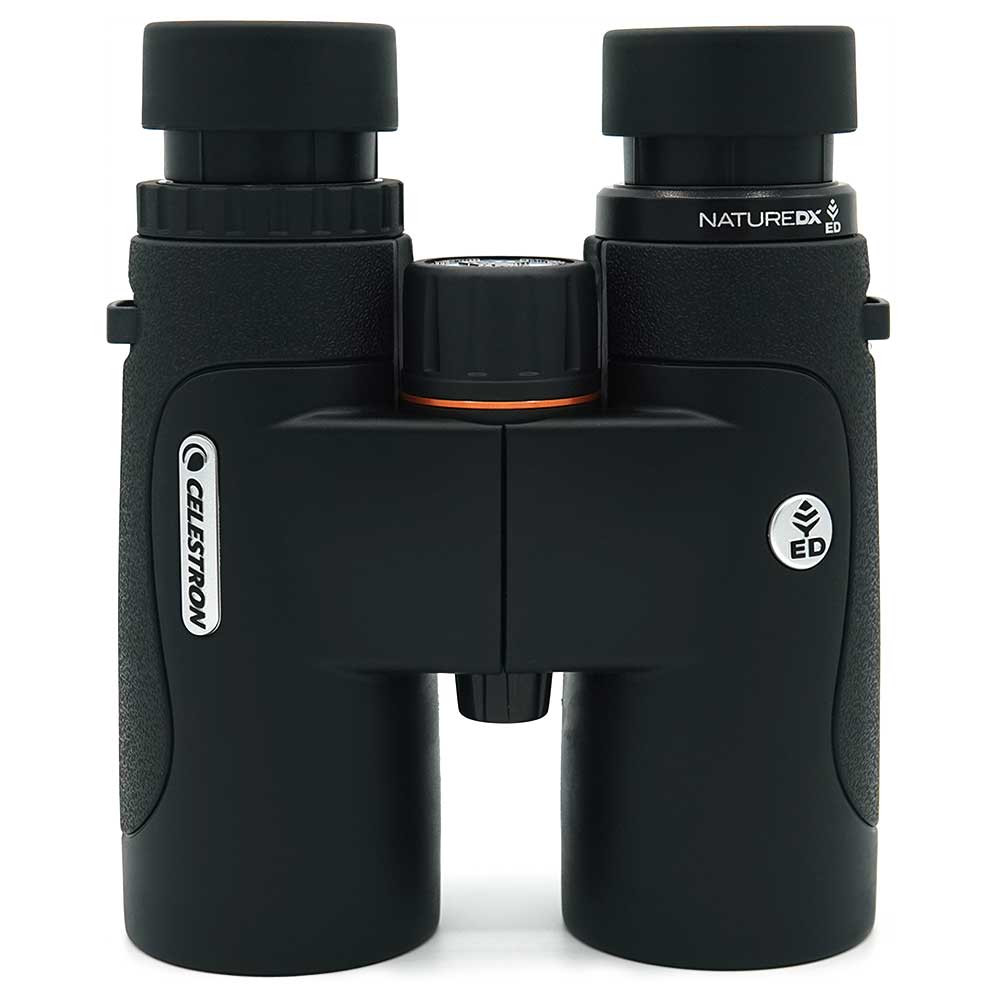
vs
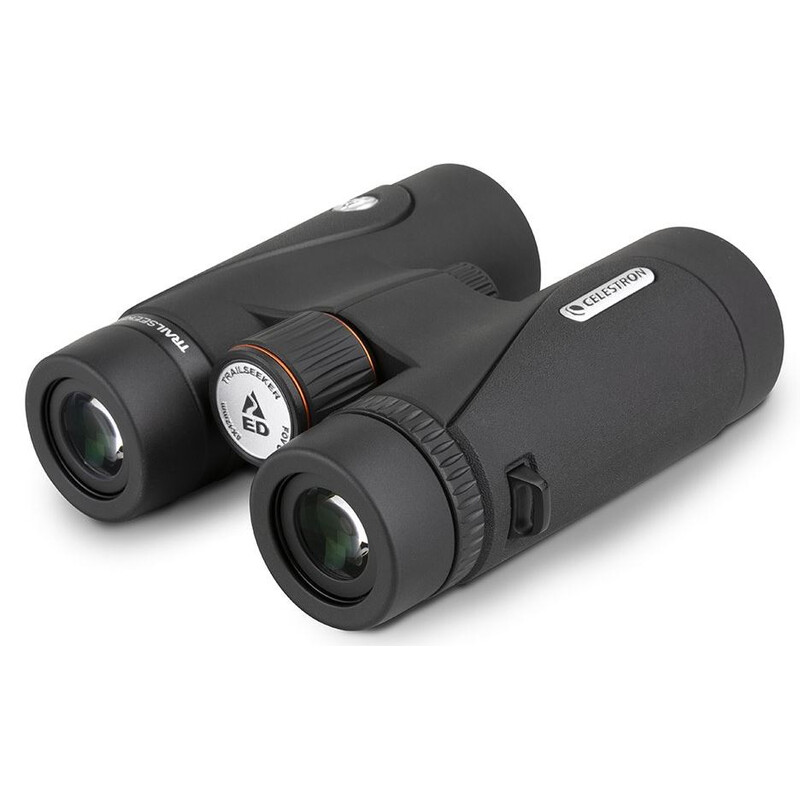
Quick take: The Celestron Nature DX ED 8x42 costs $70 less; the Celestron TrailSeeker ED 8x42 has a wider field of view (426 vs 393 ft @ 1000 yds).
Field of view, to scale
you2505007501000 yds
Distance200 yds
Celestron Nature DX ED 8x427.5°
79 ft wide at 200 yds ≈ 2.0 school buses
Celestron TrailSeeker ED 8x428.1°
85 ft wide at 200 yds ≈ 2.1 school buses
Top-down view · drawn to true scale — no exaggeration
| Spec | Celestron Nature DX ED 8x42 | Celestron TrailSeeker ED 8x42 |
|---|---|---|
| Approx. price | ~$180 | ~$250 |
| Rating | — | — |
| Use case | Birding | Birding |
| Magnification | 8x | 8x |
| Objective | 42mm | 42mm |
| Exit pupil | 5.25mm | 5.25mm |
| Field of view | 393 ft @ 1000 yds | 426 ft @ 1000 yds |
| Eye relief | 17.8mm | 17.2mm |
| Close focus | 6.5 ft | 6.5 ft |
| Prism | Roof | Roof |
| Glass | ED | ED |
| Coating | Fully Multi-Coated | Fully Multi-Coated |
| Weight | 24.9 oz | 23.5 oz |
| Dimensions | 5.6 x 5.0 in | 5.5 x 4.9 in |
| Warranty | Limited Lifetime | Limited Lifetime |
Feature comparison
Celestron Nature DX ED 8x42
- ✓ED Glass
- ✓Phase-Corrected
- ✗Dielectric Coating
- ✓Waterproof
- ✓Fogproof
- ✗Image Stabilized
- ✓Tripod Adaptable
- ✗Magnesium Body
- ✗Locking Diopter
Celestron TrailSeeker ED 8x42
- ✓ED Glass
- ✓Phase-Corrected
- ✓Dielectric Coating
- ✓Waterproof
- ✓Fogproof
- ✗Image Stabilized
- ✓Tripod Adaptable
- ✓Magnesium Body
- ✗Locking Diopter
What birders say
Celestron Nature DX ED 8x42
- ✓One of the cheapest routes to genuine ED glass — the standard forum answer to 'best binocular under $200' alongside the Vortex Crossfire HD
- ✓Cornell's All About Birds testers rated it a 'Solid Choice,' describing a very sharp image with good contrast and colorful, accurate rendering
- ✓Resolved subtle field marks in testing — warm yellow throat and fine contrasts on a Northern Parula — the kind of detail budget glass usually smears
- ✓BAK-4 prisms and optics that one test lab said rival models costing more than twice as much
- ✓Wide-ish 393-foot field of view and 17.8mm of eye relief — one of the most eyeglass-friendly budget binoculars around
- ✓Close focus measured around 7.6 feet in independent testing, fine for butterflies and feeder birds
- ✓Lighter than the average 8x42 despite the ED upgrade
- ✓Waterproof, nitrogen purged, and phase-coated — the full checklist at a price where corners usually get cut
- ✗Eyecups are the recurring complaint: testers found them narrow, hard against the eye, very loose in action, and prone to collapsing under pressure
- ✗Focus wheel described as sluggish — takes effort to get moving and to stop exactly where you want
- ✗Detail visibly suffers in backlit conditions; testers struggled with fine markings on backlit warblers
- ✗Low-light performance still trails mid-tier glass — one lab measured it noticeably dimmer than premium competitors at dusk
- ✗Unergonomic balance point and average construction feel noted by reviewers, with hinges less sturdy than higher-end options
- ✗Rubber armor feels lower-grade than pricier models
- ✗Included neck strap is basic non-padded webbing that testers called uncomfortable
- ✗Some testers found the body a bit narrow for larger faces, adding to daily-use discomfort
Celestron TrailSeeker ED 8x42
- ✓Repeatedly called one of the best values in binoculars, period - owners say things like 'you'd have a hard time convincing me there's a better value out there' and that there's no point paying more for other brands at this level
- ✓Genuinely wide 426 ft field of view - one of the widest of any 8x42 at any price, which makes scanning tree canopies and tracking birds in flight noticeably easier than the ~330-380 ft typical of competitors
- ✓ED glass actually does its job here - color fringing is minimal and rated among the best in class by expert reviewers, a real step up over the non-ED TrailSeeker and the Nature DX
- ✓Brightness that punches way above its price - in low-light testing it beat the mid-range benchmark and hung close to alpha-level glass, unusual for a sub-$300 binocular
- ✓Magnesium alloy chassis and metal eyepiece housings at a price point where most competitors (Vortex Diamondback, Nikon Monarch 5) use polycarbonate
- ✓Metal focus wheel with smooth, quick action that owners describe as 'buttery' - images snap into focus rather than requiring hunting
- ✓6.5 ft close focus is excellent for an 8x42, good enough for butterflies and dragonflies at your feet
- ✓17.2mm eye relief with twist-up eyecups lets eyeglass wearers see the full wide field - a common sticking point with budget binoculars that this one gets right
- ✗Low light is where it finally shows its price - reviewers note it starts to struggle at early dawn and late dusk, so dedicated crepuscular birders may want to spend up
- ✗The diopter ring has no locking mechanism and only a modest ±3 adjustment range, so it can get knocked out of position in a bag
- ✗Slightly heavier in the hand than some owners expected given the compact size - the magnesium build is dense at 23.5 oz
- ✗The included carry case took a step down from older Celestron cases - functional but cheap-feeling, and the accessories overall are unremarkable
- ✗Edge softness is present at the extreme edges of that huge field of view - the sweet spot is generous but it's not flat-field glass like a Nikon Monarch HG
- ✗Some forum members rank its field of view and close focus behind certain similarly-priced rivals depending on sample, so trying before buying is worth it
- ✗Celestron's 'Limited Lifetime' warranty is not the no-fault, no-receipt VIP-style coverage Vortex offers on the Diamondback - damage from accidents isn't covered
- ✗Brand snobbery is real - some birders on forums admit they'd rather carry a Nikon or Vortex badge, and resale value reflects that even when the optics compete