Celestron Nature DX 8x42 vs Celestron SkyMaster 25x70
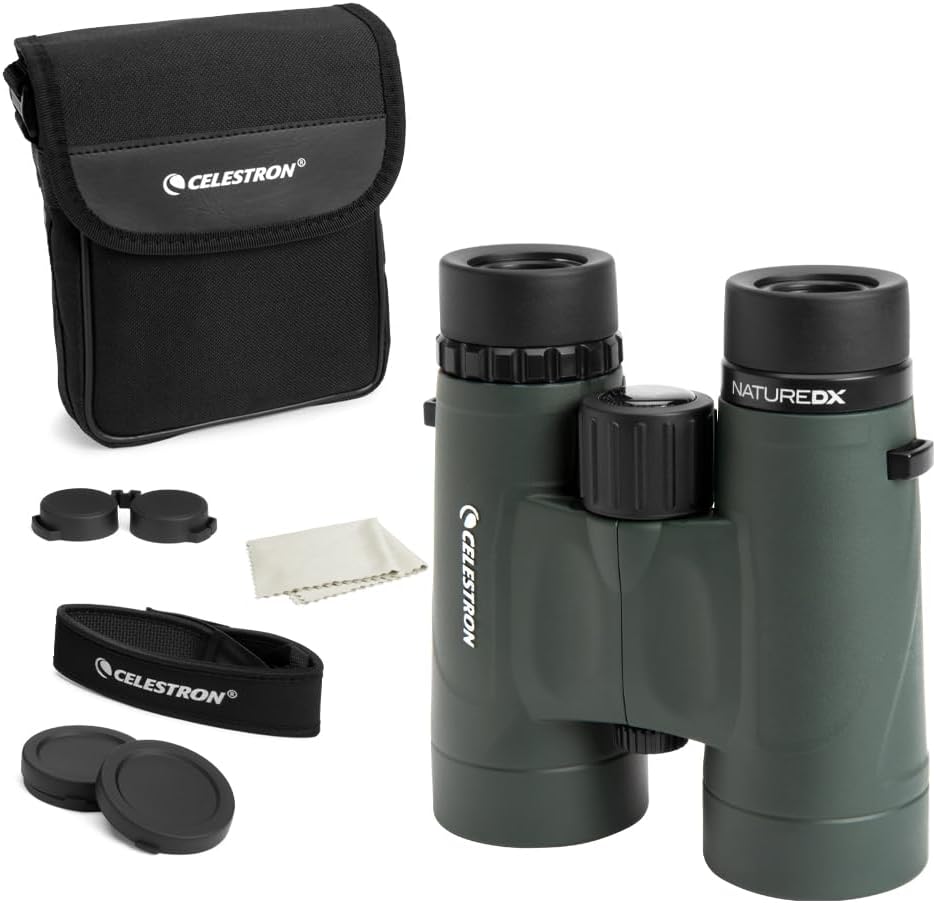
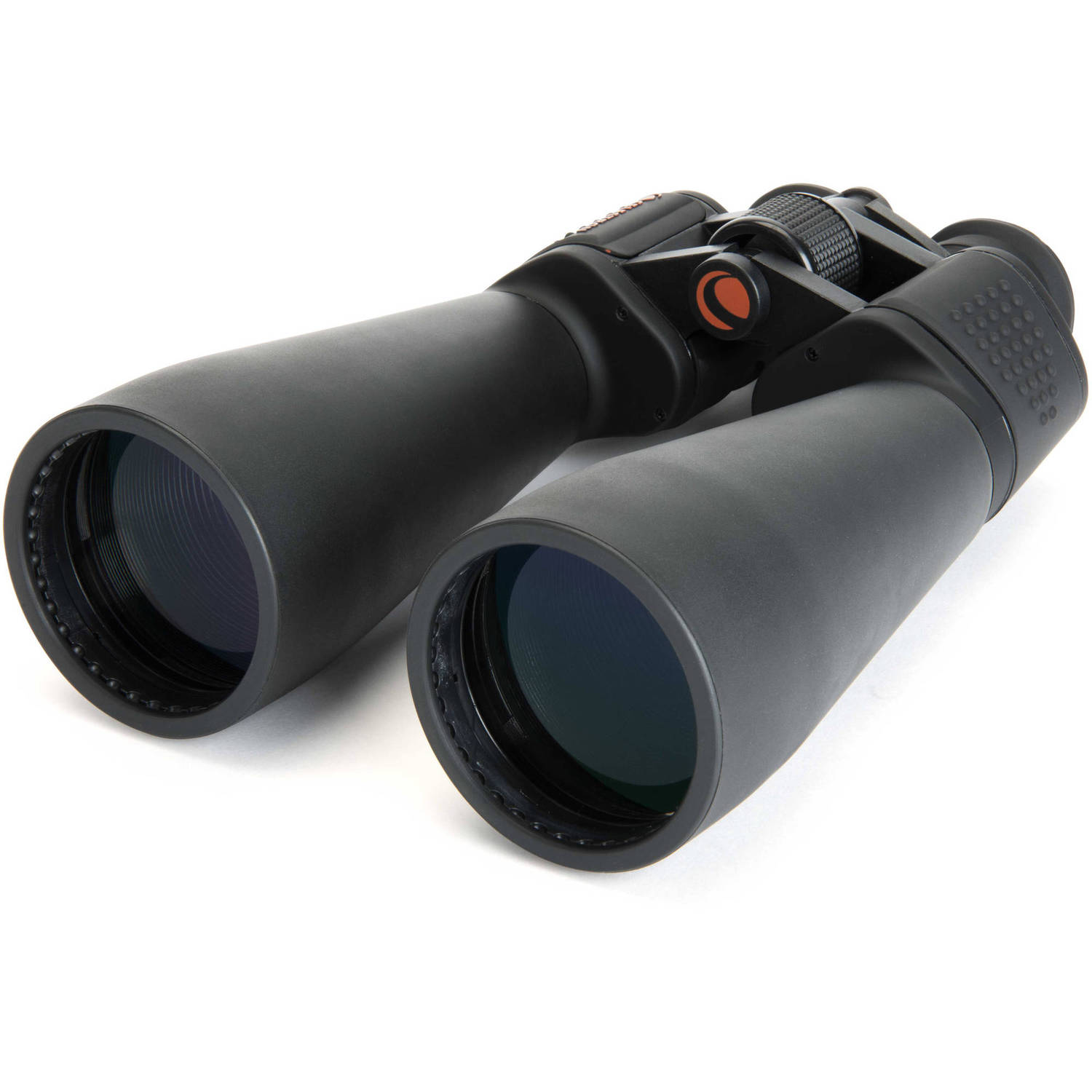
Quick take: The Celestron SkyMaster 25x70 costs $9 less; the Celestron SkyMaster 25x70 reaches farther (25x vs 8x); the Celestron Nature DX 8x42 has a wider field of view (388 vs 141 ft @ 1000 yds).
Field of view, to scale
Top-down view · drawn to true scale — no exaggeration
Which one to buy
Nine dollars apart, built for opposite jobs. The Celestron SkyMaster 25x70 is a 52 oz tripod instrument for the Moon, double stars and long-range daytime spotting; the Celestron Nature DX 8x42 is a 24.9 oz birding binocular you carry on a neck strap. Unless you already know you want 25x on a tripod, the Nature DX is the one to buy.
SkyMaster owners describe crater walls and terminator shadows no 10x can show, and use it as a budget spotting scope for harbors and ridgelines. They are also blunt about the costs. It is unusable handheld, its 141 ft field makes finding objects frustrating, its 2.8mm exit pupil gives dimmer night-sky views than a 15x70, heat haze makes daytime views boil, close focus is 75 ft, and budget units can arrive out of collimation, which at 25x means eye strain within minutes. A tripod adapter is included, but owners say a sturdy tripod is non-negotiable.
Nature DX owners call theirs the most recommended first birding binocular around: a wide 388 ft view, 6.5 ft close focus for butterflies, waterproof and nitrogen-purged sealing, and 17.5mm of eye relief against the SkyMaster's 13mm. Its quirks are kidney-bean blackouts until you learn eye placement, soft edges and ordinary fringing.
For birding, hiking, travel or a first pair of binoculars, the Nature DX is the clear choice. The SkyMaster belongs to someone who owns a solid tripod and wants maximum magnification for the Moon or distant shorelines, and even then many of its owners point toward a lower-power astronomy binocular first.
Celestron Nature DX 8x42
The clear choice for birding, hiking, travel or a first pair: waterproof, wide, close-focusing and easy to carry.
Celestron SkyMaster 25x70
Only for lunar observers and long-range spotters who own a sturdy tripod and want 25x at the lowest possible price.
| Spec | Celestron Nature DX 8x42 | Celestron SkyMaster 25x70 |
|---|---|---|
| Approx. price | ~$149 | ~$140 |
| Use case | Birding | Astronomy |
| Magnification | 8x | 25x |
| Objective | 42mm | 70mm |
| Exit pupil | 5.25mm | 2.8mm |
| Field of view | 388 ft @ 1000 yds | 141 ft @ 1000 yds |
| Eye relief | 17.5mm | 13mm |
| Close focus | 6.5 ft | 75 ft |
| Prism | Roof | Porro |
| Glass | Standard | BaK-4 |
| Coating | Fully Multi-Coated | Multi-Coated |
| Weight | 24.9 oz | 52 oz |
| Dimensions | 5.3 x 5.0 in | 8.7 x 11.0 in |
| Warranty | Limited Lifetime | Limited Lifetime |
Feature comparison
Celestron Nature DX 8x42
- ✗ED Glass
- ✓Phase-Corrected
- ✗Dielectric Coating
- ✓Waterproof
- ✓Fogproof
- ✗Image Stabilized
- ✓Tripod Adaptable
- ✗Magnesium Body
- ✗Locking Diopter
Celestron SkyMaster 25x70
- ✗ED Glass
- ✗Phase-Corrected
- ✗Dielectric Coating
- ✗Waterproof
- ✗Fogproof
- ✗Image Stabilized
- ✗Tripod Adaptable
- ✗Magnesium Body
- ✗Locking Diopter
What birders say
Celestron Nature DX 8x42
- ✓The most-recommended first birding binocular on forums for years - a huge owner base and near-universal 'best under $110' status
- ✓Outstanding 6.5-foot close focus - butterfly, dragonfly, and feeder watchers pick it over everything else at the price
- ✓Phase-coated BaK-4 prisms and fully multi-coated optics, specs that used to cost twice as much
- ✓Genuinely waterproof and nitrogen-purged - owners report years of wet-weather use without fogging
- ✓Wide, comfortable 7.4-degree field of view that makes finding and tracking birds easy for beginners
- ✓Compact, lightweight body with grippy armor that suits smaller hands better than porro rivals like the Aculon A211
- ✓Pleasing, slightly warm color rendition many owners prefer for birding
- ✓Backed by Celestron's limited lifetime warranty and a massive community of long-term owners for support
- ✗Kidney-bean blackouts are the signature complaint - eye placement is fussy until you learn the sweet spot
- ✗Not as bright as the best budget roofs at dawn and dusk - the Nikon Prostaff P3 edges it in low light
- ✗Edge softness is obvious in the outer 25-30% of the field
- ✗Chromatic aberration shows on high-contrast subjects; the ED version exists for a reason
- ✗Focus wheel on some units feels stiff or slightly uneven out of the box
- ✗Included case and strap are flimsy, and the case isn't waterproof even though the binocular is
- ✗Diopter adjustment is unlockable and easy to knock out of position
- ✗Occasional sample variation and collimation issues reported - buy from a retailer with easy returns
Celestron SkyMaster 25x70
- ✓25x magnification is genuinely telescope-adjacent - owners are stunned by lunar crater detail and the ability to read boat names across a harbor
- ✓Highest power in Celestron's fixed-magnification SkyMaster line for barely more money than the 15x70
- ✓70mm BaK-4 porro prism optics with multi-coatings produce contrasty, punchy center-field views when mounted solidly
- ✓Excellent long-range terrestrial tool - wildlife watchers and coastal observers use it as a poor-man's spotting scope
- ✓Tripod adapter included in the box, so mounting on a photo tripod costs nothing extra
- ✓Resolves tight double stars and compact clusters that a 15x70 can't quite split
- ✓Rubber-armored chassis shrugs off knocks, and the collimation screws are reachable under the armor for DIY tune-ups
- ✓Often found under $120 on sale, making it the cheapest path to 25x magnification with 70mm of aperture
- ✗The 2.8mm exit pupil makes night-sky views noticeably dimmer than the 15x70 - a frequent 'wish I'd known' from first-time buyers
- ✗Completely unusable handheld - at 25x even heartbeat tremor smears the image, so a sturdy tripod is non-negotiable
- ✗Narrow 2.7-degree field of view makes finding objects in the night sky genuinely frustrating for beginners
- ✗Tiny exit pupil demands precise eye placement - blackouts and kidney-beaning annoy owners until they learn the sweet spot
- ✗Same collimation lottery as the rest of the budget SkyMaster line, and at 25x even slight misalignment causes instant eye strain
- ✗25x amplifies atmospheric shimmer, so daytime long-range views often boil and wobble in heat haze
- ✗Effective aperture falls short of the advertised 70mm due to internal vignetting, just like its 15x70 sibling
- ✗Included accessories are throwaway quality - loose objective caps, thin strap, and a soft case that protects nothing
Celestron Nature DX 8x42 vs Celestron SkyMaster 25x70: common questions
Can I use the Celestron SkyMaster 25x70 for birding instead of the Nature DX 8x42?▾
Not in the usual way. SkyMaster owners say it is unusable handheld, its 141 ft field is narrow and it focuses no closer than 75 ft. It works on a tripod for distant shorebirds or ridgelines, but the Nature DX is the birding tool.
Is the Nature DX 8x42 a reasonable stargazing binocular next to the SkyMaster 25x70?▾
The Nature DX is built for daytime birding, and nothing about it is aimed at astronomy. The SkyMaster's 70mm objectives and 25x show lunar crater detail and split tight double stars, but only on a sturdy tripod, and its owners say views are dimmer than lower-power astronomy binoculars.