Nikon
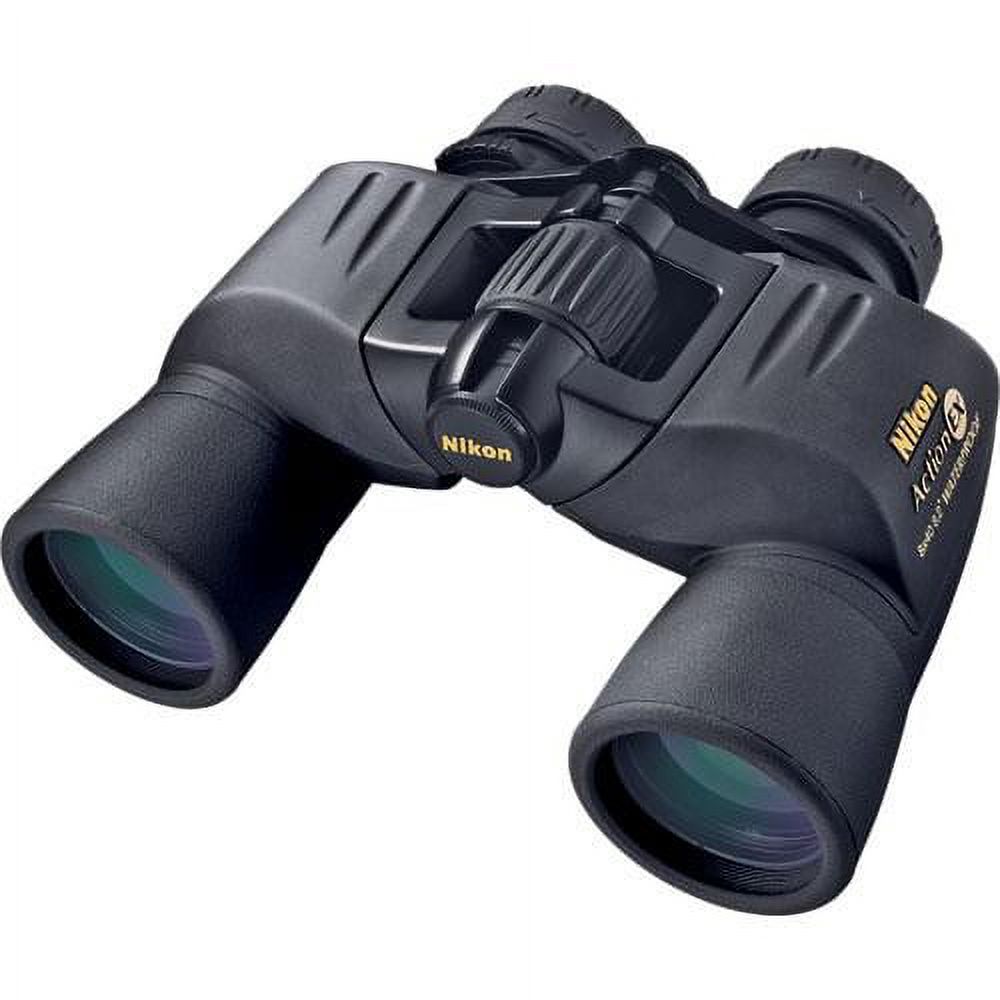
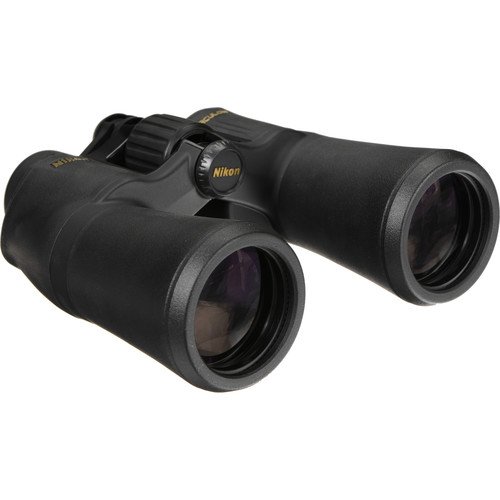
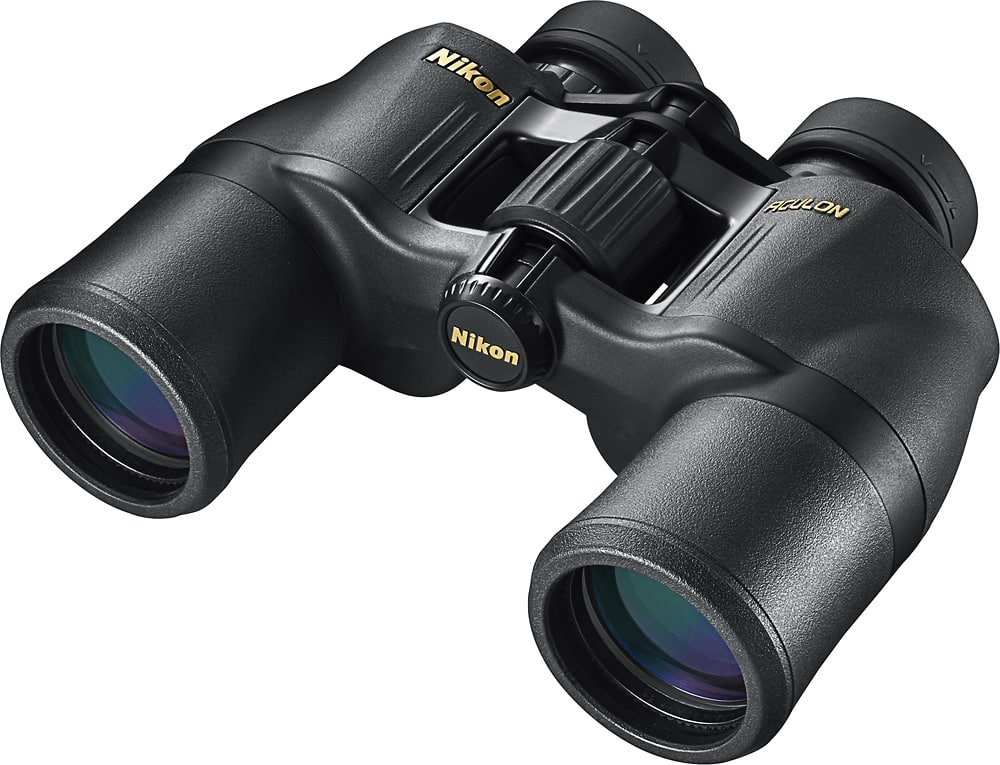
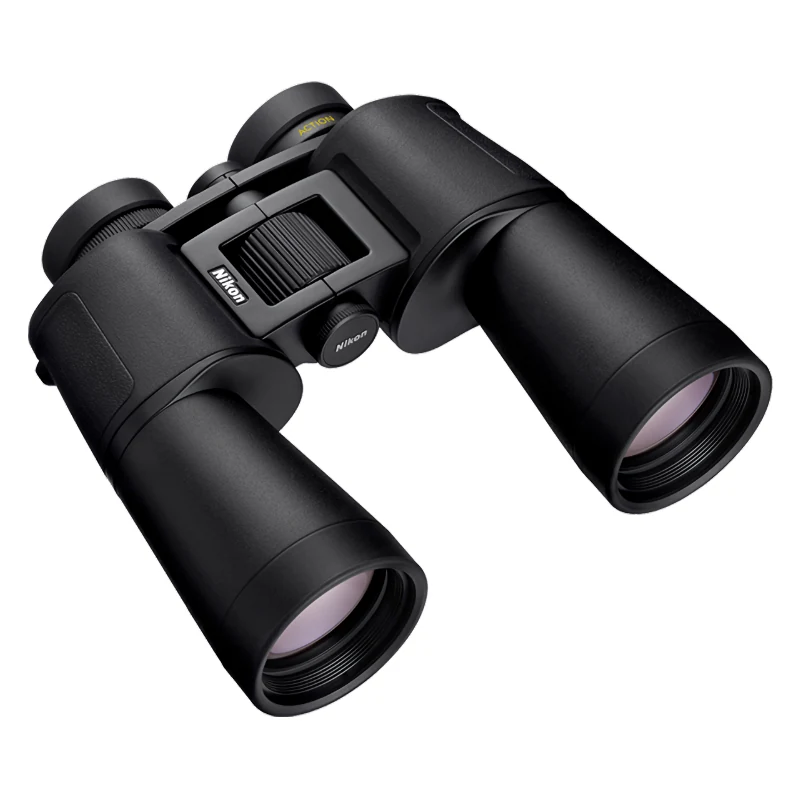
Nikon Action EX 10x50
The Nikon Action EX 10x50 is the waterproof and fogproof flagship of the Action Extreme line with 17.2mm eye relief for comfortable viewing with or without glasses.
We may earn a commission. Price and availability on Amazon may differ.
Specifications
What do these mean? →Field of view, to scale
Why FOV matters →Top-down view · drawn to true scale — no exaggeration
Wondering about the format itself? 10x42 vs 10x50 · 8x42 vs 10x50
Key Features
Owner Insights(150 discussions)
The Action EX 10x50 is the budget porro that astronomy forums never stop recommending - the standing advice to newcomers asking for a first stargazing binocular under $200. Owners describe pointing it at the Pleiades or the Milky Way and being 'impressed' to 'absolutely delighted', and the fact that it's fully waterproof and nitrogen-purged (unlike Nikon's cheaper Aculon line) makes it the porro you can actually leave in dewy grass at 2am. Daytime users - boaters, hunters glassing at distance, wildlife watchers - like it for the same reasons: brightness, toughness, and honest optics.
The view is classic good porro: a bright, contrasty, sharp center courtesy of aspherical eyepieces, with the compromises pushed to the edges - the outer third softens noticeably, and stargazers see coma creep in near the field stop. Chromatic aberration shows on the moon and bright edges. Ergonomically it's a two-hander: the click-stop eyecups and generous eye relief earn consistent praise from eyeglass wearers, but at well over two pounds nobody pretends it's a hiking binocular, and at 10x most owners end up bracing on a car roof or mounting it on a tripod for serious sky sessions. Build quality draws decade-of-use testimonials, though a handful of hard-used units have developed alignment issues over many years.
Best for: beginner astronomers, boaters, and low-light glassers who want maximum aperture per dollar and don't need to carry it far. Against the Aculon A211 10x50 (about $50 less), the Action EX wins decisively on waterproofing, eyecups, and build - the standard forum verdict is 'spend the extra'. Against the Celestron SkyMaster 15x70 it trades raw power for hand-holdability and much better quality control. If you want one binocular for the lake, the deck, and the night sky at $190, this is the perennial answer.
Pros
- +A cult favorite on astronomy forums - stargazers call sharp star fields and open clusters 'absolutely fantastic' for the price
- +Fully waterproof and nitrogen-purged, the crucial upgrade over the cheaper Aculon A211 porro line
- +Big 50mm objectives plus porro-prism brightness make it a genuine low-light and night-sky performer under $200
- +Excellent 17mm-class eye relief with click-stop twist-up eyecups - unusually glasses-friendly for a big porro
- +Aspherical eyepiece lenses keep the central image crisp with minimal distortion
- +Textured rubber armor and hefty build that owners describe as tank-like - many report a decade-plus of service
- +Balances surprisingly well in two hands for a 50mm glass, with a wide comfortable stance
- +Tripod-adaptable, which astronomy owners consider essential at 10x magnification
Cons
- −Heavy - well over 2 pounds, so all-day neck carry is punishing and most owners move to a harness or tripod
- −Outer third of the field goes soft, with stars near the edge showing coma and seagull shapes
- −Chromatic aberration is visible on the moon, bright planets, and high-contrast daytime edges
- −10x magnification amplifies hand shake - steady views really require bracing or a tripod
- −Bulky porro body won't fit any jacket pocket and needs a real bag for transport
- −A few long-term owners report optical degradation (increased coma) after years of hard use
- −Focus wheel can stiffen in cold weather - a repeated complaint from winter stargazers
- −Nikon officially positions it as a daytime instrument, so astronomy performance, while loved, isn't guaranteed by design
Common Questions
Compare the Nikon Action EX 10x50
Related binoculars