Zeiss Victory SF 8x42 vs Zeiss Victory SF 10x42
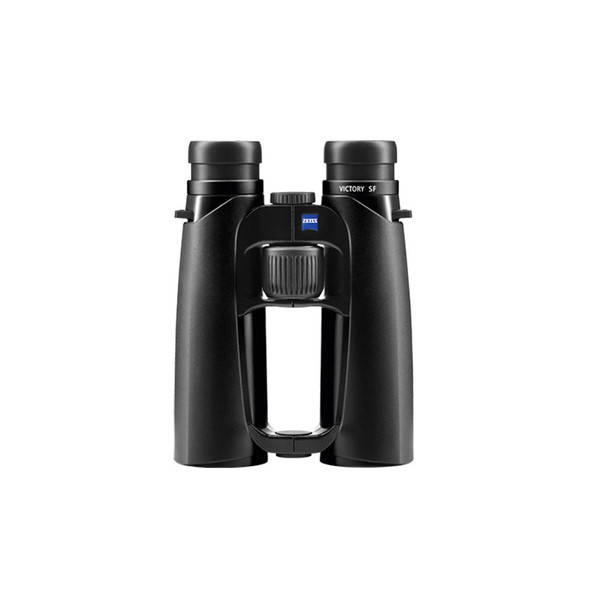
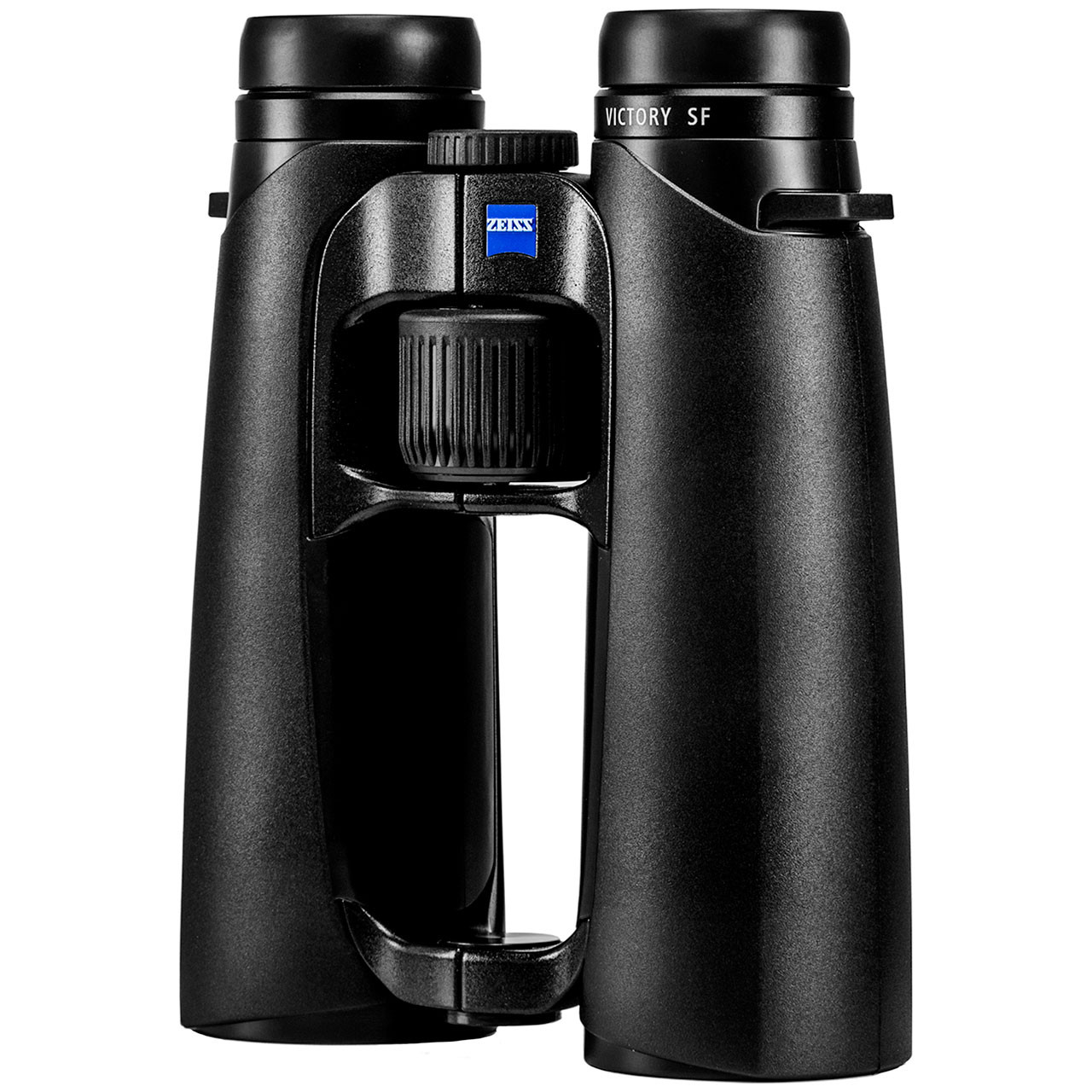
Quick take: The Zeiss Victory SF 10x42 reaches farther (10x vs 8x); the Zeiss Victory SF 8x42 has a wider field of view (444 vs 360 ft @ 1000 yds).
Field of view, to scale
Top-down view · drawn to true scale — no exaggeration
Which one to buy
Owners of the Victory SF 10x42 say it holds like an 8x, and that is the strongest argument for choosing it over the 8x42. Both cost $3,000, weigh 27.8 oz, focus to 4.9 ft, offer 18mm of eye relief and share the fluorite glass, roughly 92% transmission, rearward ErgoBalance and focus wheel that owners of each rank among the best made.
The 8x42 still suits more people. Its 444 ft field against 360 ft is one of the most immersive views in birding optics, and its 5.25mm exit pupil against 4.2mm helps in dim forest and at dusk. Owners who compared it with Swarovski's flagship say it controls glare better and holds steadier. Their complaints are squishy eyecups, flimsy objective covers, a bulky case and quality problems on early gray-armor units that later black production largely fixed.
The 10x42 is for reach. Its 360 ft field is among the widest of any 10x42, and owners describe a crisp, neutral image with fringing that barely appears. They mention crescent-shaped glare low in the field with a low sun on some samples, early quality grumbles and slightly soft outer edges. For open country, raptors, shorebirds and sea watching, the 10x42 earns its place; for forest birding and a single do-everything binocular, the 8x42 is the better choice.
Zeiss Victory SF 8x42
The pick for most birders: a vast 444 ft field, a brighter exit pupil for dim forest, and better glare control by owner accounts.
Zeiss Victory SF 10x42
For open-country, raptor and shorebird watchers who want 10x reach with a balance owners say feels as steady as an 8x.
| Spec | Zeiss Victory SF 8x42 | Zeiss Victory SF 10x42 |
|---|---|---|
| Approx. price | ~$3,000 | ~$3,000 |
| Use case | Birding | Birding |
| Magnification | 8x | 10x |
| Objective | 42mm | 42mm |
| Exit pupil | 5.25mm | 4.2mm |
| Field of view | 444 ft @ 1000 yds | 360 ft @ 1000 yds |
| Eye relief | 18mm | 18mm |
| Close focus | 4.9 ft | 4.9 ft |
| Prism | Roof | Roof |
| Glass | FL | FL |
| Coating | Fully Multi-Coated | Fully Multi-Coated |
| Weight | 27.8 oz | 27.8 oz |
| Dimensions | 5.7 x 4.7 in | 5.7 x 4.7 in |
| Warranty | Limited Lifetime | Limited Lifetime |
Feature comparison
Zeiss Victory SF 8x42
- ✓ED Glass
- ✓Phase-Corrected
- ✓Dielectric Coating
- ✓Waterproof
- ✓Fogproof
- ✗Image Stabilized
- ✓Tripod Adaptable
- ✓Magnesium Body
- ✓Locking Diopter
Zeiss Victory SF 10x42
- ✓ED Glass
- ✓Phase-Corrected
- ✓Dielectric Coating
- ✓Waterproof
- ✓Fogproof
- ✗Image Stabilized
- ✓Tripod Adaptable
- ✓Magnesium Body
- ✓Locking Diopter
What birders say
Zeiss Victory SF 8x42
- ✓Enormous 444 ft field of view with sharpness held nearly to the edge - one of the most immersive views in all of birding optics
- ✓ErgoBalance design shifts weight toward the eyepieces, and owners who compared it to the Swarovski NL Pure found the SF easier to hold steady - it's also 100g lighter
- ✓Better glare control than the NL Pure - a direct, repeated finding from owners who've used both flagships side by side
- ✓92% light transmission through fluorite-containing Ultra-FL glass - dawn and dusk brightness at the top of the 8x42 class
- ✓Huge, perfectly weighted focus wheel that owners say 'snaps' to focus faster than the Swarovski's
- ✓18mm of usable eye relief - a critical bit more than the NL Pure for eyeglass wearers, per direct comparisons
- ✓4.9 ft close focus is exceptional for a full-size flagship - real butterfly range
- ✓Later black-armor production resolved most early quality niggles, and long-term owner sentiment is that this is a binocular you buy once and keep for decades
- ✗At $3,000 you're paying alpha money - three Conquest HDXs - for gains a casual user may honestly never notice
- ✗Field of view, its headline stat, was outdone by the Swarovski NL Pure 8x42 (444 vs 477 ft), which stole its 'widest view' crown
- ✗Early gray-armor units had documented QC issues - crackly loose armor, wobbly diopter knobs, and even trapped dust in a reviewed sample
- ✗Eyecups draw persistent criticism - vague stops and a squishy feel that doesn't match the price tag
- ✗The tethered objective covers are flimsy afterthoughts, a complaint spanning Zeiss's whole current line
- ✗The included case is over-engineered and bulky - reviewers struggled to even fit the binocular inside
- ✗At 27.8 oz it's no lightweight in absolute terms, even if the balance disguises it
- ✗The 32mm SF and the newer NL Pure have shifted flagship buzz elsewhere, which can sting at resale time
Zeiss Victory SF 10x42
- ✓One of the widest fields in its class at 360 ft - many professional birders and field guides call it the best all-around 10x42 ever made because you find the bird faster and lose it less
- ✓ErgoBalance weight distribution shifts the center of gravity toward your face, so owners consistently say it holds like an 8x - noticeably steadier than the Swarovski EL 10x42 in extended glassing
- ✓SmartFocus wheel is near-universally praised as the best in the business - smooth, light, precise, and only about 1.4 turns from 4.9 ft close focus to infinity, easy even with gloves
- ✓Roughly 92% light transmission from the Schott fluoride glass - reviewers report crisp, bright views with gorgeous, neutral color rendition that pulls detail out of shaded canopy
- ✓Chromatic aberration is nearly absent - side-by-side testers note only very slight fringing in extreme high-contrast situations, with clean edges even panning silhouetted branches
- ✓Generous 18mm eye relief works well for eyeglass wearers
- ✓At 27.8 oz it undercuts the EL 10x42 and NL Pure 10x42 slightly on weight while carrying a bigger view than the EL
- ✓Triple-link open bridge leaves lots of room for your fingers - long-session comfort is the recurring theme in owner reports, with less fatigue than barrel-heavy designs
- ✗Very premium price around $2,900 - forum threads regularly conclude the used EL 10x42 delivers 95% of the view for hundreds less
- ✗Some owners report crescent-shaped glare flares in the lower part of the field with low sun - one tester saw it across three different samples, so glare-sensitive users should try before buying
- ✗Slight residual chromatic aberration shows up in the harshest backlit situations - not a problem in normal use, but pixel-peepers comparing against the NL Pure will find it
- ✗Early production runs had quality-control grumbles on forums (armor and diopter complaints), so buying used means checking the serial range and condition carefully
- ✗The rearward balance point feels odd to some hands at first - a minority of owners never warm to the long, front-light barrel feel
- ✗No forehead-rest option like Swarovski offers for the NL Pure, which some 10x users miss for steadiness
- ✗Edge sharpness is very good but not the absolute flat-field perfection of Swarovision - the last 10% of the field softens slightly by design to avoid the rolling-ball effect
- ✗Resale values sit below equivalent Swarovskis in the used market, which owners note when it's time to trade up or sell
Zeiss Victory SF 8x42 vs Zeiss Victory SF 10x42: common questions
Should I get the Zeiss Victory SF 8x42 or 10x42?▾
Owners of both lean toward the 8x42 for general birding, citing its 444 ft field, larger exit pupil and steadier image. The 10x42 suits open country, raptor and sea watching. Price, weight and eye relief are identical, so use alone should decide.
Is the Victory SF 10x42 hard to hold steady compared with the 8x42?▾
Less than most 10x binoculars. Owners say its rearward balance makes it feel like an 8x. They still suggest the 8x42 for anyone very prone to hand shake, since 8x magnification hides tremor better.
Did early Victory SF 8x42 and 10x42 units have quality problems?▾
Owners of both mention early-production complaints. 8x42 owners describe loose armor, wobbly diopter knobs and dust in one reviewed sample on early gray-armor units, and say later black-armor production is the safer used buy.