Zeiss Victory Pocket 8x25 vs Zeiss Conquest HDX 8x32
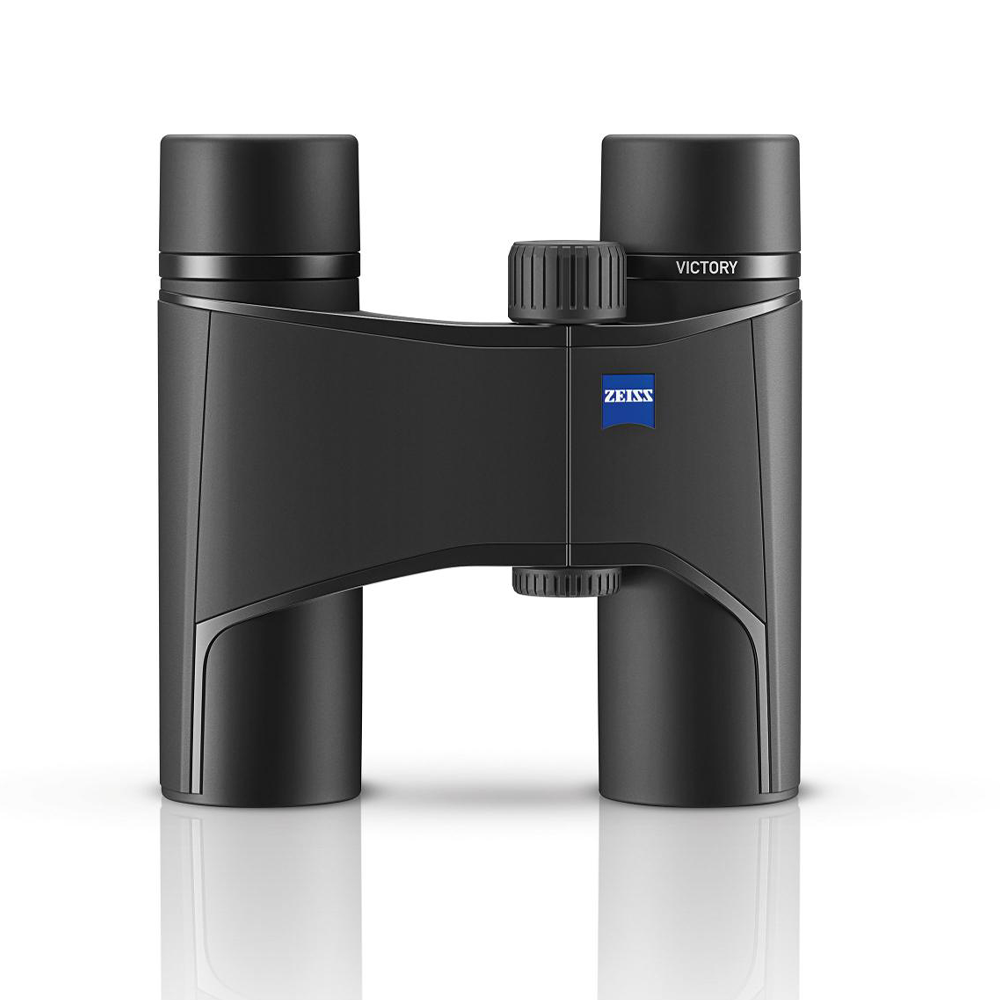
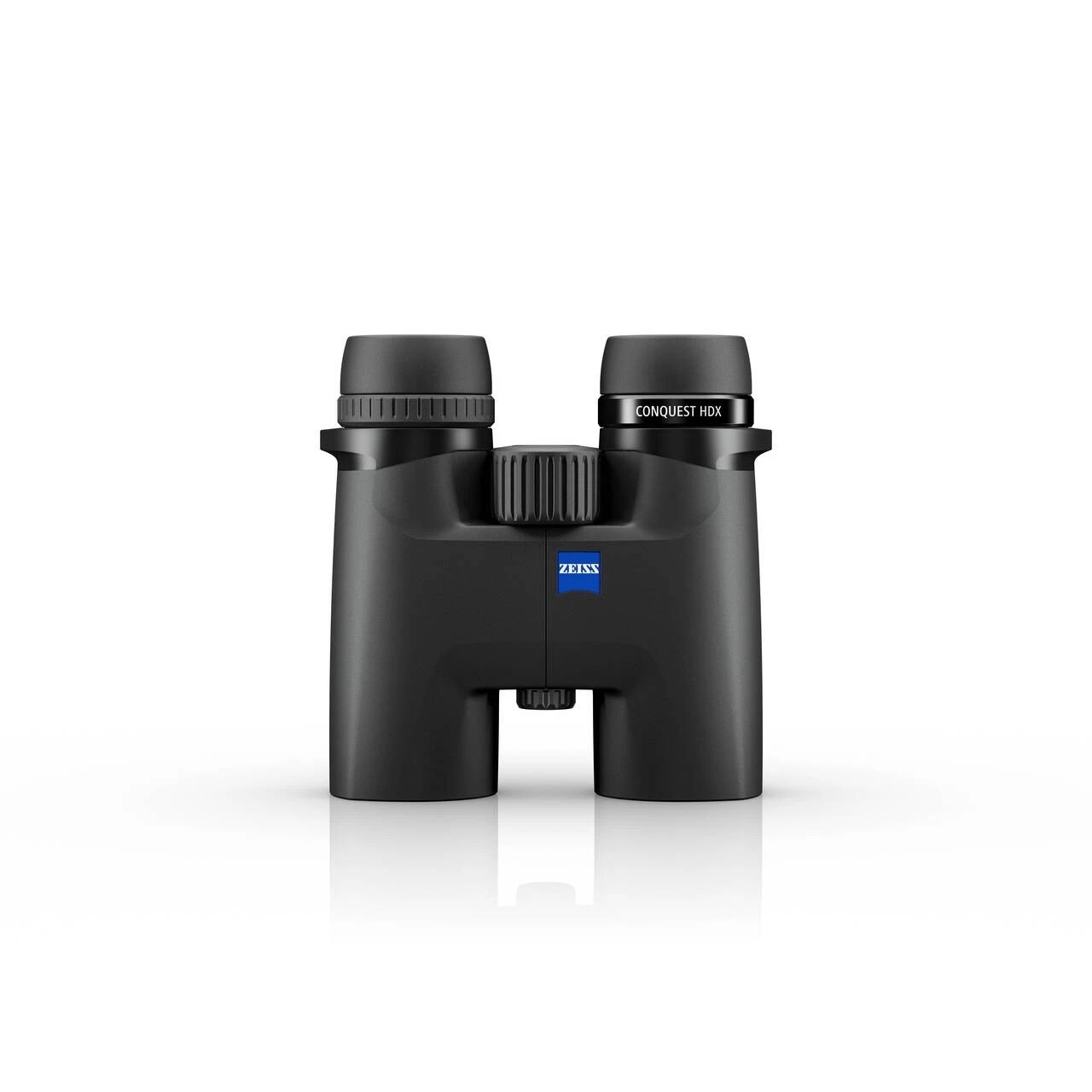
Quick take: The Zeiss Victory Pocket 8x25 costs $55 less; the Zeiss Conquest HDX 8x32 has a wider field of view (420 vs 390 ft @ 1000 yds); the Zeiss Conquest HDX 8x32 gathers more light with a larger 32mm objective.
Field of view, to scale
Top-down view · drawn to true scale — no exaggeration
Which one to buy
About $55 separates Zeiss's folding Victory Pocket 8x25 from its Conquest HDX 8x32, and they suit different roles. The Pocket weighs 10.2 oz and folds into a jacket; the HDX 8x32 weighs 21.9 oz and is a conventional mid-size binocular with a magnesium body, locking diopter and tripod thread.
As a main birding binocular the HDX has the edge on paper. Its 4mm exit pupil against 3.1mm gives more light at dawn, dusk and in shade, its 420 ft field is wider than 390 ft, and it focuses much closer, 4.9 ft against 6.2 ft. It pairs ED glass with field flattener optics and is rated at about 90% light transmission. Both have 16.5mm of eye relief.
The Pocket's owners describe something unusual: a folding binocular that gives up nothing in good light. They praise its FL glass, about 91% transmission, negligible fringing, a silky focus wheel and a field wide enough to feel like a real 8x32. They also name its limits: a small exit pupil that dims quickly at dusk and demands precise eye placement, recessed eye lenses that trim usable eye relief for some glasses wearers, flare from bright sources near the field, one documented case of a detached diopter ring, and a steep price for what most people use as a second binocular. If the binocular must disappear into a pocket, the Victory Pocket is the one to get; as a single everyday birding binocular, the HDX 8x32 is the more capable choice.
Zeiss Victory Pocket 8x25
For travelers and hikers who want top-tier optics that fold into a jacket pocket, mostly for daylight use.
Zeiss Conquest HDX 8x32
The better single birding binocular: a brighter 4mm exit pupil, a wider 420 ft field, closer focus and field flattener optics.
| Spec | Zeiss Victory Pocket 8x25 | Zeiss Conquest HDX 8x32 |
|---|---|---|
| Approx. price | ~$925 | ~$980 |
| Use case | Birding | Birding |
| Magnification | 8x | 8x |
| Objective | 25mm | 32mm |
| Exit pupil | 3.1mm | 4mm |
| Field of view | 390 ft @ 1000 yds | 420 ft @ 1000 yds |
| Eye relief | 16.5mm | 16.5mm |
| Close focus | 6.2 ft | 4.9 ft |
| Prism | Roof | Roof |
| Glass | FL | HD |
| Coating | Fully Multi-Coated | Fully Multi-Coated |
| Weight | 10.2 oz | 21.9 oz |
| Dimensions | 4.4 x 4.5 in | 5.2 x 4.5 in |
| Warranty | Limited Lifetime | Limited Lifetime |
Feature comparison
Zeiss Victory Pocket 8x25
- ✓ED Glass
- ✓Phase-Corrected
- ✓Dielectric Coating
- ✓Waterproof
- ✓Fogproof
- ✗Image Stabilized
- ✗Tripod Adaptable
- ✗Magnesium Body
- ✗Locking Diopter
Zeiss Conquest HDX 8x32
- ✓ED Glass
- ✗Phase-Corrected
- ✗Dielectric Coating
- ✓Waterproof
- ✓Fogproof
- ✗Image Stabilized
- ✓Tripod Adaptable
- ✓Magnesium Body
- ✓Locking Diopter
What birders say
Zeiss Victory Pocket 8x25
- ✓Widely called the best optical performance in any pocket binocular — one owner put it simply: 'the only pocket bino I've ever used that doesn't give up anything in good lighting'
- ✓Huge 390 ft field of view (about 60° apparent) — dramatically wider than typical folding compacts and on par with good full-size 8x binoculars
- ✓FL (fluoride) glass and 91% transmission deliver resolution and color reviewers describe as comparable to full-size premium binoculars, with negligible chromatic aberration
- ✓Clever asymmetric single-hinge design folds flat for a pocket yet allows a more natural full-hand grip than dual-hinge compacts
- ✓Focus wheel earns consistent praise as 'silky smooth and very precise' — rare in the compact class
- ✓Eyecups are unusually large and comfortable for a pocket binocular, and eyeglass wearers can see most of the wide field
- ✓At roughly 10 oz it disappears in a jacket pocket — the class-standard recommendation for travel, hiking, and concerts among forum regulars
- ✓Scored 9.9 in a dedicated pocket-binocular group test, tied with Swarovski's CL for top marks — reviewers called it 'the least compromised folding binocular' tested
- ✗The eye lenses sit deeply recessed in their cups, which effectively wastes some of the 16.5mm eye relief — glasses wearers with deep-set frames run close to the limit
- ✗Recessed objectives can produce veiling flare when a bright source like a low sun or full Moon sits near the field
- ✗The 3.1mm exit pupil dims quickly at dusk — no pocket binocular escapes this, but it's the biggest gap versus a 32mm
- ✗At least one documented case of the diopter ring detaching entirely, requiring a dealer repair — worth checking on used examples
- ✗The single-hinge design doesn't fold quite as small as dual-hinge rivals like the Swarovski CL Pocket or Leica Ultravid 8x20
- ✗The offset focus wheel position feels odd at first — reviewers note a short adjustment period before it becomes intuitive
- ✗Around $900 is steep for a second binocular, which is how most people use a pocket 8x25
- ✗Small exit pupil demands precise eye placement — quick glances produce more blackouts than a full-size 8x42
Zeiss Victory Pocket 8x25 vs Zeiss Conquest HDX 8x32: common questions
Is the Zeiss Victory Pocket 8x25 as good as the Conquest HDX 8x32 in daylight?▾
Owners of the Pocket say it gives up nothing in good light, and its 390 ft field feels like a full-size 8x. The HDX 8x32 still has a wider 420 ft field and much closer focus, and its larger exit pupil helps once light fades.
Which is better at dawn and dusk, the Victory Pocket 8x25 or Conquest HDX 8x32?▾
The HDX 8x32, with a 4mm exit pupil against 3.1mm. Owners of the Pocket say it dims quickly at dusk despite its high transmission, and recommend a 32mm binocular if low light matters regularly.
Do the Victory Pocket 8x25 and Conquest HDX 8x32 work with glasses?▾
Both are rated at 16.5mm of eye relief. Owners of the Pocket say its recessed eye lenses trim the usable relief, so wearers of thick or deep-set frames sit close to the limit. Try either with your own glasses before buying.