Zeiss Terra ED Pocket 10x25 vs Meopta MeoPro HD 8x42
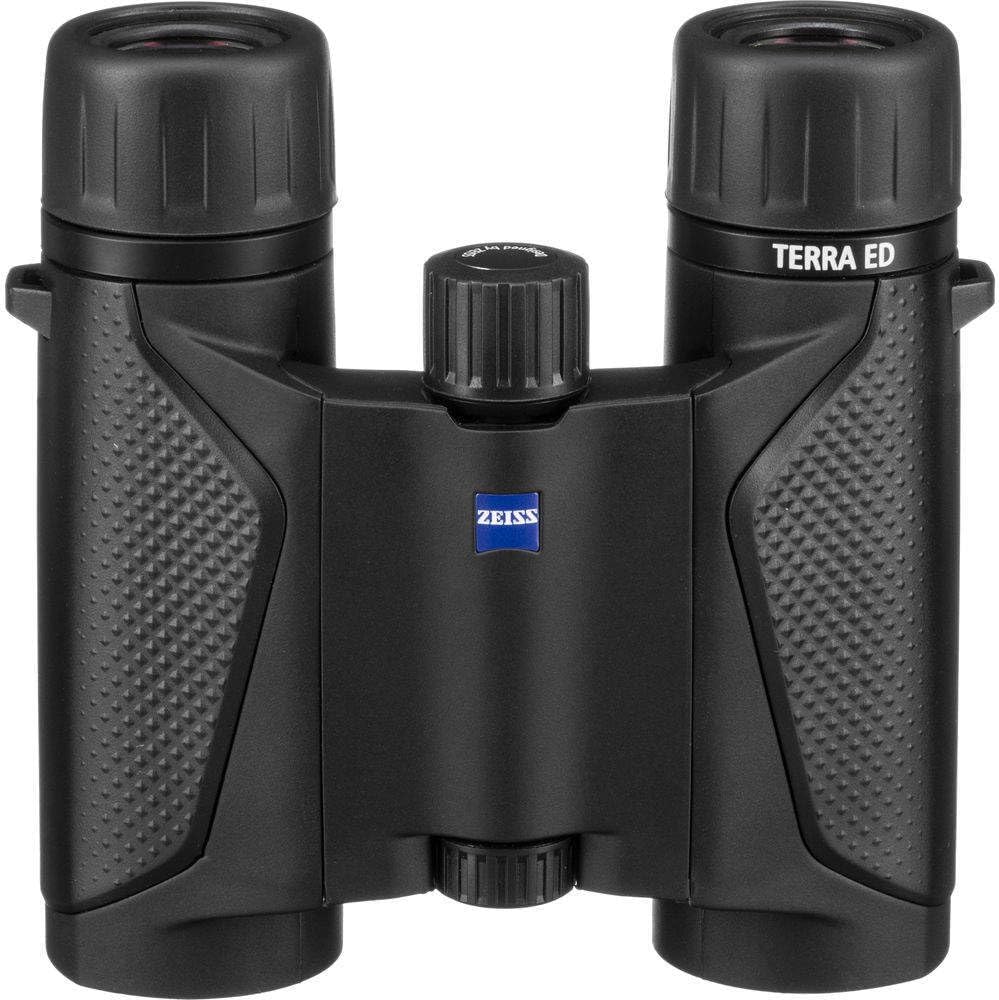
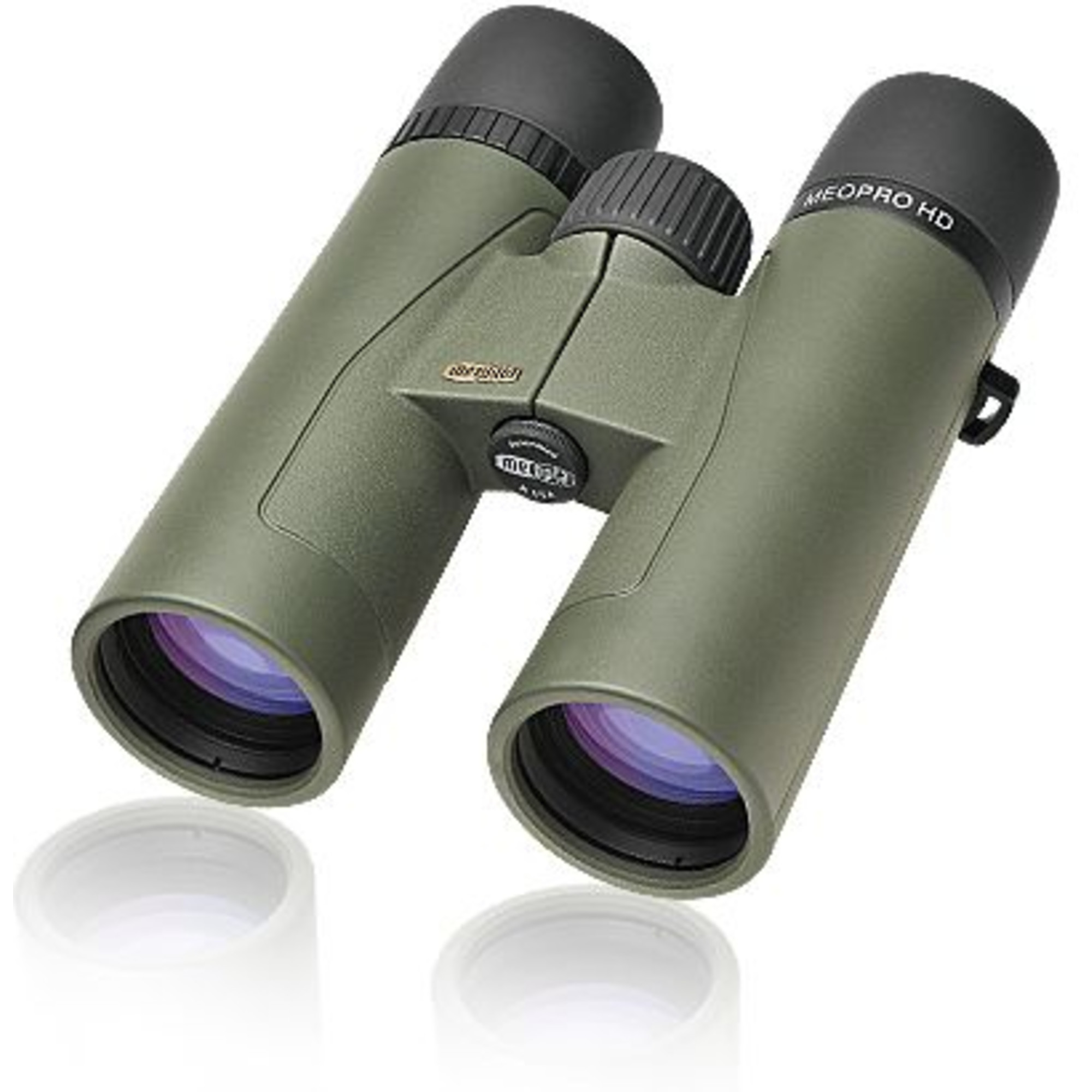
Quick take: The Zeiss Terra ED Pocket 10x25 costs $30 less; the Zeiss Terra ED Pocket 10x25 reaches farther (10x vs 8x); the Meopta MeoPro HD 8x42 has a wider field of view (384 vs 291 ft @ 1000 yds).
Field of view, to scale
Top-down view · drawn to true scale — no exaggeration
Which one to buy
A folding pocket 10x and a full-size hunting 8x land within $30 of each other, and the choice is mostly about whether this will be your only binocular. The Meopta MeoPro HD 8x42 has been discontinued, though, so a new one may be hard to find, and that can decide things on its own.
As a main binocular the Meopta is far more capable. Its 5.25mm exit pupil against 2.5mm and 384 ft field against 291 ft make it brighter and easier to aim, and its 22mm of eye relief against 16mm makes it one of the friendliest choices for glasses. Owners call its color fringing control the standout, reporting none under nearly any conditions, and describe a bright, crisp image and a build tough enough that one test pair survived a 10-foot drop. Their complaints are only three eyecup positions, a focus wheel that runs stiff when new or cold, a diopter without a lock, softer edges, an average field and a thin dealer network.
The Terra Pocket is a different tool. Its owners praise a sharp, bright-for-its-size image and 10x reach in a 10.9 oz package that folds to palm size and actually gets carried. They are equally clear about its limits: the small exit pupil makes eye placement exact and dims fast in overcast light, 10x on so little mass shows hand shake, the narrow field makes finding birds hard, and the diopter is fiddly. They call it a second binocular and steer beginners to the 8x25. If you can find a MeoPro HD new, it is the better binocular for nearly everyone; the Terra Pocket suits someone who already owns a full-size pair and wants reach in a pocket.
Zeiss Terra ED Pocket 10x25
For experienced users who already own a full-size binocular and want 10x reach that folds into a jacket pocket for travel and hiking.
Meopta MeoPro HD 8x42
The better main binocular if you can still find one new: brighter, wider, glasses-friendly with 22mm of eye relief, and nearly free of color fringing.
| Spec | Zeiss Terra ED Pocket 10x25 | Meopta MeoPro HD 8x42 |
|---|---|---|
| Approx. price | ~$400 | ~$430 |
| Use case | General Purpose | General Purpose |
| Magnification | 10x | 8x |
| Objective | 25mm | 42mm |
| Exit pupil | 2.5mm | 5.25mm |
| Field of view | 291 ft @ 1000 yds | 384 ft @ 1000 yds |
| Eye relief | 16mm | 22mm |
| Close focus | 6.2 ft | 6.6 ft |
| Prism | Roof | Roof |
| Glass | ED | HD |
| Coating | Multi-Coated | Fully Multi-Coated |
| Weight | 10.9 oz | 24 oz |
| Dimensions | 4.3 x 4.4 in | 5.5 x 5.0 in |
| Warranty | Limited Lifetime | Limited Lifetime |
Feature comparison
Zeiss Terra ED Pocket 10x25
- ✓ED Glass
- ✗Phase-Corrected
- ✗Dielectric Coating
- ✓Waterproof
- ✓Fogproof
- ✗Image Stabilized
- ✗Tripod Adaptable
- ✗Magnesium Body
- ✗Locking Diopter
Meopta MeoPro HD 8x42
- ✓ED Glass
- ✓Phase-Corrected
- ✓Dielectric Coating
- ✓Waterproof
- ✓Fogproof
- ✗Image Stabilized
- ✓Tripod Adaptable
- ✗Magnesium Body
- ✓Locking Diopter
What birders say
Zeiss Terra ED Pocket 10x25
- ✓Genuinely pocketable - the double-hinge folding design collapses to palm size at 10.9 oz, so it actually gets carried instead of left at home
- ✓Punches above its weight optically - Schmidt-Pechan prisms, ED glass, and hydrophobic coatings deliver a sharp, bright-for-its-size image reviewers say embarrasses most compacts
- ✓10x reach in a shirt-pocket format is rare - most quality pocket binoculars stop at 8x
- ✓Noticeably sharper than Zeiss's older compact designs in side-by-side comparisons
- ✓Better in low light than its 8x25 sibling in one specific way - the higher magnification's twilight factor helps resolve distant detail as light fades
- ✓Waterproof and rated from -20C to +63C - a real all-weather instrument, not a fair-weather toy
- ✓Large, easy-to-grip focus wheel that's quick to use once broken in
- ✓Regularly found in the low-$300s, undercutting the Swarovski CL Pocket 10x25 and Zeiss's own Victory Pocket by hundreds while keeping the German-brand warranty
- ✗The 2.5mm exit pupil is unforgiving - eye alignment must be exact, blackouts come easily, and the view dims fast in overcast or twilight conditions
- ✗10x magnification on a 10.9 oz binocular means visible hand shake - harder to hold steady than any full-size 10x
- ✗Narrow 291 ft field of view makes finding birds and moving subjects genuinely difficult - this is a look-at-things glass, not a track-things glass
- ✗The focus wheel is stiff out of the box - reviewers found it hard to turn smoothly with one finger until it wore in
- ✗The diopter adjustment is fiddly and easy to knock, a repeated owner gripe
- ✗16mm eye relief is workable for eyeglass wearers, but the small exit pupil makes eye placement fussy
- ✗The double-hinge design requires re-setting your interpupillary distance every time you unfold it
- ✗Experienced forum users consistently steer beginners to the 8x25 version instead - the 10x25 format rewards practiced technique and punishes casual use
Meopta MeoPro HD 8x42
- ✓Chromatic aberration control is the standout - expert reviewers report seeing 'none whatsoever under virtually any field conditions,' beating many pricier binoculars
- ✓HD fluoride objective elements paired with Meopta's MeoBright coatings deliver a bright, crisp image praised across hunting and birding reviews
- ✓Excellent close focus around 4.2 feet with no field collapse - genuinely useful for butterflies and feeder watching
- ✓Generous 20mm+ eye relief makes it one of the friendliest mid-price binoculars for eyeglass wearers
- ✓The 5.3mm exit pupil suits dawn and dusk hunting better than the 10x sibling, matching a dark-adapted eye more closely
- ✓Tank-grade durability - one reviewer's test pair survived a 10-foot drop undamaged, and MeoShield exterior coating resists abrasion
- ✓Czech-made optical heart (Meopta has ground glass since 1933) with US assembly, a pedigree owners cite as the reason it punches above its price
- ✓Focus wheel is precise with no backlash, going close-to-infinity in about 1.3 turns - a well-judged gearing for field use
- ✗Only three eyecup positions where most competitors offer four or more, so some users hunt for a comfortable in-between setting
- ✗Focus wheel action runs slightly stiff, especially when new or in cold weather
- ✗Diopter ring has no lock, relying on friction alone
- ✗Light transmission trails the premium class - fine in daylight, but true alpha glass pulls ahead in the last light
- ✗Field of view is only a little better than average for an 8x42 - wide-field rivals like the Vortex Viper HD show you more
- ✗Edge sharpness falls off in the outer field; the design prioritizes the center of the image
- ✗Meopta's thin dealer network makes trying before buying difficult and resale slower than big-name brands
- ✗The sandpaper-texture armor grips well but some owners find it less comfortable than softer rubber coatings
Zeiss Terra ED Pocket 10x25 vs Meopta MeoPro HD 8x42: common questions
Is the Meopta MeoPro HD 8x42 still available, or should I buy the Zeiss Terra ED Pocket 10x25?▾
The MeoPro HD 8x42 has been discontinued, so new stock may be scarce. If you find one, owners rate it highly for color fringing control and toughness. The Terra Pocket is current, but its owners describe it as a second binocular rather than a replacement for a full-size 8x42.
Which is better with glasses, the Terra ED Pocket 10x25 or the MeoPro HD 8x42?▾
The Meopta, with 22mm of eye relief against 16mm, and owners call it one of the friendliest mid-price binoculars for glasses. Terra Pocket owners say 16mm is workable, but its small exit pupil makes eye placement fussy.
Is the Terra ED Pocket 10x25 bright enough compared with the MeoPro HD 8x42?▾
Only in good light. Its 2.5mm exit pupil is less than half the Meopta's 5.25mm, and owners say the Pocket dims fast in overcast or twilight. Meopta owners say their 8x42 suits dawn and dusk hunting well.