Zeiss Terra ED 8x42 vs Zeiss Terra ED 10x42
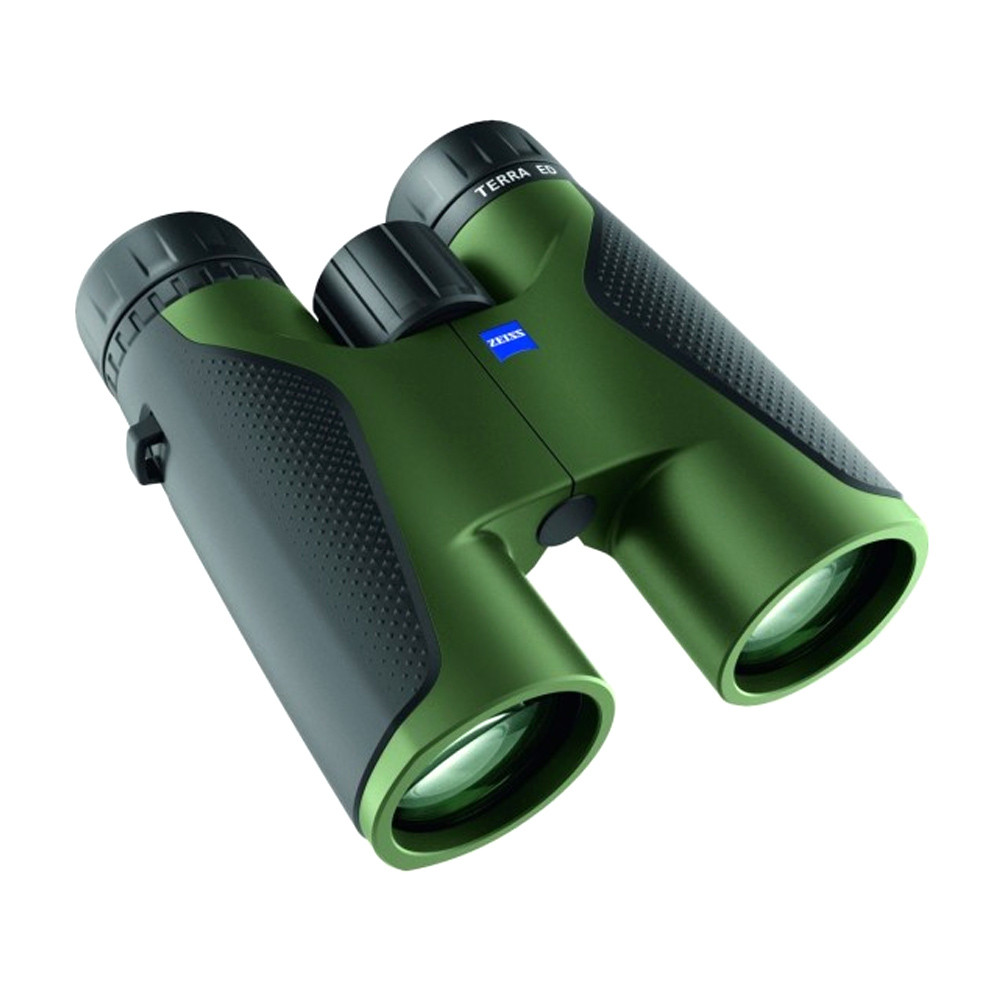
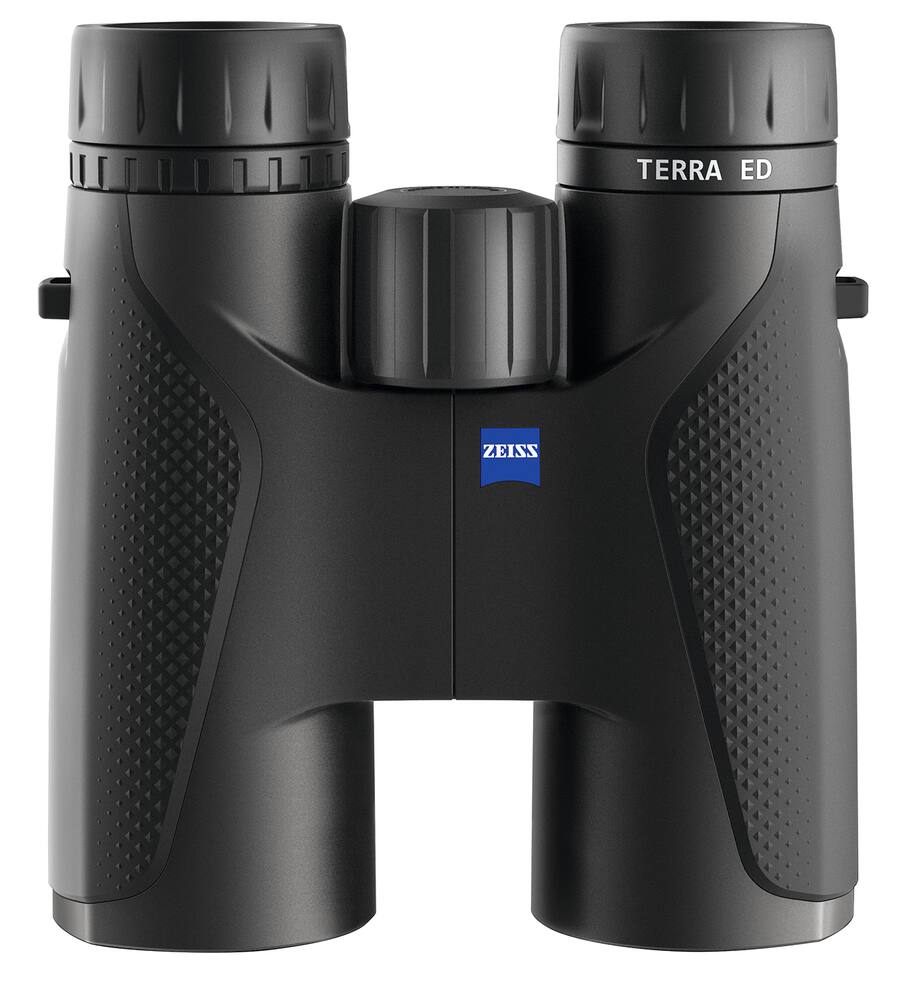
Quick take: The Zeiss Terra ED 10x42 reaches farther (10x vs 8x); the Zeiss Terra ED 8x42 has a wider field of view (375 vs 330 ft @ 1000 yds).
Field of view, to scale
Top-down view · drawn to true scale — no exaggeration
Which one to buy
For anyone who wears glasses, eye relief decides this pair before anything else. The Terra ED 8x42 offers 18mm; the 10x42 is rated at 14mm, and its owners say eyeglass wearers cannot see the full field, a common reason for returns. Both cost $500, weigh 25.6 oz, focus to 5.3 ft and share the same ED glass and body.
The 8x42 is the safer buy for most people. Beyond eye relief it has a wider 375 ft field against 330 ft and a 5.25mm exit pupil against 4.2mm. Owners say nothing at its price matches its center sharpness, praise its color and its fast 1.5-turn focus once the stiffness wears off, and report years of field abuse without failures. Their complaints are soft edges outside a roughly 70% sweet spot, color fringing on high-contrast edges, plasticky armor and eyecups, and a diopter that does not lock.
The 10x42 is for hunters who need reach. Owners call it exceptionally clear for the money, single out its stray-light control and a focus wheel fast enough for changing distances, and some prefer its eyecups to pricier Zeiss models. They also mention a warm color cast, only fair fringing control, some glare in bright conditions and more sample variation than Zeiss's pricier lines. If you glass open country without glasses, the 10x42 earns its place; for birding, general use and anyone with spectacles, take the 8x42.
Zeiss Terra ED 8x42
The default for birding, general use and glasses wearers: 18mm of eye relief, a wider field and a brighter exit pupil at the same price.
Zeiss Terra ED 10x42
For hunters glassing open country without eyeglasses who want 10x reach, strong stray-light control and a fast focus wheel.
| Spec | Zeiss Terra ED 8x42 | Zeiss Terra ED 10x42 |
|---|---|---|
| Approx. price | ~$500 | ~$500 |
| Use case | General Purpose | General Purpose |
| Magnification | 8x | 10x |
| Objective | 42mm | 42mm |
| Exit pupil | 5.25mm | 4.2mm |
| Field of view | 375 ft @ 1000 yds | 330 ft @ 1000 yds |
| Eye relief | 18mm | 14mm |
| Close focus | 5.3 ft | 5.3 ft |
| Prism | Roof | Roof |
| Glass | ED | ED |
| Coating | Multi-Coated | Multi-Coated |
| Weight | 25.6 oz | 25.6 oz |
| Dimensions | 5.6 x 4.9 in | 5.6 x 4.9 in |
| Warranty | Limited Lifetime | Limited Lifetime |
Feature comparison
Zeiss Terra ED 8x42
- ✓ED Glass
- ✗Phase-Corrected
- ✗Dielectric Coating
- ✓Waterproof
- ✓Fogproof
- ✗Image Stabilized
- ✗Tripod Adaptable
- ✗Magnesium Body
- ✗Locking Diopter
Zeiss Terra ED 10x42
- ✓ED Glass
- ✗Phase-Corrected
- ✗Dielectric Coating
- ✓Waterproof
- ✓Fogproof
- ✗Image Stabilized
- ✗Tripod Adaptable
- ✗Magnesium Body
- ✗Locking Diopter
What birders say
Zeiss Terra ED 8x42
- ✓Genuinely sharp center field with Schott ED glass - owners consistently say nothing else matches this sharpness at the price, with a sweet spot notably larger than the Monarch M7 or Diamondback HD
- ✓Real Zeiss color rendering - a bright, neutral-to-slightly-warm image that long-time users describe as 'a taste of the Conquest' for a third of the money
- ✓Excellent close focus around 5.3 feet, making it a sleeper pick for butterfly and dragonfly watchers
- ✓Hydrophobic Zeiss MC coatings shed rain and fog fast - hunters on forums report using them in drizzle all day without issues
- ✓Compact, lightweight body (~24.5 oz) that packs smaller than most 42mm competitors and rides comfortably on a harness
- ✓Fast focus wheel goes close-to-infinity in about 1.5 turns - birders like how quickly it snaps between a feeder and a distant treeline
- ✓Frequently discounted to $350-450, where owners almost universally call it the best glass-per-dollar in the Zeiss lineup
- ✓Simple, tough polymer chassis with fiberglass reinforcement - multiple owners report years of truck-and-field abuse with no mechanical failures
- ✗Focus wheel is stiff out of the box on many units - a common forum complaint, though most say it loosens up with use
- ✗Edge softness is real: about a 70% sweet spot with noticeable field curvature and pincushion, so panning is less relaxed than on the Conquest line
- ✗Made in China, which bothers some buyers expecting German manufacture at the Zeiss price - a perennial forum debate
- ✗Chromatic aberration shows on high-contrast edges (birds against bright sky) more than on the Conquest HD/HDX
- ✗Plasticky-feeling armor and eyecups that feel a step below the build of the similarly priced Nikon Monarch M7
- ✗Eyecups have limited intermediate click stops and can collapse under firm pressure for some eyeglass wearers
- ✗No locking diopter - it can get bumped in a pack, a recurring gripe from hunters
- ✗Warranty is shorter and less generous than Vortex's VIP no-questions policy, which forum members weigh heavily in this price class
Zeiss Terra ED 10x42
- ✓Real Zeiss optical DNA at an entry price - SCHOTT ED glass and hydrophobic multi-coatings deliver a crisp, contrasty image hunters on forums call "exceptionally clear for the money"
- ✓Excellent stray-light management - one experienced forum reviewer rated the Terra among the best they'd tested at suppressing veiling glare from outside the field
- ✓Fast, aggressive focus wheel that goes close-to-far quickly - a favorite feature among hunters glassing at changing distances
- ✓Comfortable eyecups that several owners say work better than the ones on the pricier Conquest line
- ✓Compact, grippy, well-armored body that feels tougher than its price - waterproof, nitrogen purged, and rated for serious cold
- ✓Frequent street-price deals well under $400 make it one of the cheapest tickets into a name-brand European optics warranty
- ✓5.3 ft close focus is unusually good for a 10x42 at this price
- ✓Strong resale and gift appeal - it's the classic 'first serious binocular' that owners keep as a truck or backup glass after upgrading
- ✗Only 14mm of usable eye relief on the 10x42 - eyeglass wearers consistently report they can't see the full field, a common reason for returns
- ✗A slightly warm/yellow color cast that purists notice next to neutral-toned competitors
- ✗Chromatic aberration control is only fair for an 'ED' binocular - fringing shows on high-contrast edges more than a Conquest or Monarch M7
- ✗Sharpness and contrast are good but not superb - at least one owner returned a sample for soft collimation and felt rivals at the price out-resolved it
- ✗Some owners report noticeable glare in certain bright conditions with the 10x42 despite the line's generally good stray-light control
- ✗Made in China, which some Zeiss loyalists hold against it - a few longtime fans openly say the Terra doesn't deserve the badge
- ✗330 ft field of view is average for 10x42 - the Nikon Monarch M7 10x42 shows you 32 more feet
- ✗Sample-to-sample variation shows up in owner reports more than with Zeiss's Japanese and German-made lines - buy from somewhere with easy returns
Zeiss Terra ED 8x42 vs Zeiss Terra ED 10x42: common questions
Can I use the Zeiss Terra ED 10x42 with glasses, or should I get the 8x42?▾
Owners of the 10x42 say its 14mm of eye relief leaves glasses wearers unable to see the full field, even with the eyecups down. The 8x42's 18mm works for most glasses, though its owners note the eyecups can collapse under firm pressure.
Is the Terra ED 8x42 or 10x42 better for birding?▾
The 8x42. Its 375 ft field is wider than the 10x42's 330 ft, its exit pupil is larger and 8x is steadier. Owners of the 8x42 praise its large, sharp sweet spot and fast focus between a feeder and a distant treeline.
Do the Terra ED 8x42 and 10x42 have the same build quality issues?▾
Largely. Owners of the 8x42 mention a stiff focus wheel when new and plasticky armor, while 10x42 owners report sample variation and occasional soft collimation. Both are Chinese-built, which owners of each say bothers some Zeiss loyalists, so buy where returns are easy.