Zeiss Terra ED 10x42 vs Zeiss Terra ED Pocket 10x25
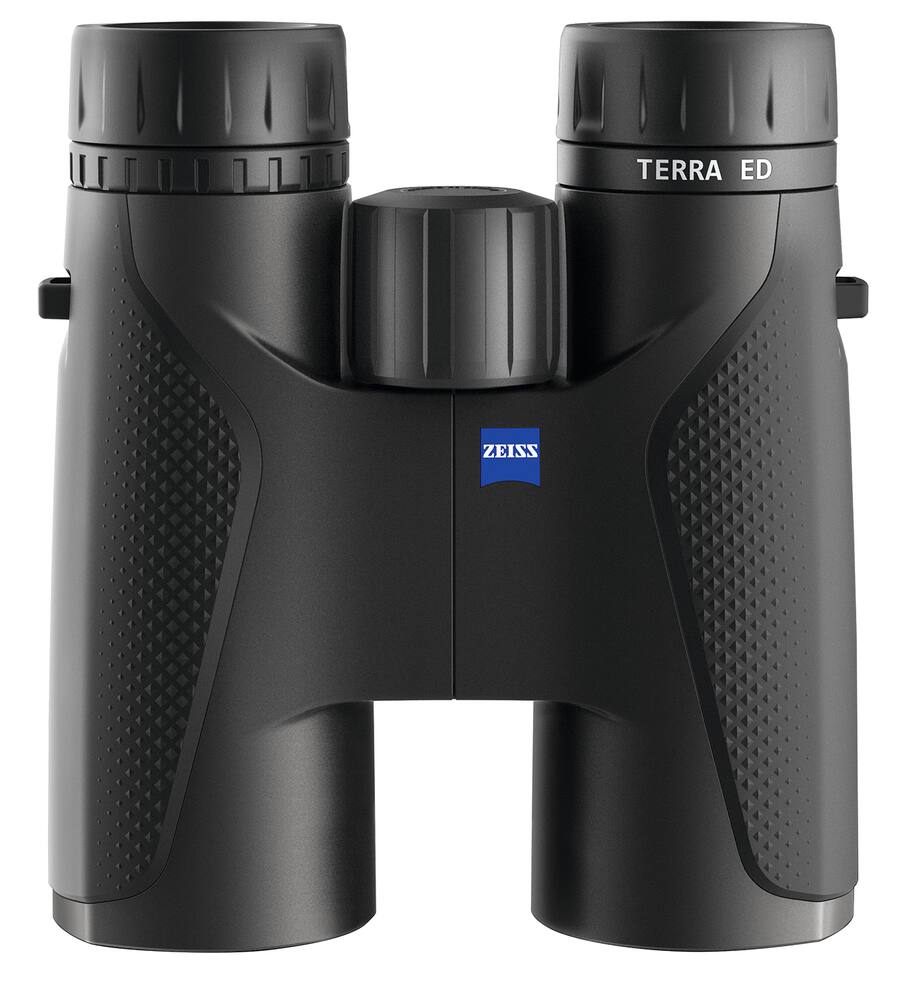
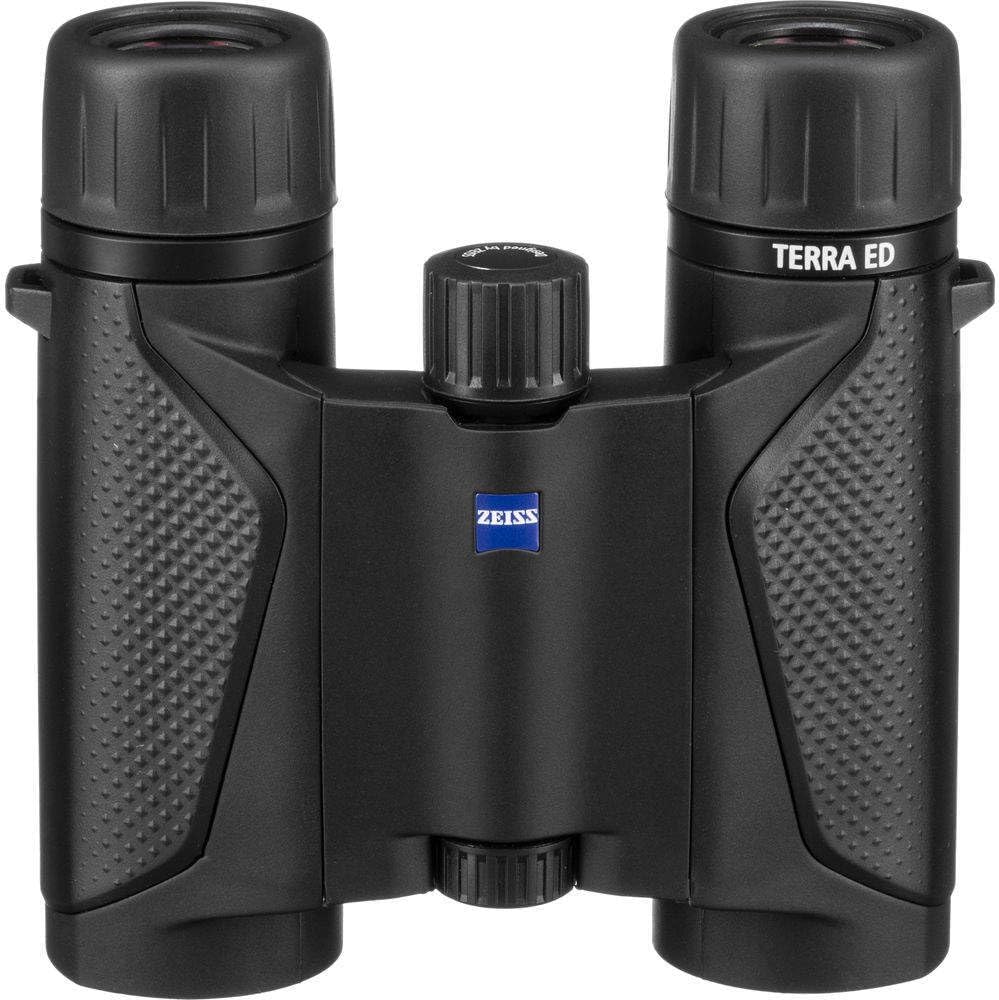
Quick take: The Zeiss Terra ED Pocket 10x25 costs $100 less; the Zeiss Terra ED 10x42 has a wider field of view (330 vs 291 ft @ 1000 yds); the Zeiss Terra ED 10x42 gathers more light with a larger 42mm objective.
Field of view, to scale
Top-down view · drawn to true scale — no exaggeration
Which one to buy
Same brand, same glass family, same 10x, and a $100 gap, but these do different jobs. The Terra ED 10x42 is a 25.6 oz full-size binocular for hunting and general glassing. The Terra ED Pocket 10x25 folds to palm size at 10.9 oz for travel, hikes and the glovebox. Pocket owners say plainly that it is a second binocular, not a first.
As a main binocular the 10x42 wins easily. Its 4.2mm exit pupil against 2.5mm keeps the image usable through legal shooting light, its 330 ft field against 291 ft makes finding subjects easier, and its mass helps hold 10x steady. Owners praise a crisp, contrasty center, strong stray-light control, a fast focus wheel and a tough body. Its big drawback is eye relief: rated at 14mm, and owners say glasses wearers cannot see the full field, a common reason for returns. They also mention a warm color cast, fair-at-best color fringing control and sample variation.
The Pocket's owners like its sharp, bright-for-its-size image and 10x reach in a shirt pocket. Its 16mm of eye relief beats the 10x42's, but the small exit pupil makes eye placement fussy, blackouts come easily and the view dims fast in overcast light. 10x on 10.9 oz shows hand shake, the focus is stiff when new, the diopter is fiddly and you reset the hinge each time you unfold it. Owners steer beginners to the 8x25 instead. For hunting or a first serious binocular, the 10x42 is the right call, provided you don't wear glasses; the Pocket suits experienced users who want reach in the smallest package.
Zeiss Terra ED 10x42
For hunters and general outdoor use: brighter, wider and steadier as a main binocular, if you don't glass with eyeglasses on.
Zeiss Terra ED Pocket 10x25
For experienced users who want a 10x that fits a pocket for travel and hiking, alongside a full-size binocular rather than instead of one.
| Spec | Zeiss Terra ED 10x42 | Zeiss Terra ED Pocket 10x25 |
|---|---|---|
| Approx. price | ~$500 | ~$400 |
| Use case | General Purpose | General Purpose |
| Magnification | 10x | 10x |
| Objective | 42mm | 25mm |
| Exit pupil | 4.2mm | 2.5mm |
| Field of view | 330 ft @ 1000 yds | 291 ft @ 1000 yds |
| Eye relief | 14mm | 16mm |
| Close focus | 5.3 ft | 6.2 ft |
| Prism | Roof | Roof |
| Glass | ED | ED |
| Coating | Multi-Coated | Multi-Coated |
| Weight | 25.6 oz | 10.9 oz |
| Dimensions | 5.6 x 4.9 in | 4.3 x 4.4 in |
| Warranty | Limited Lifetime | Limited Lifetime |
Feature comparison
Zeiss Terra ED 10x42
- ✓ED Glass
- ✗Phase-Corrected
- ✗Dielectric Coating
- ✓Waterproof
- ✓Fogproof
- ✗Image Stabilized
- ✗Tripod Adaptable
- ✗Magnesium Body
- ✗Locking Diopter
Zeiss Terra ED Pocket 10x25
- ✓ED Glass
- ✗Phase-Corrected
- ✗Dielectric Coating
- ✓Waterproof
- ✓Fogproof
- ✗Image Stabilized
- ✗Tripod Adaptable
- ✗Magnesium Body
- ✗Locking Diopter
What birders say
Zeiss Terra ED 10x42
- ✓Real Zeiss optical DNA at an entry price - SCHOTT ED glass and hydrophobic multi-coatings deliver a crisp, contrasty image hunters on forums call "exceptionally clear for the money"
- ✓Excellent stray-light management - one experienced forum reviewer rated the Terra among the best they'd tested at suppressing veiling glare from outside the field
- ✓Fast, aggressive focus wheel that goes close-to-far quickly - a favorite feature among hunters glassing at changing distances
- ✓Comfortable eyecups that several owners say work better than the ones on the pricier Conquest line
- ✓Compact, grippy, well-armored body that feels tougher than its price - waterproof, nitrogen purged, and rated for serious cold
- ✓Frequent street-price deals well under $400 make it one of the cheapest tickets into a name-brand European optics warranty
- ✓5.3 ft close focus is unusually good for a 10x42 at this price
- ✓Strong resale and gift appeal - it's the classic 'first serious binocular' that owners keep as a truck or backup glass after upgrading
- ✗Only 14mm of usable eye relief on the 10x42 - eyeglass wearers consistently report they can't see the full field, a common reason for returns
- ✗A slightly warm/yellow color cast that purists notice next to neutral-toned competitors
- ✗Chromatic aberration control is only fair for an 'ED' binocular - fringing shows on high-contrast edges more than a Conquest or Monarch M7
- ✗Sharpness and contrast are good but not superb - at least one owner returned a sample for soft collimation and felt rivals at the price out-resolved it
- ✗Some owners report noticeable glare in certain bright conditions with the 10x42 despite the line's generally good stray-light control
- ✗Made in China, which some Zeiss loyalists hold against it - a few longtime fans openly say the Terra doesn't deserve the badge
- ✗330 ft field of view is average for 10x42 - the Nikon Monarch M7 10x42 shows you 32 more feet
- ✗Sample-to-sample variation shows up in owner reports more than with Zeiss's Japanese and German-made lines - buy from somewhere with easy returns
Zeiss Terra ED Pocket 10x25
- ✓Genuinely pocketable - the double-hinge folding design collapses to palm size at 10.9 oz, so it actually gets carried instead of left at home
- ✓Punches above its weight optically - Schmidt-Pechan prisms, ED glass, and hydrophobic coatings deliver a sharp, bright-for-its-size image reviewers say embarrasses most compacts
- ✓10x reach in a shirt-pocket format is rare - most quality pocket binoculars stop at 8x
- ✓Noticeably sharper than Zeiss's older compact designs in side-by-side comparisons
- ✓Better in low light than its 8x25 sibling in one specific way - the higher magnification's twilight factor helps resolve distant detail as light fades
- ✓Waterproof and rated from -20C to +63C - a real all-weather instrument, not a fair-weather toy
- ✓Large, easy-to-grip focus wheel that's quick to use once broken in
- ✓Regularly found in the low-$300s, undercutting the Swarovski CL Pocket 10x25 and Zeiss's own Victory Pocket by hundreds while keeping the German-brand warranty
- ✗The 2.5mm exit pupil is unforgiving - eye alignment must be exact, blackouts come easily, and the view dims fast in overcast or twilight conditions
- ✗10x magnification on a 10.9 oz binocular means visible hand shake - harder to hold steady than any full-size 10x
- ✗Narrow 291 ft field of view makes finding birds and moving subjects genuinely difficult - this is a look-at-things glass, not a track-things glass
- ✗The focus wheel is stiff out of the box - reviewers found it hard to turn smoothly with one finger until it wore in
- ✗The diopter adjustment is fiddly and easy to knock, a repeated owner gripe
- ✗16mm eye relief is workable for eyeglass wearers, but the small exit pupil makes eye placement fussy
- ✗The double-hinge design requires re-setting your interpupillary distance every time you unfold it
- ✗Experienced forum users consistently steer beginners to the 8x25 version instead - the 10x25 format rewards practiced technique and punishes casual use
Zeiss Terra ED 10x42 vs Zeiss Terra ED Pocket 10x25: common questions
Can the Zeiss Terra ED Pocket 10x25 replace the Terra ED 10x42?▾
Not for most people. Owners of the Pocket describe it as a second binocular, with a 2.5mm exit pupil that dims fast and a narrow 291 ft field. The 10x42 is far better at dawn and dusk and easier to hold steady. The Pocket's strength is fitting where a 10x42 never will.
Which Terra ED is better with eyeglasses, the 10x42 or the Pocket 10x25?▾
The Pocket is rated at 16mm against the 10x42's 14mm, and owners of the 10x42 say glasses wearers cannot see its full field. Pocket owners call 16mm workable but say its small exit pupil makes eye placement fussy. Glasses wearers should also consider the 8x42 Terra.
Is the Terra ED Pocket 10x25 hard to hold steady compared with the 10x42?▾
Yes. Owners say 10x on a 10.9 oz body shows hand shake more than any full-size 10x, and recommend bracing elbows or using a trekking pole. The heavier 10x42 sits steadier in the hand.