Zeiss SFL 10x40 vs Zeiss SFL 8x30
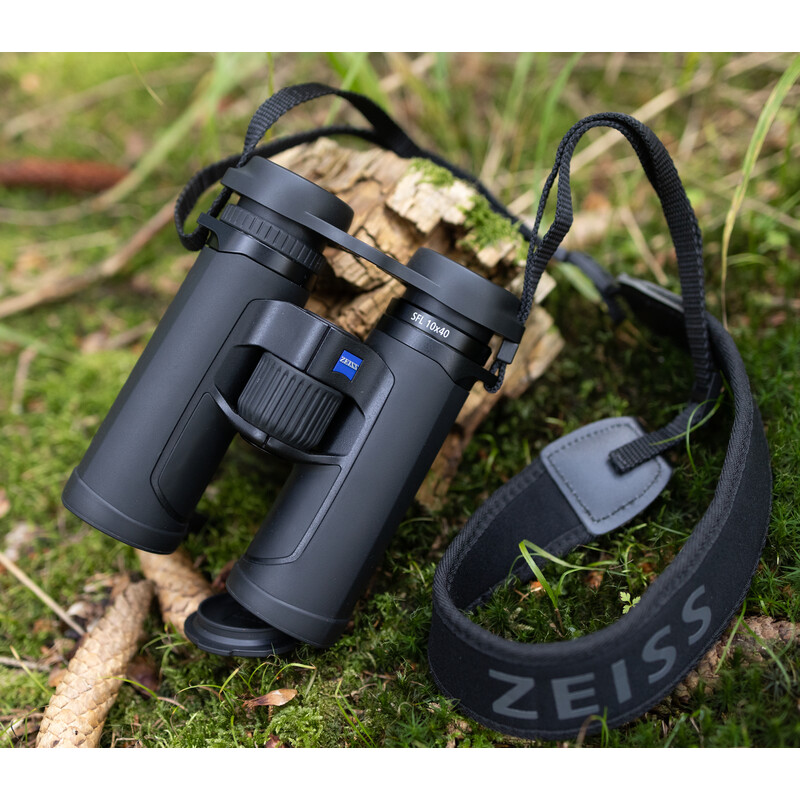
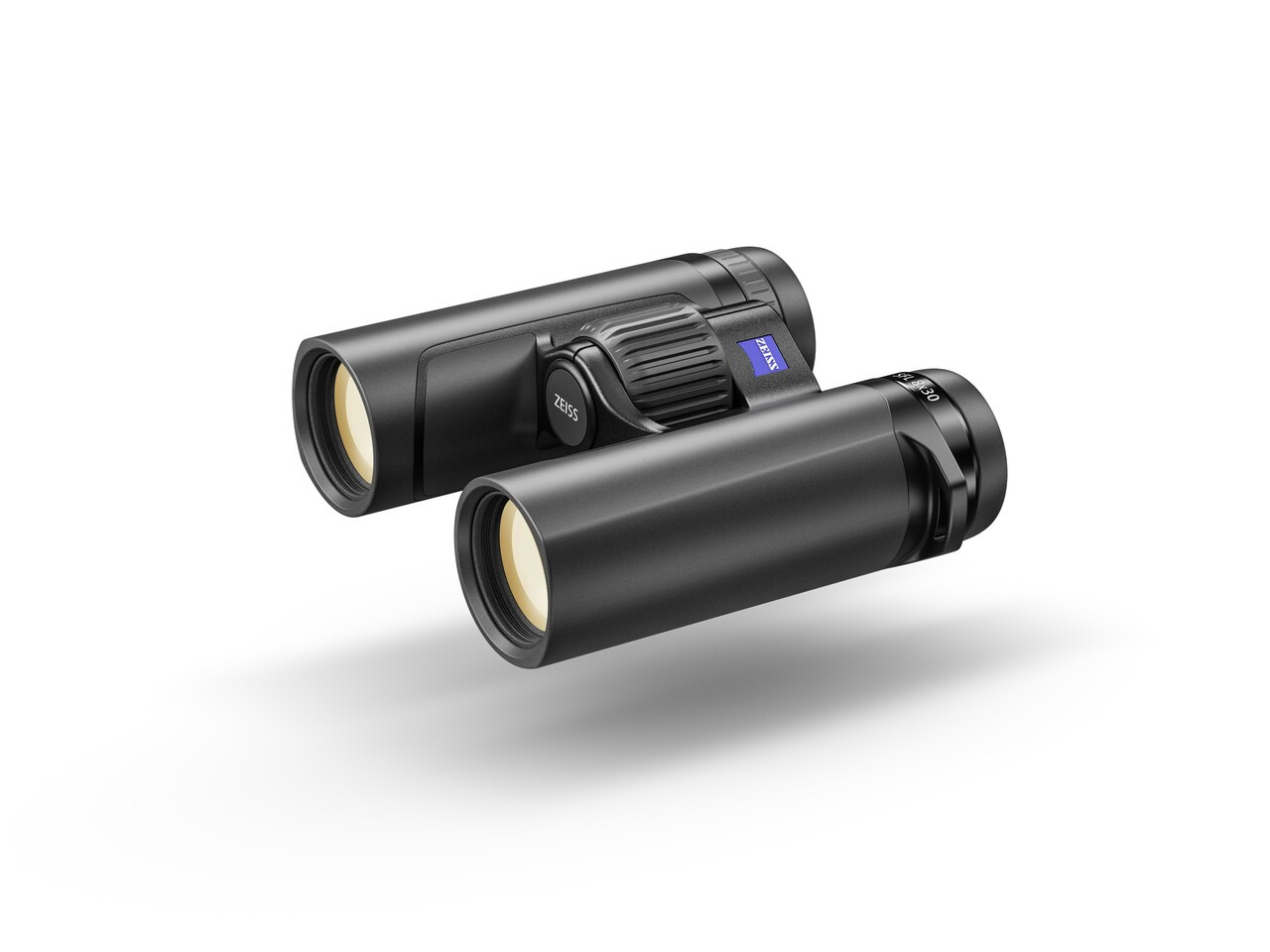
Quick take: The Zeiss SFL 8x30 costs $200 less; the Zeiss SFL 10x40 reaches farther (10x vs 8x); the Zeiss SFL 8x30 has a wider field of view (426 vs 345 ft @ 1000 yds).
Field of view, to scale
Top-down view · drawn to true scale — no exaggeration
Which one to buy
Reach and dusk light on one side, a wide field and the lightest carry on the other: that is how the SFL 10x40 and SFL 8x30 divide, with $200 between them. Both share Zeiss's UHD glass, 18mm of rated eye relief, 4.9 ft close focus, a fast focus wheel of about 1.4 turns and a transferable lifetime warranty.
The 8x30 is the easier binocular to love, and its owners say so. It weighs 16.2 oz against 22.6 oz, shows 426 ft against 345 ft, and owners describe a bright, tack-sharp center, excellent glare suppression, no rolling-ball effect, and an eye box forgiving enough that glasses wearers see the whole field. Its complaints are edge color fringing that owners expect better at this price, softening outside roughly the central 60%, thin armor that scratches, eyecups that can unscrew, and a weight so low that holding steady in strong wind gets harder.
The 10x40 brings 10x reach and a 4.0mm exit pupil against 3.75mm. Owners describe a vibrant picture-window view with resolution among the best in its size class, well-controlled center fringing and minimal blackouts. Its downsides are softer edges with some fringing, a field modest next to pricier 10x42s, focus some find touchy at 10x, and hand shake that has pushed a number of owners to trade down to an 8x. For long-distance birding, shorebirds and mountain hunting with steady hands, the 10x40 is worth the extra $200 and ounces; for everyday birding, hiking and travel, the 8x30 is lighter, wider and cheaper.
Zeiss SFL 10x40
For birders and mountain hunters who glass at distance and later in the day, and have steady hands: 10x reach and a larger exit pupil in a 22.6 oz body.
Zeiss SFL 8x30
Best for all-day birding, hiking and travel: 16.2 oz, a much wider 426 ft field, a forgiving eye box, and $200 less.
| Spec | Zeiss SFL 10x40 | Zeiss SFL 8x30 |
|---|---|---|
| Approx. price | ~$1,700 | ~$1,500 |
| Use case | Birding | Birding |
| Magnification | 10x | 8x |
| Objective | 40mm | 30mm |
| Exit pupil | 4.0mm | 3.75mm |
| Field of view | 345 ft @ 1000 yds | 426 ft @ 1000 yds |
| Eye relief | 18mm | 18mm |
| Close focus | 4.9 ft | 4.9 ft |
| Prism | Roof | Roof |
| Glass | UHD | UHD |
| Coating | ZEISS T* Multi-Layer | ZEISS T* Multi-Layer |
| Weight | 22.6 oz | 16.2 oz |
| Dimensions | 5.7 x 4.9 in | 4.7 x 4.2 in |
| Warranty | Transferable Lifetime | Transferable Lifetime |
Feature comparison
Zeiss SFL 10x40
- ✗ED Glass
- ✗Phase-Corrected
- ✗Dielectric Coating
- ✓Waterproof
- ✓Fogproof
- ✗Image Stabilized
- ✗Tripod Adaptable
- ✓Magnesium Body
- ✗Locking Diopter
Zeiss SFL 8x30
- ✗ED Glass
- ✗Phase-Corrected
- ✗Dielectric Coating
- ✓Waterproof
- ✓Fogproof
- ✗Image Stabilized
- ✗Tripod Adaptable
- ✓Magnesium Body
- ✗Locking Diopter
What birders say
Zeiss SFL 10x40
- ✓Near-alpha optics at just 22.6 oz - the weight-to-performance ratio is the whole reason this line exists, and owners say Zeiss delivered
- ✓Bright, vibrant 'picture-window' view with no obvious aberrations and resolution testers rank among the best of any compact handheld
- ✓SmartFocus wheel: about 1.4 turns lock-to-lock, big, rubberized, and precise - astronomy testers scored it a perfect 10
- ✓Noticeably smaller magnesium body than any 42mm alpha - packs like a mid-size, performs like a full-size
- ✓Comfortable measured 16-17mm eye relief with minimal blackouts, workable for most glasses wearers
- ✓Chromatic aberration very well controlled in the central field, even on harsh high-contrast subjects
- ✓Close focus around 1.3m measured - butterfly and dragonfly territory that most 10x binoculars can't touch
- ✓Roughly $700 cheaper than a Victory SF 10x42 while giving up only a sliver of its performance
- ✗Edge of field softens and chromatic aberration creeps in toward the periphery - the visible gap to Victory SF and NL Pure
- ✗345 ft field of view is modest next to the Victory SF 10x42's 360 ft and the NL Pure's 399 ft
- ✗Made in Japan rather than Germany - some long-time Zeiss owners question long-term serviceability once the warranty runs out
- ✗40mm objectives and a 4mm exit pupil give up a touch of twilight brightness to 42mm rivals
- ✗The fast SmartFocus gearing divides owners - at 10x, some find under 1.5 turns touchy for fine adjustment
- ✗At $1,700 it sits uncomfortably close to used and discounted alpha-glass money
- ✗Handshake at 10x is real: a number of owners end up trading to the 8x40 for all-day birding
- ✗No flagship extras - you don't get the accessory ecosystem or the edge-to-edge flat field of Zeiss's own SF line
Zeiss SFL 8x30
- ✓Huge 426 ft field of view with genuinely excellent central sharpness - professional testers describe the image as bright, tack sharp, and free of any detectable color bias
- ✓Feather-light at about 16.4 oz - roughly 150g lighter than the Victory SF 8x32 - making it the compact that actually stays on your neck all day
- ✓The focuser is the consensus best in the compact class: forum owners rate it considerably better than the Nikon Monarch 8x30, Swarovski CL, Curio, and Kowa 8x33, with 1.4 smooth turns from close focus to infinity
- ✓Outstanding close focus - measured at about 4.5 ft by one review team - great for butterflies and feeder watching
- ✓Excellent glare suppression against the light and no rolling-ball effect when panning, a deliberate design outcome Zeiss engineered with published optics research in mind
- ✓Comfortable, forgiving eye box with enough eye relief for glasses wearers to see the entire field - one detailed reviewer called it the most comfortable compact he'd personally used
- ✓Wide 54-74mm interpupillary range plus grippy 'sticky' armor - fits small faces and small hands unusually well
- ✓Owners consistently praise the clean magnesium design as one of the best-looking binoculars made, with eyecups that unscrew for easy cleaning
- ✗Edge chromatic aberration is the most repeated complaint - dead branches against bright sky show significant lateral color near the field edge, and owners say at over $1,000 they expect better
- ✗The UHD glass is a deliberate step below the Victory SF's fluoride glass - expert testers rate overall CA control as fairly average for the price
- ✗Star testing reveals field curvature and edge softening outside roughly the central 60% - daytime views look clean but critical viewers notice bloating near the field stops
- ✗So light that it's harder to hold steady in strong wind than a full-size 8x42 - several owners flag that low mass cuts both ways
- ✗Thin armor and an exposed anodized metal bridge that can't be refinished if scratched - less rugged than the old Victory FL line it effectively replaces
- ✗Focus wheel feel varies by unit: some owners report a slight softness or play while others call theirs perfect - worth checking your sample
- ✗The screw-off eyecups can accidentally unscrew when twisting them up if not firmly seated
- ✗3.75mm exit pupil fades earlier at dusk than an 8x42, and it's made in Japan rather than Germany, which some owners raise regarding long-term service
Zeiss SFL 10x40 vs Zeiss SFL 8x30: common questions
Is the Zeiss SFL 10x40 worth $200 more than the SFL 8x30?▾
Only if you need 10x reach or more dusk light. The 10x40 has a 4.0mm exit pupil against 3.75mm and more magnification. Owners of the 10x40 say a number of buyers end up trading to an 8x for steadier all-day birding, which is the 8x30's strength.
Which is better with glasses, the SFL 10x40 or SFL 8x30?▾
Both are rated at 18mm. Owners of the 8x30 say glasses wearers see the entire field and call its eye box unusually forgiving. Owners of the 10x40 measured closer to 16-17mm but report minimal blackouts and say it works for most glasses wearers.
Is the Zeiss SFL 8x30 too light to hold steady compared with the 10x40?▾
In strong wind, owners of the 8x30 say its low mass makes it harder to hold steady than a full-size binocular. In normal conditions, 8x is steadier than 10x, and 10x40 owners say hand shake at 10x is real enough that some switched to an 8x.