Zeiss Conquest HDX 8x42 vs Zeiss Conquest HDX 10x42
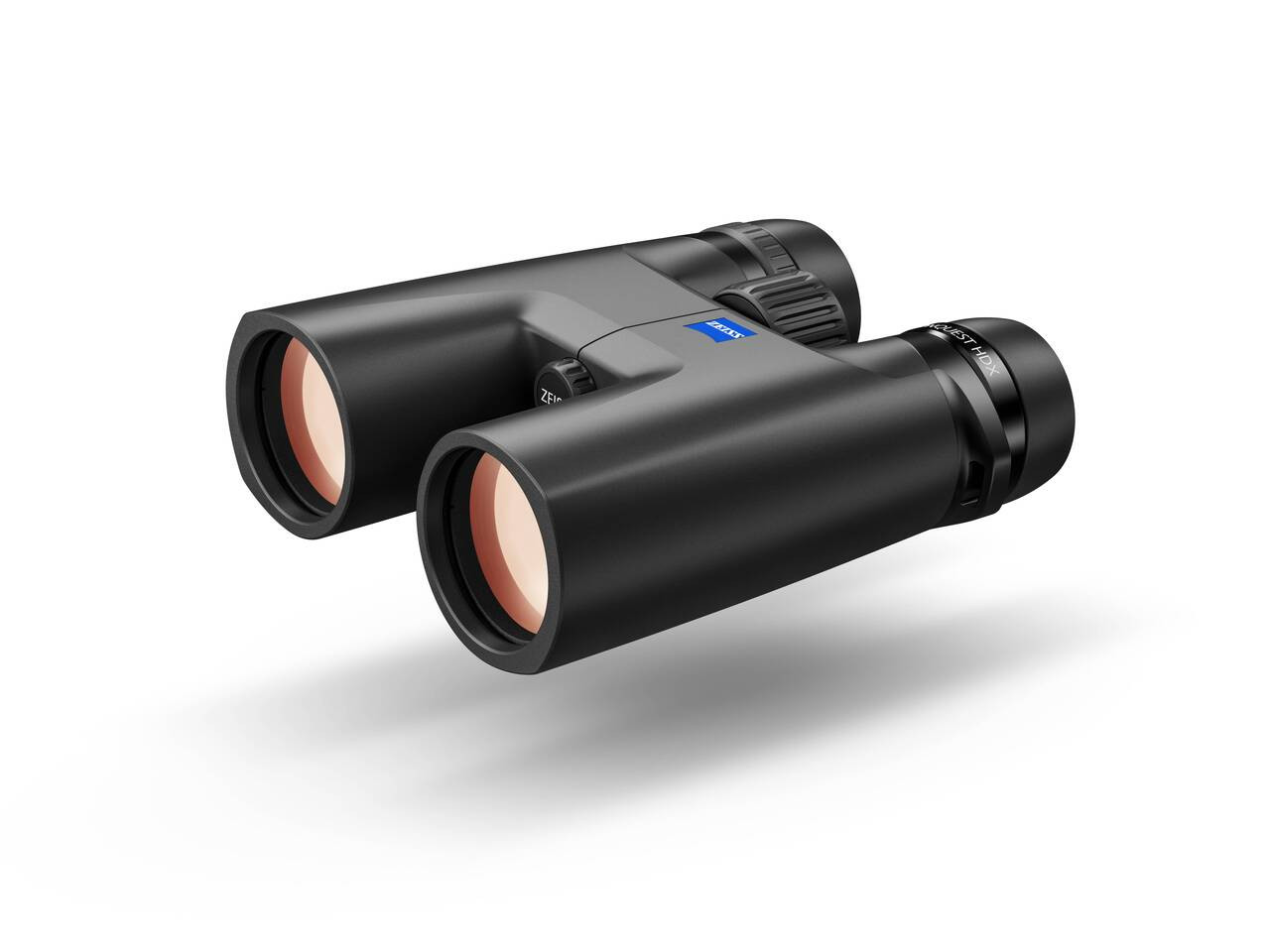
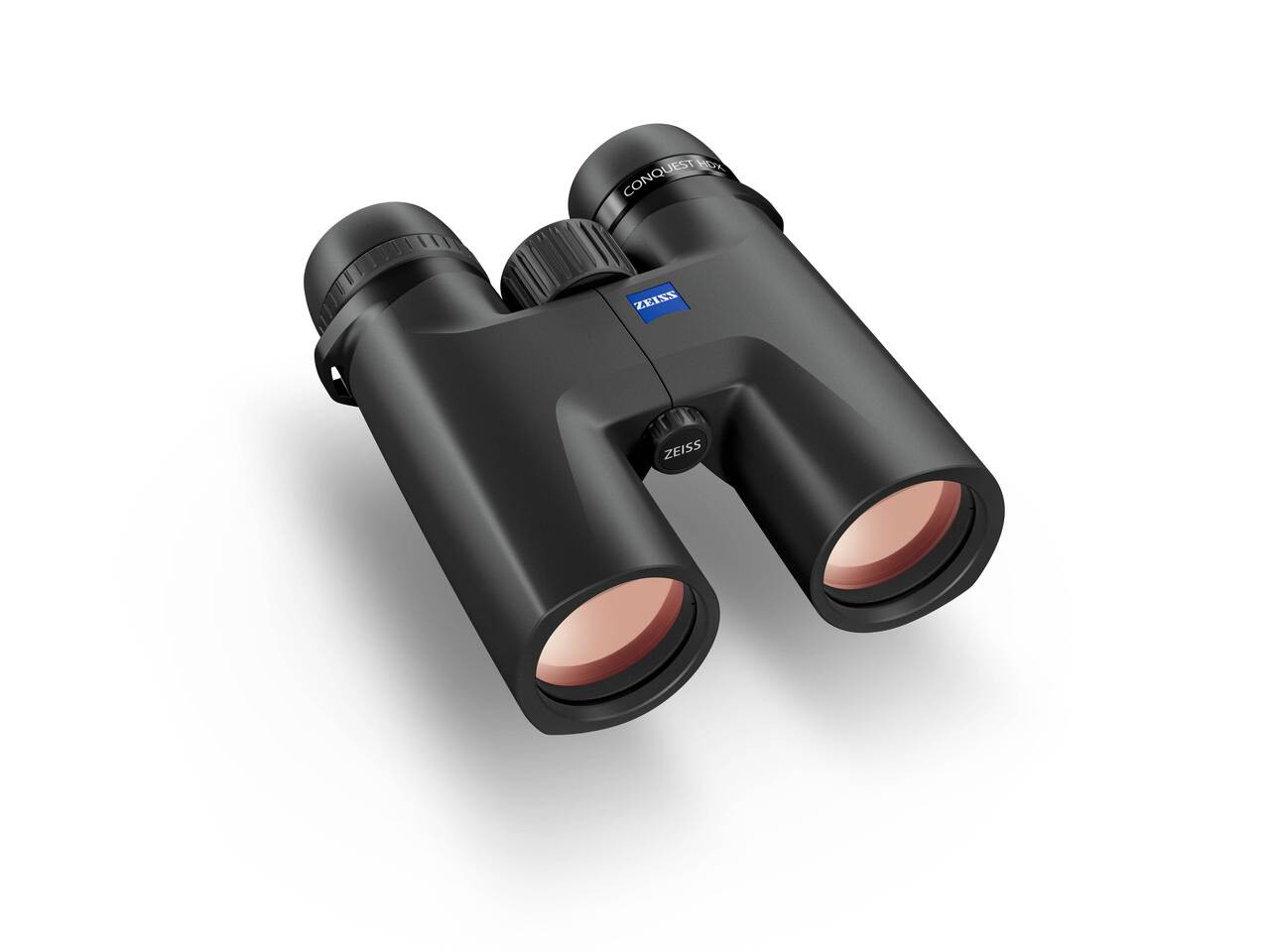
Quick take: The Zeiss Conquest HDX 10x42 reaches farther (10x vs 8x); the Zeiss Conquest HDX 8x42 has a wider field of view (384 vs 345 ft @ 1000 yds).
Field of view, to scale
Top-down view · drawn to true scale — no exaggeration
Which one to buy
Birders tend toward the 8x42 and hunters toward the 10x42, and with these two that split holds up. Both cost $1,000, weigh 25.2 oz, have 16.5mm of eye relief, focus to 6.6 ft and share the magnesium body, locking diopter, redesigned eyecups and field flattener that owners of each praise as fixes over the old Conquest HD.
The 8x42 gives the wider, brighter view: 384 ft against 345 ft and a 5.25mm exit pupil against 4.2mm. Its owners report edges dramatically sharper than the old HD and noticeably better color at dusk, and say panning feels natural rather than swimmy. A wider field and steadier hold make it the easier binocular for following birds and for general use.
The 10x42 is the hunting configuration. Its owners say its over 90% transmission gives bright, detailed images deep into legal shooting light, and one blind comparison put its image among the sharpest and brightest against much pricier glass. Its complaints are a field that trails the top tier, eye relief slightly tight for thick frames, and a short track record. Owners of the 8x42 add that glare in harsh side light is good rather than class-leading and that early units showed some variation in focus tension. For open-country glassing at dawn and dusk, take the 10x; for birding, woods and travel, the 8x42 is the more forgiving binocular.
Zeiss Conquest HDX 8x42
For birders and general use: a wider 384 ft field, a bigger exit pupil and a steadier view at the same price and weight.
Zeiss Conquest HDX 10x42
For hunters glassing open country at first and last light, where 10x reach and high transmission pay off.
| Spec | Zeiss Conquest HDX 8x42 | Zeiss Conquest HDX 10x42 |
|---|---|---|
| Approx. price | ~$1,000 | ~$1,000 |
| Use case | Birding | Hunting |
| Magnification | 8x | 10x |
| Objective | 42mm | 42mm |
| Exit pupil | 5.25mm | 4.2mm |
| Field of view | 384 ft @ 1000 yds | 345 ft @ 1000 yds |
| Eye relief | 16.5mm | 16.5mm |
| Close focus | 6.6 ft | 6.6 ft |
| Prism | Roof | Roof |
| Glass | HD | HD |
| Coating | Fully Multi-Coated | Fully Multi-Coated |
| Weight | 25.2 oz | 25.2 oz |
| Dimensions | 5.9 x 4.7 in | 5.9 x 4.7 in |
| Warranty | Limited Lifetime | Limited Lifetime |
Feature comparison
Zeiss Conquest HDX 8x42
- ✓ED Glass
- ✓Phase-Corrected
- ✓Dielectric Coating
- ✓Waterproof
- ✓Fogproof
- ✗Image Stabilized
- ✓Tripod Adaptable
- ✓Magnesium Body
- ✓Locking Diopter
Zeiss Conquest HDX 10x42
- ✓ED Glass
- ✓Phase-Corrected
- ✓Dielectric Coating
- ✓Waterproof
- ✓Fogproof
- ✗Image Stabilized
- ✓Tripod Adaptable
- ✓Magnesium Body
- ✓Locking Diopter
What birders say
Zeiss Conquest HDX 8x42
- ✓Field flattener plus aspheric lenses deliver near edge-to-edge sharpness - early owners on forums say the edges are dramatically better than the old Conquest HD and even beat the Maven B-series flagships
- ✓About 90% light transmission with updated coatings - noticeably brighter and more color-accurate at dusk than the HD it replaces
- ✓Magnesium chassis cut roughly 10% of the weight versus the Conquest HD 8x42, fixing the old model's biggest complaint (heft)
- ✓Finally gets a locking diopter - a long-requested fix that hunters and travelers repeatedly call out as worth the upgrade alone
- ✓Redesigned eyecups are smoother, properly sized, and hold their click stops - another direct fix of a common HD-era gripe
- ✓New armor is resistant to sweat, sunscreen, and DEET, and the hinge accepts a tripod adapter up front
- ✓Wide 7.3-degree (383 ft) field of view with minimal rolling-ball distortion - flat-field skeptics report panning feels natural, not swimmy
- ✓German-made Zeiss build and ergonomics at roughly half the price of a Victory SF - widely called the new sweet spot of the lineup
- ✗Price jumped meaningfully over the outgoing Conquest HD (roughly $1,000-1,150 vs the HD's frequent $800-900 sales), so the value math is tighter
- ✗Glare resistance in harsh side-light is good but not class-leading - a few side-by-side testers found competitors like the Nikon Monarch HG handle low-sun glare slightly better
- ✗Still no Victory-level T* FL glass - chromatic aberration is well controlled but not eliminated on the harshest contrast edges
- ✗Close focus around 6.5 feet is fine but unremarkable - butterfly watchers do better with an SFL or Monarch HG
- ✗At around 25.8 oz it's lighter than the HD but still heavier than the Zeiss SFL 8x40 or Monarch HG, which some owners cross-shop specifically for weight
- ✗Early-production units are still shaking out - a handful of forum reports of focus-wheel tension varying unit to unit
- ✗The flat-field view, while mild, does introduce a hint of rolling-ball for the small minority who are sensitive to field flatteners
- ✗Discontinuation deals on the old Conquest HD made it a screaming bargain, and some long-time users argue the HD at closeout money was the smarter buy
Zeiss Conquest HDX 10x42
- ✓Over 90% light transmission - field testers confirm bright, high-resolution images deep into legal shooting light
- ✓Field-flattened eyepieces keep the image sharp across the field - the clearest optical upgrade over the old Conquest HD's softer edges
- ✓New magnesium chassis cuts roughly 80g versus the Conquest HD it replaces
- ✓Finally gets a lockable diopter, fixing a long-standing Conquest HD annoyance
- ✓Improved eyecups and clever foldable objective covers - the small stuff got real attention
- ✓Zeiss T* and LotuTec coatings with well-controlled chromatic aberration in field conditions
- ✓Responsive, well-weighted focus wheel praised by hunting reviewers
- ✓In blind comparisons a tester found its image among 'the sharpest and brightest' against binoculars costing 500 pounds more - hunters call sub-$1,000 the most competitive segment, and this its benchmark
- ✗16.5mm eye relief is slightly tight for glasses wearers with thick frames
- ✗No fluoride UFL glass - color correction is very good but visibly a step below Zeiss's own Victory SF
- ✗345 ft field of view trails the Victory SF 10x42's 360 ft and Swarovski NL Pure's 399 ft
- ✗At 25.2 oz it's notably heavier than Zeiss's own SFL 10x40 at 22.6 oz
- ✗Several testers judge the gains over a Conquest HD 'extremely minor' in the center of the field - upgraders from an HD may be underwhelmed
- ✗The outgoing Conquest HD sold for hundreds less on closeout, which muddied the HDX's value story
- ✗Close focus of 2.0m is merely adequate for birders next to the SFL's ~1.5m
- ✗Brand-new 2024 line, so there's little long-term durability track record yet
Zeiss Conquest HDX 8x42 vs Zeiss Conquest HDX 10x42: common questions
Is the Conquest HDX 8x42 or 10x42 better for birding?▾
The 8x42. Its 384 ft field is wider than the 10x42's 345 ft, its 5.25mm exit pupil is brighter, and 8x is steadier in the hand. Owners of the 10x42 note its field trails the best in its class, which matters most when tracking moving birds.
Is the Conquest HDX 10x42 heavier than the 8x42?▾
No. Both weigh 25.2 oz and share the same magnesium body, eye relief and close focus. The only meaningful differences are magnification, field of view and exit pupil, so the choice comes down to how far away your subjects usually are.
Which Conquest HDX is better at dusk, the 8x42 or 10x42?▾
The 8x42 has the larger exit pupil, 5.25mm against 4.2mm, and its owners report better color at dusk than the old Conquest HD. Owners of the 10x42 still say its high transmission keeps images bright and detailed deep into legal light, with more reach.