Zeiss Conquest HD 8x42 vs Zeiss Conquest HDX 10x42
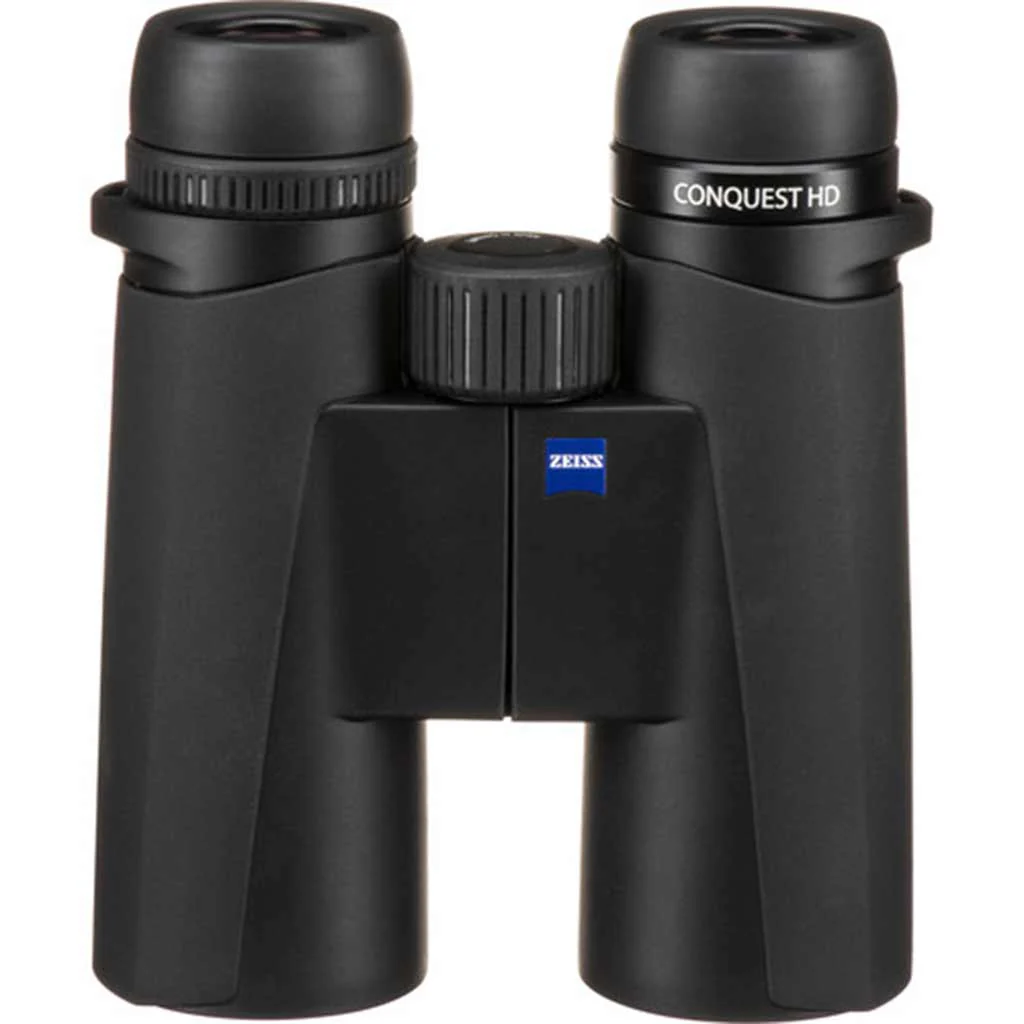
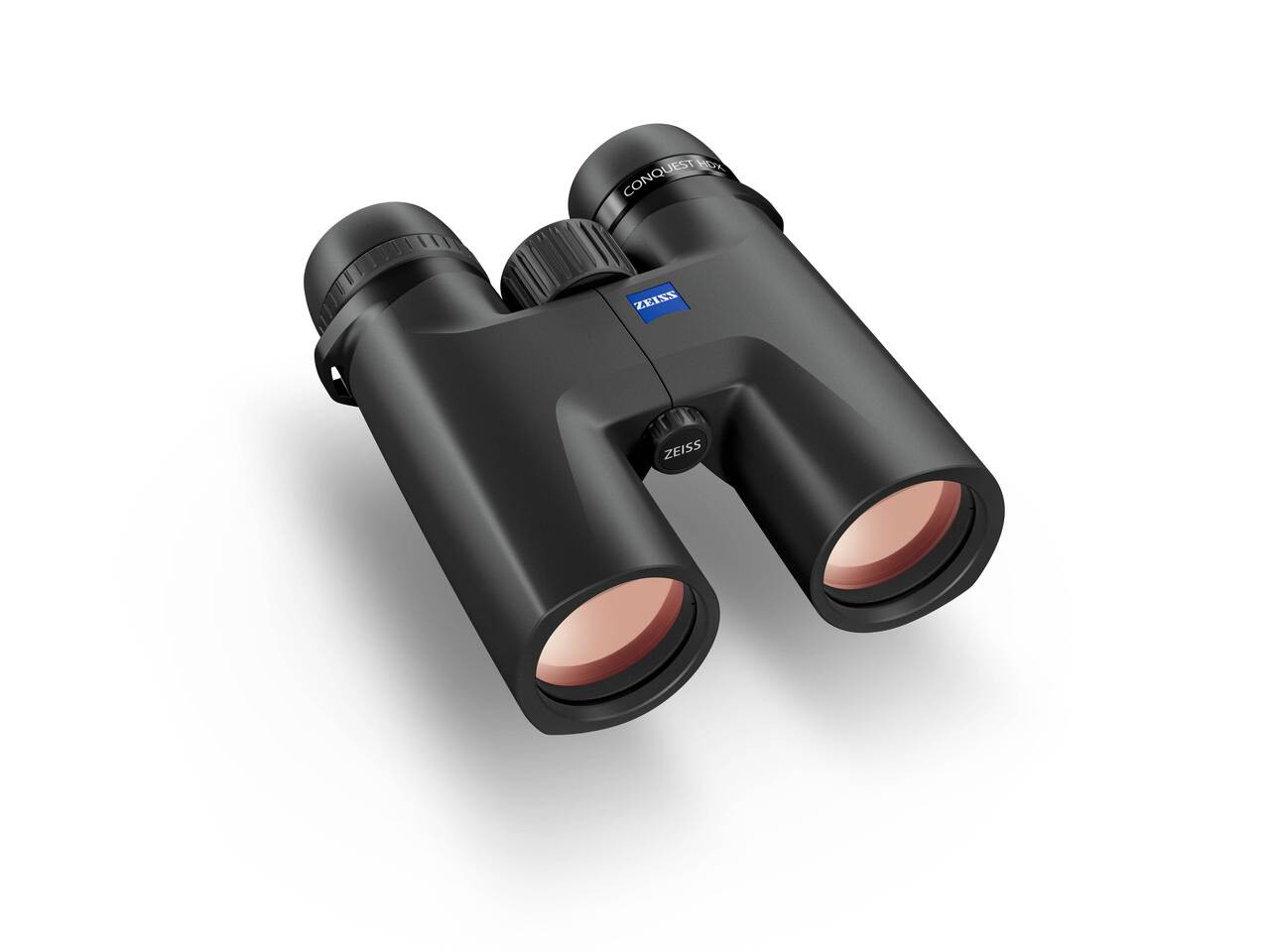
Quick take: The Zeiss Conquest HDX 10x42 reaches farther (10x vs 8x); the Zeiss Conquest HD 8x42 has a wider field of view (384 vs 345 ft @ 1000 yds).
Field of view, to scale
Top-down view · drawn to true scale — no exaggeration
Which one to buy
Choosing here means choosing a generation and a magnification at once, and at $1,000 apiece the two decisions point different ways. The Conquest HDX 10x42 is the newer, lighter binocular, 25.2 oz against 28.0 oz, with a magnesium body, a locking diopter, improved eyecups and a field flattener its owners say fixes the old HD's soft edges. The Conquest HD 8x42 has been discontinued, and owners say new stock is scarce, so it may be hard to find new at all.
What the older 8x42 still offers is the easier magnification. It has a 5.25mm exit pupil against 4.2mm, a 384 ft field against 345 ft and 18mm of eye relief against 16.5mm, which its owners say works for most glasses wearers. They call its center sharpness very hard to beat and its focus fast, with excellent depth of field. Its weaknesses are edges that soften past roughly halfway out, some glare when panning against backlight, its weight, and a diopter that does not lock.
The HDX 10x42 is built for hunters. Owners report over 90% transmission and bright, detailed images deep into legal light, a responsive focus wheel and well-controlled color fringing. Its drawbacks are eye relief that is slightly tight for thick frames, a midpack field, and a short track record since its 2024 launch. Several testers also call its center gains over a good Conquest HD extremely minor. For a birder, a Conquest HD 8x42 found well under $1,000 is the better buy; at equal money, or for a hunter who wants 10x, the HDX is the one to choose.
Zeiss Conquest HD 8x42
For birders and glasses wearers who find one at closeout below $1,000: a brighter, wider 8x view and 18mm of eye relief, with superb center sharpness.
Zeiss Conquest HDX 10x42
The choice at equal money, and for hunters: lighter, sharper at the edges, with a locking diopter and 10x reach that stays bright into legal light.
| Spec | Zeiss Conquest HD 8x42 | Zeiss Conquest HDX 10x42 |
|---|---|---|
| Approx. price | ~$1,000 | ~$1,000 |
| Use case | Birding | Hunting |
| Magnification | 8x | 10x |
| Objective | 42mm | 42mm |
| Exit pupil | 5.25mm | 4.2mm |
| Field of view | 384 ft @ 1000 yds | 345 ft @ 1000 yds |
| Eye relief | 18mm | 16.5mm |
| Close focus | 6.6 ft | 6.6 ft |
| Prism | Roof | Roof |
| Glass | HD | HD |
| Coating | Fully Multi-Coated | Fully Multi-Coated |
| Weight | 28.0 oz | 25.2 oz |
| Dimensions | 5.9 x 4.7 in | 5.9 x 4.7 in |
| Warranty | Limited Lifetime | Limited Lifetime |
Feature comparison
Zeiss Conquest HD 8x42
- ✓ED Glass
- ✓Phase-Corrected
- ✓Dielectric Coating
- ✓Waterproof
- ✓Fogproof
- ✗Image Stabilized
- ✓Tripod Adaptable
- ✗Magnesium Body
- ✓Locking Diopter
Zeiss Conquest HDX 10x42
- ✓ED Glass
- ✓Phase-Corrected
- ✓Dielectric Coating
- ✓Waterproof
- ✓Fogproof
- ✗Image Stabilized
- ✓Tripod Adaptable
- ✓Magnesium Body
- ✓Locking Diopter
What birders say
Zeiss Conquest HD 8x42
- ✓On-axis sharpness that forum veterans say is 'very hard to beat' - some rate its center resolution alongside binoculars costing three times as much
- ✓Outstanding brightness with roughly 90% light transmission - in group comparisons at the $1,000 point, one reviewer judged it best overall
- ✓384 ft field of view - the same width as the Conquest HDX 8x42 that replaced it
- ✓Fast, precise German-made focus mechanism with excellent depth of field - a repeated owner favorite for birding
- ✓Built like a tank - owners describe the German construction as bomber-grade, and long-term reliability reports are excellent
- ✓18mm eye relief that genuinely works for most eyeglass wearers, with Zeiss having supplied longer eyecups free to owners who needed more
- ✓Discontinuation means falling used and closeout prices - the classic sub-alpha benchmark can now be had well under its old $1,000 sticker
- ✓LotuTec hydrophobic coatings shed rain and smudges, and the whole package carries Zeiss's limited lifetime US warranty
- ✗Edge sharpness is its known weakness - the field softens noticeably beyond about 50-60% out from center, well short of a Swarovski EL or Zeiss SF
- ✗Heavy for its class at about 28 oz - noticeably more than an HDX (25.2 oz) or Nikon Monarch M7 (23.6 oz)
- ✗Some eyepiece-sourced glare when panning against bright backlight or silhouetted branches, varying with eye position
- ✗Chromatic aberration is visible in the outer field on high-contrast subjects - well-controlled in the center, less so at the edges
- ✗The diopter adjustment doesn't lock - one of the specific things the HDX redesign addressed
- ✗Discontinued in 2024, so buying new means hunting scarce remaining stock; forum members looking for closeouts in 2025 came up mostly empty
- ✗Included accessories underwhelm for the price - the tethered objective covers in particular draw complaints across Zeiss's line
- ✗The design dates to 2012, and spec-for-spec the HDX offers a lighter magnesium body and locking diopter at the same original price
Zeiss Conquest HDX 10x42
- ✓Over 90% light transmission - field testers confirm bright, high-resolution images deep into legal shooting light
- ✓Field-flattened eyepieces keep the image sharp across the field - the clearest optical upgrade over the old Conquest HD's softer edges
- ✓New magnesium chassis cuts roughly 80g versus the Conquest HD it replaces
- ✓Finally gets a lockable diopter, fixing a long-standing Conquest HD annoyance
- ✓Improved eyecups and clever foldable objective covers - the small stuff got real attention
- ✓Zeiss T* and LotuTec coatings with well-controlled chromatic aberration in field conditions
- ✓Responsive, well-weighted focus wheel praised by hunting reviewers
- ✓In blind comparisons a tester found its image among 'the sharpest and brightest' against binoculars costing 500 pounds more - hunters call sub-$1,000 the most competitive segment, and this its benchmark
- ✗16.5mm eye relief is slightly tight for glasses wearers with thick frames
- ✗No fluoride UFL glass - color correction is very good but visibly a step below Zeiss's own Victory SF
- ✗345 ft field of view trails the Victory SF 10x42's 360 ft and Swarovski NL Pure's 399 ft
- ✗At 25.2 oz it's notably heavier than Zeiss's own SFL 10x40 at 22.6 oz
- ✗Several testers judge the gains over a Conquest HD 'extremely minor' in the center of the field - upgraders from an HD may be underwhelmed
- ✗The outgoing Conquest HD sold for hundreds less on closeout, which muddied the HDX's value story
- ✗Close focus of 2.0m is merely adequate for birders next to the SFL's ~1.5m
- ✗Brand-new 2024 line, so there's little long-term durability track record yet
Zeiss Conquest HD 8x42 vs Zeiss Conquest HDX 10x42: common questions
Should I buy the discontinued Conquest HD 8x42 or the Conquest HDX 10x42 at the same price?▾
At equal money, owners of the HD themselves say the newer HDX is the sensible default, because it is lighter and adds a locking diopter and better eyecups. The HD 8x42 makes sense if you find one meaningfully below $1,000 and want 8x for birding.
Is the Conquest HD 8x42 better with glasses than the Conquest HDX 10x42?▾
Yes. The HD 8x42 has 18mm of eye relief against 16.5mm, and its owners say most glasses wearers see the full field. HDX owners say its eye relief is slightly tight for thick frames, though its improved eyecups help.
How much sharper are the edges on the Conquest HDX 10x42 than the HD 8x42?▾
Noticeably. HD owners say sharpness falls off beyond about 50-60% of the way out from center, while HDX owners credit its field-flattened eyepieces with keeping the image sharp across the field. In the center, testers say the difference is extremely minor.