Vortex Viper HD 10x50 vs Vortex Razor HD 8x42
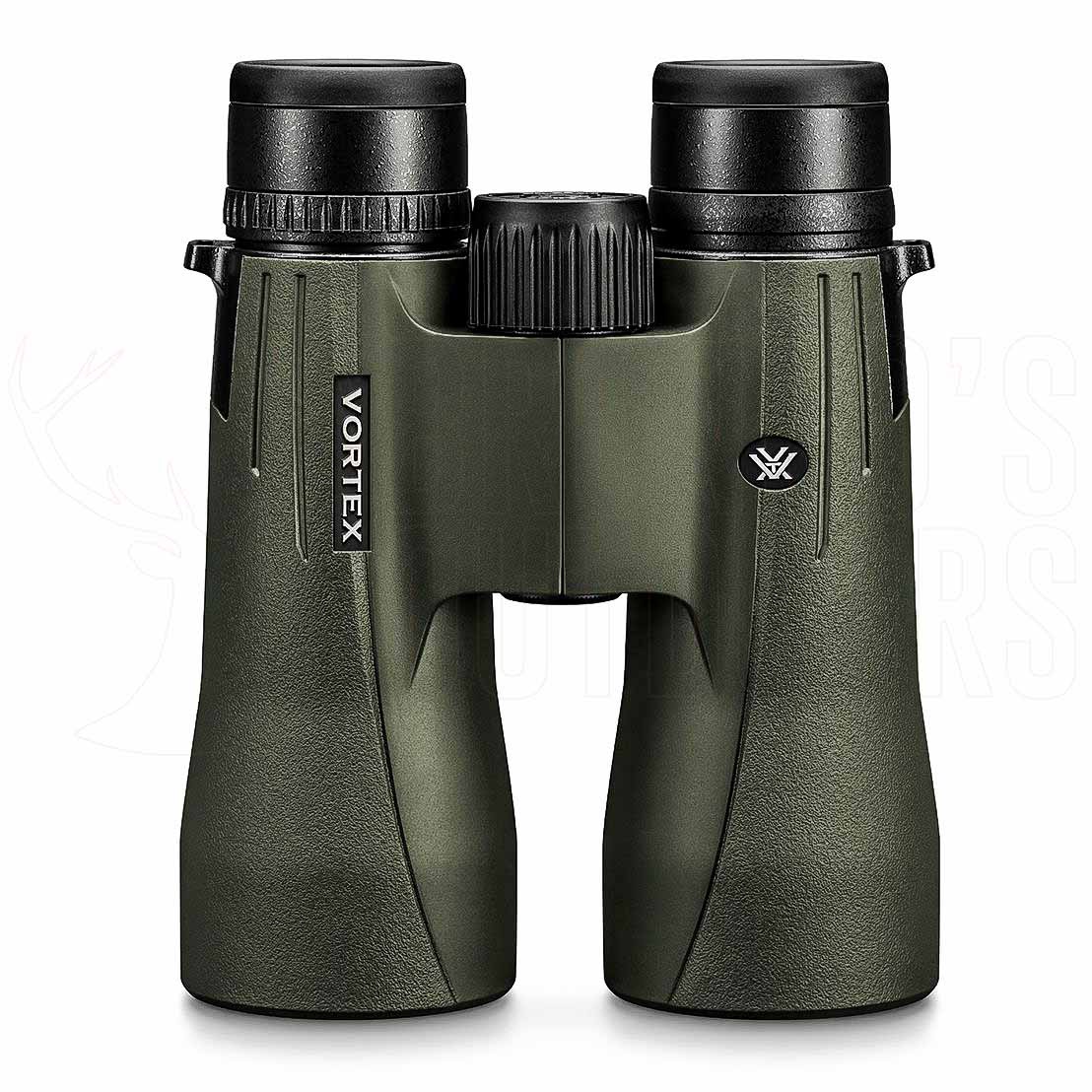
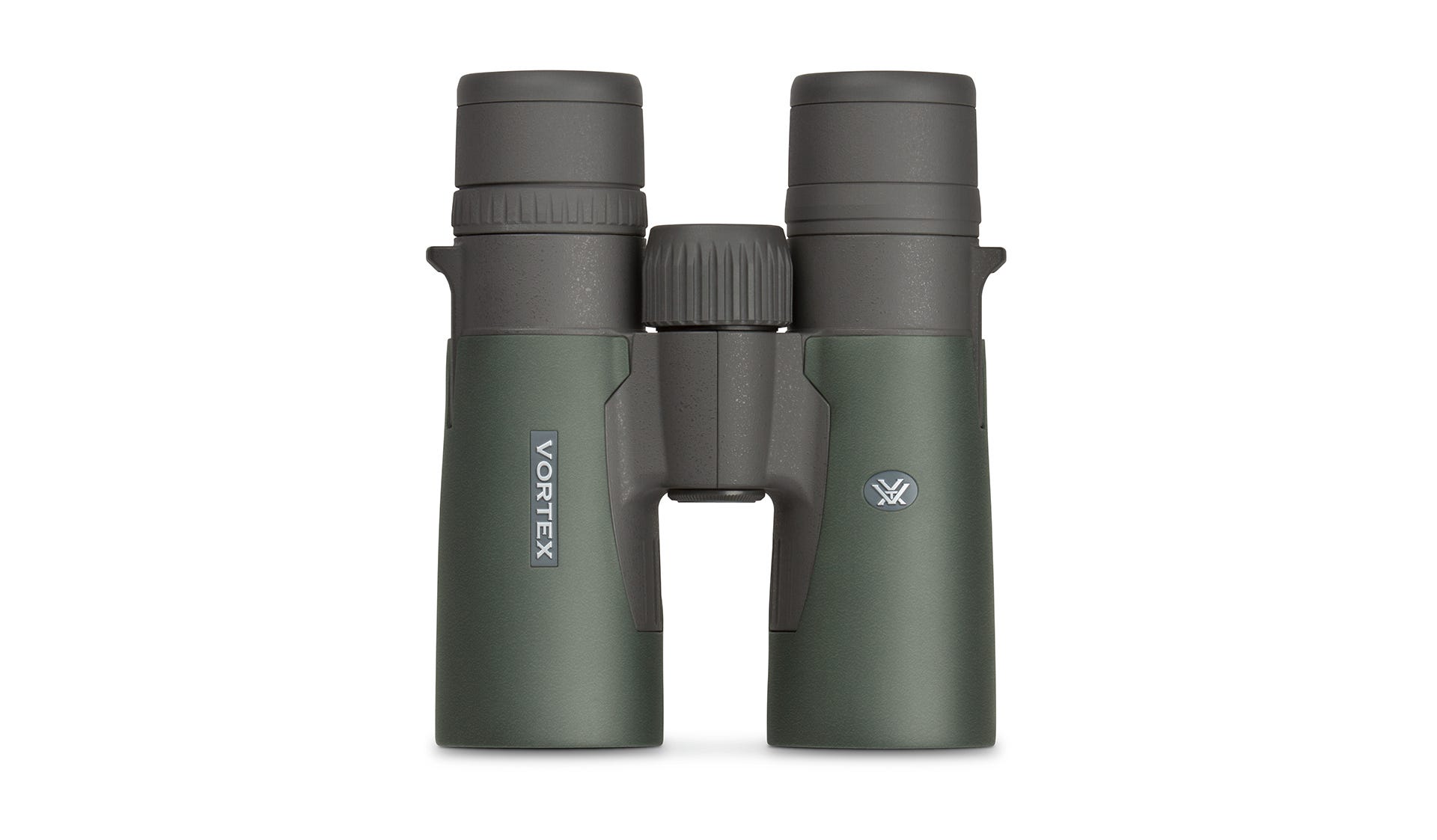
Quick take: The Vortex Viper HD 10x50 costs $431 less; the Vortex Viper HD 10x50 reaches farther (10x vs 8x); the Vortex Razor HD 8x42 has a wider field of view (388 vs 346 ft @ 1000 yds).
Field of view, to scale
Top-down view · drawn to true scale — no exaggeration
Which one to buy
Spending about $430 more within Vortex's own range gets you a former flagship. The Razor HD 8x42 was the company's top binocular before the Razor UHD replaced it, and owners say it is now selling through as closeout stock, so it may be hard to find new and your chance to buy one is shrinking. The Viper HD 10x50 is a current model with the same VIP warranty.
The Razor's advantages are optical and physical. Lab testing put its transmission around 90%, with distortion and astigmatism nearly invisible, and owners say forum testing found it resolves measurably better than the Viper. It is lighter at 24.2 oz against 28.4 oz, has a wider 388 ft field against 346 ft, more eye relief at 17.5mm against 16mm, closer focus at 6 ft against 8 ft, and an exit pupil of 5.3mm against 5.0mm. Its owners mention eyecup gaskets that work loose, some vignetting from truncated exit pupils, coma near the edge and shallow depth of field.
The Viper's argument is 10x reach and price. Elk hunters call it the best in its price range and describe picking apart hillsides beyond a mile, its depth of focus means less refocusing on distant terrain, and it rewards a tripod. Its owners also say it needs a chest harness, its focus wheel runs stiff, and the gap to top-tier glass is still there. For long-range western glassing on a budget, the Viper is the sensible choice. For an all-round binocular you will keep for years, a Razor HD 8x42 found new at closeout is the better instrument.
Vortex Viper HD 10x50
For western hunters who need 10x reach for long-range glassing, especially from a tripod, and want a current model at about $430 less.
Vortex Razor HD 8x42
Worth the extra money if you can still find one new: better resolution, a wider and brighter 8x view, and a lighter body for birding and woodland hunting.
| Spec | Vortex Viper HD 10x50 | Vortex Razor HD 8x42 |
|---|---|---|
| Approx. price | ~$549 | ~$980 |
| Use case | Hunting | Hunting |
| Magnification | 10x | 8x |
| Objective | 50mm | 42mm |
| Exit pupil | 5.0mm | 5.3mm |
| Field of view | 346 ft @ 1000 yds | 388 ft @ 1000 yds |
| Eye relief | 16mm | 17.5mm |
| Close focus | 8 ft | 6 ft |
| Prism | Roof | Roof |
| Glass | HD | HD |
| Coating | Fully Multi-Coated | Fully Multi-Coated |
| Weight | 28.4 oz | 24.2 oz |
| Dimensions | 6.4 x 5.4 in | 5.9 x 5.1 in |
| Warranty | Lifetime (VIP) | Lifetime (VIP) |
Feature comparison
Vortex Viper HD 10x50
- ✓ED Glass
- ✓Phase-Corrected
- ✓Dielectric Coating
- ✓Waterproof
- ✓Fogproof
- ✗Image Stabilized
- ✓Tripod Adaptable
- ✗Magnesium Body
- ✓Locking Diopter
Vortex Razor HD 8x42
- ✓ED Glass
- ✓Phase-Corrected
- ✓Dielectric Coating
- ✓Waterproof
- ✓Fogproof
- ✗Image Stabilized
- ✓Tripod Adaptable
- ✓Magnesium Body
- ✓Locking Diopter
What birders say
Vortex Viper HD 10x50
- ✓Owners flat-out love the low-light performance - 'very clear with great low light performance' is the recurring owner verdict for dawn and dusk glassing
- ✓Called the best binocular in its price range for elk hunting by owners, with clarity that lets them pick apart hillsides beyond a mile
- ✓A hands-on forum reviewer called the current version a home run for the price point, praising the field of view and edge performance
- ✓The 5mm exit pupil keeps the image bright at 10x right through legal shooting light
- ✓Great depth of focus noted by a multi-year owner - less refocusing while working a distant hillside
- ✓ED glass, locking diopter, and phase-corrected prisms - the full mid-premium feature set in a big-objective format
- ✓Tripod adaptable, and hunters say that's where the 10x50 format really shines for extended glassing sessions
- ✓VIP warranty service that owners describe as getting binoculars back essentially rebuilt
- ✗The 50mm objectives buy brightness, not view: field of view (346 ft) is about the same as the lighter Viper 10x42's
- ✗Forum users debate whether the light-gathering gain over the 10x42 is worth it - some call the real-world difference negligible against the added weight
- ✗At 28.4 ounces it's a chest-harness binocular, not a neck-strap binocular
- ✗A long-term owner's honest take: great glass, but the gap to true alpha binoculars is still there - it's not magic
- ✗The stiff focus wheel complaint from the Viper line applies here too
- ✗Slight glare under strong light, consistent with the rest of the Viper HD family
- ✗Occasional quality-control issues surface on hunting forums, though the warranty resolves them
- ✗Bulky for treestand or timber hunting, where owners say a 42mm makes more sense
Vortex Razor HD 8x42
- ✓Apochromatic HD lens system earned a 90% score and 'Binocular of the Year' honors from BestBinocularsReviews - bright, high-contrast views with minimal color fringing
- ✓Independent lab testing measured light transmission right around 90%, which is genuinely alpha-territory brightness for dawn and dusk glassing
- ✓Open-bridge magnesium chassis keeps weight to 24.2 oz - notably light for this optical class, and reviewers praise the balanced one-handed grip
- ✓Distortion and astigmatism measured as nearly invisible in lab testing, so point sources stay tight across most of the field
- ✓Generous 17.5mm eye relief plus a locking diopter make it easy to set up and forget, including for glasses wearers
- ✓Now that the Razor UHD took over the flagship slot, closeout street prices run hundreds below the original ~$1,430 MSRP - a repeated favorite of deal hunters
- ✓Vortex VIP warranty is unconditional and transferable with no receipt required - owners consistently cite it as a reason to buy used or closeout stock
- ✓Forum side-by-side testing found its resolution measurably better than the Viper HD, and one longtime hunting-forum owner called them 'the best binoculars I have ever used'
- ✗Lab testing found truncated exit pupils and distinct vignetting (roughly 3-4.5% light loss) - a tradeoff of squeezing smaller prisms into the compact body
- ✗Coma shows up in the outer field starting about 65-70% out from center, so stars and bright points smear near the edge
- ✗388 ft field of view is good but not class-leading - the eyepieces run about 58 degrees apparent versus the 60+ of true wide-angle rivals
- ✗Chromatic aberration is very low in the center but creeps up noticeably toward the field edge
- ✗The rubber gaskets on Razor HD eyecups are known to work loose over time - Vortex has even suggested gluing them back in place
- ✗The line is discontinued, so new stock is drying up and your configuration choices shrink as remaining inventory sells through
- ✗Reviewers note shallow depth of field, meaning more focus-wheel adjustment when scanning between near and far subjects
- ✗The included soft carry case is functional but noticeably less premium than what European competitors ship at this level
Vortex Viper HD 10x50 vs Vortex Razor HD 8x42: common questions
Is the Vortex Razor HD 8x42 still available new compared with the Viper HD 10x50?▾
Owners say the Razor HD line was replaced by the Razor UHD and remaining new stock is selling through, so configurations may sell out. The Viper HD 10x50 is current. Both carry the VIP warranty, which Razor owners say covers closeout and used pairs too.
Is the Razor HD 8x42 sharper than the Viper HD 10x50?▾
Owners of the Razor say forum testing found it resolves measurably better than the Viper HD, and lab tests found distortion and astigmatism nearly invisible. Viper 10x50 owners still praise its clarity at long range, but a long-term owner notes the gap to top-tier glass remains.
Which is lighter to carry, the Razor HD 8x42 or the Viper HD 10x50?▾
The Razor HD 8x42, at 24.2 oz against 28.4 oz. Its owners praise the balanced one-handed grip of its open-bridge magnesium body, while Viper 10x50 owners describe theirs as a chest-harness binocular rather than a neck-strap one.