Vortex Razor UHD 8x42 vs Vortex Razor UHD 10x42
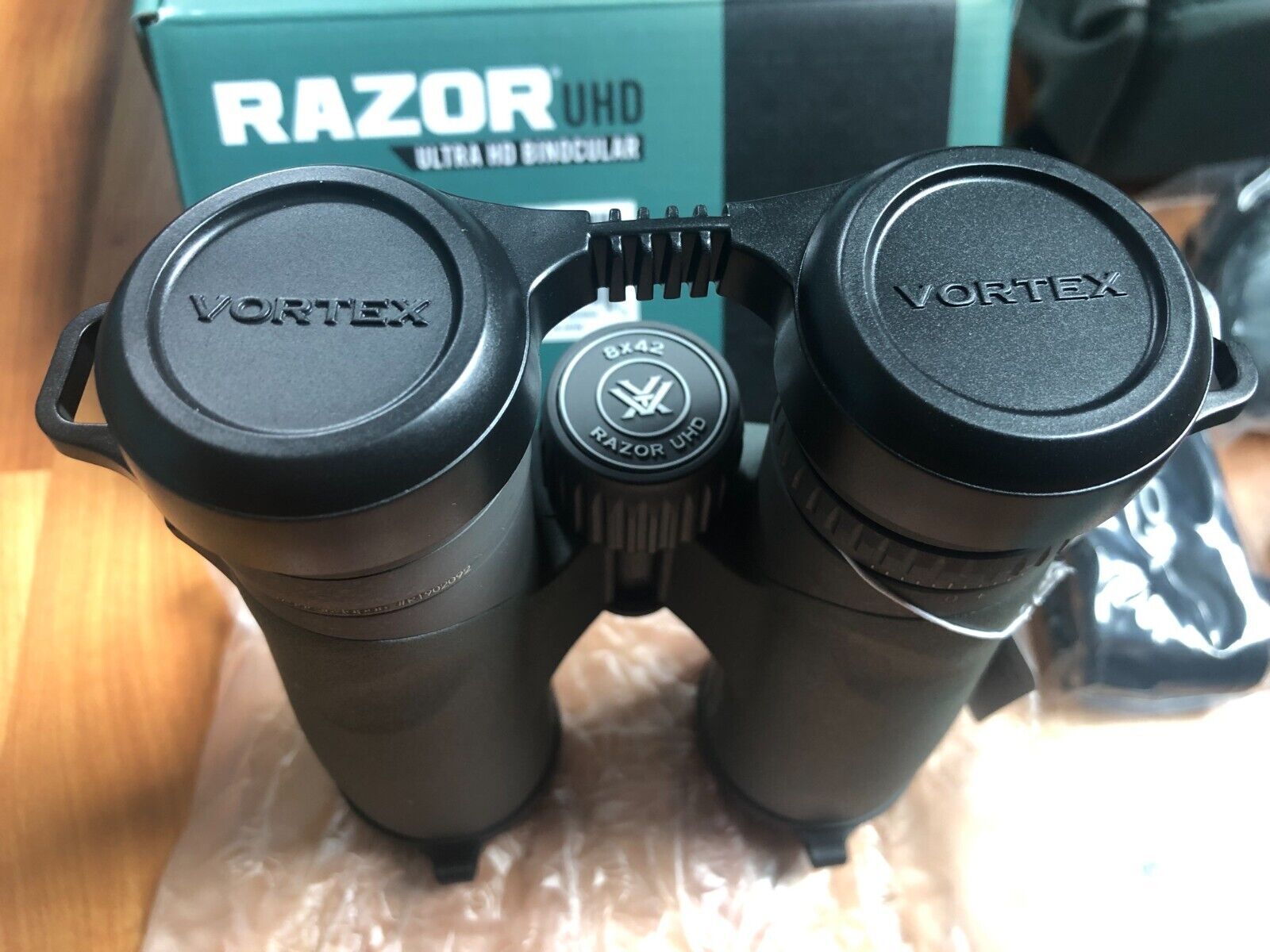
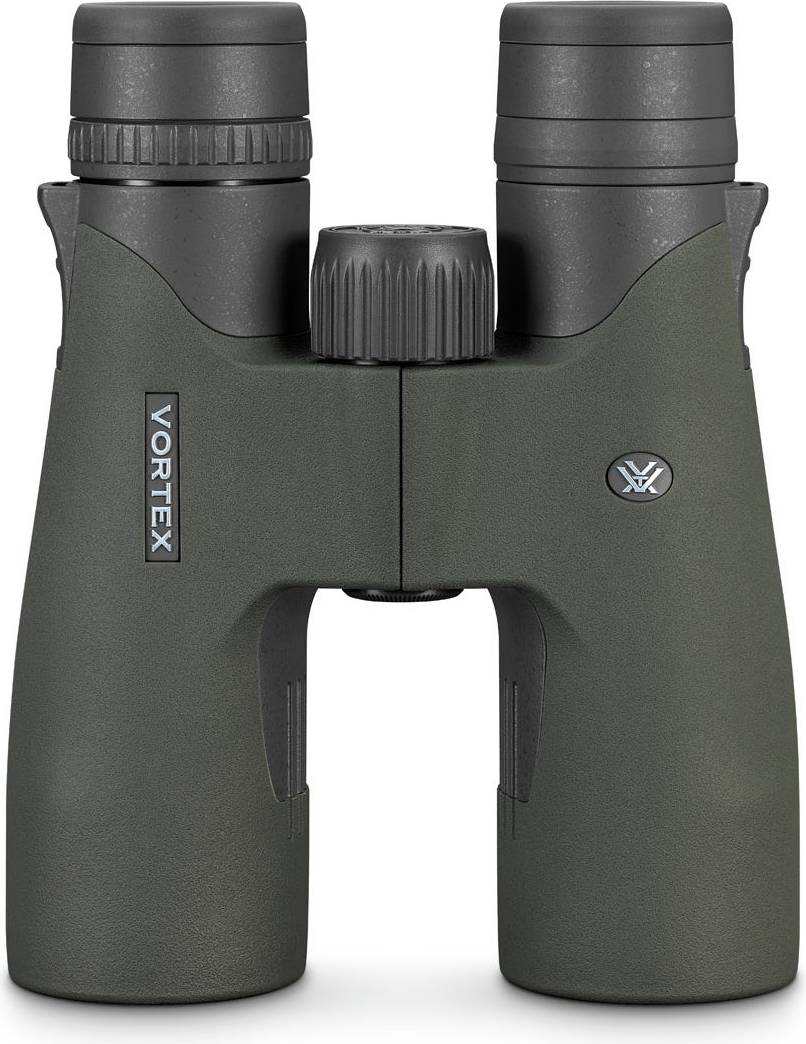
Quick take: The Vortex Razor UHD 8x42 costs $50 less; the Vortex Razor UHD 10x42 reaches farther (10x vs 8x); the Vortex Razor UHD 8x42 has a wider field of view (420 vs 346 ft @ 1000 yds).
Field of view, to scale
Top-down view · drawn to true scale — no exaggeration
Which one to buy
Nothing about the body changes between these two. Both weigh 32.4 oz, focus to 4.5 ft, offer 16.7mm of eye relief and carry the VIP warranty, and the 10x42 costs $50 more. The choice is the usual magnification trade, made sharper by that weight: a heavy binocular at 10x is harder to hold steady than the same body at 8x.
The 8x42 gives the wider, brighter view: 420 ft against 346 ft and a 5.25mm exit pupil against 4.2mm. Its owners rank it among the best birding glass available, near the top of a major birding-focused test. 10x42 owners, by contrast, say its field is narrower than the older Razor HD 10x42's, which disappoints some upgraders, and that its firm focus is slow for chasing warblers. Birders who handle the 10x often pick an 8x42 UHD for the wider view.
The 10x42 is for hunters. Owners say it ranks among the best last-light binoculars short of the top European brands, makes picking a bedded buck out of shaded timber easier, and borders on spotting-scope useful on a tripod. The complaints are shared across both: weight that needs a harness, a large body, and, from 8x42 owners, glare toward a low sun and an eye box that can black out. Choose the 10x if most of your glassing is long-range from a harness or tripod; for birding and general use, the 8x42 is the better binocular for $50 less.
Vortex Razor UHD 8x42
The choice for birders and general use: a much wider 420 ft field, a brighter exit pupil and a steadier view, for $50 less.
Vortex Razor UHD 10x42
For hunters who glass long distances from a harness or tripod and want 10x reach with Vortex's best last-light optics.
| Spec | Vortex Razor UHD 8x42 | Vortex Razor UHD 10x42 |
|---|---|---|
| Approx. price | ~$1,749 | ~$1,799 |
| Use case | Birding | Birding |
| Magnification | 8x | 10x |
| Objective | 42mm | 42mm |
| Exit pupil | 5.25mm | 4.2mm |
| Field of view | 420 ft @ 1000 yds | 346 ft @ 1000 yds |
| Eye relief | 16.7mm | 16.7mm |
| Close focus | 4.5 ft | 4.5 ft |
| Prism | Roof | Roof |
| Glass | HD | HD |
| Coating | Fully Multi-Coated | Fully Multi-Coated |
| Weight | 32.4 oz | 32.4 oz |
| Dimensions | 7.0 x 5.7 in | 7.0 x 5.7 in |
| Warranty | Lifetime (VIP) | Lifetime (VIP) |
Feature comparison
Vortex Razor UHD 8x42
- ✓ED Glass
- ✓Phase-Corrected
- ✓Dielectric Coating
- ✓Waterproof
- ✓Fogproof
- ✗Image Stabilized
- ✓Tripod Adaptable
- ✓Magnesium Body
- ✓Locking Diopter
Vortex Razor UHD 10x42
- ✓ED Glass
- ✓Phase-Corrected
- ✓Dielectric Coating
- ✓Waterproof
- ✓Fogproof
- ✗Image Stabilized
- ✓Tripod Adaptable
- ✓Magnesium Body
- ✓Locking Diopter
What birders say
Vortex Razor UHD 8x42
- ✓In Audubon's binocular test it nearly tied the Swarovski EL 8.5x42 and ranked above the Zeiss SF 8x42 and Leica Noctivid - genuine alpha-tier optics
- ✓Direct comparers found it brighter, wider-fielded, and closer-focusing than the Swarovski SLC while just as sharp - for $600+ less
- ✓Owners praise its wide dynamic range - it pulls detail out of dark timber shadows on sunny days better than the Razor HD
- ✓Owners of both generations call it a definite upgrade over the Razor HD - 'absolutely phenomenal' is a representative quote
- ✓Japanese-made with a magnesium chassis and Abbe-Koenig prisms for maximum light transmission
- ✓APO objective system keeps chromatic aberration impressively controlled for critical viewing
- ✓426-foot field of view is expansive for an 8x42 - bigger than several alpha competitors
- ✓VIP no-fault lifetime warranty on alpha-level glass - a coverage level Swarovski, Zeiss, and Leica don't match
- ✗Heavy for an 8x42 - measurably heavier than the Swarovski SLC, and some rivals are 20-25% lighter, which owners feel on all-day carries
- ✗Physically large in the hands - bulkier than the Swarovski equivalents, and some forum users say the size isn't worth it
- ✗Glare when glassing toward a low-angle sun is a real complaint from hunters, exactly the lighting hunts happen in
- ✗Eye box can be finicky - some owners report blackouts or 'darkout' when their eye wanders around the image
- ✗Eyeglass wearers note the usable eye relief runs shorter than some alpha competitors
- ✗Some owners who priced it against the standard Razor HD concluded the size and cost delta wasn't worth it for their use
- ✗At this price, lightly used true alphas enter the conversation and split forum opinions
- ✗The premium price positions it awkwardly - far above the Viper HD, yet shoppers still cross-shop actual Swarovski and Zeiss
Vortex Razor UHD 10x42
- ✓Optics that owners describe as knocking on the alpha door - clarity and brightness 'second to none' in low light, with resolution that embarrasses its price peers
- ✓Abbe-Koenig prism design and APO objective system deliver the brightness and near-zero color fringing usually reserved for $2,000+ glass
- ✓Outstanding dusk and dawn performance - hunters consistently rank it among the best last-light binoculars short of a Swarovski
- ✓Edge-to-edge sharpness holds impressively across the field, a visible step past the Razor HD and Viper
- ✓Excellent contrast and color fidelity that make picking a bedded buck out of shadowed timber genuinely easier
- ✓Saves $500-1,000 versus comparable alpha-brand 10x42s like the Swarovski SLC class while giving up very little optically
- ✓Vortex VIP warranty on a flagship - unconditional, transferable, no receipt - undercuts the more bureaucratic alpha service programs
- ✓Premium fit and finish with a smooth, precise focus and included high-end GlassPak Pro harness
- ✗Seriously heavy at about 32 ounces - four ounces more than a Swarovski SLC and half a pound over typical 10x42s, a constant refrain among owners
- ✗Physically large for the format; the long Abbe-Koenig prism housing makes it feel like a small 50mm binocular
- ✗Field of view is narrower than the older Razor HD 10x42, which surprises and disappoints some upgraders
- ✗At $1,300+ it enters used-alpha territory - forum threads regularly note a pre-owned Zeiss or Leica is attainable at the same money
- ✗The weight makes extended one-handed or unbraced glassing fatiguing without a harness or tripod
- ✗Overkill for casual users - the improvement over a Viper HD only reveals itself in demanding light
- ✗Focus wheel tension, while smooth, is on the firm side for fast birding-style focus changes
- ✗Limited stock and infrequent discounts mean you rarely find it meaningfully below list price
Vortex Razor UHD 8x42 vs Vortex Razor UHD 10x42: common questions
Is the Razor UHD 10x42 too heavy to hold steady compared with the 8x42?▾
Both weigh 32.4 oz, but 10x magnifies shake more than 8x. Owners of the 10x42 say long one-handed or unbraced glassing gets tiring without a harness or tripod, and many use one. The 8x42 is easier to hold steady by hand.
Does the Razor UHD 10x42 have a narrower field than the 8x42?▾
Yes, 346 ft against 420 ft at 1000 yards. Owners of the 10x42 also note its field is narrower than the older Razor HD 10x42's. Birders who want a wide, immersive view often choose the 8x42 UHD for that reason.
Which Razor UHD is better for birding, the 8x42 or the 10x42?▾
The 8x42. Its wider field, brighter 5.25mm exit pupil and steadier image suit birding, and it placed near the top of a major birding-focused test. Owners of the 10x42 say its firm focus wheel is slow for fast birding-style focus changes.