Vortex Diamondback HD 10x50 vs Vortex Viper HD 8x42
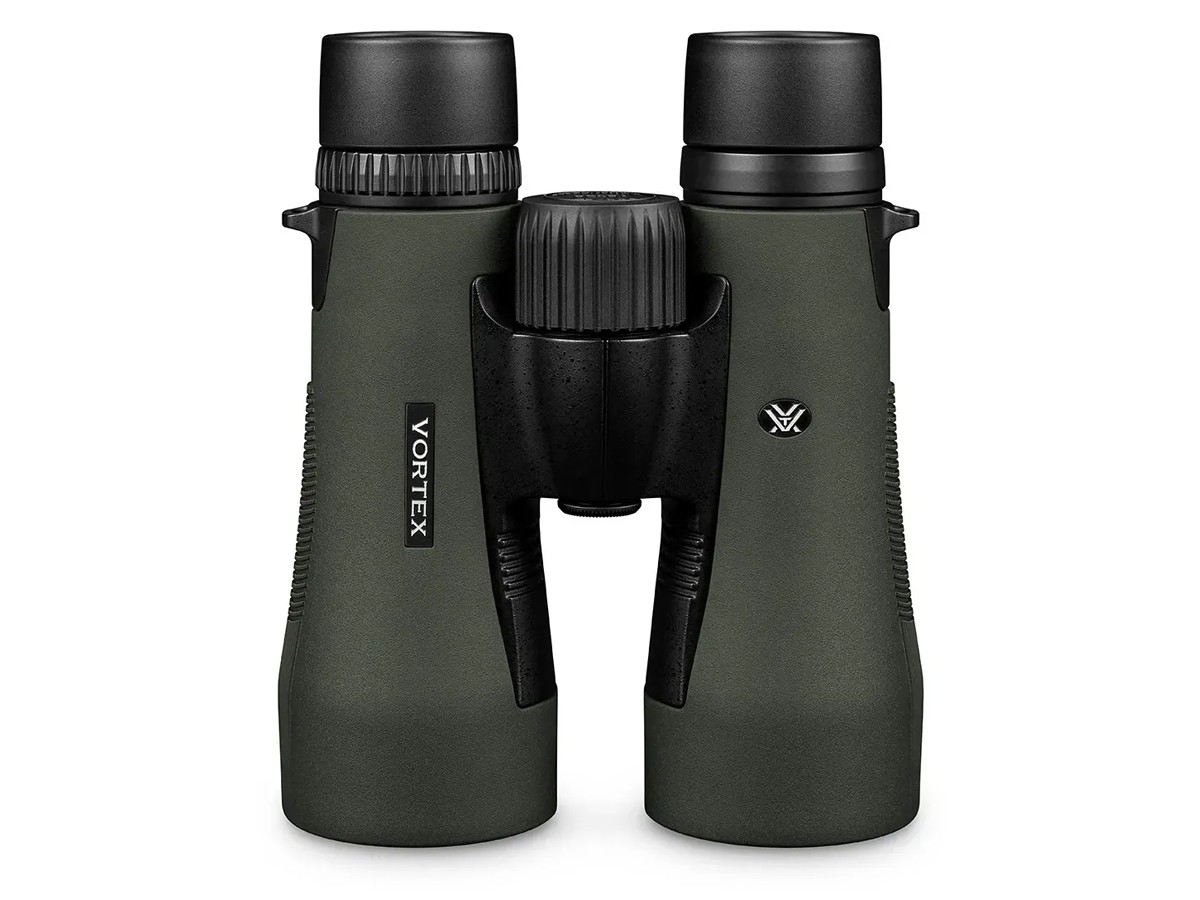
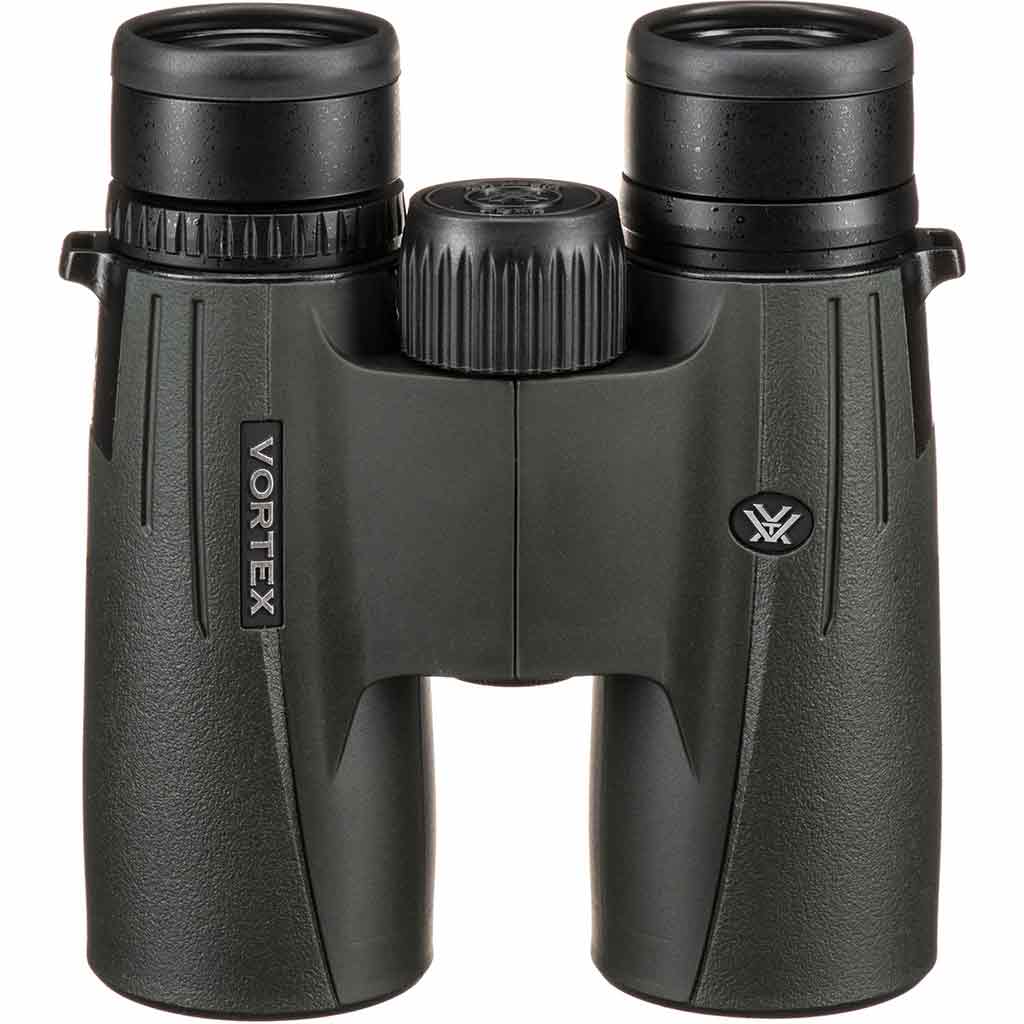
Quick take: The Vortex Diamondback HD 10x50 costs $200 less; the Vortex Diamondback HD 10x50 reaches farther (10x vs 8x); the Vortex Viper HD 8x42 has a wider field of view (409 vs 315 ft @ 1000 yds).
Field of view, to scale
Top-down view · drawn to true scale — no exaggeration
Which one to buy
The extra $200 for the Viper HD 8x42 does not buy more light on paper. Its 5.25mm exit pupil is a hair larger than the Diamondback HD 10x50's 5.0mm, and it gets there with 8x and 42mm objectives in a 24.5 oz body against 30.0 oz. What it does buy is ED glass, and that is what Diamondback owners say their binocular lacks. They name edge chromatic aberration as its main flaw and concede that the Viper looks crisper in low light. Viper owners report no noticeable fringing on focused subjects and sharpness that holds nearly to the edges.
The Viper is also the easier binocular to use. A 409 ft field against 315 ft makes finding moving animals far simpler, 18mm of eye relief lets glasses wearers keep nearly the full view, and it adds a locking diopter. Its owners' most repeated complaint is a stiff focus wheel, with a few reports of outright sticky ones, plus slight glare in strong light.
The Diamondback's argument is reach and value. It is the 10x of the pair, which matters for western hunters picking apart distant hillsides, and its owners say the clarity holds its own against pricier brands and that the gap to the Viper is real but not dramatic. It ships with the GlassPak harness, which its owners say makes its weight manageable. Both carry the same VIP warranty. For a hunter on a budget who needs 10x, the Diamondback is the smarter spend; for a birder, or anyone who wants one premium binocular for every use, the Viper is worth the money.
Vortex Diamondback HD 10x50
Best if you are a budget-minded western hunter who wants 10x reach and dusk brightness, and would rather keep $200 than gain ED glass.
Vortex Viper HD 8x42
Worth the extra $200 for birders and all-round users: ED glass with little fringing, a much wider 409 ft field and 18mm of eye relief, in a lighter body.
| Spec | Vortex Diamondback HD 10x50 | Vortex Viper HD 8x42 |
|---|---|---|
| Approx. price | ~$270 | ~$470 |
| Use case | Hunting | Birding |
| Magnification | 10x | 8x |
| Objective | 50mm | 42mm |
| Exit pupil | 5.0mm | 5.25mm |
| Field of view | 315 ft @ 1000 yds | 409 ft @ 1000 yds |
| Eye relief | 17mm | 18mm |
| Close focus | 6 ft | 6 ft |
| Prism | Roof | Roof |
| Glass | HD | HD |
| Coating | Fully Multi-Coated | Fully Multi-Coated |
| Weight | 30.0 oz | 24.5 oz |
| Dimensions | 6.3 x 5.5 in | 5.6 x 5.0 in |
| Warranty | Lifetime (VIP) | Lifetime (VIP) |
Feature comparison
Vortex Diamondback HD 10x50
- ✗ED Glass
- ✓Phase-Corrected
- ✓Dielectric Coating
- ✓Waterproof
- ✓Fogproof
- ✗Image Stabilized
- ✓Tripod Adaptable
- ✗Magnesium Body
- ✗Locking Diopter
Vortex Viper HD 8x42
- ✓ED Glass
- ✓Phase-Corrected
- ✓Dielectric Coating
- ✓Waterproof
- ✓Fogproof
- ✗Image Stabilized
- ✓Tripod Adaptable
- ✗Magnesium Body
- ✓Locking Diopter
What birders say
Vortex Diamondback HD 10x50
- ✓Dawn and dusk brightness is the headline - the 5mm exit pupil keeps images usable when game is actually moving, and western hunters call it great for elk
- ✓HD glass plus phase-corrected, dielectric-coated prisms are a real optical step over the Crossfire at a modest price bump
- ✓Hunting-forum consensus is that it's hard to justify spending more for the minimal performance gain at this price
- ✓Owners regularly compare the clarity favorably to binoculars from more expensive brands
- ✓Size-to-weight ratio described by elk hunters as a sweet spot for a 50mm glass
- ✓Comes with the GlassPak chest harness, which makes the weight a non-issue on long hikes
- ✓17mm eye relief with click-stop eyecups is comfortable for eyeglass wearers
- ✓VIP lifetime warranty and Vortex customer service repeatedly cited as the tiebreaker over similarly priced competitors
- ✗Chromatic aberration along the field edges is the recurring optical criticism - technical testers have called edge CA the format's most serious flaw
- ✗Heavy at over 28 ounces - all-day neck carry without the harness gets old fast
- ✗Glare shows up when the sun is overhead or in front of you, which owners notice while glassing open country
- ✗No ED glass at this tier - that's reserved for the Viper HD and up, and picky hunters notice on high-contrast subjects
- ✗Side-by-side forum comparisons find the Viper HD noticeably crisper in low light, so the ceiling here is real
- ✗Minor flaws in the focus mechanism reported by some owners
- ✗Field of view (315 ft) is typical for a 10x50 and tighter than an 8x model, so finding moving animals takes more work
- ✗Overkill for treestand and whitetail hunters, who owners say are better served by the lighter 8x42 or 10x42
Vortex Viper HD 8x42
- ✓Cornell's bird-optics testers rated it a Solid Choice, with some calling it among the brightest, clearest images they tested - particularly in low light
- ✓Expert reviewers describe the view as nearly as good as multi-thousand-dollar models once focused - exceptional for its tier
- ✓Excellent contrast with no noticeable color fringing on focused subjects, thanks to ED glass and premium coatings
- ✓Sharpness holds nearly to the field edges, with only minimal peripheral softening noted by testers
- ✓The current-generation redesign improved edge sharpness, field of view, eye relief, and low-light contrast over the older version
- ✓18mm of eye relief is generous - eyeglass wearers report keeping essentially the full field of view
- ✓24.5 ounces is reasonably light for a fully featured 42mm, with a locking diopter and grippy armor that also dampens noise
- ✓VIP lifetime warranty means owners genuinely use them hard - a repeated theme in owner reviews
- ✗The stiff focus wheel is the most repeated complaint - multiple owners and even professional testers say it takes getting used to, and a few report outright sticky wheels
- ✗Slight glare shows up under strong light, noted by expert reviewers
- ✗In a direct week-long home comparison, one buyer returned the Vipers because the Nikon Monarch M7 was cheaper with a wider field of view
- ✗Field of view is good but not class-leading - wide-field rivals like the Monarch M7 beat it on spec
- ✗Forum users have grumbled about the production move to China and whether the price is still justified
- ✗Hunting-forum realists note the gap over the much cheaper Diamondback HD is real but not dramatic
- ✗Some value-focused owners favor the Maven C.1 at this price point in head-to-head forum debates
- ✗The line has been refreshed over the years, so buyers need to watch which generation they're getting - older stock lacks the redesign's improvements
Vortex Diamondback HD 10x50 vs Vortex Viper HD 8x42: common questions
Is the Vortex Viper HD 8x42 worth $200 more than the Diamondback HD 10x50?▾
If you notice color fringing or glass a lot in dim light, owners of both say yes. The Viper adds ED glass and holds sharpness nearly to the edges. Diamondback owners say the gap is real but not dramatic, so a hunter who mainly needs 10x reach can save the money.
Is the Diamondback HD 10x50 brighter than the Viper HD 8x42 at dusk?▾
Not on paper. The Viper's exit pupil is 5.25mm against the Diamondback's 5.0mm, and Diamondback owners say the Viper looks noticeably crisper in low light. The Diamondback still earns praise from elk hunters for dawn and dusk use, especially at its price.
Which is better with eyeglasses, the Viper HD 8x42 or the Diamondback HD 10x50?▾
Both are good, and the Viper is slightly better with 18mm of eye relief against 17mm. Viper owners say glasses wearers keep essentially the full field, and Diamondback owners call its click-stop eyecups comfortable with glasses too.