Vortex Diamondback HD 10x50 vs Bushnell Forge 10x42
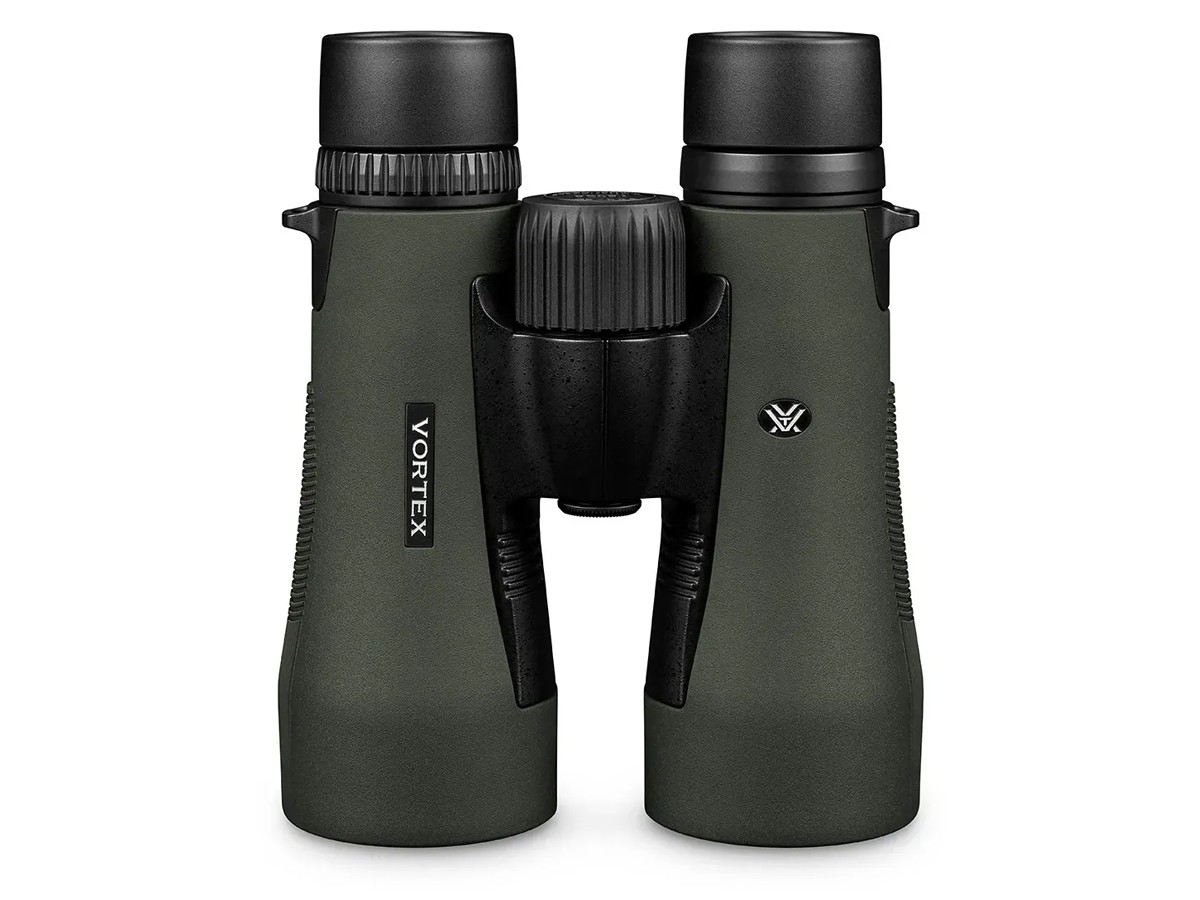
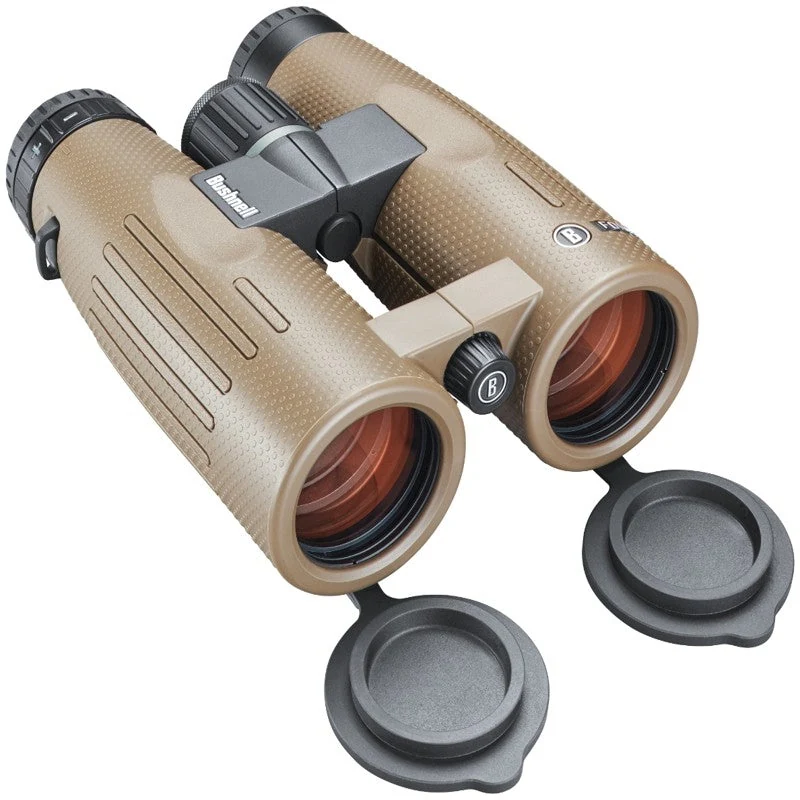
Quick take: The Bushnell Forge 10x42 costs $20 less; the Bushnell Forge 10x42 has a wider field of view (340 vs 315 ft @ 1000 yds); the Vortex Diamondback HD 10x50 gathers more light with a larger 50mm objective.
Field of view, to scale
Top-down view · drawn to true scale — no exaggeration
Which one to buy
Bushnell built the Forge to fight a tier above the Diamondback, and at $250 against $270 it now sits below it on price. Owners say the Forge line has been wound down and cycled through clearance, so a new one may be hard to find and long-term support is a fair question. If you can get one, it is the better optic here; if you can't, the Diamondback is the sound default.
The Forge's case is its glass. It has ED glass, which the Diamondback lacks, plus phase-corrected dielectric prisms and a magnesium body. Owners and reviewers describe a bright, saturated, contrasty image, and its EXO Barrier coating breaks rain into small droplets that don't smear the view. Diamondback owners, for their part, name edge chromatic aberration as their glass's most serious flaw and note that ED starts a tier up in Vortex's line. The Forge also has a wider 340 ft field against 315 ft and focuses to 5 ft against 6 ft.
The Diamondback answers with light and support. Its 5.0mm exit pupil against 4.2mm is why elk hunters praise it at dawn and dusk, its 17mm eye relief beats the Forge's 15mm for glasses, and the VIP warranty is unconditional. Forge owners mention at least one complaint of poor Bushnell customer support, soft resale value, and a long, heavy body that big-mileage backpack hunters pass on, though testers say the heft steadies the view. The Diamondback is heavier still at 30.0 oz against 24.2 oz, and its owners say the GlassPak harness is what makes it livable. For someone glassing hard at last light who wants a warranty that will outlive the product line, the Vortex wins; for the best image per dollar while stock lasts, it is the Forge.
Vortex Diamondback HD 10x50
For hunters who glass at first and last light and want the brighter 5.0mm exit pupil, roomier eye relief and an unconditional warranty from a line still in production.
Bushnell Forge 10x42
Worth grabbing if you find one new: ED glass, rain-shedding lens coatings and a wider field for $20 less, accepting that the line is being wound down.
| Spec | Vortex Diamondback HD 10x50 | Bushnell Forge 10x42 |
|---|---|---|
| Approx. price | ~$270 | ~$250 |
| Use case | Hunting | Hunting |
| Magnification | 10x | 10x |
| Objective | 50mm | 42mm |
| Exit pupil | 5.0mm | 4.2mm |
| Field of view | 315 ft @ 1000 yds | 340 ft @ 1000 yds |
| Eye relief | 17mm | 15mm |
| Close focus | 6 ft | 5 ft |
| Prism | Roof | Roof |
| Glass | HD | ED |
| Coating | Fully Multi-Coated | Fully Multi-Coated |
| Weight | 30.0 oz | 24.2 oz |
| Dimensions | 6.3 x 5.5 in | 5.6 x 4.9 in |
| Warranty | Lifetime (VIP) | Limited Lifetime |
Feature comparison
Vortex Diamondback HD 10x50
- ✗ED Glass
- ✓Phase-Corrected
- ✓Dielectric Coating
- ✓Waterproof
- ✓Fogproof
- ✗Image Stabilized
- ✓Tripod Adaptable
- ✗Magnesium Body
- ✗Locking Diopter
Bushnell Forge 10x42
- ✓ED Glass
- ✓Phase-Corrected
- ✓Dielectric Coating
- ✓Waterproof
- ✓Fogproof
- ✗Image Stabilized
- ✓Tripod Adaptable
- ✓Magnesium Body
- ✓Locking Diopter
What birders say
Vortex Diamondback HD 10x50
- ✓Dawn and dusk brightness is the headline - the 5mm exit pupil keeps images usable when game is actually moving, and western hunters call it great for elk
- ✓HD glass plus phase-corrected, dielectric-coated prisms are a real optical step over the Crossfire at a modest price bump
- ✓Hunting-forum consensus is that it's hard to justify spending more for the minimal performance gain at this price
- ✓Owners regularly compare the clarity favorably to binoculars from more expensive brands
- ✓Size-to-weight ratio described by elk hunters as a sweet spot for a 50mm glass
- ✓Comes with the GlassPak chest harness, which makes the weight a non-issue on long hikes
- ✓17mm eye relief with click-stop eyecups is comfortable for eyeglass wearers
- ✓VIP lifetime warranty and Vortex customer service repeatedly cited as the tiebreaker over similarly priced competitors
- ✗Chromatic aberration along the field edges is the recurring optical criticism - technical testers have called edge CA the format's most serious flaw
- ✗Heavy at over 28 ounces - all-day neck carry without the harness gets old fast
- ✗Glare shows up when the sun is overhead or in front of you, which owners notice while glassing open country
- ✗No ED glass at this tier - that's reserved for the Viper HD and up, and picky hunters notice on high-contrast subjects
- ✗Side-by-side forum comparisons find the Viper HD noticeably crisper in low light, so the ceiling here is real
- ✗Minor flaws in the focus mechanism reported by some owners
- ✗Field of view (315 ft) is typical for a 10x50 and tighter than an 8x model, so finding moving animals takes more work
- ✗Overkill for treestand and whitetail hunters, who owners say are better served by the lighter 8x42 or 10x42
Bushnell Forge 10x42
- ✓Reviewers called it 'a big leap up from Bushnell's past offerings, and on par with other premium optics in its price range' after extended field testing
- ✓ED Prime glass with wide-band coatings and phase-coated, dielectric BaK-4 prisms - a genuinely premium optical recipe that testers said boosts color saturation, contrast, and detail in all light
- ✓A hands-on budget-glass reviewer said it 'performed well beyond expectations' and ranked it among the best binoculars you can buy for the money in its bracket
- ✓Independent lab-style testing crowd received it as 'a positive surprise' when the measurements came in
- ✓EXO Barrier coating disperses rain and fog into tiny droplets that won't obscure the view - and it's smudge-proof, a real advantage in wet mountain weather
- ✓Tough magnesium chassis and robust build - reviewers noted the whole package, down to the protective case, feels ready for rough handling
- ✓Heft works in its favor for glassing: testers found the weight helped steady the image during long sessions
- ✓Frequently discounted well below its original ~$480-600 MSRP - forum members grabbing it on markdown called it an outright steal at those prices
- ✗Heavier and longer than most 10x42s - the roughly 6.7-inch barrels and near-2-lb heft are noticeable next to trimmer rivals
- ✗Some experienced users still preferred the Vortex Viper HD 10x42 optically after comparing both
- ✗Bushnell's customer support has been described as 'dismal' by at least one owner - a real contrast with Vortex's VIP warranty reputation
- ✗The Forge line has been discontinued/clearance-cycled, so long-term parts and warranty support is a fair concern
- ✗Locking diopter collar adds bulk at the right eyecup, a familiar Bushnell quirk shared with the Engage
- ✗Resale value is soft - Bushnell's brand perception lags the actual glass quality, which stings if you ever sell
- ✗At full MSRP it fought hard against the Viper HD and Leupold BX-4 Pro Guide - it's only a slam-dunk at discounted prices
- ✗Open-country hunters who hike big miles often pass on it purely for the weight penalty versus a Maven C.1 or slimmer Viper
Vortex Diamondback HD 10x50 vs Bushnell Forge 10x42: common questions
Is the Bushnell Forge 10x42 discontinued, and should that stop me choosing it over the Diamondback HD 10x50?▾
Owners say the Forge line has been wound down and sold through clearance, so new stock may be hard to find. Bushnell still offers a limited lifetime warranty, but long-term support is a fair concern. If that worries you, the Diamondback HD 10x50 is still made and carries Vortex's unconditional VIP warranty.
Does the Bushnell Forge 10x42 have better glass than the Vortex Diamondback HD 10x50?▾
On paper and by owner accounts, yes. The Forge uses ED glass, which the Diamondback does not, and reviewers describe a bright, saturated, contrasty image. Diamondback owners name edge chromatic aberration as their binocular's main optical weakness, the very thing ED glass is meant to reduce.
Which is brighter at dusk, the Diamondback HD 10x50 or the Forge 10x42?▾
The Diamondback has the larger exit pupil, 5.0mm against 4.2mm, and its owners single out dawn and dusk brightness as its headline strength. Forge owners credit its ED glass and coatings with a bright picture in all light, so the gap is smaller than the numbers alone suggest.