Vortex Diamondback HD 10x28 vs Vortex Diamondback HD 8x32
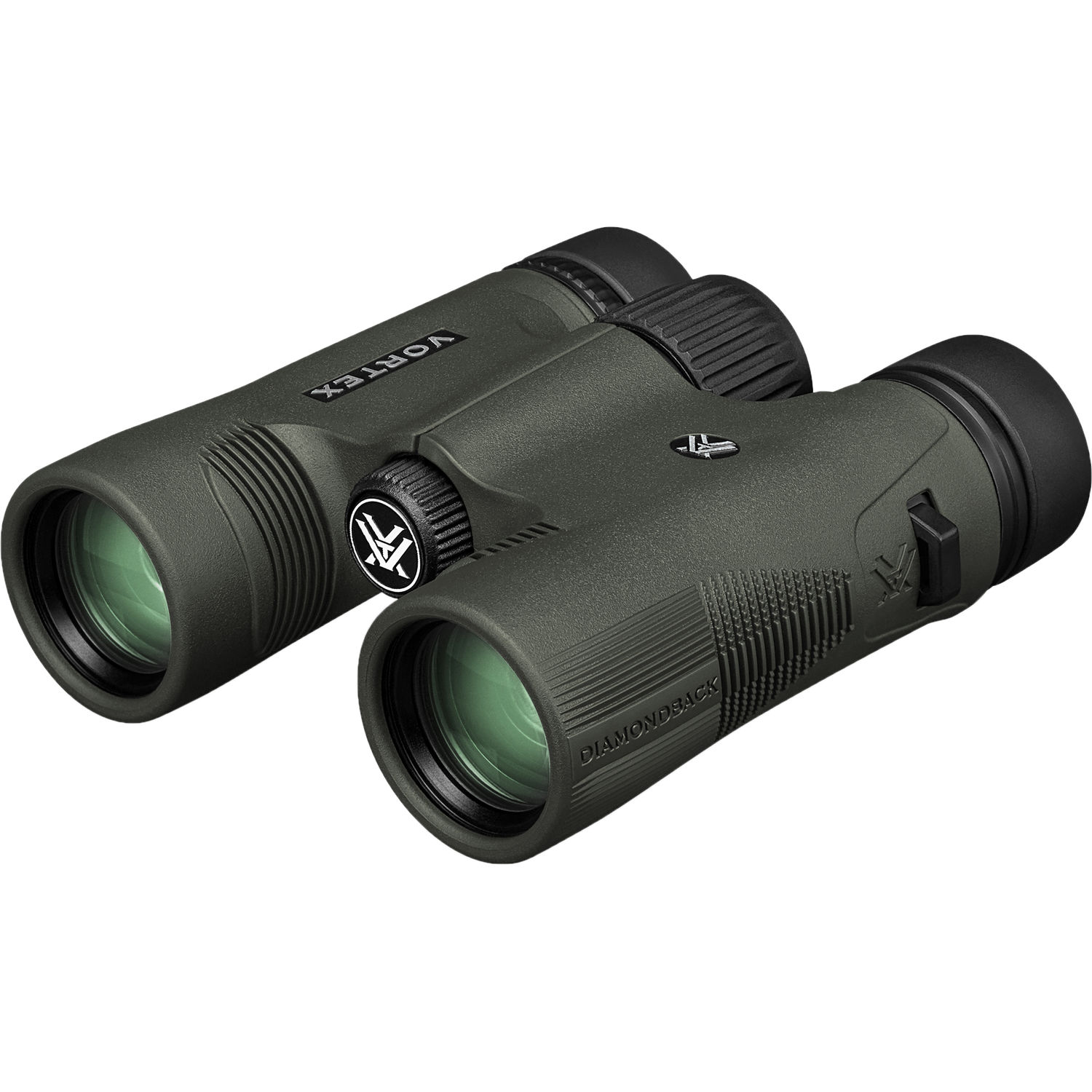
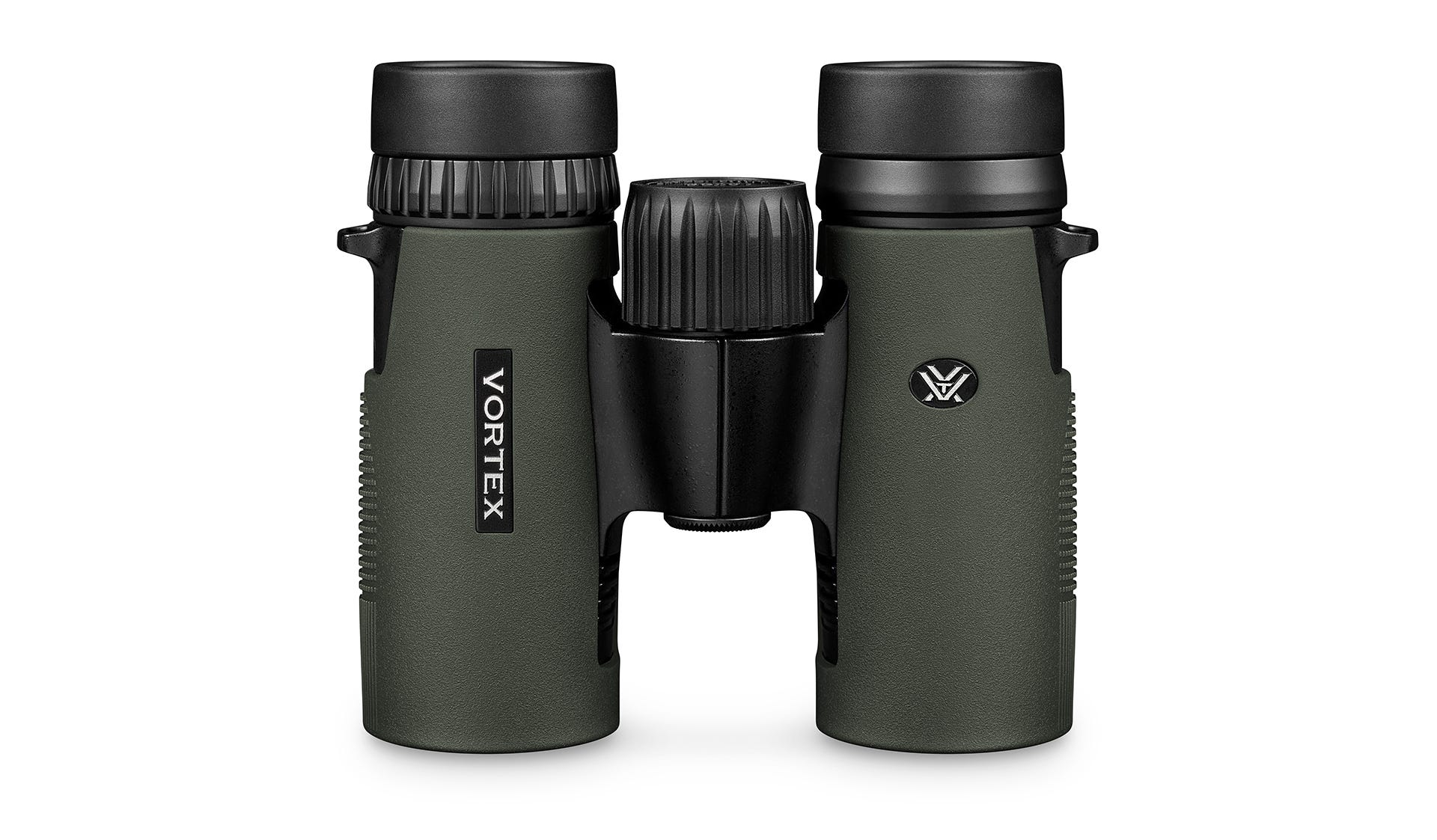
Quick take: The Vortex Diamondback HD 10x28 costs $51 less; the Vortex Diamondback HD 10x28 reaches farther (10x vs 8x); the Vortex Diamondback HD 8x32 has a wider field of view (426 vs 304 ft @ 1000 yds).
Field of view, to scale
Top-down view · drawn to true scale — no exaggeration
Which one to buy
Owners of the 10x28 point birders away from it, and that is the best guide to this pair. The Diamondback HD 8x32 costs $51 more and weighs 15.9 oz against 13.4 oz, and for that you get the more usable binocular almost everywhere: a 426 ft field against 304 ft, a 4.0mm exit pupil against 2.8mm, 16mm of eye relief against 14mm and 5 ft close focus against 6 ft. The glass, prism coatings and VIP warranty are the same family.
The 8x32's numbers translate into a view that is easier to find things in and stays bright longer. Expert testers found it the brightest of the small compacts they compared, measured close focus as near as 3.8 ft, and owners report resolving fine bill detail on warblers. The 10x28's owners, meanwhile, say 10x on a chassis that light shows hand shake, eye placement is unforgiving, and the view dims fast in poor light.
Neither is perfect. 8x32 owners report thin eyecups that felt cheap on tested units, a slightly stiff focus wheel, eye relief that feels tighter than its spec, and a hinge that won't close far enough for close-set eyes. Both show color fringing on high-contrast edges. The 10x28 still makes sense for one buyer: a hiker or traveler glassing open country in good light who wants the most reach for the fewest ounces and the smallest package.
Vortex Diamondback HD 10x28
For a hiker or traveler who glasses distant open country in daylight and values 10x reach in the smallest, lightest body.
Vortex Diamondback HD 8x32
The better choice for birding and general use: a much wider 426 ft field, a brighter 4.0mm exit pupil and close focus for insects, for $51 more.
| Spec | Vortex Diamondback HD 10x28 | Vortex Diamondback HD 8x32 |
|---|---|---|
| Approx. price | ~$169 | ~$220 |
| Use case | General Purpose | Birding |
| Magnification | 10x | 8x |
| Objective | 28mm | 32mm |
| Exit pupil | 2.8mm | 4.0mm |
| Field of view | 304 ft @ 1000 yds | 426 ft @ 1000 yds |
| Eye relief | 14mm | 16mm |
| Close focus | 6 ft | 5 ft |
| Prism | Roof | Roof |
| Glass | HD | HD |
| Coating | Fully Multi-Coated | Fully Multi-Coated |
| Weight | 13.4 oz | 15.9 oz |
| Dimensions | 4.4 x 4.6 in | 4.4 x 5.0 in |
| Warranty | Lifetime (VIP) | Lifetime (VIP) |
Feature comparison
Vortex Diamondback HD 10x28
- ✗ED Glass
- ✓Phase-Corrected
- ✓Dielectric Coating
- ✓Waterproof
- ✓Fogproof
- ✗Image Stabilized
- ✗Tripod Adaptable
- ✗Magnesium Body
- ✗Locking Diopter
Vortex Diamondback HD 8x32
- ✗ED Glass
- ✓Phase-Corrected
- ✓Dielectric Coating
- ✓Waterproof
- ✓Fogproof
- ✗Image Stabilized
- ✓Tripod Adaptable
- ✗Magnesium Body
- ✗Locking Diopter
What birders say
Vortex Diamondback HD 10x28
- ✓Genuinely pocketable at 13.4 ounces - owners repeatedly say they grab it because it disappears into a daypack or jacket pocket where a 42mm gets left home
- ✓HD glass delivers clarity and color accuracy that owners describe as above what a compact this size should manage
- ✓Full-size durability in miniature: waterproof, nitrogen purged, and grippy rubber armor that earns praise from people using it hard
- ✓Close focus around 6 feet is excellent for butterflies, dragonflies, and museum or stadium use
- ✓10x reach in a tiny chassis appeals to hikers glassing open country who refuse to carry full-size weight
- ✓Multi-position click-stop eyecups help dial in eye placement, including for eyeglass wearers
- ✓VIP lifetime warranty applies just like on the full-size models - unusual assurance for a compact
- ✓Strong travel and event glass - owners use it for safaris, cruises, and concerts where packability rules
- ✗The 2.8mm exit pupil goes dim fast at dawn and dusk - reviewers are blunt that a 28mm objective gives up meaningful low-light performance versus 42mm or 50mm
- ✗10x magnification on a chassis this light is hard to hold steady - hand shake is more visible than owners expect
- ✗Sample variation reported on forums - one buyer's first unit had noticeable astigmatism across part of the field before an exchange
- ✗Chromatic aberration is present on high-contrast subjects, which forum users say is expected at this price but still there
- ✗Eye relief is tighter than the full-size Diamondbacks - eyeglass wearers should test before committing
- ✗Small objectives make eye placement less forgiving - blackouts happen if the fit isn't dialed in
- ✗No harness or substantial case in the box, which some buyers wish were included at this price
- ✗Most birding-focused reviewers steer people to the 8x28 version instead, since the steadier, brighter view suits birds better
Vortex Diamondback HD 8x32
- ✓Expert birding reviewers rated it a Solid Choice and found it the brightest image among the smallest compacts they tested - unusual praise at $220
- ✓Wide 8.1-degree field of view (426 ft) that independent lab measurement confirmed actually exceeds the spec slightly at 8.19 degrees
- ✓Outstanding close focus - listed at 5 ft, measured as close as 3.8 ft in testing - making it a legitimate butterfly and dragonfly binocular
- ✓Very crisp center of field with little distortion when panning or focusing - testers resolved fine bill detail on warblers with it
- ✓Light and handy at a measured 442g with genuinely good ergonomics: quality rubber armor, thumb indents, and a shape lab reviewers called stylish and a joy to handle
- ✓Dielectric phase-corrected prisms and hydrophobic ArmorTek exterior coatings - features that used to be $400+ territory
- ✓Vortex's VIP lifetime warranty is truly no-questions - one owner who emailed about a minor optical artifact was offered a replacement without hesitation
- ✓Wide, well-padded neck strap and a solid accessory kit for a budget binocular
- ✗No ED glass despite the 'HD' branding - lab reviewers note the optics are decent but without fireworks, and chromatic aberration is visible in high-contrast scenes
- ✗The focus wheel on tested units was slightly stiff
- ✗Thin, flimsy-feeling eyecups - on one professionally tested pair the outer eyecup covering spun freely, making adjustment awkward and less comfortable against the face
- ✗Testers found them hard to use with glasses - the 16mm eye relief is tighter in practice than on paper
- ✗Not suitable for people with close-set eyes - multiple testers couldn't close the hinge far enough to merge the image
- ✗Nighttime and streetlight viewing shows halos, spikes, and ghost reflections - the interior tubes are gray rather than deeply blackened, and baffling is mediocre
- ✗The diopter ring rotates the outer eyepiece element rather than an internal one - functional but a budget touch
- ✗Low-light performance trails 42mm siblings and ED-glass competitors like the Nikon Monarch M7 tier above it
Vortex Diamondback HD 10x28 vs Vortex Diamondback HD 8x32: common questions
Is the Diamondback HD 8x32 worth $51 more than the 10x28 for birding?▾
Yes. Owners of the 10x28 themselves steer birders toward a steadier 8x, and the 8x32 adds a far wider 426 ft field, a brighter 4.0mm exit pupil and closer focus. Testers found it the brightest of the small compacts they compared.
How much bigger is the Diamondback HD 8x32 than the 10x28?▾
Not much. The 8x32 is 15.9 oz and 4.4 x 5.0 in, against 13.4 oz and 4.4 x 4.6 in for the 10x28. Both fit a daypack easily, so the weight difference rarely decides it unless the binocular has to go in a jacket pocket.
Which Diamondback HD works better with glasses, the 10x28 or the 8x32?▾
On paper the 8x32, with 16mm of eye relief against 14mm. Owners of both still find them tight in practice, and testers of the 8x32 said its thin eyecups did not help. Glasses wearers should try either before buying.