Vortex Crossfire HD 10x50 vs Vortex Diamondback HD 10x28
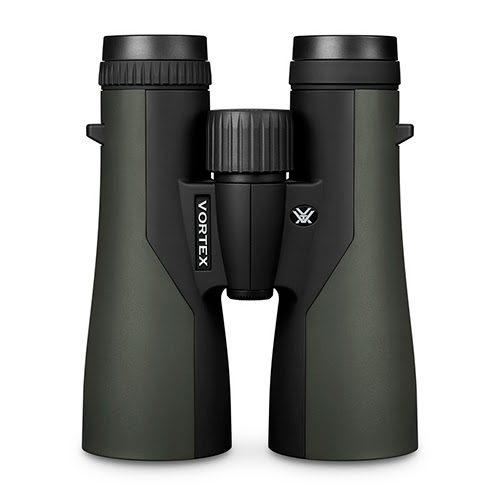
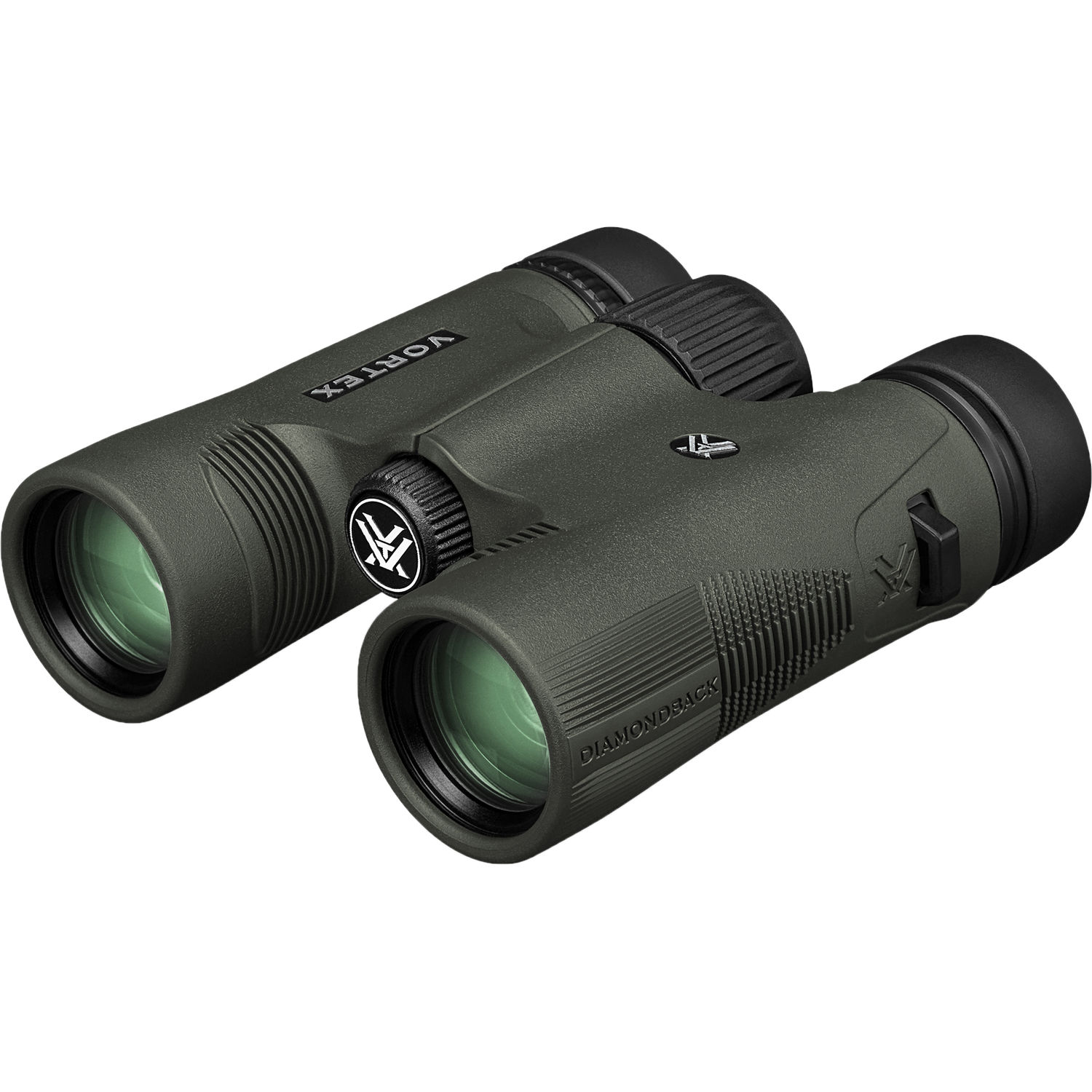
Quick take: The Vortex Crossfire HD 10x50 has a wider field of view (320 vs 304 ft @ 1000 yds); the Vortex Crossfire HD 10x50 gathers more light with a larger 50mm objective.
Field of view, to scale
Top-down view · drawn to true scale — no exaggeration
Which one to buy
Same $169, same VIP warranty, and they could hardly be more different tools. The Crossfire HD 10x50 is a 30.4 oz light bucket for dawn and dusk; the Diamondback HD 10x28 is a 13.4 oz compact that fits a jacket pocket. What decides it is when you look through them. A 5.0mm exit pupil against 2.8mm is the gap that matters: Crossfire owners describe picking a deer out of brush in fading light, while 10x28 owners say their compact goes dim fast at the edges of the day.
In daylight the compact has the better glass. It gets HD elements, phase-corrected prisms and dielectric coatings, and Crossfire owners point out that the 'HD' in their model's name refers to the optical system, not ED glass. Both show chromatic aberration on high-contrast edges, and the Crossfire softens in roughly the outer 15% of the field. The 10x28 has its own handling problem: 10x on a chassis that light shows every tremor, and its 14mm eye relief is tight for glasses next to the Crossfire's 17mm.
Carrying is where the Crossfire loses. Owners call it front-heavy and tiring in long handheld sessions, though the GlassPak harness in the box helps a lot; the 10x28 ships with no harness and needs none. For a hunter who sits a field edge at sunrise, the 10x50's brightness is worth the bulk and the compact is simply the wrong tool. For travel, hiking and stadium seats in good light, the 10x28 is the pair that comes along, and a binocular left at home sees nothing.
Vortex Crossfire HD 10x50
Best if most of your glassing happens at first and last light: the 5.0mm exit pupil keeps a field readable after the compact has gone dim, and the included harness takes the edge off its weight.
Vortex Diamondback HD 10x28
For travelers and hikers who glass in daylight and want 10x reach at 13.4 oz, with HD glass and phase-corrected prisms the Crossfire does without.
| Spec | Vortex Crossfire HD 10x50 | Vortex Diamondback HD 10x28 |
|---|---|---|
| Approx. price | ~$169 | ~$169 |
| Use case | Hunting | General Purpose |
| Magnification | 10x | 10x |
| Objective | 50mm | 28mm |
| Exit pupil | 5.0mm | 2.8mm |
| Field of view | 320 ft @ 1000 yds | 304 ft @ 1000 yds |
| Eye relief | 17mm | 14mm |
| Close focus | 6 ft | 6 ft |
| Prism | Roof | Roof |
| Glass | Standard | HD |
| Coating | Fully Multi-Coated | Fully Multi-Coated |
| Weight | 30.4 oz | 13.4 oz |
| Dimensions | 6.1 x 5.5 in | 4.4 x 4.6 in |
| Warranty | Lifetime (VIP) | Lifetime (VIP) |
Feature comparison
Vortex Crossfire HD 10x50
- ✗ED Glass
- ✗Phase-Corrected
- ✗Dielectric Coating
- ✓Waterproof
- ✓Fogproof
- ✗Image Stabilized
- ✓Tripod Adaptable
- ✗Magnesium Body
- ✗Locking Diopter
Vortex Diamondback HD 10x28
- ✗ED Glass
- ✓Phase-Corrected
- ✓Dielectric Coating
- ✓Waterproof
- ✓Fogproof
- ✗Image Stabilized
- ✗Tripod Adaptable
- ✗Magnesium Body
- ✗Locking Diopter
What birders say
Vortex Crossfire HD 10x50
- ✓Low-light performance genuinely surprises owners - the 50mm objectives and 5mm exit pupil make picking out a deer from brush at dusk noticeably easier than a 42mm at this price
- ✓Multiple owners say the clarity is close enough to the Diamondback HD that they couldn't justify the step up - 'you can spend the extra money for no difference at all' is a recurring sentiment
- ✓Vortex's transferable, no-receipt VIP lifetime warranty on a $200 binocular is a value argument owners bring up constantly
- ✓Ships with the GlassPak chest harness case, which hunters consistently call out as a nice touch that competitors make you buy separately
- ✓Center-field resolution is strong for the price, with reviewers noting clarity that approaches models a tier up
- ✓Rugged rubber armor, waterproof and nitrogen-purged construction holds up to truck-cab and field abuse without babying
- ✓16mm eye relief with click-stop eyecups works fine for most eyeglass wearers
- ✓Tripod adaptable, so hunters can throw it on a tripod for extended glassing sessions where the 10x50 format shines
- ✗Heavy at over 28 ounces, and testers specifically call out front-heavy, poorly balanced mass that you feel during long handheld sessions
- ✗Field of view (320 ft) is only average for a 10x50, so the view is no roomier than the lighter 10x42's
- ✗Chromatic aberration shows up on high-contrast subjects like dark branches or poles against bright sky
- ✗Edge softness in roughly the outer 15% of the field of view
- ✗No ED glass - the 'HD' in the name refers to the optical system, not the glass type, which trips up buyers comparing to the Diamondback HD
- ✗Several reviewers conclude it's worth budgeting a little more for the next step up in Vortex's lineup
- ✗Entry-level fit and finish - accessories like the lens covers and neck strap feel cheap compared to the optics
- ✗Bulky footprint makes it an awkward carry for hikers compared to a 42mm format
Vortex Diamondback HD 10x28
- ✓Genuinely pocketable at 13.4 ounces - owners repeatedly say they grab it because it disappears into a daypack or jacket pocket where a 42mm gets left home
- ✓HD glass delivers clarity and color accuracy that owners describe as above what a compact this size should manage
- ✓Full-size durability in miniature: waterproof, nitrogen purged, and grippy rubber armor that earns praise from people using it hard
- ✓Close focus around 6 feet is excellent for butterflies, dragonflies, and museum or stadium use
- ✓10x reach in a tiny chassis appeals to hikers glassing open country who refuse to carry full-size weight
- ✓Multi-position click-stop eyecups help dial in eye placement, including for eyeglass wearers
- ✓VIP lifetime warranty applies just like on the full-size models - unusual assurance for a compact
- ✓Strong travel and event glass - owners use it for safaris, cruises, and concerts where packability rules
- ✗The 2.8mm exit pupil goes dim fast at dawn and dusk - reviewers are blunt that a 28mm objective gives up meaningful low-light performance versus 42mm or 50mm
- ✗10x magnification on a chassis this light is hard to hold steady - hand shake is more visible than owners expect
- ✗Sample variation reported on forums - one buyer's first unit had noticeable astigmatism across part of the field before an exchange
- ✗Chromatic aberration is present on high-contrast subjects, which forum users say is expected at this price but still there
- ✗Eye relief is tighter than the full-size Diamondbacks - eyeglass wearers should test before committing
- ✗Small objectives make eye placement less forgiving - blackouts happen if the fit isn't dialed in
- ✗No harness or substantial case in the box, which some buyers wish were included at this price
- ✗Most birding-focused reviewers steer people to the 8x28 version instead, since the steadier, brighter view suits birds better
Vortex Crossfire HD 10x50 vs Vortex Diamondback HD 10x28: common questions
Is the Vortex Diamondback HD 10x28 bright enough to replace the Crossfire HD 10x50 for deer hunting?▾
No. Its 2.8mm exit pupil is a little over half the Crossfire's 5.0mm, and owners say the compact dims well before legal shooting light runs out. It works as a daylight scouting glass or a backup, but the 10x50 is the one for dawn and dusk sits.
Does the Diamondback HD 10x28 have better glass than the Crossfire HD 10x50?▾
In the ways that show in daylight, yes. It adds HD glass, phase correction and dielectric prism coatings, while Crossfire owners note their model's 'HD' badge does not mean ED glass. Both still show some color fringing on dark branches against a bright sky.
Which works better with eyeglasses, the Crossfire HD 10x50 or the Diamondback HD 10x28?▾
The Crossfire, with 17mm of eye relief against 14mm. Owners of the 10x28 also say its small eyepieces make eye placement less forgiving, with blackouts if the eyecups are not dialed in, so glasses wearers should try it before committing.