Swarovski EL 10x42 vs Swarovski EL 8.5x42
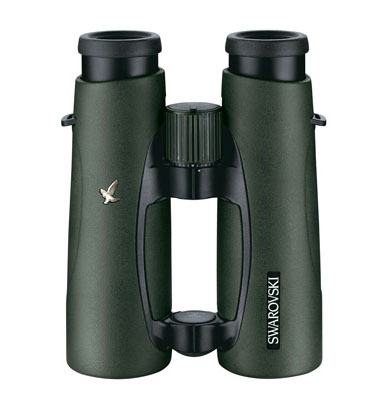
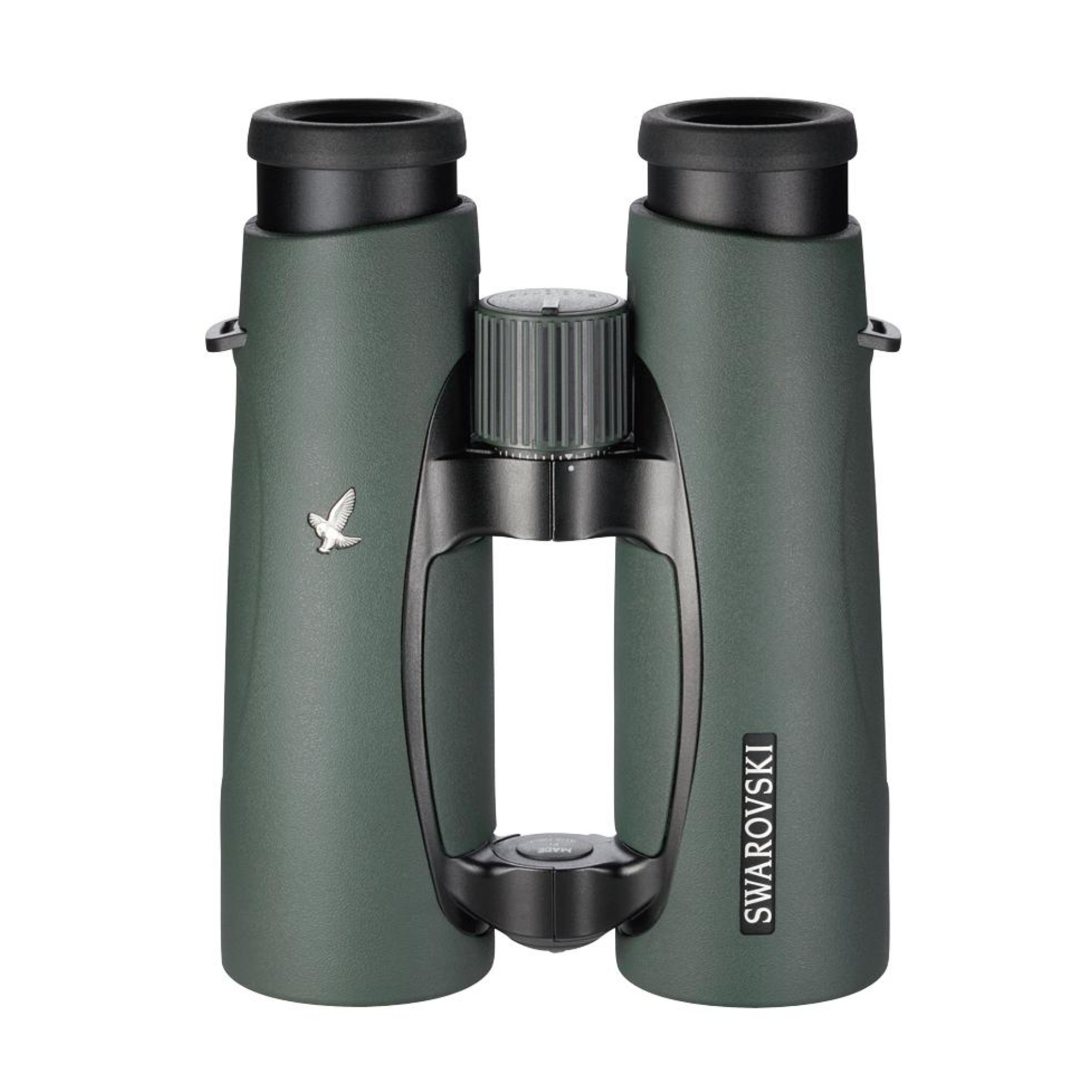
Quick take: The Swarovski EL 10x42 reaches farther (10x vs 8.5x); the Swarovski EL 8.5x42 has a wider field of view (399 vs 336 ft @ 1000 yds).
Field of view, to scale
Top-down view · drawn to true scale — no exaggeration
Which one to buy
Same $1,999, same open-bridge body, same 5.2 ft close focus and 20mm of eye relief: Swarovski's two 42mm ELs differ only in magnification, and the 8.5x42 is the one birders bought most. Its owners describe it as the most common EL choice among birders and, for years, the glass to beat at every festival and hawkwatch.
The 8.5x gives you a 399 ft field against 336 ft, a 4.94mm exit pupil against 4.2mm, and a steadier hold. Its owners say the extra reach over an 8x is just enough to matter without the shake of a 10x, and rank it among the best twilight performers short of 50mm glass. 10x42 owners themselves note that the 8.5x42 shows most people more actual detail because it is easier to hold still.
The 10x's case is distance. Owners say it wins in open country, on raptors and shorebirds, and for western hunting, and that its edge-to-edge sharpness lets you scan ridgelines with nothing smearing at the margins.
Both carry the same Swarovision traits by owner account: a rolling-ball effect when panning that bothers a minority, edge color fringing on harsh contrast, and glare in low-angle light. They weigh almost the same, 29.6 oz and 29.5 oz. As a single birding binocular, the 8.5x42 is the more complete instrument. The 10x42 is for someone who knows most of their viewing is long-distance and in decent light.
Swarovski EL 10x42
For open country, raptors, shorebirds and western hunting, where distance matters more than field width.
Swarovski EL 8.5x42
The more complete birding binocular at the same price: wider, brighter at dusk and steadier in the hand.
| Spec | Swarovski EL 10x42 | Swarovski EL 8.5x42 |
|---|---|---|
| Approx. price | ~$1,999 | ~$1,999 |
| Use case | Birding | Birding |
| Magnification | 10x | 8.5x |
| Objective | 42mm | 42mm |
| Exit pupil | 4.2mm | 4.94mm |
| Field of view | 336 ft @ 1000 yds | 399 ft @ 1000 yds |
| Eye relief | 20mm | 20mm |
| Close focus | 5.2 ft | 5.2 ft |
| Prism | Roof | Roof |
| Glass | FL | FL |
| Coating | Fully Multi-Coated | Fully Multi-Coated |
| Weight | 29.6 oz | 29.5 oz |
| Dimensions | 5.6 x 4.7 in | 5.6 x 4.7 in |
| Warranty | Lifetime | Lifetime |
Feature comparison
Swarovski EL 10x42
- ✓ED Glass
- ✓Phase-Corrected
- ✓Dielectric Coating
- ✓Waterproof
- ✓Fogproof
- ✗Image Stabilized
- ✓Tripod Adaptable
- ✓Magnesium Body
- ✓Locking Diopter
Swarovski EL 8.5x42
- ✓ED Glass
- ✓Phase-Corrected
- ✓Dielectric Coating
- ✓Waterproof
- ✓Fogproof
- ✗Image Stabilized
- ✓Tripod Adaptable
- ✓Magnesium Body
- ✓Locking Diopter
What birders say
Swarovski EL 10x42
- ✓Swarovision optics still trade punches with current flagships - hunters and birders who compared it directly to the NL Pure 10x42 report no significant difference for most real-world use
- ✓Edge-to-edge sharpness from the field flattener means the entire 336 ft field is usable - scanning ridgelines or seabird rafts, nothing smears at the margins
- ✓The post-NL price drop made it the consensus 'value alpha' - forum threads consistently steer buyers to new-discounted or used ELs as the smart way into Swarovski glass
- ✓Award-winning pedigree (Best of the Best honors in its era) and a decade-plus of field reports give it one of the deepest track records in optics
- ✓The open-bridge wrap-around grip is one of the most loved ergonomic designs ever shipped - secure one-handed carry that hunters especially praise
- ✓Brilliant color rendition and contrast - the richness and depth of the Swarovision image is still described as breathtaking in reviews
- ✓5.2 ft close focus is exceptional for a 10x42 and better than the Zeiss SF 10x42's, useful for insects and close hides
- ✓Swarovski's legendary service reputation - owners routinely report decade-old ELs coming back from service like new, which underwrites used purchases
- ✗The NL Pure 10x42's 399 ft field makes the EL's 336 ft feel dated - field width is the one spec where the EL clearly lost the crown
- ✗Swarovski lists 20mm of eye relief, but some eyeglass wearers still fiddle with the eyecup stops to see the whole field
- ✗The field-flattener rolling-ball effect bothers a minority of users when panning, and it's a permanent characteristic, not a defect
- ✗Glare in low-angle light draws recurring comments, though it's less criticized than in the 32mm ELs
- ✗Resale values fell after the NL launch and discounting - sellers who bought at peak pricing took the hit, and buyers should not overpay for used samples
- ✗At 29.6 oz it's heavier than the Zeiss SF 10x42 and lacks that model's rearward balance trick, so it feels more nose-heavy in extended holds
- ✗Some edge chromatic aberration is baked into the Swarovision design - visible fringing in the outer field on high-contrast subjects
- ✗10x magnification and a conventional balance mean shake management matters - forum threads regularly note the 8.5x42 shows most people more actual detail
Swarovski EL 8.5x42
- ✓Arguably the most iconic birding binocular of its generation - the 8.5x42 was the most common EL choice among birders, and for years it was the glass to beat at every festival and hawkwatch
- ✓The clever 8.5x split-the-difference magnification gives a touch more reach than an 8x while staying easy to hold steady - owners describe it as the best of both worlds
- ✓Swarovision edge-to-edge sharpness across the 399 ft field - reviewers called the richness, sharpness, and depth of the image breathtaking
- ✓Nearly 5mm of exit pupil keeps the view bright and forgiving into dusk - meaningfully better twilight performance than any 32mm or the 10x42
- ✓20mm eye relief with a full usable field makes it one of the friendliest alpha binoculars for eyeglass wearers
- ✓5.2 ft close focus is superb for a full-size glass - butterflies, dragonflies, and feeder birds are all in play
- ✓The open-bridge grip and balanced 29.5 oz body draw praise from wildlife watchers who carry it on all-day treks
- ✓Post-NL Pure discounting makes it the value path to a no-excuses alpha - used and closeout pricing runs far below any new NL Pure, and forum buyers consider it the deal of the current market
- ✗The NL Pure line's much wider fields (the NL 8x42 sees 424 ft) make the EL's 399 ft merely very good instead of class-leading
- ✗The rolling-ball globe effect when panning is inherent to the flat-field design and a minority of users never get comfortable with it
- ✗Veiling glare in low-angle light is a known EL-line trait that comes up in owner threads, though less severely than with the 32mm models
- ✗Edge chromatic aberration is visible on high-contrast subjects - the price of the field flattener
- ✗Resale values softened once the NL Pure arrived, so early adopters lost real money and today's buyers should price accordingly
- ✗The 8.5x magnification is an odd duck - marginally shakier than a true 8x, and buyers wanting maximum steadiness sometimes wish it were a straight 8x42
- ✗At 29.5 oz it's no featherweight, and the newer SFL-class binoculars deliver most of the view at two-thirds the weight
- ✗Focus is geared on the slow, precise side - fast-moving warbler flocks reward the quicker wheels on the Zeiss SF
Swarovski EL 10x42 vs Swarovski EL 8.5x42: common questions
Which Swarovski EL do birders prefer, the 10x42 or the 8.5x42?▾
The 8.5x42, by owner accounts. It was the most common EL choice among birders, and even 10x42 owners say its wider field, deeper depth of focus and steadier view outweigh the 10x's extra reach for most people.
Is the EL 8.5x42 better than the EL 10x42 at dusk?▾
Yes. Its 4.94mm exit pupil beats the 10x42's 4.2mm, and owners rank it among the best twilight performers short of 50mm-class binoculars. The 10x42 is still a strong low-light glass, just not quite as forgiving as the light fades.