Steiner HX 15x56 vs Canon 18x50 IS AW
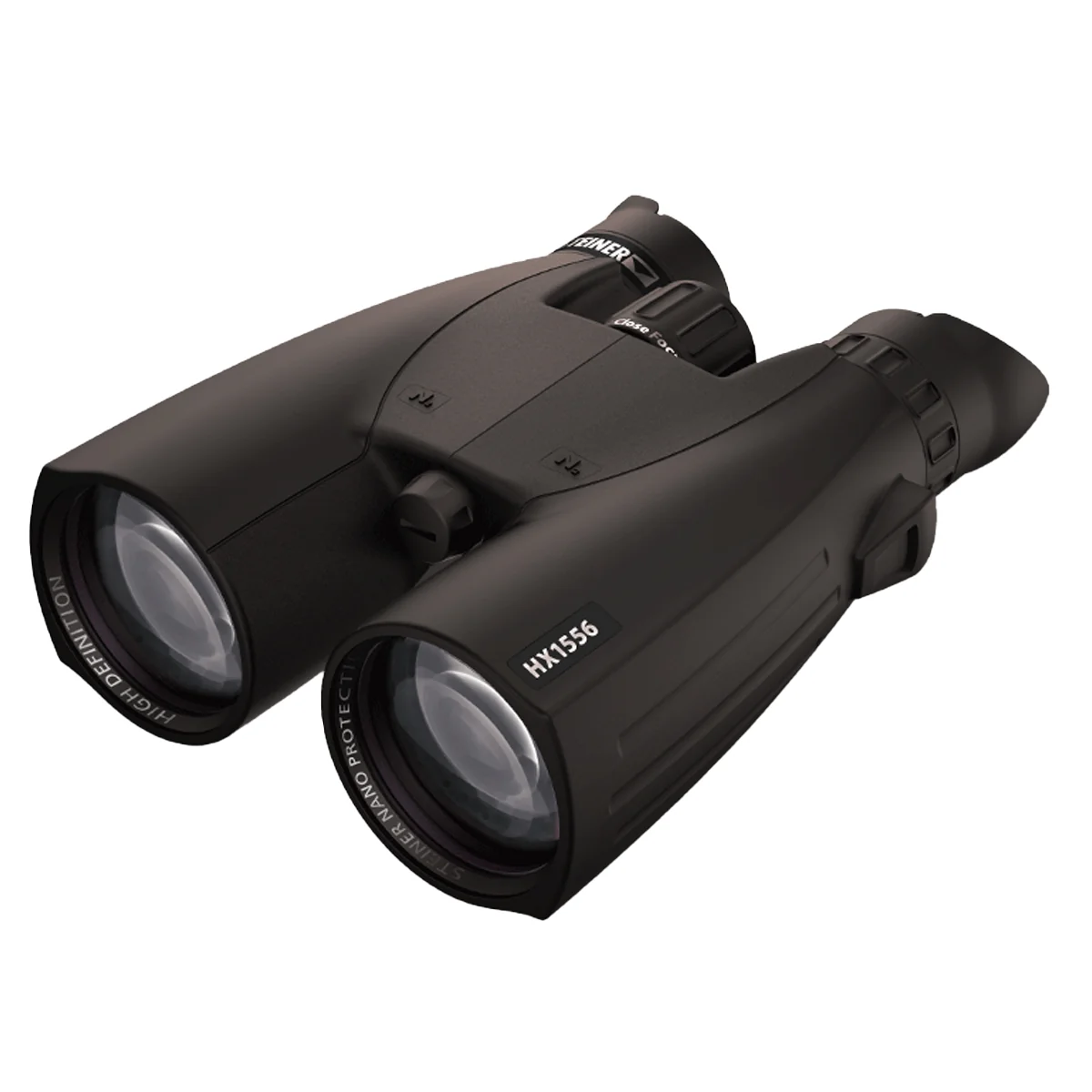
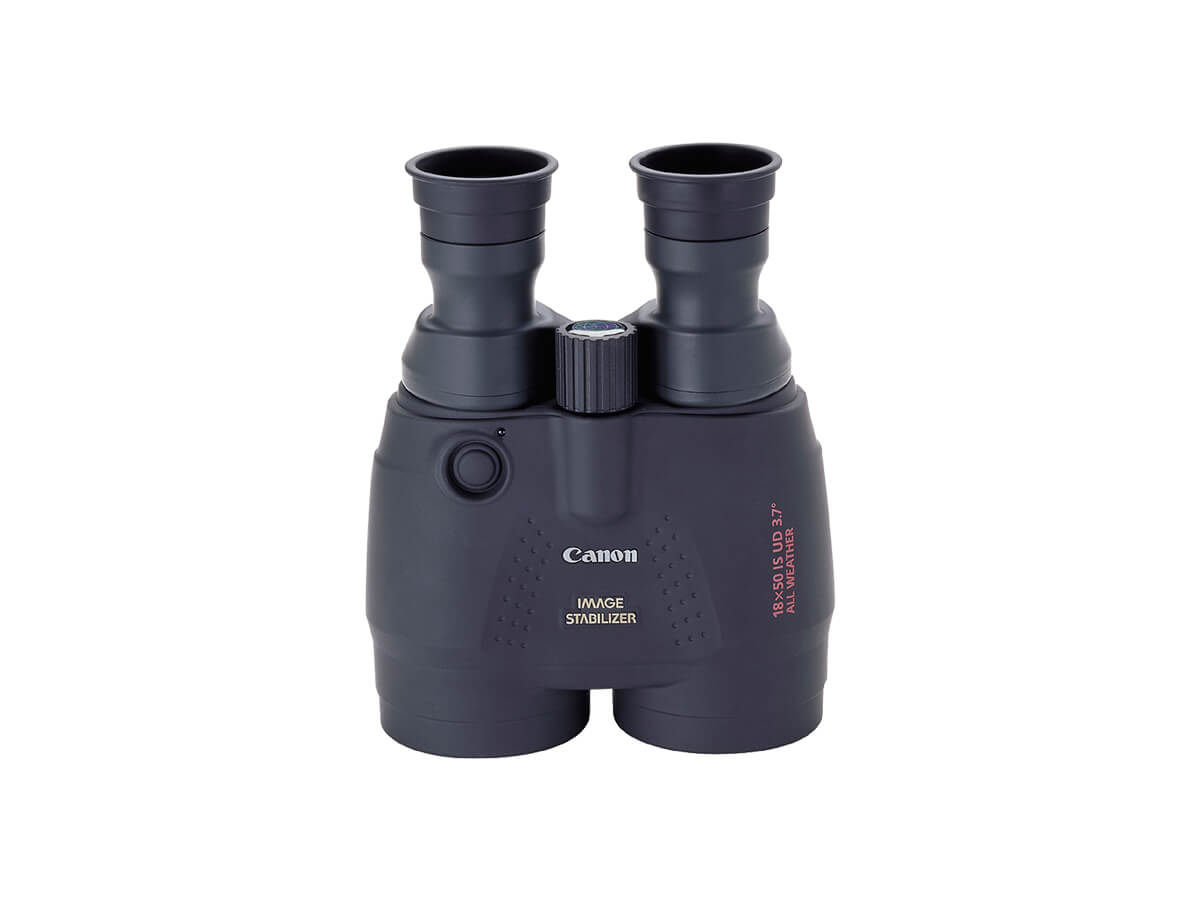
Quick take: The Steiner HX 15x56 costs $549 less; the Canon 18x50 IS AW reaches farther (18x vs 15x); the Steiner HX 15x56 has a wider field of view (225 vs 194 ft @ 1000 yds).
Field of view, to scale
Top-down view · drawn to true scale — no exaggeration
Which one to buy
Tripod or stabilizer: that is the real choice between these two high-power binoculars. The Steiner HX 15x56 is a 44.1 oz conventional glass that owners treat as a tripod instrument, full stop; at 15x, they say, hand shake blurs fine detail within seconds. The Canon 18x50 IS AW uses image stabilization so you can hold 18x in your hands, at 41.6 oz. The Canon costs $549 more, and the Steiner is discontinued, so it may be hard to find new.
Mounted, the Steiner gives the brighter, easier view. Its 3.73mm exit pupil beats the Canon's 2.78mm, its 225 ft field beats 194 ft, and owners say it holds detail on shaded slopes deep into dusk, with optics close to pricier 15x56 rivals. Its weak spots are 15.4mm of eye relief that glasses wearers fight, softness toward the edges, and the real carried weight once a tripod is added.
Canon owners split sharply. Those who love it call it a handheld small spotter that resolves more than almost anything without a tripod, with remarkable views of clusters and nebulae. Those who sell it cite critical eye placement, stabilization that takes seconds to settle and stutters when panning, very shallow depth of field, and eye relief that measures closer to 10mm than the claimed 15mm, which shuts out most glasses. It also carries a 1-year warranty against Steiner's lifetime.
The Canon earns its premium only for someone who refuses to carry a tripod and will put in the time to learn a demanding instrument. For long sessions from one spot, the Steiner on a tripod is the better tool and the better value, if a new one turns up.
Steiner HX 15x56
For western hunters and stargazers who glass from a tripod for hours and want the brighter, wider view, while stock lasts; it is discontinued.
Canon 18x50 IS AW
For long-range birders and observers who want maximum handheld reach and will learn its fussy eye placement; skip it if you wear glasses.
| Spec | Steiner HX 15x56 | Canon 18x50 IS AW |
|---|---|---|
| Approx. price | ~$1,000 | ~$1,549 |
| Use case | Astronomy | Astronomy |
| Magnification | 15x | 18x |
| Objective | 56mm | 50mm |
| Exit pupil | 3.73mm | 2.78mm |
| Field of view | 225 ft @ 1000 yds | 194 ft @ 1000 yds |
| Eye relief | 15.4mm | 15mm |
| Close focus | 8 ft | 20 ft |
| Prism | Roof | Porro |
| Glass | HD | Standard |
| Coating | Fully Multi-Coated | Fully Multi-Coated |
| Weight | 44.1 oz | 41.6 oz |
| Dimensions | 7.8 x 5.5 in | 7.5 x 5.9 in |
| Warranty | Lifetime | 1 Year |
Feature comparison
Steiner HX 15x56
- ✓ED Glass
- ✓Phase-Corrected
- ✓Dielectric Coating
- ✓Waterproof
- ✓Fogproof
- ✗Image Stabilized
- ✓Tripod Adaptable
- ✗Magnesium Body
- ✓Locking Diopter
Canon 18x50 IS AW
- ✗ED Glass
- ✗Phase-Corrected
- ✗Dielectric Coating
- ✓Waterproof
- ✓Fogproof
- ✓Image Stabilized
- ✓Tripod Adaptable
- ✗Magnesium Body
- ✗Locking Diopter
What birders say
Steiner HX 15x56
- ✓Hunting-forum members who compared it found optical quality very close to the Leupold BX-5 Santiam HD 15x56 at a meaningfully lower price
- ✓At least one buyer reported his optics dealer steered him to the HX 15x56 over Maven and other competitors at $850 - retailer-level endorsements come up more than once
- ✓German-made glass with the brightness and central sharpness the HX line is known for, scaled up to a 56mm objective for serious light gathering
- ✓15x magnification turns it into a legitimate truck-window and tripod glassing tool for western hunting - picking apart hillsides that a 10x42 just can't resolve
- ✓Massive twilight performance for the money - the 15x56 format is the classic low-light mule deer and elk configuration, and owners report it holds detail deep into dusk
- ✓Steiner's rugged armor and waterproofing carried into a big-eye format, with the lifetime Heritage Warranty behind it
- ✓Tripod adaptable out of the box, which owners consider mandatory equipment for this class and it takes standard adapters cleanly
- ✓Clearly cheaper than the Swarovski SLC 15x56 and Zeiss Conquest HD 15x56 that define the category, while giving up less than the price gap suggests according to owners
- ✗15x is beyond practical handheld magnification - without a tripod the image shakes too much to use for more than a quick look, a universal caveat in the format
- ✗At 44.1 oz plus a required tripod, the real carried weight of this setup is substantial - backpack hunters debate whether it earns its place over a spotter
- ✗15.4mm eye relief is tight for eyeglass wearers, a recurring Steiner complaint that stings more on a $1000 instrument
- ✗Edge sharpness falls off in the outer field like the rest of the HX line - noticeable when scanning star fields or panning wide hillsides
- ✗8 ft close focus is irrelevant for glassing but rules out any close-range use
- ✗Discussion volume is thin compared to the Vortex Kaibab HD and Maven B5 - fewer long-term reports to draw on before spending this much
- ✗Some owners who later compared against Meopta's 15x56 reported the pricier Meopta gave a superior image, so it's not the last word in the class
- ✗The 3.7mm exit pupil means that despite the big objectives, full-dark astronomy is limited - it's a twilight instrument more than a deep-sky one
Canon 18x50 IS AW
- ✓Resolves more detail than almost any other hand-holdable binocular on the market - 18x magnification plus stabilization is a combination nothing conventional can match
- ✓Genuinely sharp, high-contrast optics with UD glass and a flat field - reviewers compare the central image quality to Swarovski and Zeiss glass
- ✓Outstanding astronomy instrument - owners report remarkable hand-held views of globular clusters, M42, and the Ring Nebula, and reviewers call it the best suburban moon-viewing tool they've used
- ✓Excellent long-range birding weapon - one reviewer called the stabilized 18x 'lethal' for teasing distant warblers out of hedgerows no 10x could reach
- ✓All-weather (AW) construction with water resistance - unique among Canon's big stabilized models and usable in field conditions
- ✓Proven long-term reliability - one owner reported 15 years of use, including winters, without a single problem
- ✓Effectively replaces a small spotting scope - owners describe it as an easy-to-use, effective 'small spotter' without the tripod
- ✗Heavy at 41.6 oz - fatiguing to hold for extended sessions and firmly in 'is this still hand-holdable?' territory for some owners
- ✗Stabilization takes several seconds to fully settle and can look jerky when panning - a notably less refined IS behavior than newer Canon models
- ✗Effective eye relief measures closer to 10mm than the claimed 15mm, making the full field nearly unusable with eyeglasses
- ✗Very narrow 194 ft field of view with critical eye placement - experienced users describe it as 'for advanced users only'
- ✗Shallow depth of field at 18x demands constant refocusing, and the focus action is sensitive enough to overshoot
- ✗Visible chromatic aberration on silhouettes and high-contrast edges despite the UD element
- ✗Plastic exterior and flimsy case feel like consumer electronics rather than $1,700 optics, per multiple reviewers
- ✗Polarizing ownership experience - some buyers report disappointment and resell them, while others rave, suggesting a real learning curve and sample sensitivity
Steiner HX 15x56 vs Canon 18x50 IS AW: common questions
Can you hand-hold the Steiner HX 15x56 like the Canon 18x50 IS AW?▾
Only for quick looks. HX owners say 15x without a tripod shakes too much for more than a confirming glance. The Canon's stabilization is what makes 18x usable in your hands, though owners say it takes a few seconds to fully settle.
Which works better with glasses, the Steiner HX 15x56 or the Canon 18x50 IS AW?▾
Neither is good, but the Canon is worse. Reviewers measured its usable eye relief near 10mm despite the 15mm claim. The Steiner is rated at 15.4mm, which owners still call tight; some tripod users take their glasses off and set the diopter instead.
Is the Canon 18x50 IS AW better for astronomy than the Steiner HX 15x56?▾
Handheld, yes: owners report striking views of globular clusters and nebulae without a tripod. On a tripod, the Steiner's 3.73mm exit pupil and wider field gather more light, though its owners call it more of a twilight hunting tool than a deep-sky instrument.