Steiner Commander 7x50 vs Steiner Marine 7x50
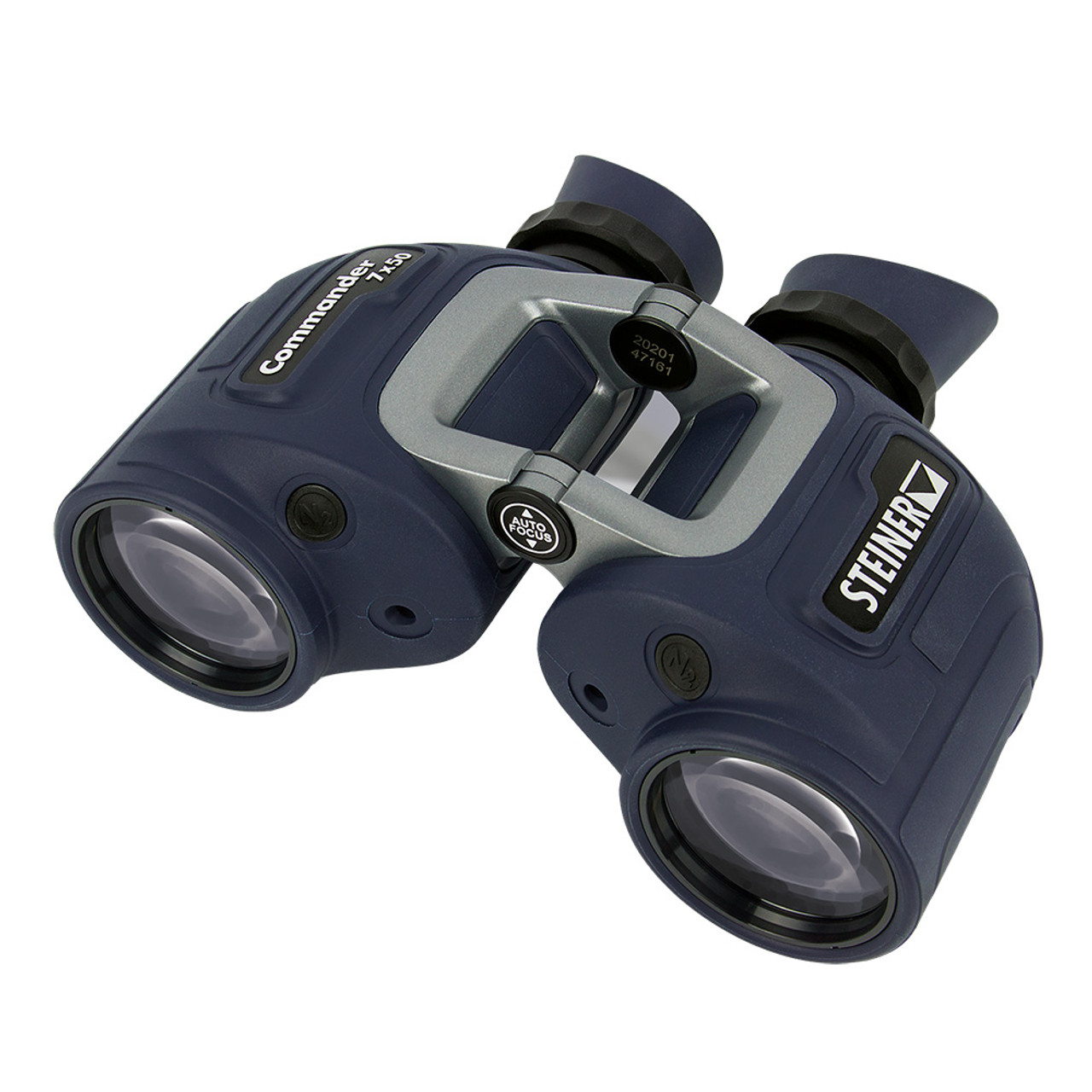
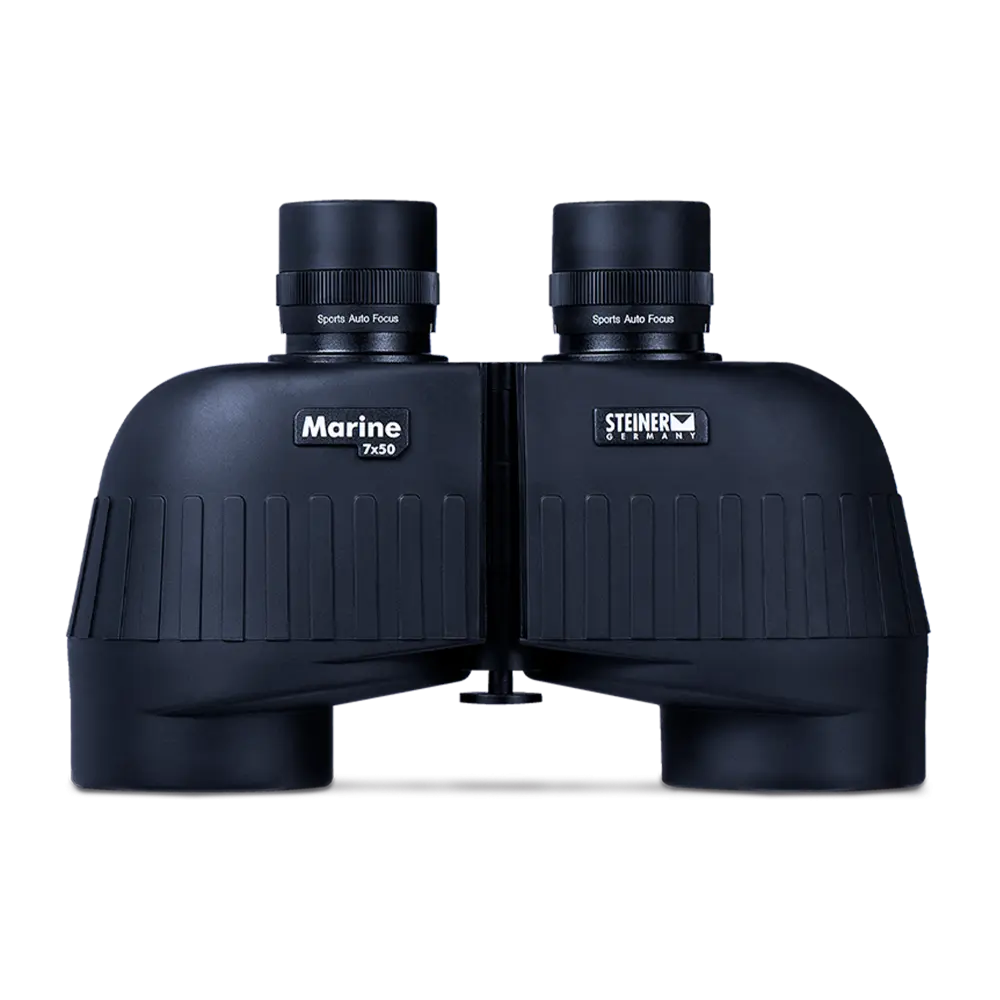
Quick take: The Steiner Marine 7x50 costs $251 less; the Steiner Commander 7x50 has a wider field of view (357 vs 354 ft @ 1000 yds).
Field of view, to scale
Top-down view · drawn to true scale — no exaggeration
Which one to buy
Steiner's own two 7x50s share more than they don't: the same sports-auto-focus that keeps everything past about 20 yards sharp, the same 20.2mm of eye relief, the same 66 ft close focus, near-identical fields of 357 ft and 354 ft, and an exit pupil around 7.1mm. The Commander costs $251 more, and it is discontinued, so it may be hard to find new.
What the premium bought, by Commander owners' account, is navigation gear: an illuminated compass and rangefinding reticle they use constantly for bearings, a buoyant strap, and a locking diopter. Take the compass away and you'd be paying for very little; Commander owners themselves say the compass and reticle are clutter for anyone who doesn't navigate by them.
Marine owners describe a rugged, comfortable binocular: a tugboat crew that kept breaking cheaper optics pooled money for a pair and had no regrets, silicone eyecups that fold without cracking, and brightness that holds up in fog and rain. Their complaints are softer edges than premium marine porros, some sample variation worth checking on arrival, a strap that doesn't float, and word that Steiner has shortened the lifetime warranty on new units.
Unless you take bearings at sea, the Marine is the sensible buy and does the same core job for about half the money. The Commander is worth tracking down only for a navigator who wants the compass built in.
Steiner Commander 7x50
For sailors who take bearings and want a built-in compass and floating strap, if a new one can still be found; it is discontinued.
Steiner Marine 7x50
The sensible buy for most boaters: the same auto-focus and 7x50 view for $251 less, with a floating strap bought separately.
| Spec | Steiner Commander 7x50 | Steiner Marine 7x50 |
|---|---|---|
| Approx. price | ~$530 | ~$279 |
| Use case | Marine | Marine |
| Magnification | 7x | 7x |
| Objective | 50mm | 50mm |
| Exit pupil | 7.14mm | 7.1mm |
| Field of view | 357 ft @ 1000 yds | 354 ft @ 1000 yds |
| Eye relief | 20.2mm | 20.2mm |
| Close focus | 66 ft | 66 ft |
| Prism | Porro | Porro |
| Glass | Standard | Standard |
| Coating | Fully Multi-Coated | Fully Multi-Coated |
| Weight | 38.4 oz | 36.3 oz |
| Dimensions | 7.8 x 5.5 in | 5.5 x 8.1 in |
| Warranty | Lifetime | Lifetime |
Feature comparison
Steiner Commander 7x50
- ✗ED Glass
- ✗Phase-Corrected
- ✗Dielectric Coating
- ✓Waterproof
- ✓Fogproof
- ✗Image Stabilized
- ✗Tripod Adaptable
- ✗Magnesium Body
- ✓Locking Diopter
Steiner Marine 7x50
- ✗ED Glass
- ✗Phase-Corrected
- ✗Dielectric Coating
- ✓Waterproof
- ✓Fogproof
- ✗Image Stabilized
- ✗Tripod Adaptable
- ✗Magnesium Body
- ✗Locking Diopter
What birders say
Steiner Commander 7x50
- ✓Integrated illuminated compass with rangefinding reticle that sailors genuinely use - owners report reaching for it 'all the time' for taking bearings on marks, ships, and lights
- ✓Huge 7.1mm exit pupil makes it a low-light monster - one owner notes 9 out of 10 uses are at night, exactly what a watch-keeping binocular is for
- ✓Sports-auto-focus system: set each eyepiece once for your eyes and everything from about 20 yards to infinity stays sharp - no fumbling with a focus wheel on a pitching deck
- ✓Extra-wide field of view for easy orientation and quick reacquisition of targets from a moving boat
- ✓Bright, razor-sharp German optics that long-term owners describe as the reference standard for marine glass
- ✓Built for abuse at sea: pressurized nitrogen fill, deeply cushioned NBR rubber armor, and waterproofing rated for full submersion
- ✓Buoyant high-visibility neck strap included, so an overboard drop doesn't mean a lost binocular
- ✓Steiner's decades-long warranty coverage plus a repair program owners on forums describe as reasonably priced and reliable
- ✗Individual-focus design is wrong for wildlife and general nature use - anything closer than about 20 yards can't be brought into sharp focus, as birding forum users point out
- ✗Premium price - comparably specced Fujinon 7x50 models with compass and reticle undercut it, and a respected marine-binocular test picked the Fujinon as its favorite
- ✗Heavy at 38.4 ounces, which you feel during a long watch without the strap properly rigged
- ✗Bulky 7x50 format is overkill for daytime-only coastal use where a compact would do
- ✗Polycarbonate (Makrolon) chassis, though proven at sea, feels less premium to some than the metal bodies on rival glass
- ✗Compass models are balanced for a specific hemisphere zone, a detail circumnavigators need to check before buying
- ✗No image stabilization, which boating forum threads increasingly weigh against stabilized alternatives at similar money
- ✗The compass and reticle add weight and clutter that non-navigators will never use
Steiner Marine 7x50
- ✓Sports-AutoFocus is the killer feature afloat: set each eyepiece once for your eyes and everything from about 20 yards to the horizon stays sharp - boaters describe it as set-and-forget with no focus fiddling on a pitching deck
- ✓Genuinely rugged - a tugboat wheelhouse crew who kept destroying company-issued optics pooled money for a pair and reported no regrets, with everyone amazed at the view
- ✓Big 7.1mm exit pupil and stable 7x magnification make for an easy, relaxed view on moving water - one owner called them the most comfortable binoculars he owned, resting perfectly on the eye sockets
- ✓Bright optics that hold up in fog, snow, and rain - deep-sea fishermen use them for reading buoy numbers, boat names, and finding birds over feeding tuna
- ✓In one owner's side-by-side 7x50 shootout it beat a Celestron Nova and Nikon Tropical and looked comparable to a classic Zeiss 7x50 B - serious company at a $250-300 street price
- ✓Flexible silicone eyecups that fold without cracking or drying out like rubber, praised by long-term owners
- ✓Generous eye relief that works with glasses, plus a wide easy field for scanning a horizon
- ✓Nitrogen-pressurized, waterproof housing with a strong track record - owners running pairs from 2012 and earlier still recommend them
- ✗The individual-focus autofocus design cannot focus closer than roughly 20 meters - close-in daytime use and birding are effectively off the table, and center-focus users need an adjustment period
- ✗Edge sharpness trails the premium marine porros - an owner comparing directly found it clearly behind the Fujinon FMT-SX and Nikon SP at the field edges
- ✗Sample quality varies: one buyer's unit was blurry with bad collimation out of the box and went straight back, and another owner found color rendition below par - inspect early
- ✗Steiner's famous lifetime Heritage warranty has been shortened to a limited term on new production, which longtime fans call out as a real downgrade
- ✗At about 36 oz it's strictly a boat binocular - owners say it's too big to hike with around your neck
- ✗The included strap is small and doesn't float - marine buyers routinely budget for a floating strap
- ✗Some buyers simply dislike the unconventional bulbous Steiner styling and autofocus concept and choose Fujinon or Nikon instead
- ✗Not the pick for astronomy purists - the fixed-focus eyepieces and soft edges give up ground to conventional 7x50s under the stars
Steiner Commander 7x50 vs Steiner Marine 7x50: common questions
Is the Steiner Commander 7x50 optically better than the Steiner Marine 7x50?▾
Owners don't describe a large optical gap. Both share auto-focus, a 7.1mm-class exit pupil and nearly the same field, and Commander owners mainly praise its compass, reticle and strap. Marine owners say its edges trail premium marine porros and suggest inspecting your unit early.
Does the Steiner Marine 7x50 come with a floating strap like the Commander 7x50?▾
No. Marine owners say its included strap is small and sinks, so boaters budget for a floating one. Commander owners say theirs ships with a buoyant, high-visibility strap, so an overboard drop doesn't mean a lost binocular.