Pentax SP 10x50 WP vs Pentax AD 8x25 WP
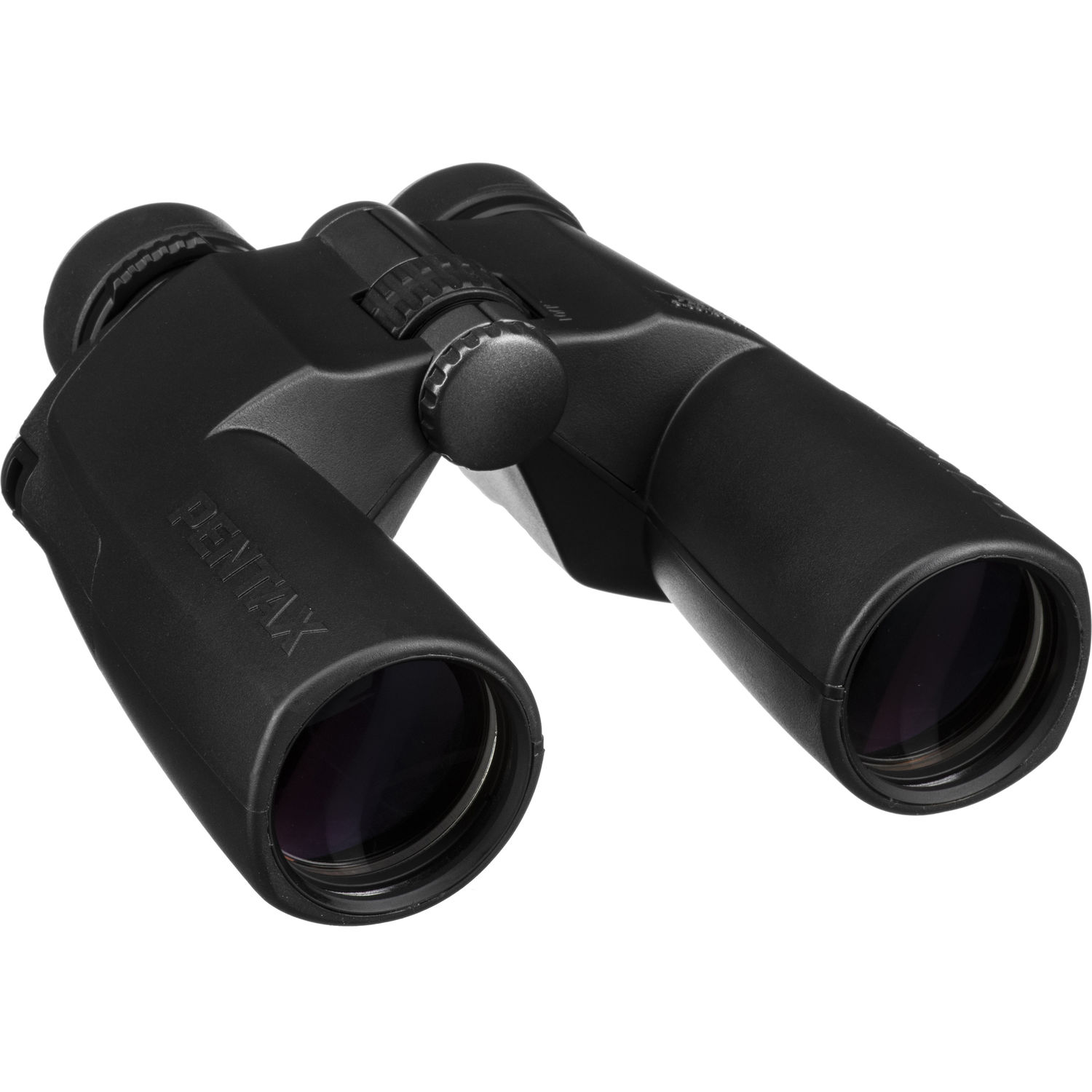
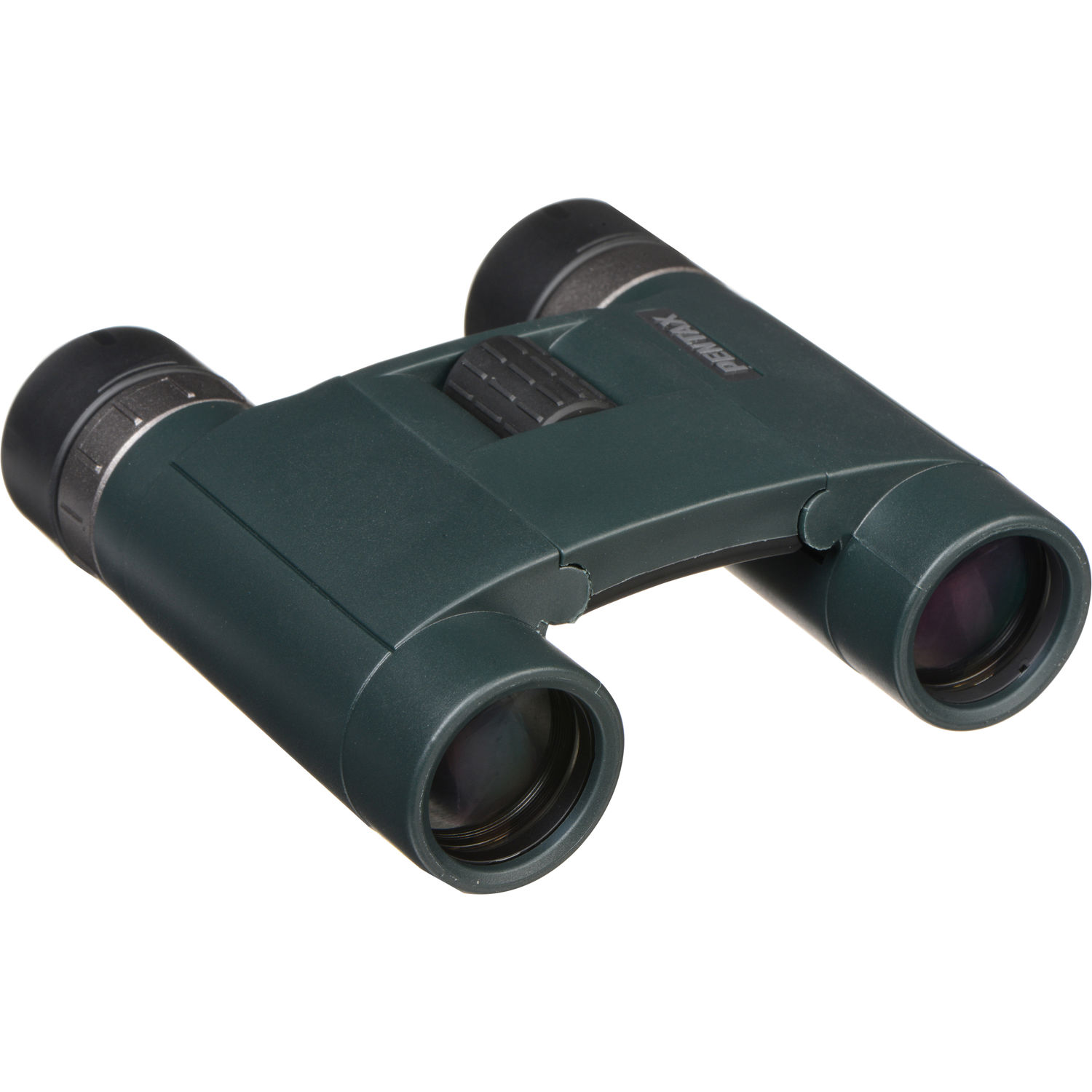
Quick take: The Pentax AD 8x25 WP costs $20 less; the Pentax SP 10x50 WP reaches farther (10x vs 8x); the Pentax AD 8x25 WP has a wider field of view (289 vs 262 ft @ 1000 yds).
Field of view, to scale
Top-down view · drawn to true scale — no exaggeration
Which one to buy
Pentax backs both with the same 25-year limited warranty, seals both against water, and gives both unusually long eye relief, 20mm on the SP and 21mm on the AD. Beyond that they share almost nothing. The SP 10x50 WP is a 37.4 oz porro built for the night sky; the AD 8x25 WP is a 10.6 oz roof compact built to come along. The SP costs $20 more.
SP owners describe pinpoint stars, very little ghosting on the Moon, light transmission measured around 85% and a rugged sealed chassis, with a 5.0mm exit pupil that suits dark skies. They also call it a stationary instrument: a narrow field, a stiff, slow focuser, an 18 ft close focus, and enough weight that long sessions want a tripod. Birders, they say, should look elsewhere.
AD owners describe a sharp, contrasty image from its phase-corrected prisms, solid hinges and a smooth focus wheel, all in a body that fits a pocket, and they rate it among the best compacts for glasses. Its limits are a narrow 289 ft field for a compact and a 3.1mm exit pupil that dims at dawn and dusk.
Which matters more depends on where you'll be standing, but the AD is the more useful general binocular of the two. The SP only pays off under dark skies or at a fixed viewpoint, usually on a tripod, and there it is clearly the better instrument.
Pentax SP 10x50 WP
For stargazing and fixed-point viewing from a deck or coastline, especially in glasses, where weight doesn't matter.
Pentax AD 8x25 WP
The one you'll carry: a 10.6 oz sealed compact for travel, hikes and events, and the better general-purpose choice for $20 less.
| Spec | Pentax SP 10x50 WP | Pentax AD 8x25 WP |
|---|---|---|
| Approx. price | ~$199 | ~$179 |
| Use case | Astronomy | General Purpose |
| Magnification | 10x | 8x |
| Objective | 50mm | 25mm |
| Exit pupil | 5.0mm | 3.1mm |
| Field of view | 262 ft @ 1000 yds | 289 ft @ 1000 yds |
| Eye relief | 20mm | 21mm |
| Close focus | 18 ft | 9.8 ft |
| Prism | Porro | Roof |
| Glass | BaK-4 | BaK-4 |
| Coating | Fully Multi-Coated | Fully Multi-Coated |
| Weight | 37.4 oz | 10.6 oz |
| Dimensions | 7.2 x 7.0 in | 4.3 x 4.1 in |
| Warranty | 25-Year Limited | 25-Year Limited |
Feature comparison
Pentax SP 10x50 WP
- ✗ED Glass
- ✗Phase-Corrected
- ✗Dielectric Coating
- ✓Waterproof
- ✓Fogproof
- ✗Image Stabilized
- ✓Tripod Adaptable
- ✗Magnesium Body
- ✗Locking Diopter
Pentax AD 8x25 WP
- ✗ED Glass
- ✓Phase-Corrected
- ✗Dielectric Coating
- ✓Waterproof
- ✓Fogproof
- ✗Image Stabilized
- ✗Tripod Adaptable
- ✗Magnesium Body
- ✗Locking Diopter
What birders say
Pentax SP 10x50 WP
- ✓Pinpoint star sharpness - an expert astronomy review found stars like Vega rendered as clean points with no secondary spectrum, and rated it very highly recommended
- ✓Genuinely waterproof porro: the unusual internal-focus design lets Pentax fully O-ring seal and nitrogen-purge it, which conventional porros can't easily do
- ✓Excellent stray-light control - very little ghosting on bright sources, making it a strong moon and bright-planet binocular
- ✓Class-leading 20mm eye relief lets eyeglass wearers see the whole field comfortably
- ✓Measured light transmission around 85% with strong contrast and color - solid performance for the price
- ✓Side-by-side forum comparisons found it sharper across the field than the Nikon Action Extreme
- ✓Lockable focuser plus rugged aluminum chassis and deeply recessed objectives - built for real outdoor abuse
- ✓Repeatedly called exceptional value for money by astronomy reviewers
- ✗Narrow 262 ft (5 degree) field of view - the roughly 50-degree apparent field is the most common complaint and feels tunnel-like next to wide-angle rivals
- ✗Heavy at 37.4 oz - reviewers say extended sessions really want a tripod
- ✗Stiff, deliberate focus wheel is wrong for birding or anything needing rapid refocusing
- ✗18 ft close focus rules out close-range nature watching entirely
- ✗Loose-fitting lens caps that fall off constantly - a repeated gripe
- ✗Flimsy soft case offers minimal protection for a $229 instrument
- ✗Center sharpness is a slight notch behind premium porros like the Pentax ZD and Opticron DBA in direct comparisons
- ✗Too specialized for a first do-everything binocular - it's best at stationary viewing
Pentax AD 8x25 WP
- ✓Extraordinary 21mm eye relief - nearly unheard of in a compact, letting eyeglass wearers see the entire field with ease
- ✓Phase-corrected BaK-4 roof prisms - a premium touch at this price that visibly improves contrast and color rendition
- ✓Genuinely sharp, crisp image from the fully multi-coated optics - reviewers say it feels solid and optically beyond its price
- ✓Truly waterproof: O-ring sealed and nitrogen-filled, unlike most budget compacts
- ✓Just 10.6 oz and pocketable - the binocular that actually comes along on hikes, travel, and events
- ✓Astronomy forum buyers celebrated finding it under $100 street price and reported the image quality was an outright bargain
- ✓Smooth focus wheel, solid hinges, and twist-up eyecups that reviewers say feel quality rather than cheap
- ✓Recommended by birding reviewers as a top entry-level and travel choice, holding its own against far bulkier mid-range models
- ✗289 ft (5.5 degree) field of view is narrow for the compact class - the most consistent criticism across reviews
- ✗3.1mm exit pupil dims noticeably at dawn, dusk, and in deep shade
- ✗25mm objectives simply can't match full-size binoculars once light drops - physics, not a flaw, but a real limit
- ✗Small, light body shows hand shake more than full-size binoculars - steady hands or a brace help
- ✗That narrow field makes initially finding birds in dense canopy harder, especially for beginners
- ✗9.8 ft close focus is unremarkable - no insect-watching double duty here
- ✗Priced above bare-bones compacts, so it depends on street-price deals to be a true bargain
- ✗No standout accessories - the case and strap are basic
Pentax SP 10x50 WP vs Pentax AD 8x25 WP: common questions
Can the Pentax AD 8x25 WP be used for stargazing like the SP 10x50 WP?▾
Only casually. Its 3.1mm exit pupil dims noticeably once light drops, and owners say 25mm objectives can't match full-size glass at night. The SP 10x50 WP's 5.0mm exit pupil and pinpoint stars make it the real astronomy binocular of the two.
Is the Pentax SP 10x50 WP any good for birding compared with the AD 8x25 WP?▾
Not really. SP owners say its stiff, slow focus, narrow field and 18 ft close focus fight everything birding demands. The AD is lighter and quicker to use, though its own owners call its field narrow for a compact.