Pentax SP 10x50 WP vs Celestron SkyMaster Pro 15x70
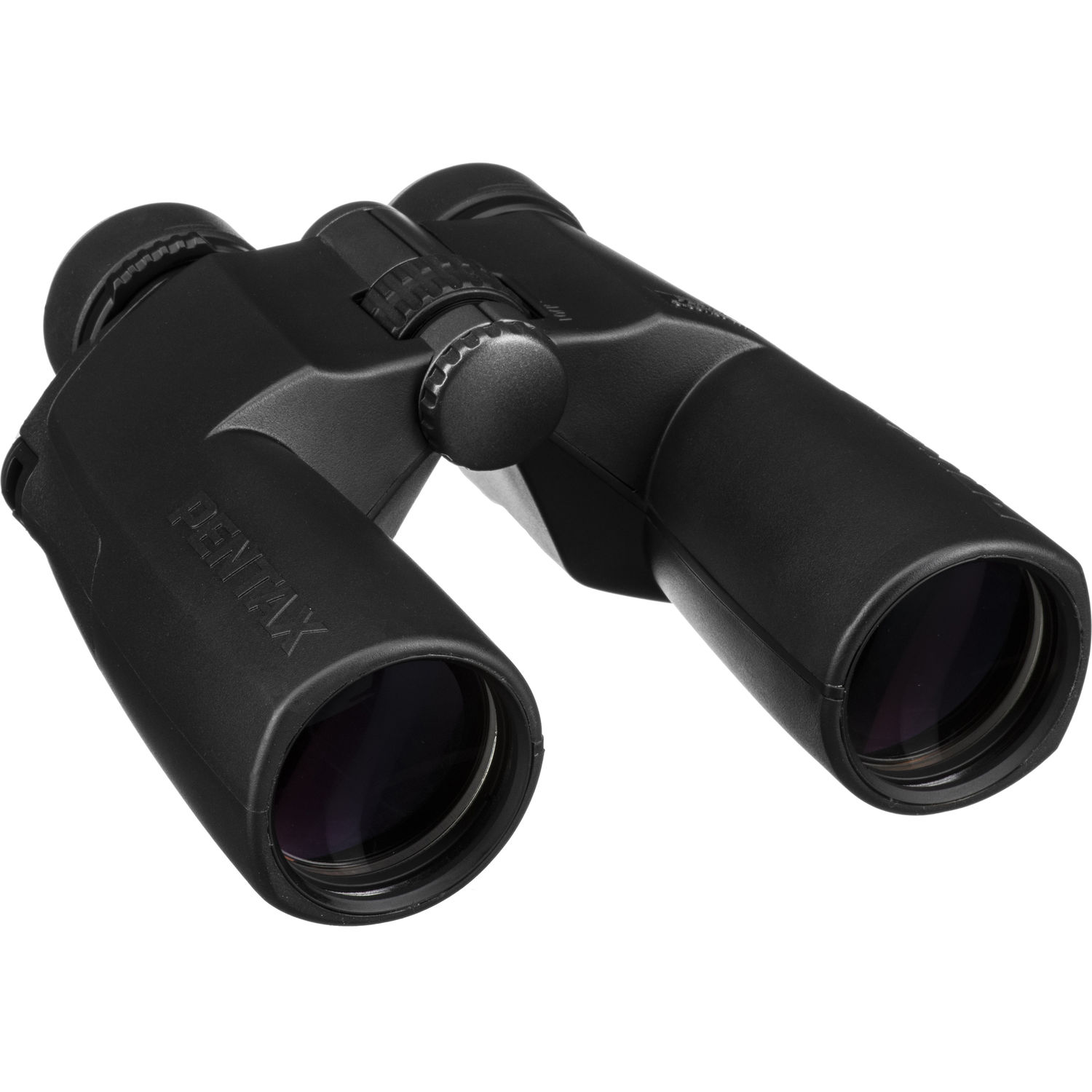
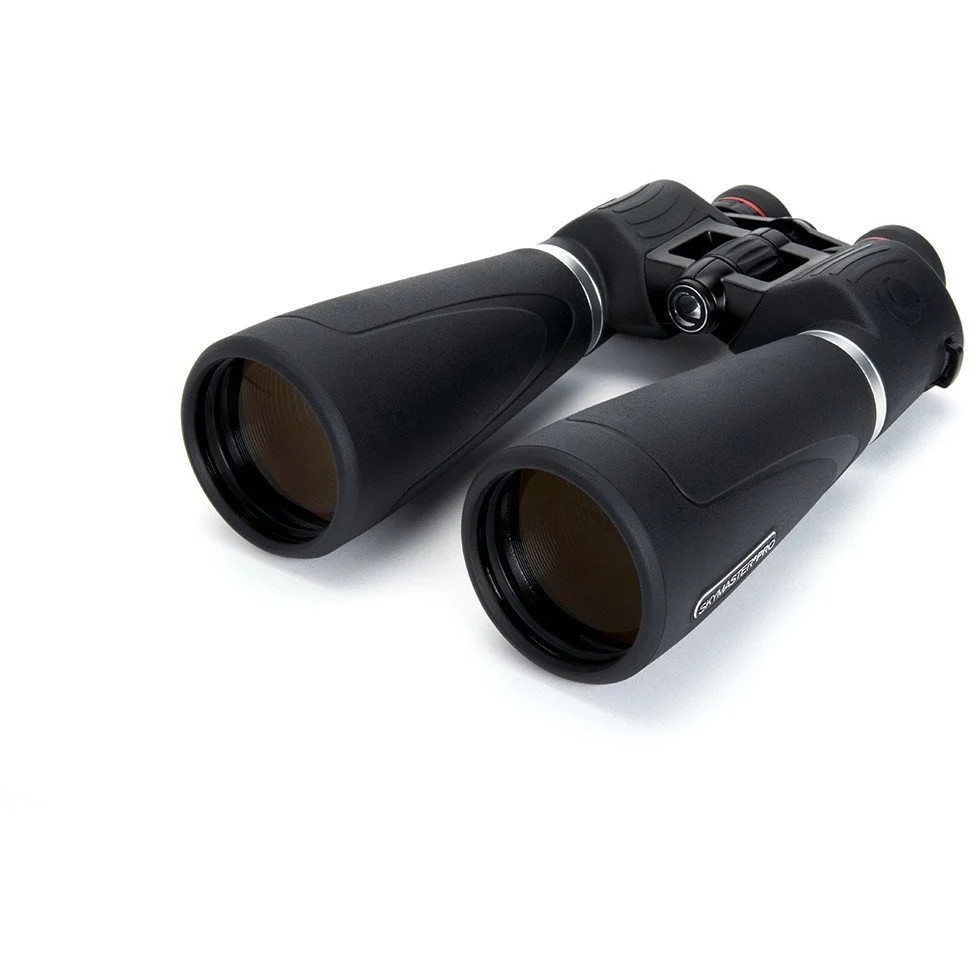
Quick take: The Pentax SP 10x50 WP costs $81 less; the Celestron SkyMaster Pro 15x70 reaches farther (15x vs 10x); the Pentax SP 10x50 WP has a wider field of view (262 vs 231 ft @ 1000 yds).
Field of view, to scale
Top-down view · drawn to true scale — no exaggeration
Which one to buy
How much binocular are you willing to put on a tripod every time you go out? That question sorts this pair. The Celestron SkyMaster Pro 15x70 is a 51 oz, 15x instrument with 70mm objectives and a 4.6mm exit pupil, built for mounted stargazing; it has a built-in tripod adapter and a removable rail for a red-dot finder, inside a waterproof, nitrogen-purged housing. It costs $81 more than the Pentax SP 10x50 WP.
The Pentax is the more flexible binocular. At 37.4 oz and 10x it can be hand-held for short looks, and owners report pinpoint stars, very little ghosting on the Moon and a sealed, rugged chassis. Its 5.0mm exit pupil is slightly larger than the Celestron's, its 20mm of eye relief beats 17mm for glasses, and its 262 ft field is wider than the 15x70's 231 ft. Owners still call that field narrow for a 10x50 and say long sessions want a tripod; they also mention a stiff focus wheel and loose caps.
What the Celestron adds is aperture and power: 70mm objectives at 15x can pull more out of the night sky, as long as the binocular is mounted. At 51 oz, nobody should plan on hand-holding it for long.
For a first astronomy binocular, or one that also earns its keep on a deck or a coastline, the Pentax is the better buy. The SkyMaster Pro makes more sense as a dedicated, tripod-mounted second instrument for someone already committed to observing.
Pentax SP 10x50 WP
The better first stargazing binocular: usable handheld for short looks, comfortable with glasses, and $81 cheaper.
Celestron SkyMaster Pro 15x70
For observers ready to mount a 51 oz binocular every session who want 15x and 70mm objectives on the night sky.
| Spec | Pentax SP 10x50 WP | Celestron SkyMaster Pro 15x70 |
|---|---|---|
| Approx. price | ~$199 | ~$280 |
| Use case | Astronomy | Astronomy |
| Magnification | 10x | 15x |
| Objective | 50mm | 70mm |
| Exit pupil | 5.0mm | 4.6mm |
| Field of view | 262 ft @ 1000 yds | 231 ft @ 1000 yds |
| Eye relief | 20mm | 17mm |
| Close focus | 18 ft | 49.2 ft |
| Prism | Porro | Porro |
| Glass | BaK-4 | BaK-4 |
| Coating | Fully Multi-Coated | Fully Multi-Coated |
| Weight | 37.4 oz | 51 oz |
| Dimensions | 7.2 x 7.0 in | 10.9 x 8.7 in |
| Warranty | 25-Year Limited | Limited Lifetime |
Feature comparison
Pentax SP 10x50 WP
- ✗ED Glass
- ✗Phase-Corrected
- ✗Dielectric Coating
- ✓Waterproof
- ✓Fogproof
- ✗Image Stabilized
- ✓Tripod Adaptable
- ✗Magnesium Body
- ✗Locking Diopter
Celestron SkyMaster Pro 15x70
- ✗ED Glass
- ✗Phase-Corrected
- ✗Dielectric Coating
- ✓Waterproof
- ✓Fogproof
- ✗Image Stabilized
- ✓Tripod Adaptable
- ✗Magnesium Body
- ✗Locking Diopter
What birders say
Pentax SP 10x50 WP
- ✓Pinpoint star sharpness - an expert astronomy review found stars like Vega rendered as clean points with no secondary spectrum, and rated it very highly recommended
- ✓Genuinely waterproof porro: the unusual internal-focus design lets Pentax fully O-ring seal and nitrogen-purge it, which conventional porros can't easily do
- ✓Excellent stray-light control - very little ghosting on bright sources, making it a strong moon and bright-planet binocular
- ✓Class-leading 20mm eye relief lets eyeglass wearers see the whole field comfortably
- ✓Measured light transmission around 85% with strong contrast and color - solid performance for the price
- ✓Side-by-side forum comparisons found it sharper across the field than the Nikon Action Extreme
- ✓Lockable focuser plus rugged aluminum chassis and deeply recessed objectives - built for real outdoor abuse
- ✓Repeatedly called exceptional value for money by astronomy reviewers
- ✗Narrow 262 ft (5 degree) field of view - the roughly 50-degree apparent field is the most common complaint and feels tunnel-like next to wide-angle rivals
- ✗Heavy at 37.4 oz - reviewers say extended sessions really want a tripod
- ✗Stiff, deliberate focus wheel is wrong for birding or anything needing rapid refocusing
- ✗18 ft close focus rules out close-range nature watching entirely
- ✗Loose-fitting lens caps that fall off constantly - a repeated gripe
- ✗Flimsy soft case offers minimal protection for a $229 instrument
- ✗Center sharpness is a slight notch behind premium porros like the Pentax ZD and Opticron DBA in direct comparisons
- ✗Too specialized for a first do-everything binocular - it's best at stationary viewing
Pentax SP 10x50 WP vs Celestron SkyMaster Pro 15x70: common questions
Does the SkyMaster Pro 15x70 need a tripod more than the Pentax SP 10x50 WP?▾
Yes. The SkyMaster Pro weighs 51 oz and magnifies 15x, so it is meant to be mounted, and it includes a tripod adapter. The Pentax at 37.4 oz and 10x can be hand-held briefly, though its owners still use a tripod for long sessions.
Which is better with eyeglasses, the Pentax SP 10x50 WP or the SkyMaster Pro 15x70?▾
The Pentax, with 20mm of eye relief against 17mm on the Celestron. Pentax owners say glasses wearers see the whole field comfortably, which makes it one of the more glasses-friendly astronomy binoculars around.