Nikon Prostaff P7 8x42 vs Nikon Prostaff P7 10x42
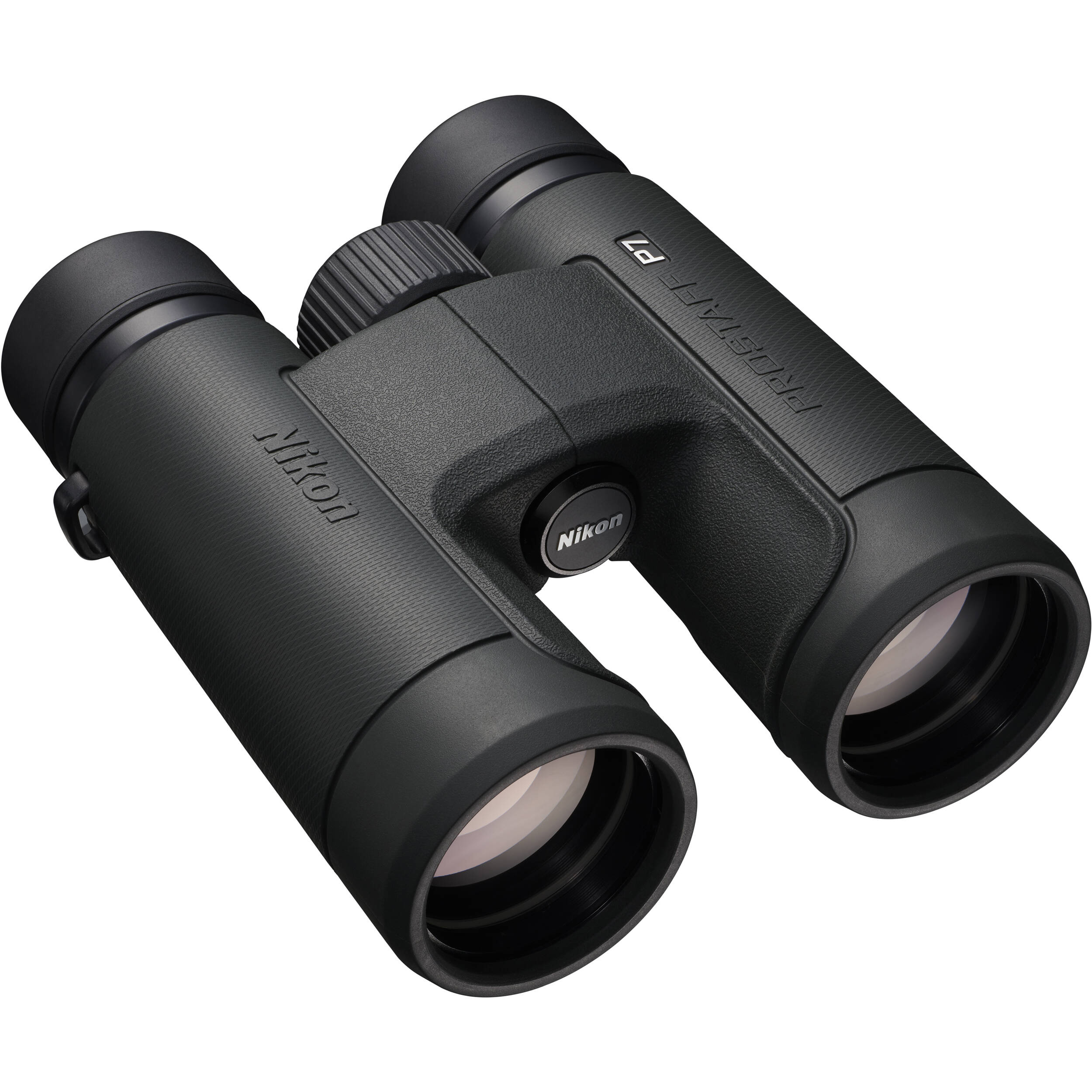
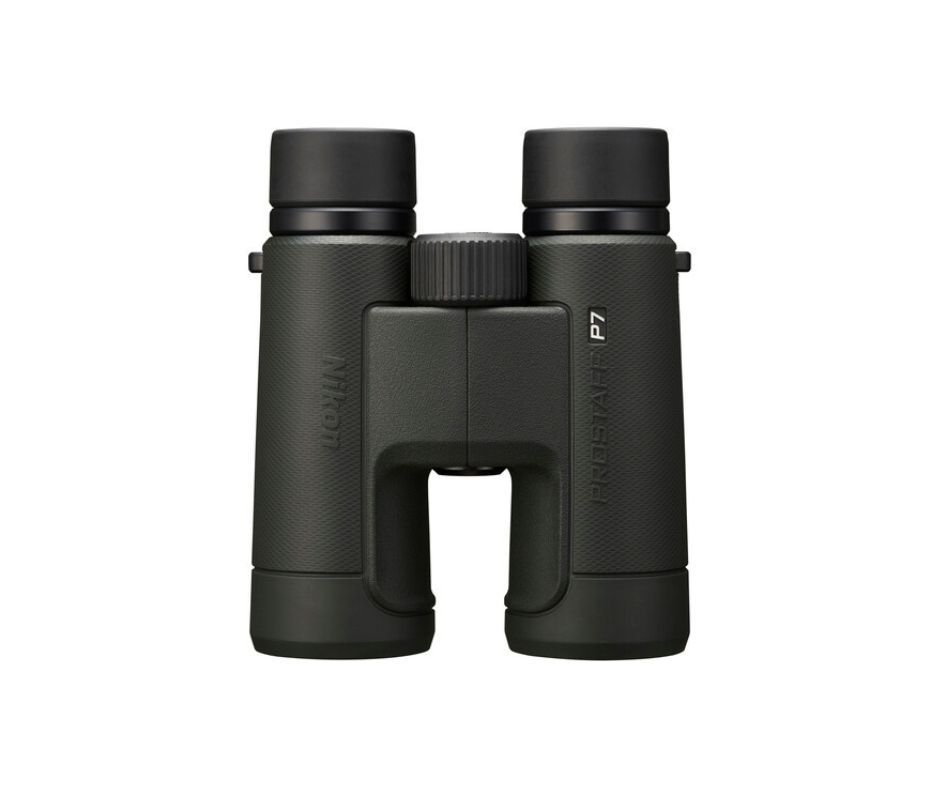
Quick take: The Nikon Prostaff P7 8x42 costs $10 less; the Nikon Prostaff P7 10x42 reaches farther (10x vs 8x); the Nikon Prostaff P7 8x42 has a wider field of view (377 vs 367 ft @ 1000 yds).
Field of view, to scale
Top-down view · drawn to true scale — no exaggeration
Which one to buy
Nikon builds these two P7s on one chassis, with the same coatings, the same locking diopter and the same 9.8 ft close focus, so the only real question is how much magnification you can use. The 8x42 is $10 cheaper and gives you a 5.25mm exit pupil against 4.2mm, 20.2mm of eye relief against 15.7mm, and a 377 ft field against 367 ft, at 20.8 oz to the 10x42's 21.2 oz. Both are waterproof, fogproof and tripod adaptable.
8x42 owners describe a bright, sharp center, slim handling and eye relief that keeps glasses wearers happy. 10x42 owners like the reach and the sharp center, and say it makes a decent casual astronomy glass, but they list what the extra power costs: a dimmer image in the last light, less forgiving eye relief, and 10x shake that loses the easy feel of the 8x42. The shared weak spots, by owner account, are no ED glass, so some fringing on bright edges, and finish details that lag the optics: cheap-feeling eyecups on the 10x42, and enough gritty or uneven focus wheels on the 8x42 that testing yours on arrival is sensible.
The 8x42 is the right P7 for birding, woodland hunting and anyone in glasses. The 10x42 earns its place only in open country, where pulling detail off a far hillside matters more than brightness or field width, because the extra $10 buys nothing but magnification.
Nikon Prostaff P7 8x42
For birders, woodland hunters and glasses wearers: brighter, steadier and more comfortable, and $10 cheaper.
Nikon Prostaff P7 10x42
Only worth it for open-country glassing, where reach counts for more than dusk brightness or eye relief.
| Spec | Nikon Prostaff P7 8x42 | Nikon Prostaff P7 10x42 |
|---|---|---|
| Approx. price | ~$220 | ~$230 |
| Use case | Birding | Hunting |
| Magnification | 8x | 10x |
| Objective | 42mm | 42mm |
| Exit pupil | 5.25mm | 4.2mm |
| Field of view | 377 ft @ 1000 yds | 367 ft @ 1000 yds |
| Eye relief | 20.2mm | 15.7mm |
| Close focus | 9.8 ft | 9.8 ft |
| Prism | Roof | Roof |
| Glass | Standard | Standard |
| Coating | Fully Multi-Coated | Fully Multi-Coated |
| Weight | 20.8 oz | 21.2 oz |
| Dimensions | 5.6 x 5.1 in | 5.7 x 5.1 in |
| Warranty | Limited Lifetime | Limited Lifetime |
Feature comparison
Nikon Prostaff P7 8x42
- ✗ED Glass
- ✓Phase-Corrected
- ✗Dielectric Coating
- ✓Waterproof
- ✓Fogproof
- ✗Image Stabilized
- ✓Tripod Adaptable
- ✗Magnesium Body
- ✓Locking Diopter
Nikon Prostaff P7 10x42
- ✗ED Glass
- ✓Phase-Corrected
- ✗Dielectric Coating
- ✓Waterproof
- ✓Fogproof
- ✗Image Stabilized
- ✓Tripod Adaptable
- ✗Magnesium Body
- ✓Locking Diopter
What birders say
Nikon Prostaff P7 8x42
- ✓Dielectric prism coatings at a $170 price point - a genuinely brighter image than the P3 and most direct competitors
- ✓Wider field of view than the Monarch M5 - forum users doing side-by-sides call the FOV and weight 'a definite win for the P7'
- ✓Light for a full-size 42mm roof, noticeably easier on the neck than the Vortex Diamondback HD it's often cross-shopped against
- ✓Sharp central image that owners say matches binoculars well above its price - several M5 buyers admitted the gap was smaller than expected
- ✓Oil- and water-repellent coatings on the outer lenses - rain beads off and fingerprints wipe clean, a feature usually reserved for pricier glass
- ✓Fully waterproof and nitrogen-purged with a reassuringly grippy rubber armor
- ✓Long eye relief with click-stop eyecups keeps eyeglass wearers happy
- ✓Slimmer single-hinge-style handling than the Diamondback - owners praise how manageable the bridge is for one-handed use
- ✗No ED glass, so chromatic aberration is visible on high-contrast subjects - the main optical gap versus the Monarch M5
- ✗Focus wheel quality is the most repeated complaint - some units feel gritty or inconsistent, and a few owners exchanged theirs
- ✗Edge-of-field softness is noticeable when panning, typical of the class but behind the Monarch line
- ✗Accessories remain budget-grade: basic strap, soft pouch, and lens caps owners routinely lose
- ✗Only a modest step up from the P3 in daylight - some owners say the extra $60 only shows at dawn and dusk
- ✗Occasional sample variation reported on forums - worth checking collimation and focus feel on arrival
- ✗Glare suppression is average when shooting toward low sun
- ✗Resale value is soft because the Prostaff name sits in Nikon's budget tier, even though performance is closer to mid-tier
Nikon Prostaff P7 10x42
- ✓Punches above its price on prism quality - phase-corrected, dielectric-coated prisms are features that used to require Monarch money, and reviewers say they eliminate the dull, low-contrast look of cheap roof prisms
- ✓Genuinely sharp center image - an astronomy-focused review called it 'very sharp' and noted it holds its own against classic porro-prism binoculars on the night sky
- ✓Surprisingly capable for stargazing - testers found no false-color halos around the Moon, Jupiter, or bright stars, with subtle star colors rendering well despite the lack of ED glass
- ✓Light and compact for a full-size 10x42 at about 21.2 ounces, with a slim bridge and manageable hinge that side-by-side testers preferred to the stiffer Vortex Diamondback HD
- ✓Close focus of 9.8 feet, the same as the Prostaff P3 - fine for distant birds, too long for butterflies
- ✓Locking diopter at a sub-$200 price, a feature usually reserved for more expensive glass
- ✓Named an editor's choice for best hunting binocular under $200, with reviewers praising the rugged, nitrogen-sealed, waterproof build
- ✓In three-way forum comparisons against the Vortex Diamondback HD, testers found sharpness essentially equal with the Nikon lighter and easier to handle
- ✗No ED glass - some false color shows up in daytime viewing on bright, high-contrast edges and specular reflections, which is exactly where the Monarch M5's ED elements pull ahead
- ✗Eyepiece build feels cheap - a side-by-side forum tester described the P7's eyecups as 'cheap and rattly' compared to the Monarch M5's
- ✗Edge-to-edge sharpness trails the Monarch M5 in direct comparisons - the ED-glass Monarch holds detail further into the field
- ✗Eye relief drops from a generous 20.2mm on the 8x42 to 15.7mm on this 10x42 - still workable for glasses but noticeably less forgiving
- ✗The 4.2mm exit pupil gives up meaningful low-light performance versus the 8x42, a real cost for a binocular marketed at hunters who glass at dawn and dusk
- ✗Glare handling is imperfect - reviewers of the Prostaff line have noted sun spots and flare artifacts when viewing toward direct sunlight
- ✗At 367 ft the field is close to the 8x42's 377 ft, but the 4.2mm exit pupil and 10x shake lose the easy feel that makes the 8x42 P7 such a simple recommendation
- ✗Sits in an awkward spot for upgraders - forum threads repeatedly conclude that another $70-90 gets you the Monarch M5's ED glass, leaving the P7 as the 'almost' choice
Nikon Prostaff P7 8x42 vs Nikon Prostaff P7 10x42: common questions
Which Prostaff P7 is better for hunting at dawn and dusk, the 8x42 or the 10x42?▾
The 8x42. Its 5.25mm exit pupil beats the 10x42's 4.2mm, and 10x42 owners themselves list the smaller exit pupil as a real cost for hunters who glass in the first and last light of the day.
Does the Prostaff P7 10x42 work with glasses as well as the 8x42?▾
Not quite. Its 15.7mm of eye relief is well short of the 8x42's 20.2mm, and 10x42 owners call it workable but noticeably less forgiving. If you glass with your glasses on, the 8x42 is the safer of the two.