Nikon Prostaff P3 8x42 vs Bushnell Prime 10x42
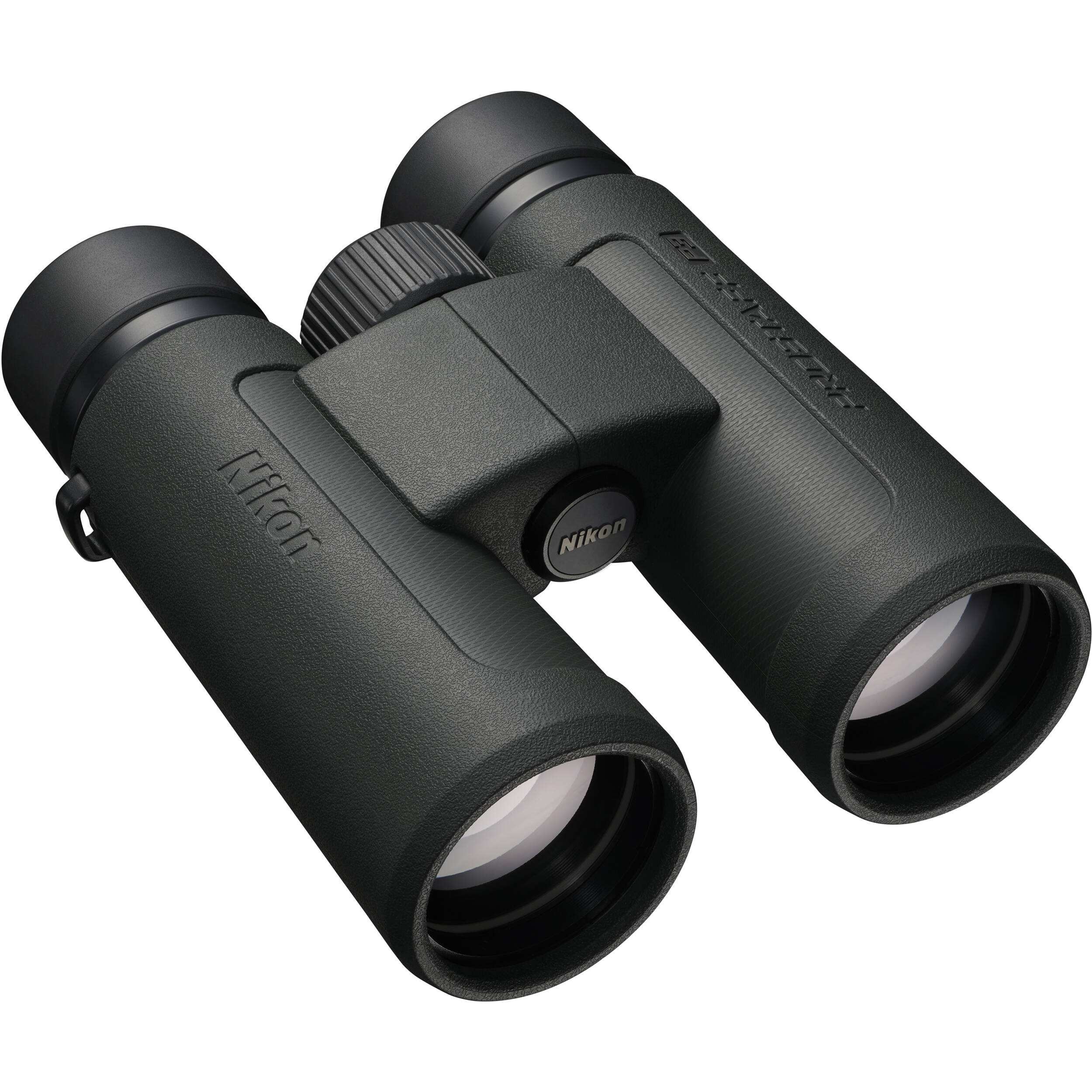
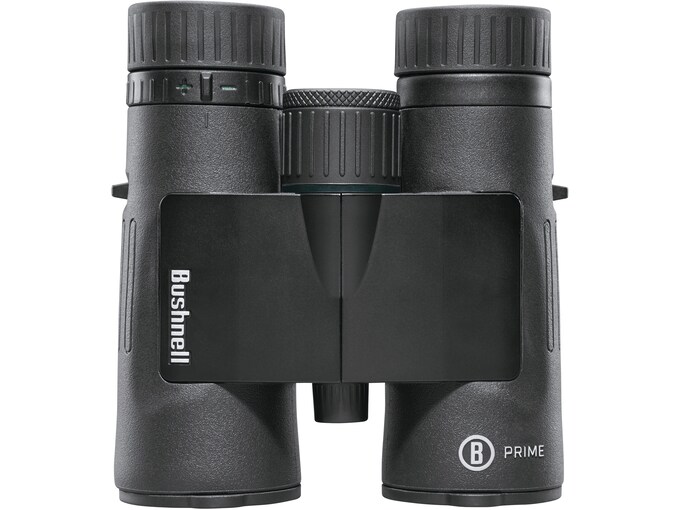
Quick take: The Bushnell Prime 10x42 reaches farther (10x vs 8x); the Nikon Prostaff P3 8x42 has a wider field of view (377 vs 305 ft @ 1000 yds).
Field of view, to scale
Top-down view · drawn to true scale — no exaggeration
Which one to buy
For most first-time buyers, 8x beats 10x at this price, and this pair makes the case cleanly. Both cost $160 and both are waterproof roof prisms with lifetime warranties. The Prostaff P3 8x42 gives a 377 ft field against the Prime's 305 ft, a 5.25mm exit pupil against 4.2mm, and 20.2mm of eye relief against 19mm, while weighing 20.3 oz to the Prime's 23.3 oz. Owners call its center the sharpest they've seen near this price and single it out for glasses wearers. Their complaints are peripheral: no ED glass, so backlit birds show fringing, edges soften, and the lens caps and strap are throwaway. Its 9.8 ft close focus also beats the Prime's 12 ft, which matters little to hunters but helps at a feeder.
The Bushnell Prime 10x42 is discontinued, so it may be hard to find new, and Bushnell has put out a successor. Its owners like what you'd expect from a tough budget hunting glass: submersion-rated sealing, a water-shedding lens coating, eyecups that work with glasses, and low-light images that stay usable later than expected. They are also plain about the optics. Color fringing is its documented weak spot, strong toward the edges, coma and distortion pile up in the outer third, and the narrow field plus 10x shake makes birds hard to find. Even its own owners steer most beginners to an 8x42.
That leaves the Prime for one buyer: someone glassing open country who wants 10x reach and finds one at a fair price. Everyone else, birders and anyone in glasses especially, gets more from the P3.
Nikon Prostaff P3 8x42
The safer default for beginners, birders and eyeglass wearers who want a wide, bright, light 8x42 for $160.
Bushnell Prime 10x42
Only if open-country reach is the point and you can still find one; it is discontinued, so look at its successor if new stock has dried up.
| Spec | Nikon Prostaff P3 8x42 | Bushnell Prime 10x42 |
|---|---|---|
| Approx. price | ~$160 | ~$160 |
| Use case | General Purpose | General Purpose |
| Magnification | 8x | 10x |
| Objective | 42mm | 42mm |
| Exit pupil | 5.25mm | 4.2mm |
| Field of view | 377 ft @ 1000 yds | 305 ft @ 1000 yds |
| Eye relief | 20.2mm | 19mm |
| Close focus | 9.8 ft | 12 ft |
| Prism | Roof | Roof |
| Glass | Standard | Standard |
| Coating | Fully Multi-Coated | Fully Multi-Coated |
| Weight | 20.3 oz | 23.3 oz |
| Dimensions | 5.7 x 5.1 in | 5.5 x 5.0 in |
| Warranty | Limited Lifetime | Limited Lifetime |
Feature comparison
Nikon Prostaff P3 8x42
- ✗ED Glass
- ✗Phase-Corrected
- ✗Dielectric Coating
- ✓Waterproof
- ✓Fogproof
- ✗Image Stabilized
- ✓Tripod Adaptable
- ✗Magnesium Body
- ✗Locking Diopter
Bushnell Prime 10x42
- ✗ED Glass
- ✓Phase-Corrected
- ✗Dielectric Coating
- ✓Waterproof
- ✓Fogproof
- ✗Image Stabilized
- ✓Tripod Adaptable
- ✗Magnesium Body
- ✗Locking Diopter
What birders say
Nikon Prostaff P3 8x42
- ✓Class-leading on-axis sharpness - forum reviewers call it probably the sharpest roof prism you can buy near $100
- ✓Remarkably lightweight for a full-size 42mm roof - one of the lightest phase-coated 8x42s made, great for all-day carry
- ✓Generous 20mm+ eye relief with click-stop eyecups makes it one of the most eyeglass-friendly budget binoculars available
- ✓Fully waterproof and nitrogen-purged fogproof - a huge step over porro-prism rivals like the Aculon A211 at similar money
- ✓Wide 7.2-degree field of view, unusually generous for a budget roof and a clear upgrade over the old Prostaff 3s
- ✓Phase-corrected prisms at a price point where many competitors skip them - contrast and resolution punch above the price
- ✓Comfortable, grippy rubber armor and a simple, snag-free body that owners describe as 'disappearing in the hand'
- ✓Widely regarded on forums as a significant optical improvement over its Prostaff 3s predecessor for barely more money
- ✗Silver-coated (not dielectric) prisms mean the image is a touch dimmer than the Prostaff P7 or Monarch M5 - noticeable at dusk
- ✗No ED glass, so chromatic aberration shows as color fringing on backlit birds and high-contrast edges
- ✗Accessories are bare-bones: unpadded webbing strap, a foam pouch, and lens covers that don't attach and famously get lost
- ✗Edge sharpness falls off in the outer portion of the field - fine for spotting, less fine for panning landscapes
- ✗Some eyeglass wearers report slight vignetting at certain eyecup positions - worth testing before the return window closes
- ✗Focus wheel is functional but not luxurious; a few owners describe slight stiffness in cold weather
- ✗Close focus is unremarkable, so butterfly and dragonfly watchers often look elsewhere
- ✗Plastic-heavy chassis keeps weight down but doesn't feel as substantial as the Monarch M5's build
Bushnell Prime 10x42
- ✓One of the cheapest legitimate 10x42 roof prisms with real waterproofing - IPX7 submersion-rated and nitrogen purged at $160
- ✓Testing found virtually no astigmatism - point light sources stay clean, which is unusual discipline for a budget optic
- ✓Owners report low-light images staying usable noticeably longer than expected for the class, helped by BaK-4 prisms and fully multi-coated optics
- ✓EXO Barrier coating bonds to the lenses and repels water, oil, and dust - genuinely useful on a binocular destined to live in a truck or blind
- ✓Twist-up eyecups get specific owner praise for working comfortably with eyeglasses
- ✓Light for a 10x42 at 23.3 oz, and the grippy rubber armor takes abuse - reviewers position it as ideal starter glass for hunting and hiking
- ✓Bushnell's lifetime Ironclad guarantee covers it - rare peace of mind at this price
- ✓Center-field sharpness is adequate for real hunting and wildlife use - reviewers call it a solid entry point for recreational hunters and beginner birders
- ✗Chromatic aberration is the documented weak spot - moderate in the center and strong at the edges, perceptible across the whole field in testing
- ✗Coma and distortion get quite strong at the field edge, so the outer third of the image is noticeably degraded
- ✗305 ft field of view is narrow even for a 10x42 - combined with 10x shake, beginners can struggle to find birds
- ✗Sharpness is described as adequate, not exceptional - fine feather detail and distant antler points are where it runs out
- ✗No ED glass; Bushnell's own Engage X, Engage EDX, and R7 lines exist precisely to fix this model's optical shortcomings
- ✗10x on a budget optic magnifies hand shake without the resolution to reward it - many reviewers steer entry-level buyers to the 8x42 instead
- ✗19mm eye relief is shorter than the 8x42's but still workable for most eyeglass wearers
- ✗Optics enthusiasts on forums rarely recommend it over the Nikon Prostaff or Vortex equivalents - it wins on price and toughness, not glass
Nikon Prostaff P3 8x42 vs Bushnell Prime 10x42: common questions
Is the Bushnell Prime 10x42 a better hunting binocular than the Prostaff P3 8x42?▾
Only if you need 10x reach in open country. Prime owners describe it as tough starter hunting glass with real waterproofing, but its 305 ft field and 10x shake make spotting harder, and the P3 8x42 gives a wider, brighter view for treestand and woodland hunting.
Which shows less color fringing, the Prostaff P3 8x42 or the Bushnell Prime 10x42?▾
Neither has ED glass, but fringing is the Prime's documented weak spot, moderate in the center and strong at the edges. P3 owners see some fringing on backlit birds and high-contrast edges and treat it as normal for the price.
Can you still buy the Bushnell Prime 10x42 new?▾
It is discontinued and may be hard to find new, and Bushnell has released a successor. If a new one isn't available at $160 or less, the Prostaff P3 8x42 is the current model at the same price and the better fit for most buyers.