Nikon Monarch M7 8x30 vs Nikon Monarch M7 10x30
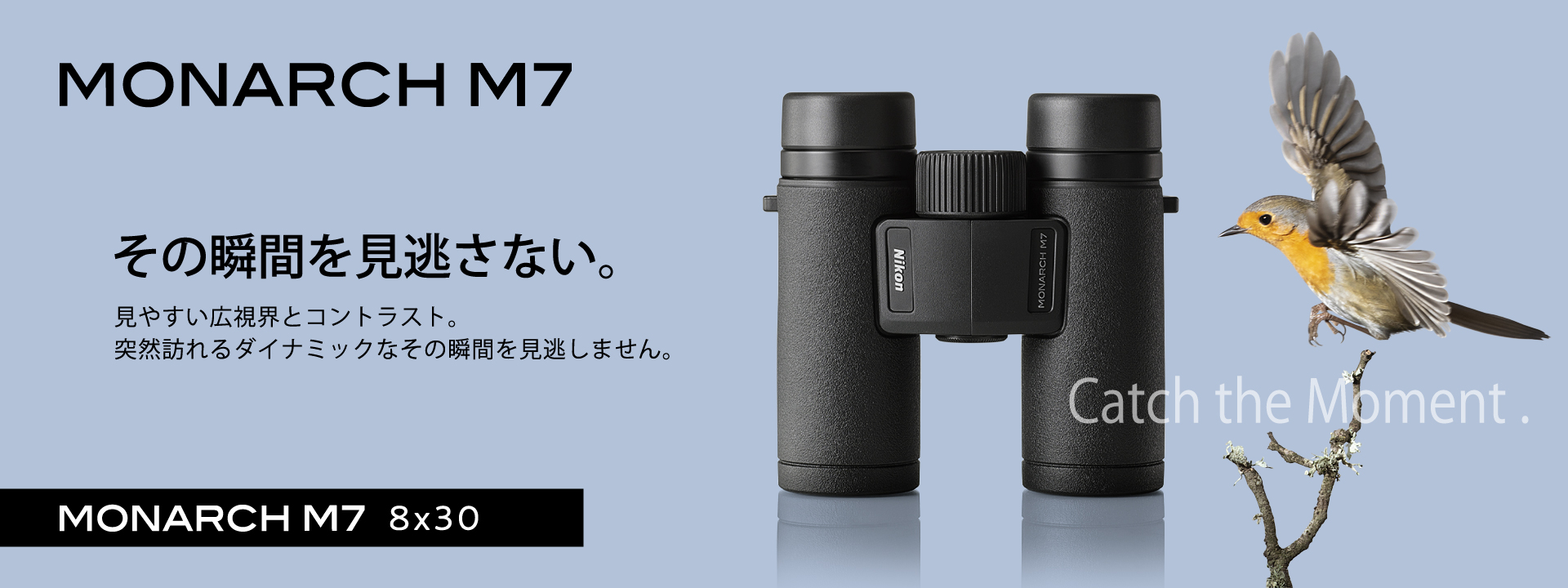

Quick take: The Nikon Monarch M7 8x30 costs $10 less; the Nikon Monarch M7 10x30 reaches farther (10x vs 8x); the Nikon Monarch M7 8x30 has a wider field of view (435 vs 351 ft @ 1000 yds).
Field of view, to scale
Top-down view · drawn to true scale — no exaggeration
Which one to buy
Ten dollars and almost no weight separate these Monarch M7 siblings, at 16.4 oz and 16.6 oz, so the choice is purely 8x or 10x in a one-pound body. Both are waterproof, use ED glass with a locking diopter and focus to 6.6 ft. Owners of both describe the same family traits: a sharp, colorful center with soft edges, fussy eye placement, and glare that can wash the bottom of the view under bright skies.
The Nikon Monarch M7 8x30 is the one owners recommend most. Its 435 ft field is as wide as many full-size 8x42s, its 3.75mm exit pupil is more forgiving than the 10x30's 3.0mm, and owners say its daytime brightness holds up against bigger binoculars. Its weaknesses are the glare crescent when panning upward, which some call a dealbreaker, 15.1mm of eye relief that is marginal for glasses, and a budget-feeling case and strap.
The Nikon Monarch M7 10x30 gives you reach with a 351 ft field that owners say avoids the tunnel feel of most compact 10x binoculars, and they report less shake than expected thanks to its light weight. But its smaller exit pupil makes eye placement even fussier and dims the view sooner at dawn and dusk, and it has much less owner history than the 8x30. Its 15.8mm of eye relief is slightly better for glasses.
Owners of both models steer most people to the 8x30. The 10x30 is the right call for safari, mountain viewpoints and open country, where distant subjects matter more than a forgiving view.
Nikon Monarch M7 8x30
For birding, travel and anyone new to binoculars, the wider, more forgiving 8x is the M7 compact to own.
Nikon Monarch M7 10x30
Worth the extra $10 if your trips are about distant subjects in open country and you can hold 10x steady.
| Spec | Nikon Monarch M7 8x30 | Nikon Monarch M7 10x30 |
|---|---|---|
| Approx. price | ~$530 | ~$540 |
| Use case | Birding | General Purpose |
| Magnification | 8x | 10x |
| Objective | 30mm | 30mm |
| Exit pupil | 3.75mm | 3.0mm |
| Field of view | 435 ft @ 1000 yds | 351 ft @ 1000 yds |
| Eye relief | 15.1mm | 15.8mm |
| Close focus | 6.6 ft | 6.6 ft |
| Prism | Roof | Roof |
| Glass | ED | ED |
| Coating | Fully Multi-Coated | Fully Multi-Coated |
| Weight | 16.4 oz | 16.6 oz |
| Dimensions | 4.8 x 4.4 in | 4.9 x 4.4 in |
| Warranty | Limited Lifetime | Limited Lifetime |
Feature comparison
Nikon Monarch M7 8x30
- ✓ED Glass
- ✓Phase-Corrected
- ✓Dielectric Coating
- ✓Waterproof
- ✓Fogproof
- ✗Image Stabilized
- ✗Tripod Adaptable
- ✗Magnesium Body
- ✓Locking Diopter
Nikon Monarch M7 10x30
- ✓ED Glass
- ✓Phase-Corrected
- ✓Dielectric Coating
- ✓Waterproof
- ✓Fogproof
- ✗Image Stabilized
- ✗Tripod Adaptable
- ✗Magnesium Body
- ✓Locking Diopter
What birders say
Nikon Monarch M7 8x30
- ✓Huge 435 ft field of view for an 8x30 - the same width as the full-size M7 8x42, which makes finding and tracking birds noticeably easier than most compacts
- ✓Brightness that surprises people - testers at All About Birds found it held its own head-to-head against similarly priced 8x42s even in dim light
- ✓Genuinely sharp, colorful image with a large sweet spot - forum reviewers found its sharp zone slightly bigger than the Vortex Viper HD's
- ✓Well-controlled chromatic aberration thanks to ED glass - owners comparing it to the older Monarch 7 8x30 note the fringing is even better tamed
- ✓Only 16.4 oz and truly pocketable in a jacket - a real all-day-carry and travel binocular that doesn't feel like a toy
- ✓Smooth, fast focus wheel with no slop - a clear upgrade over the wobblier focuser on the previous Monarch 7 generation
- ✓Locking diopter, oil- and water-repellent lens coatings, and full waterproofing - premium touches rarely seen at this size and price
- ✓Excellent close focus around 6.6 ft for butterflies and dragonflies, plus flare suppression one birder found better than the pricier Leica Trinovid 8x32
- ✗Known glare/veiling issue under bright skies - a bright crescent can appear at the bottom of the view when panning upward, and some owners find it a dealbreaker
- ✗Very sensitive to eye placement - if your eyes aren't centered exactly right you get blackouts or that glare veil, so it punishes casual technique
- ✗15.1mm eye relief is marginal for eyeglass wearers - some spectacled owners can't quite see the full field
- ✗3.75mm exit pupil gives up real low-light performance to an 8x42 at dawn and dusk despite the impressive daytime brightness
- ✗Edge sharpness falls off in the outer 40% of the field - fine for birding, but not the flat-field view of a Monarch HG or Zeiss Conquest
- ✗Small body means less to grip - people with large hands find the ergonomics cramped compared to a full-size binocular
- ✗Included case and neck strap feel budget-grade for a $450 instrument
- ✗Made-in-China build (the old Monarch 7 8x30 was Japan) bothers some longtime Nikon fans even though quality control reports are good
Nikon Monarch M7 10x30
- ✓Remarkably wide 351 ft field of view for a 10x - about as wide as many 8x binoculars, so you get real reach without the tunnel-vision feeling
- ✓Outstanding image quality for the size - one birding-forum owner called it "an engineering success" for how much Nikon squeezed into a 30mm binocular
- ✓Bright for a 10x30 - owners consistently report it punches above what the small objectives suggest in daylight
- ✓Only 16.6 oz, making it one of the very few serious 10x binoculars you can carry all day or stuff in a travel bag without thinking about it
- ✓Easy to hold steady for a 10x thanks to the light weight and good rubber armor - reviewers note less apparent shake than expected
- ✓ED glass keeps chromatic aberration well controlled, with phase-corrected, dielectric-coated prisms - a full premium coating stack at a midrange price
- ✓The earlier-generation 10x30 topped OutdoorGearLab's 13-binocular test, and the M7 refines that formula with a smoother focus wheel and locking diopter
- ✓Waterproof, fogproof, and oil-repellent lens coatings make it a worry-free grab-and-go binocular
- ✗Tiny 3.0mm exit pupil - the first thing that suffers is dusk and dawn performance, where any 42mm binocular will clearly outperform it
- ✗15.8mm eye relief is on the tight side for eyeglass wearers - some spectacled users will lose part of the field
- ✗The same eye-placement fussiness as its 8x30 sibling, arguably amplified by the smaller exit pupil - blackouts come easy with sloppy technique
- ✗Glare control is only average; bright overhead skies can wash the bottom of the view like on the 8x30
- ✗10x magnification on a 1-pound binocular still shows hand tremor - people coming from 8x will notice
- ✗Much less owner feedback out there than for the popular 8x30 - it is the niche pick of the line
- ✗Edge softness in the outer field, like the rest of the M7 line - not a flat-field design
- ✗At $470 it creeps close to used prices for the optically superior Monarch HG 10x30
Nikon Monarch M7 8x30 vs Nikon Monarch M7 10x30: common questions
Is the Nikon Monarch M7 10x30 harder to use than the 8x30?▾
A little. Owners say its 3.0mm exit pupil makes eye placement even fussier than the 8x30, which is already sensitive, and blackouts come easily with sloppy technique. Its light weight helps keep 10x shake lower than expected.
Which Nikon Monarch M7 compact is better at dawn and dusk, the 8x30 or 10x30?▾
The 8x30, with a 3.75mm exit pupil against 3.0mm. Owners of both say neither matches an 8x42 at dawn and dusk, and 10x30 owners call low light the format's biggest weakness.
Do the Nikon Monarch M7 8x30 and 10x30 both have the glare problem?▾
Owners of both report it. Under bright skies a crescent of glare can appear at the bottom of the view when panning upward, and careful eye placement reduces it. Some 8x30 owners call it a dealbreaker; many never see it.