Nikon Monarch M5 10x42 vs Nikon Monarch M5 10x50
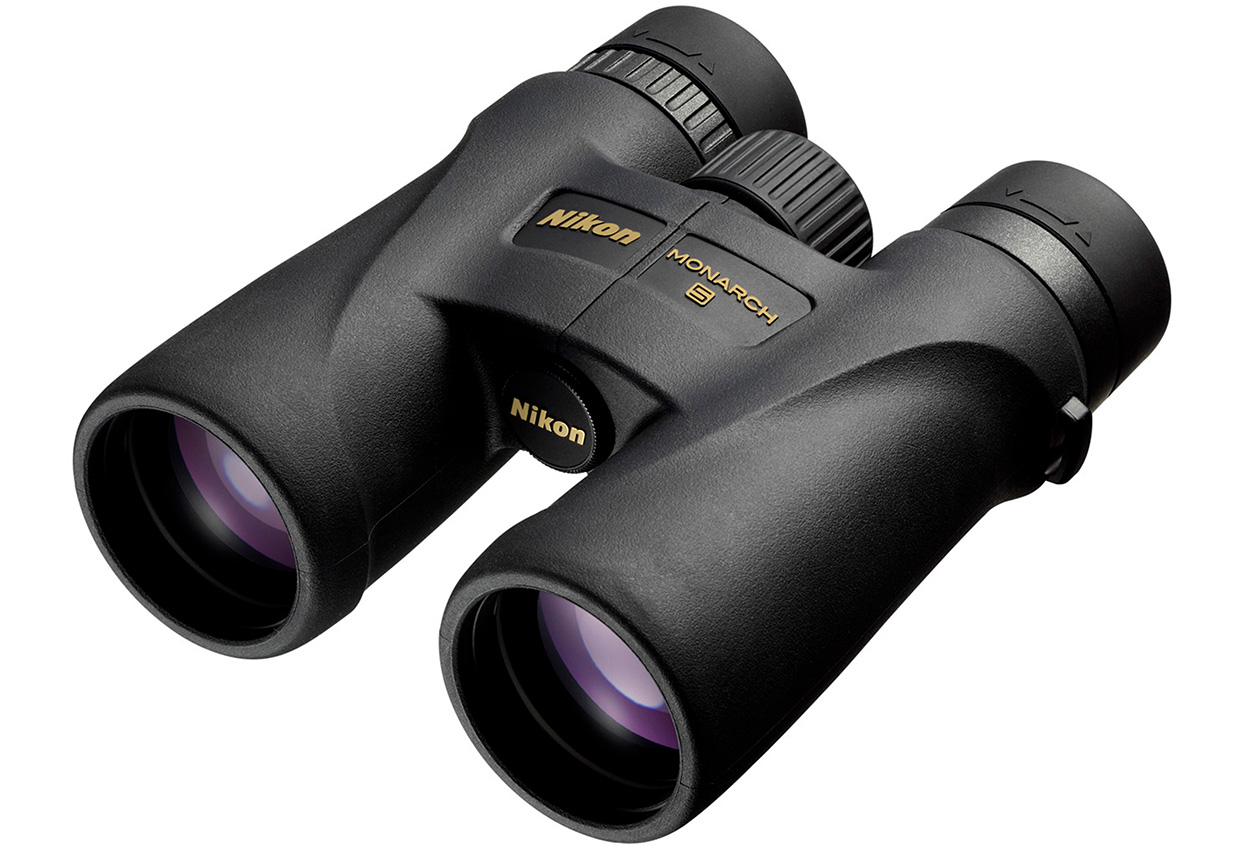
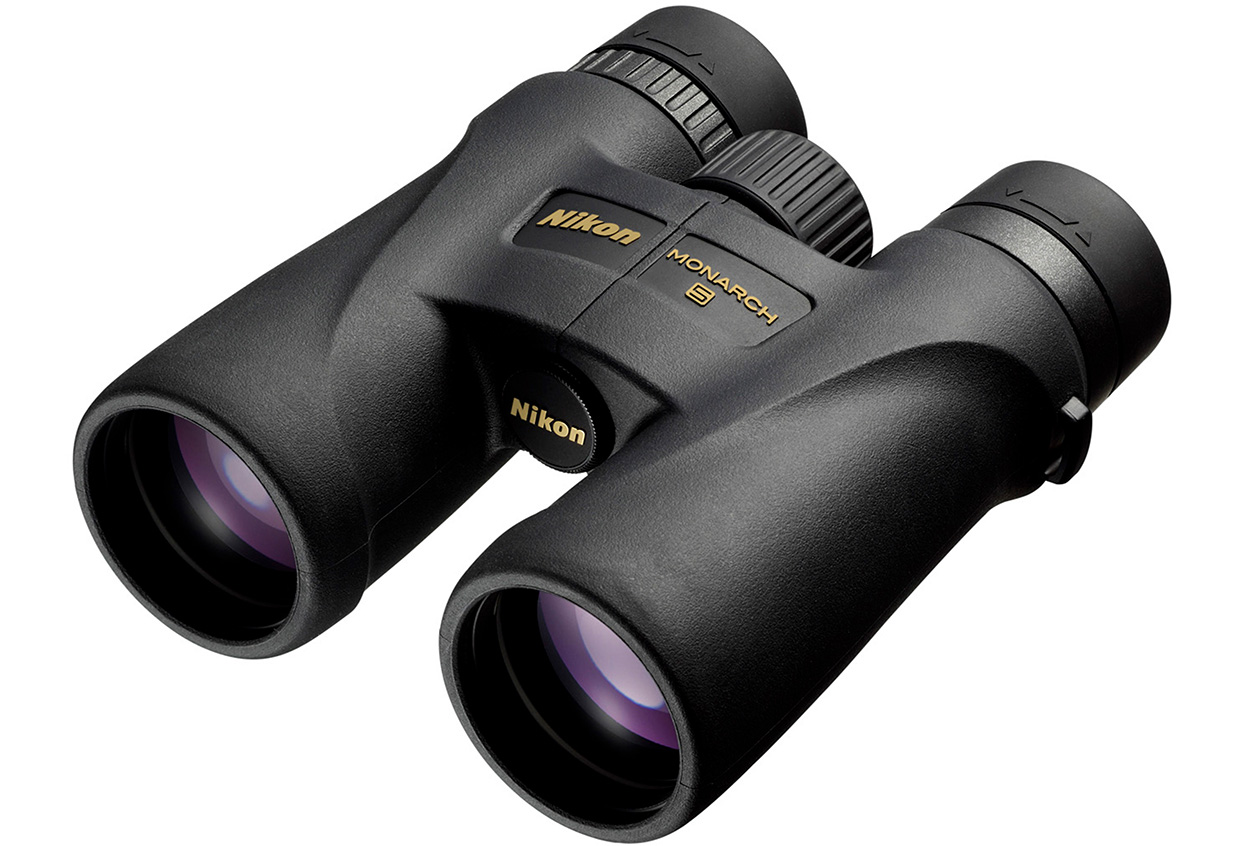
Quick take: The Nikon Monarch M5 10x42 costs $40 less; the Nikon Monarch M5 10x50 has a wider field of view (314 vs 293 ft @ 1000 yds); the Nikon Monarch M5 10x50 gathers more light with a larger 50mm objective.
Field of view, to scale
Top-down view · drawn to true scale — no exaggeration
Which one to buy
Light is the one reason to spend the extra $40. Owners of the Nikon Monarch M5 10x50 say its 5mm exit pupil is why the configuration exists: it keeps the M5's sharp, fringe-free ED image bright through dawn, dusk and twilight stargazing, where the Nikon Monarch M5 10x42's 4.2mm starts to fade. Both weigh 22.6 oz, both carry the same ED glass, dielectric coatings and locking diopter, and owners of both praise the true-to-color image.
The 10x50 even wins a couple of smaller points: a 314 ft field against the 10x42's tunnel-like 293 ft, and 19.3mm of eye relief against 18.4mm, both excellent for glasses. What it gives up is handling. It is longer at 6.7 inches against 5.6, and owners say the barrels hang heavier on the neck over a day. Its close focus is 14.8 ft, the worst in the family, against the 10x42's 8.2 ft, which rules it out for feeders and butterflies. It also has far less owner history than the heavily reviewed 10x42.
Owners of both note the same shared weaknesses: 10x on a light body shakes, and Nikon's limited lifetime warranty is less generous than no-fault rivals.
If you hunt the first and last light or want a binocular that doubles for the night sky, the 10x50 is worth it. For daytime glassing, feeders and all-day carry, the more compact 10x42 is the better choice.
Nikon Monarch M5 10x42
For daytime hunting, feeder watching and all-day carry where close focus and a compact body matter, the 42mm is the easier M5.
Nikon Monarch M5 10x50
Worth the extra $40 for dawn-and-dusk hunters and casual stargazers who want the brighter 5mm exit pupil.
| Spec | Nikon Monarch M5 10x42 | Nikon Monarch M5 10x50 |
|---|---|---|
| Approx. price | ~$350 | ~$390 |
| Use case | Hunting | Astronomy |
| Magnification | 10x | 10x |
| Objective | 42mm | 50mm |
| Exit pupil | 4.2mm | 5.0mm |
| Field of view | 293 ft @ 1000 yds | 314 ft @ 1000 yds |
| Eye relief | 18.4mm | 19.3mm |
| Close focus | 8.2 ft | 14.8 ft |
| Prism | Roof | Roof |
| Glass | ED | ED |
| Coating | Fully Multi-Coated | Fully Multi-Coated |
| Weight | 22.6 oz | 22.6 oz |
| Dimensions | 5.6 x 5.1 in | 6.7 x 5.2 in |
| Warranty | Limited Lifetime | Limited Lifetime |
Feature comparison
Nikon Monarch M5 10x42
- ✓ED Glass
- ✓Phase-Corrected
- ✓Dielectric Coating
- ✓Waterproof
- ✓Fogproof
- ✗Image Stabilized
- ✓Tripod Adaptable
- ✗Magnesium Body
- ✓Locking Diopter
Nikon Monarch M5 10x50
- ✓ED Glass
- ✓Phase-Corrected
- ✓Dielectric Coating
- ✓Waterproof
- ✓Fogproof
- ✗Image Stabilized
- ✓Tripod Adaptable
- ✗Magnesium Body
- ✓Locking Diopter
What birders say
Nikon Monarch M5 10x42
- ✓ED glass at a mid-$200s price delivers the clean, fringe-free image that separates it from the Prostaff tier - forum testers who ran it against the Prostaff P7 and Vortex Diamondback HD gave the M5 the overall edge-to-edge sharpness win
- ✓Excellent 18.4mm eye relief for a 10x42 - reviewers call it out as genuinely eyeglass-friendly, where most 10x competitors force glasses wearers to compromise
- ✓Owners consistently describe the image as clear, sharp, and true to color - the classic Monarch signature that made this line a best-seller
- ✓Dielectric prism coatings and fully multi-coated optics keep the view bright for a 42mm - side-by-side testers found it brighter than the Vortex Diamondback HD
- ✓Noticeably nicer build than the Prostaff P7 - a forum tester specifically contrasted the M5's solid eyepieces with the P7's rattly ones
- ✓Reasonably light for the class at 22.6 ounces, with a trim body that reviewers say handles closer to a mid-size than a full-size
- ✓Locking diopter holds settings through hard field use
- ✓Owner reviews frequently note it delivers close to Monarch M7 performance for meaningfully less money - the 'sensible Monarch' pick
- ✗The narrow field of view is the complaint that shows up in nearly every review - 293 ft at 1000 yards creates what testers describe as a tunnel-vision feel that makes finding and following birds harder
- ✗The Vortex Diamondback HD 10x42 offers a substantially wider window for less money, which reviewers repeatedly cite as the M5's most awkward comparison
- ✗Focus wheel gets mixed reports - some testers found it needs constant positive pressure to keep moving rather than gliding, though others call it smooth and fast
- ✗The 4.2mm exit pupil dims earlier at dusk than an 8x42 - a real consideration for hunters who need the last minutes of light
- ✗Handheld shake at 10x is amplified by the light body - some users find they need to brace more than expected
- ✗Nikon's limited lifetime warranty is far more restrictive than Vortex's transferable no-fault VIP warranty on similarly priced glass
- ✗Close focus of 8.2 feet is fine for feeder birds, the same as the Monarch M7, but too long for butterflies
- ✗Dedicated birders on forums keep concluding the M5 isn't for them - the field of view issue pushes them to the M7 or wider rivals despite the M5's sharpness
Nikon Monarch M5 10x50
- ✓The 5mm exit pupil is the reason this configuration exists - it keeps the ED-glass Monarch image bright into dawn, dusk, and twilight stargazing where the 10x42's 4.2mm pupil starts to fade
- ✓Same ED glass and dielectric prism coatings as the rest of the M5 line, which forum testers found sharper edge to edge than the Prostaff P7 and Vortex Diamondback HD tier
- ✓One of the cheapest ways to get a name-brand ED-glass 10x50 - at around $300 it undercuts most quality 50mm competitors by a wide margin
- ✓Has 19.3mm of eye relief, even more than the M5 10x42, so eyeglass wearers can actually use the full field - rare in big-objective binoculars
- ✓A legitimate dual-purpose wildlife-and-stargazing glass - the 50mm objectives and clean roof-prism image make it a natural casual astronomy pick, and it's tripod adaptable for exactly that
- ✓Locking diopter and waterproof, fogproof build carried over from the smaller M5s
- ✓Owners of the M5 line consistently praise the true-to-color, fringe-free image that ED glass delivers - traits that matter even more on bright stars and backlit wildlife
- ✓Fills a gap Nikon left open for years - forum members greeted the 50mm Monarch's introduction as the budget ED big-objective option the lineup was missing
- ✗The field is 314 ft at 1000 yards - wider than the M5 10x42's 293 ft, but still no wide-angle sky sweeper
- ✗Nikon lists it at 22.6 ounces, the same as the M5 10x42, but the longer barrels still hang heavier on the neck over a full day
- ✗Close focus of 14.8 feet is by far the worst in the M5 family and rules out close-range nature observation entirely
- ✗Still a relatively new addition to the line with limited third-party review coverage and forum discussion - buyers have less owner history to lean on than with the 42mm models
- ✗Handheld 10x through a heavy 50mm body shows shake - many users end up on a tripod for extended sessions
- ✗Nikon's limited lifetime warranty compares poorly with the unconditional coverage from Vortex and Maven at nearby prices
- ✗For dedicated astronomy, the narrow field works against it - classic wide-field 10x50 porros show far more sky for less money
- ✗The bulk pushes it into direct comparison with 50mm hunting glass like the Vortex Viper HD 10x50, where the competition is much stiffer than at the M5's usual price point
Nikon Monarch M5 10x42 vs Nikon Monarch M5 10x50: common questions
Is the Nikon Monarch M5 10x50 heavier than the 10x42?▾
Nikon rates both at 22.6 oz, but owners of the 10x50 say its longer barrels feel front-heavier and hang more on the neck over a full day. Many move to a chest harness or brace it for long sessions.
Is the Nikon Monarch M5 10x50 good for stargazing compared with the 10x42?▾
It is the better of the two for the night sky because of its 5mm exit pupil and 50mm objectives, and owners call it a solid casual stargazing glass. Its 314 ft field is only average for sweeping the Milky Way, so dedicated astronomers may want wider-field designs.
Can the Nikon Monarch M5 10x50 focus as close as the 10x42?▾
No. The 10x50 focuses to 14.8 ft against the 10x42's 8.2 ft, and owners call it the worst close focus in the family. If you watch feeders or insects, the 10x42 is the right pick.