Nikon Aculon A211 8x42 vs Nikon Aculon A211 10x50
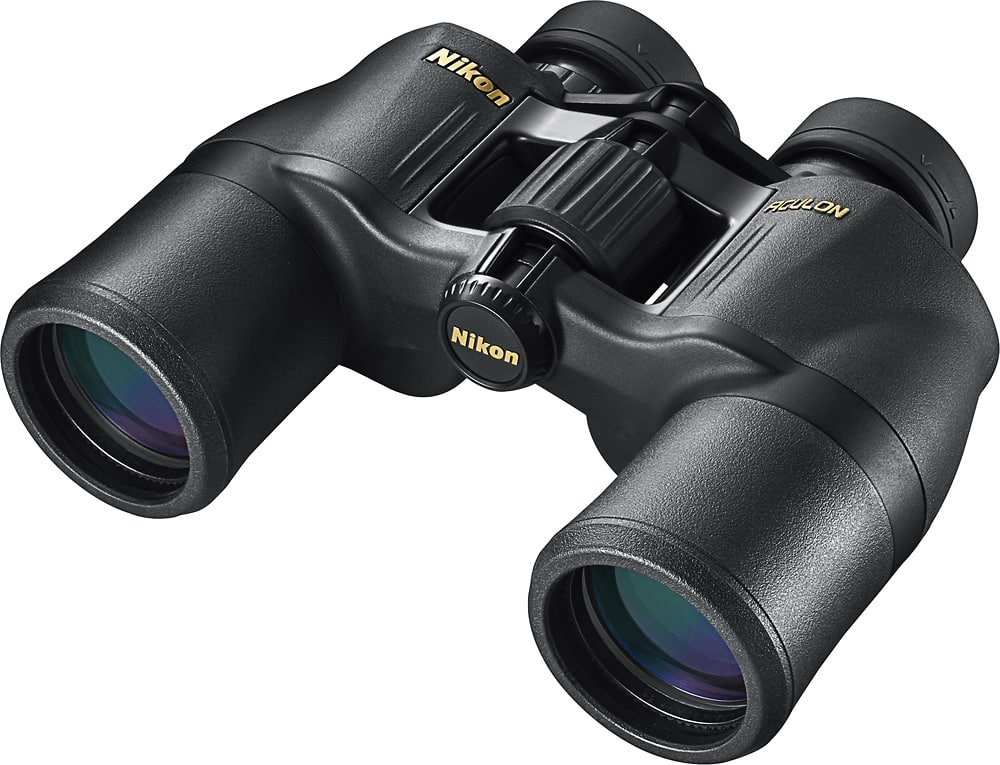
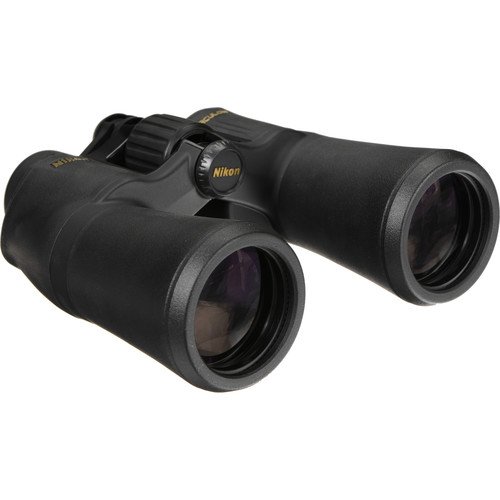
Quick take: The Nikon Aculon A211 8x42 costs $40 less; the Nikon Aculon A211 10x50 reaches farther (10x vs 8x); the Nikon Aculon A211 8x42 has a wider field of view (420 vs 341 ft @ 1000 yds).
Field of view, to scale
Top-down view · drawn to true scale — no exaggeration
Which one to buy
Daytime or night sky? Within the same discontinued Aculon line, that is the whole decision, and new stock of either may be hard to find. Both share the strengths owners love: bright Porro prisms with real depth, aspherical eyepieces that keep the center sharp, and a lot of image for the money. Both share the same faults too: no waterproofing or fogproofing, so rain and humidity swings can fog them internally, eye relief too short for most glasses (12mm and 11.8mm), soft edges and color fringing on bright, high-contrast subjects.
The Nikon Aculon A211 8x42 is the everyday pick at $100. Its 420 ft field makes birds easy to find, 8x is steadier in the hand, it weighs 26.8 oz against 31.7 oz, and it focuses closer, at 16.4 ft against 23 ft. Owners call it the beater pair that lives in the car and the loaner for guests.
The Nikon Aculon A211 10x50 costs $40 more and is aimed at stargazing. Astronomy owners recommend it as a first pair, and its 50mm objectives gather more light for star clusters and the moon. But owners agree 10x at that weight shakes by hand and works best on a tripod, and the adapter is not in the box.
For birding, walks and general use, the 8x42 is the better and cheaper choice. Take the 10x50 only if the night sky is the main reason you're buying.
Nikon Aculon A211 8x42
For birding, hikes and a car-door loaner in dry weather, the wider, lighter 8x is the better Aculon; it is discontinued.
Nikon Aculon A211 10x50
Worth the extra $40 if stargazing is the goal and you'll add a tripod adapter; it is also discontinued.
| Spec | Nikon Aculon A211 8x42 | Nikon Aculon A211 10x50 |
|---|---|---|
| Approx. price | ~$100 | ~$140 |
| Use case | General Purpose | General Purpose |
| Magnification | 8x | 10x |
| Objective | 42mm | 50mm |
| Exit pupil | 5.3mm | 5.0mm |
| Field of view | 420 ft @ 1000 yds | 341 ft @ 1000 yds |
| Eye relief | 12mm | 11.8mm |
| Close focus | 16.4 ft | 23 ft |
| Prism | Porro | Porro |
| Glass | Eco-Glass | Eco-Glass |
| Coating | Multi-Coated | Multi-Coated |
| Weight | 26.8 oz | 31.7 oz |
| Dimensions | 5.7 x 7.3 in | 7.0 x 7.8 in |
| Warranty | Limited Lifetime | Limited Lifetime |
Feature comparison
Nikon Aculon A211 8x42
- ✗ED Glass
- ✗Phase-Corrected
- ✗Dielectric Coating
- ✗Waterproof
- ✗Fogproof
- ✗Image Stabilized
- ✓Tripod Adaptable
- ✗Magnesium Body
- ✗Locking Diopter
Nikon Aculon A211 10x50
- ✗ED Glass
- ✗Phase-Corrected
- ✗Dielectric Coating
- ✗Waterproof
- ✗Fogproof
- ✗Image Stabilized
- ✓Tripod Adaptable
- ✗Magnesium Body
- ✗Locking Diopter
What birders say
Nikon Aculon A211 8x42
- ✓Porro prism design delivers a bright, punchy image with a pleasing 3D depth effect that roof prisms at this price can't match
- ✓Genuinely wide 8-degree field of view makes it easy to find and track birds in flight - beginners lose targets far less often
- ✓Aspherical eyepiece lenses keep the center of the image sharper than most sub-$100 glass, and owners consistently praise center clarity
- ✓Excellent low-light gatherer for the money - dusk deer watching and dawn birding hold up better than similarly priced roof prisms
- ✓Smooth, well-damped central focus wheel that owners say stays consistent even after years of use
- ✓Rubber-armored body shrugs off knocks - long-time users report theirs surviving a decade of truck-cab and boat duty
- ✓Turn-and-slide eyecups are simple but reliable, with none of the loose-eyecup complaints common on cheap roofs
- ✓Nikon's warranty and long production run mean parts, reviews, and used units are everywhere - a safe, known quantity
- ✗Not waterproof or fogproof - the single most repeated warning from owners; rain, humidity swings, and internal fogging are real risks
- ✗Short eye relief (about 12mm) means eyeglass wearers lose a big chunk of the field of view - the top complaint from bespectacled birders
- ✗Noticeable edge softness; roughly the outer third of the image goes blurry, which bothers anyone who pans across landscapes
- ✗At around 27 oz it's heavier and bulkier than modern roof-prism competitors like the Celestron Nature DX
- ✗Chromatic aberration (purple fringing) shows on high-contrast subjects like birds against bright sky
- ✗The classic wide porro body doesn't fit small hands well and won't ride comfortably in a jacket pocket
- ✗Flimsy slip-on lens caps and a thin neck strap - accessories feel like an afterthought
- ✗No tripod adapter compatibility issues aside, glare control is mediocre when the sun is anywhere near the frame
Nikon Aculon A211 10x50
- ✓Outstanding optics per dollar - astronomy forum members recommend it as a first pair and say it would make a good investment for an astronomy club outfitting beginners
- ✓Big 50mm objectives and a 5mm exit pupil deliver genuinely bright images for stargazing and dusk wildlife at a budget price
- ✓BaK-4 Porro prisms give the image a depth and 3D quality that budget roof-prism binoculars can't match
- ✓Aspherical multilayer-coated eyepiece lenses keep the center of the field sharp and distortion low
- ✓374 ft field of view is wide for a 10x50 at this price
- ✓Reviewers describe the frame as sleek, solid, and well made - it doesn't feel like a $140 binocular in the hand
- ✓Tripod adaptable, which matters because that's how it performs best on the night sky
- ✓Stargazers who've compared it have preferred it over pricier alternatives for casual astronomy
- ✗Not waterproof or fogproof - a soaking or a cold-to-warm transition can end its day, which rules it out as serious field glass
- ✗Tight 11.8mm eye relief is the most common complaint - eyeglass wearers lose a big chunk of the field of view
- ✗Heavy at 31.7 oz, and reviewers note it lacks any pretense of portability
- ✗10x magnification in a 2 lb body is genuinely hard to hold steady - owners consistently say handheld shake is noticeable, as with all 10x50s
- ✗Edges of the field go soft - star fields blur noticeably away from center
- ✗Chromatic aberration shows on bright, high-contrast targets like the moon and streetlights
- ✗Turn-and-slide rubber eyecups are less precise than click-stop twist-up designs
- ✗No tripod adapter in the box - it's a separate purchase you'll probably want
Nikon Aculon A211 8x42 vs Nikon Aculon A211 10x50: common questions
Is the Nikon Aculon A211 10x50 brighter than the 8x42?▾
The 10x50 gathers more light through its 50mm objectives, which helps on the night sky. Exit pupils are close, 5.0mm against the 8x42's 5.3mm, so for dusk wildlife the 8x42 is about as bright and easier to hold steady.
Can glasses wearers use the Nikon Aculon A211 8x42 or 10x50?▾
Poorly. Eye relief is 12mm on the 8x42 and 11.8mm on the 10x50, and owners of both report losing a large part of the field with glasses on. If you must wear glasses to observe, neither Aculon is a good fit.
Do I need a tripod for the Nikon Aculon A211 10x50 but not the 8x42?▾
Owners say the 10x50 shakes noticeably by hand at 31.7 oz and works best on a tripod, especially on stars. The 8x42 is comfortable handheld. Both are tripod adaptable, but the adapter is a separate purchase.