Maven B.5 18x56 vs Canon 18x50 IS AW
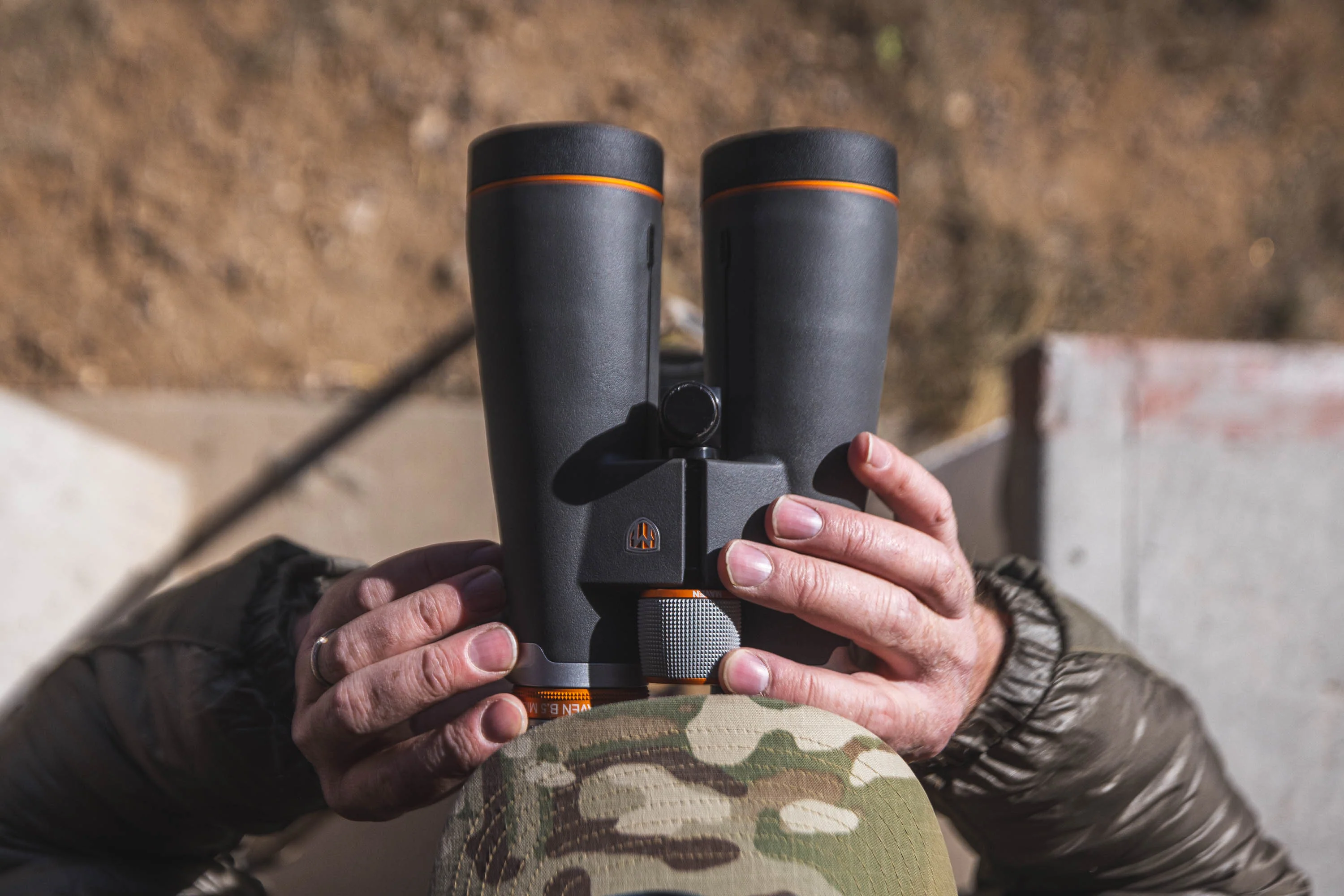
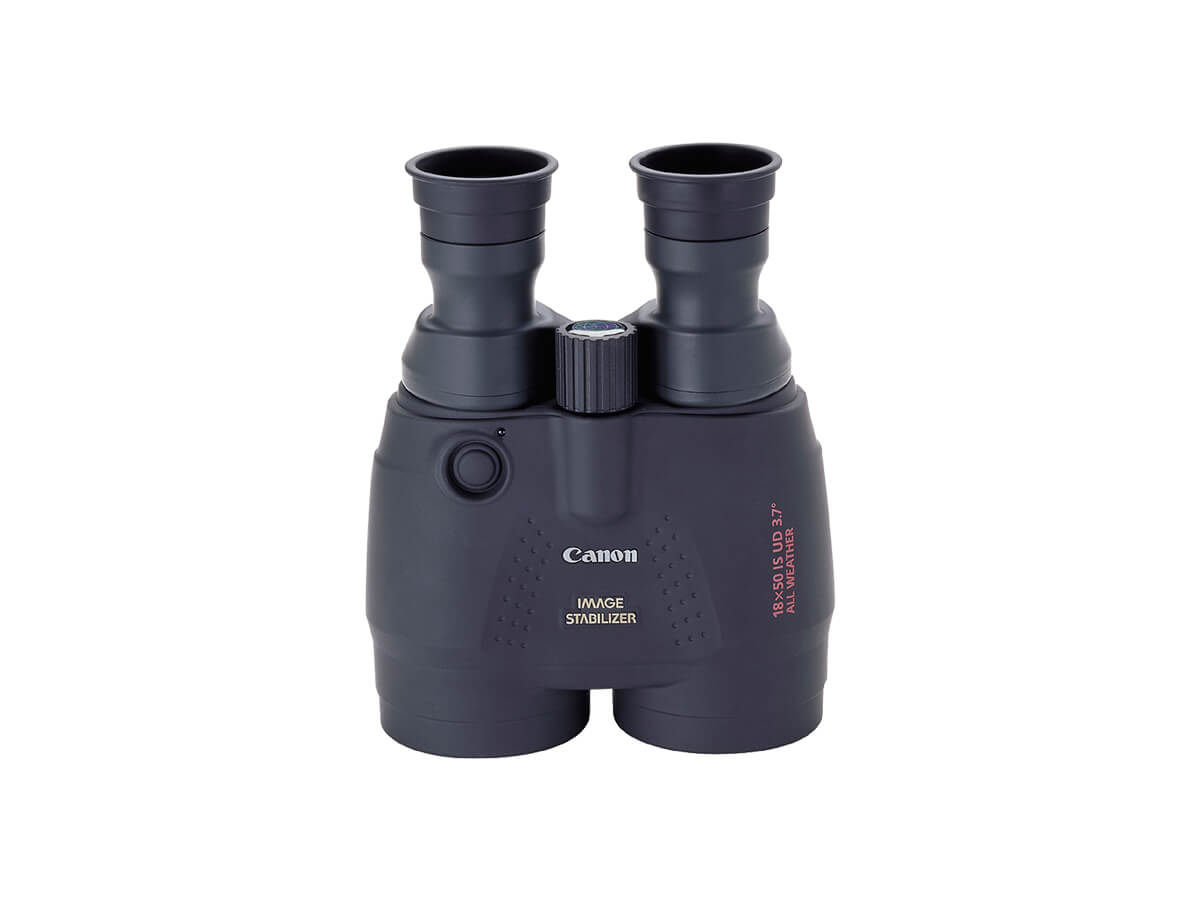
Quick take: The Canon 18x50 IS AW costs $301 less; the Maven B.5 18x56 gathers more light with a larger 56mm objective.
Field of view, to scale
Top-down view · drawn to true scale — no exaggeration
Which one to buy
At 18x, something has to stop the shake. The Maven B.5 18x56 uses a tripod; the Canon 18x50 IS AW uses image stabilization. That one choice outweighs every other spec here, including the roughly $300 the Canon saves you. The two weigh about the same, 45 oz against 41.6 oz, and both show a 194 ft field, so neither is a casual carry.
On a tripod, the Maven is the better optic. Owners report color fringing corrected to essentially zero by its fluorite objectives, sharpness that holds nearly to the edge, and 18mm of eye relief that keeps glasses wearers in the game. Its 56mm objectives give a 3.1mm exit pupil against the Canon's 2.78mm. Owner complaints are about what's missing: no tripod adapter in the box, a drawstring bag, generic covers. Maven's lifetime warranty is unconditional; Canon's runs 1 year.
The Canon's case is that it works standing in a field. Owners say it resolves more than nearly any other binocular you can hold, and astronomy users report hand-held views of globular clusters and the Ring Nebula. Its owners are unusually split, though, and the complaints are specific: stabilization that takes several seconds to settle and stutters when panning, a claimed 15mm of eye relief that measures closer to 10mm and effectively rules out glasses, visible color fringing on high-contrast edges, a 20 ft close focus, and a plastic body with a flimsy case. Some owners resell them; others report 15 years of trouble-free use.
For western hunters glassing from a fixed spot and stargazers with a mount, the Maven gives the cleaner, more comfortable image and the far better warranty. The Canon is only the right choice if you will not carry a tripod and are willing to learn its quirks, and if you wear glasses it is very hard to recommend.
Maven B.5 18x56
For glassing from a tripod or a fixed spot, especially in eyeglasses, its cleaner image and unconditional warranty make it the stronger long-term buy.
Canon 18x50 IS AW
Worth the learning curve only if you need 18x without a tripod, standing in a field or under the stars, and don't wear glasses.
| Spec | Maven B.5 18x56 | Canon 18x50 IS AW |
|---|---|---|
| Approx. price | ~$1,850 | ~$1,549 |
| Use case | Astronomy | Astronomy |
| Magnification | 18x | 18x |
| Objective | 56mm | 50mm |
| Exit pupil | 3.1mm | 2.78mm |
| Field of view | 194 ft @ 1000 yds | 194 ft @ 1000 yds |
| Eye relief | 18mm | 15mm |
| Close focus | 9.8 ft | 20 ft |
| Prism | Roof | Porro |
| Glass | FL | Standard |
| Coating | Fully Multi-Coated | Fully Multi-Coated |
| Weight | 45 oz | 41.6 oz |
| Dimensions | 7.8 x 5.6 in | 7.5 x 5.9 in |
| Warranty | Lifetime | 1 Year |
Feature comparison
Maven B.5 18x56
- ✓ED Glass
- ✓Phase-Corrected
- ✓Dielectric Coating
- ✓Waterproof
- ✓Fogproof
- ✗Image Stabilized
- ✓Tripod Adaptable
- ✗Magnesium Body
- ✓Locking Diopter
Canon 18x50 IS AW
- ✗ED Glass
- ✗Phase-Corrected
- ✗Dielectric Coating
- ✓Waterproof
- ✓Fogproof
- ✓Image Stabilized
- ✓Tripod Adaptable
- ✗Magnesium Body
- ✗Locking Diopter
What birders say
Maven B.5 18x56
- ✓Fluorite ED objectives correct chromatic aberration to essentially zero - a level of false-color control reviewers say is rare anywhere near this price
- ✓Image stays sharp from center nearly to the edge, unusual for a high-magnification binocular
- ✓18x magnification resolves detail testers describe as spotting-scope territory - reading license plates at 200 meters and picking apart shaded timber a mile out
- ✓Two-eyed glassing at 18x causes far less fatigue than an equivalent spotting scope during hours-long sits, which is exactly why western hunters buy it
- ✓18mm of eye relief keeps the full field usable for eyeglass wearers, uncommon among big-eye binoculars
- ✓Magnesium chassis with a deeply etched metal focus wheel that reviewers call one of the real highlights of the build
- ✓Held its own in a head-to-head field test against the Vortex Kaibab HD 18x56, Sig Zulu9 15x56, and Swarovski SLC 15x56 while costing much less than the Swarovski
- ✓Standard 1/4-inch tripod thread with plenty of clearance between the barrels makes mounting simple, and Maven's unconditional lifetime warranty covers it for life
- ✗At roughly 45 ounces it's a tripod instrument, full stop - handholding 18x for more than a few seconds is futile and fatiguing
- ✗The 3.1mm exit pupil dims faster at dusk than 15x56 or 12x56 alternatives, costing you the last minutes of prime glassing light
- ✗Narrow field of view inherent to 18x makes finding and following moving animals harder - several owners suggest the 15x56 as the more versatile pick
- ✗No tripod adapter included despite being a tripod-first optic - it's an extra purchase
- ✗Ships with a drawstring bag instead of a protective hard case
- ✗Diopter doesn't lock
- ✗The reticle version's rifle-style layout strikes reviewers as poorly suited to observation work - a grid design would be more useful, and most recommend saving money with the non-reticle model
- ✗Generic lens covers and near-zero chance of trying a pair in person before ordering
Canon 18x50 IS AW
- ✓Resolves more detail than almost any other hand-holdable binocular on the market - 18x magnification plus stabilization is a combination nothing conventional can match
- ✓Genuinely sharp, high-contrast optics with UD glass and a flat field - reviewers compare the central image quality to Swarovski and Zeiss glass
- ✓Outstanding astronomy instrument - owners report remarkable hand-held views of globular clusters, M42, and the Ring Nebula, and reviewers call it the best suburban moon-viewing tool they've used
- ✓Excellent long-range birding weapon - one reviewer called the stabilized 18x 'lethal' for teasing distant warblers out of hedgerows no 10x could reach
- ✓All-weather (AW) construction with water resistance - unique among Canon's big stabilized models and usable in field conditions
- ✓Proven long-term reliability - one owner reported 15 years of use, including winters, without a single problem
- ✓Effectively replaces a small spotting scope - owners describe it as an easy-to-use, effective 'small spotter' without the tripod
- ✗Heavy at 41.6 oz - fatiguing to hold for extended sessions and firmly in 'is this still hand-holdable?' territory for some owners
- ✗Stabilization takes several seconds to fully settle and can look jerky when panning - a notably less refined IS behavior than newer Canon models
- ✗Effective eye relief measures closer to 10mm than the claimed 15mm, making the full field nearly unusable with eyeglasses
- ✗Very narrow 194 ft field of view with critical eye placement - experienced users describe it as 'for advanced users only'
- ✗Shallow depth of field at 18x demands constant refocusing, and the focus action is sensitive enough to overshoot
- ✗Visible chromatic aberration on silhouettes and high-contrast edges despite the UD element
- ✗Plastic exterior and flimsy case feel like consumer electronics rather than $1,700 optics, per multiple reviewers
- ✗Polarizing ownership experience - some buyers report disappointment and resell them, while others rave, suggesting a real learning curve and sample sensitivity
Maven B.5 18x56 vs Canon 18x50 IS AW: common questions
Can the Canon 18x50 IS AW replace the Maven B.5 18x56 on a tripod?▾
It can be mounted, but on a tripod the Maven's advantages show: fluorite glass that owners say corrects color fringing to essentially zero, a larger 3.1mm exit pupil and 18mm of eye relief. Canon owners report visible color fringing on high-contrast edges despite its UD element.
Is the Maven B.5 18x56 or the Canon 18x50 IS AW better for eyeglass wearers?▾
The Maven, clearly. It offers 18mm of eye relief and owners say the full field stays usable with glasses. Canon claims 15mm, but owners measured usable eye relief closer to 10mm, which makes the full field nearly impossible to see in glasses.
Which is better for stargazing, the Maven B.5 18x56 or the Canon 18x50 IS AW?▾
Both have devoted astronomy owners. The Canon lets you sweep the sky by hand and owners report striking views of clusters and nebulae, while the Maven needs a solid mount but gives a brighter 3.1mm exit pupil and near-zero color fringing on the moon and bright planets.
Does the warranty difference between the Maven B.5 and the Canon 18x50 IS AW matter?▾
It can at this price. Maven's lifetime warranty is unconditional, while Canon's runs 1 year. Some Canon owners report 15 years without a problem, but the stabilizer is electronics, and out-of-warranty repairs on it would be on you.