Leupold BX-5 Santiam HD 10x42 vs SIG Sauer Zulu6 HDX 16x42
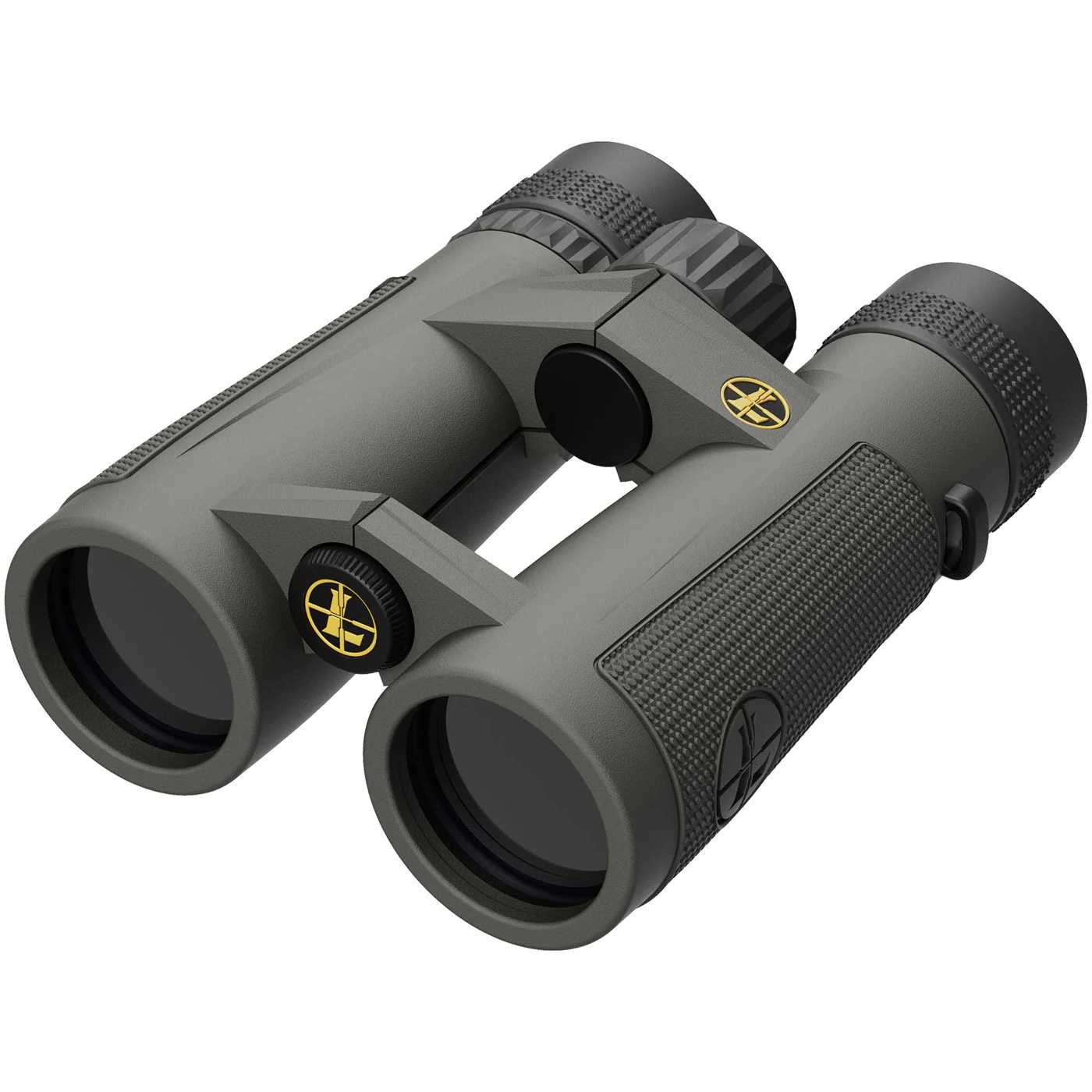
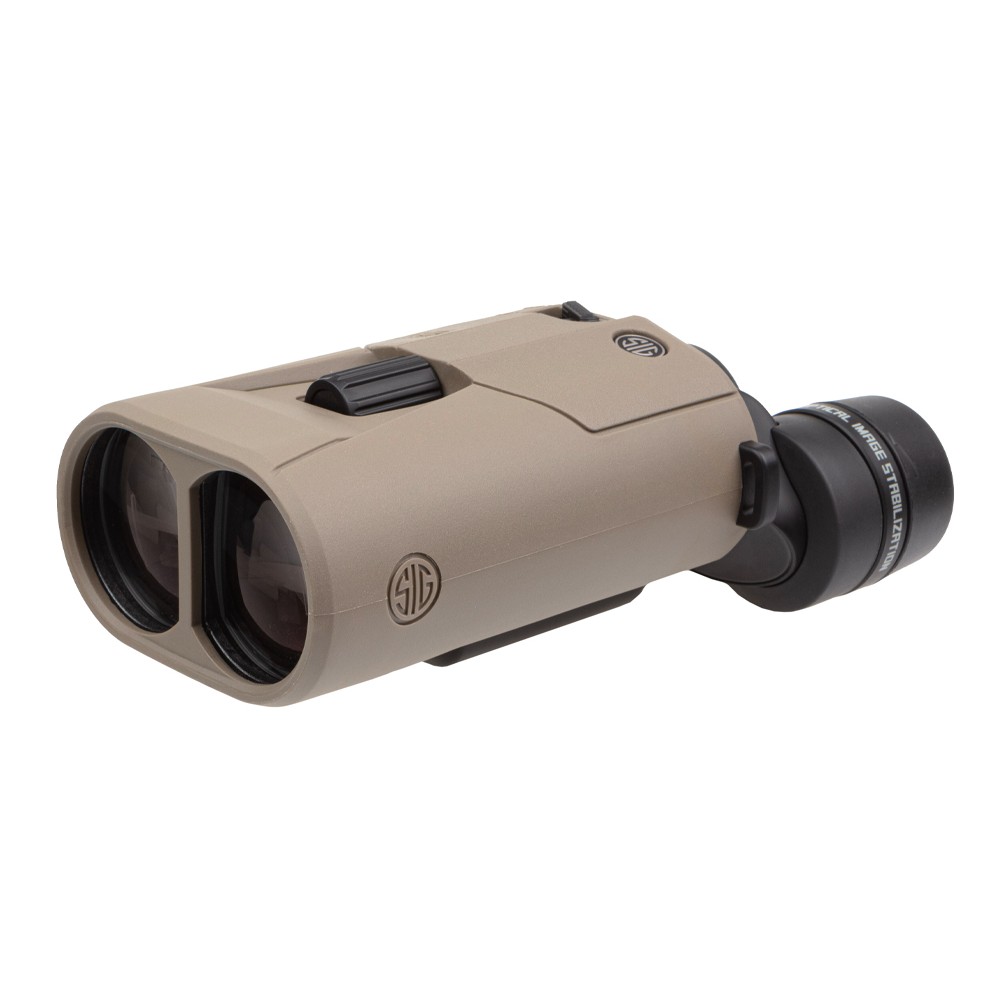
Quick take: The Leupold BX-5 Santiam HD 10x42 costs $100 less; the SIG Sauer Zulu6 HDX 16x42 reaches farther (16x vs 10x); the Leupold BX-5 Santiam HD 10x42 has a wider field of view (341 vs 200 ft @ 1000 yds).
Field of view, to scale
Top-down view · drawn to true scale — no exaggeration
Which one to buy
Sixteen power held in two hands is a stunt without stabilization, and that is the whole case for the SIG Sauer Zulu6 HDX 16x42. SIG promises selectable Scan and Target modes, with Target adding up to 50% more stability, about 30 hours from a single AA, and IPX7 sealing, all at 21.9 oz. For $100 more than the Leupold BX-5 Santiam HD 10x42, you get 16x you can use without a tripod.
The cost shows up everywhere else. A 2.6mm exit pupil is very small for a hunting binocular, so the image dims quickly as light fades, and the 200 ft field is far narrower than the Leupold's 341 ft. Eye relief drops to 14mm against the Santiam's 16.6mm, which is tight for eyeglass wearers. The Leupold is the opposite instrument: a 4.2mm exit pupil, a wide view, and an eye box owners describe as forgiving and comfortable for long sessions, with low-light performance they repeatedly praise. Its known weak points are resolution a step behind the best rivals at its price and 6-8 week warranty turnarounds.
For most hunters the Leupold is the better tool, because most game is found in the dim edges of the day by scanning, not by staring hard at one spot at noon. The Zulu6 16x42 makes sense as a specialist for open-country hunters who need to judge an animal at long range in decent light and refuse to carry a tripod.
Leupold BX-5 Santiam HD 10x42
For hunters who do most of their glassing at dawn and dusk or wear glasses, the wider, brighter view is the one to own.
SIG Sauer Zulu6 HDX 16x42
Only worth the extra $100 if you judge animals at long range in good light and want 16x freehand instead of a tripod setup.
| Spec | Leupold BX-5 Santiam HD 10x42 | SIG Sauer Zulu6 HDX 16x42 |
|---|---|---|
| Approx. price | ~$1,100 | ~$1,200 |
| Use case | Hunting | Hunting |
| Magnification | 10x | 16x |
| Objective | 42mm | 42mm |
| Exit pupil | 4.2mm | 2.6mm |
| Field of view | 341 ft @ 1000 yds | 200 ft @ 1000 yds |
| Eye relief | 16.6mm | 14mm |
| Close focus | 5 ft | 4 ft |
| Prism | Roof | Roof |
| Glass | HD | HD |
| Coating | Fully Multi-Coated | Fully Multi-Coated |
| Weight | 24.3 oz | 21.9 oz |
| Dimensions | 5.5 x 4.9 in | 7.1 x 4.7 in |
| Warranty | Lifetime | Lifetime |
Feature comparison
Leupold BX-5 Santiam HD 10x42
- ✓ED Glass
- ✓Phase-Corrected
- ✓Dielectric Coating
- ✓Waterproof
- ✓Fogproof
- ✗Image Stabilized
- ✓Tripod Adaptable
- ✓Magnesium Body
- ✓Locking Diopter
SIG Sauer Zulu6 HDX 16x42
- ✗ED Glass
- ✗Phase-Corrected
- ✗Dielectric Coating
- ✓Waterproof
- ✓Fogproof
- ✓Image Stabilized
- ✗Tripod Adaptable
- ✗Magnesium Body
- ✗Locking Diopter
What birders say
Leupold BX-5 Santiam HD 10x42
- ✓Wide 341 ft field of view for a 10x42 in this bracket - you simply see more country per scan than with a Viper HD or Conquest HD
- ✓Generous 16.6mm eye relief and a famously forgiving eye box - reviewers single it out for comfortable extended glassing sessions and easy eye placement
- ✓Sharp, color-accurate HD image that reviewers describe as delivering 'more detail, more color, and more clarity, even when conditions are less than ideal'
- ✓Genuinely strong low-light performance - multiple reviewers concluded the clarity and dusk capability 'justify the investment for serious users'
- ✓Open-bridge magnesium design keeps the flagship 10x42 around 24.3 oz
- ✓Guard-Ion scratch- and smudge-resistant lens coatings hold up to the dusty, wet abuse of real hunts
- ✓Leupold's no-receipt lifetime guarantee, with forum owners reporting good warranty outcomes - one hunter had an ancient pair upgraded to BX-5s
- ✓Street prices frequently run well below MSRP, which puts near-alpha glass in reach of Viper HD money
- ✗In one hunter's nine-binocular shootout of the $1,000 bracket, the BX-5 ranked below the Zeiss Conquest HD, Nikon Monarch HG, and Vortex Razor HD on pure optical clarity
- ✗A technical comparison on a birding forum found the glass quality closely resembles the cheaper BX-4 Pro Guide - the upgrade buys build, FOV, and eye box more than raw resolution
- ✗At full MSRP it fights proven favorites (Conquest HD, Razor HD, Monarch HG) without a decisive optical win
- ✗Far less owner feedback and independent test data than its competitors - you're partly buying on brand trust
- ✗Frequent deep discounting is great for buyers but hints at soft demand next to the Razor and Conquest crowd
- ✗Leupold warranty repairs are reported to take 6-8 weeks - excellent coverage, slow turnaround
- ✗The warm Leupold color rendition and high contrast aren't to everyone's taste next to more neutral European glass
- ✗Resale value is mediocre - like-new pairs show up on hunting classifieds at steep cuts, so buy to keep
Leupold BX-5 Santiam HD 10x42 vs SIG Sauer Zulu6 HDX 16x42: common questions
Can you hold the Zulu6 HDX 16x42 steady enough to beat the Leupold BX-5 Santiam 10x42 freehand?▾
That is what the stabilization is for, with Target mode adding up to 50% more correction, according to SIG. With power on, 16x freehand becomes usable. With a dead AA it becomes a 16x you cannot hold still, while the Leupold needs no battery at all.
Is the Zulu6 HDX 16x42 any good in low light compared with the Santiam HD 10x42?▾
It is at a clear disadvantage. Its exit pupil is 2.6mm against the Leupold's 4.2mm, so less light reaches your eye at dusk. Leupold owners specifically praise the Santiam's twilight performance, which is when many hunters do their glassing.
Which works better with eyeglasses, the Leupold BX-5 Santiam 10x42 or the SIG Zulu6 16x42?▾
The Leupold, with 16.6mm of eye relief against 14mm on the SIG. Santiam owners also describe its eye box as forgiving, so eye placement is easy. Spectacle wearers should try the Zulu6 16x42 before committing.