Hawke Frontier ED X 8x42 vs Hawke Frontier ED X 10x42
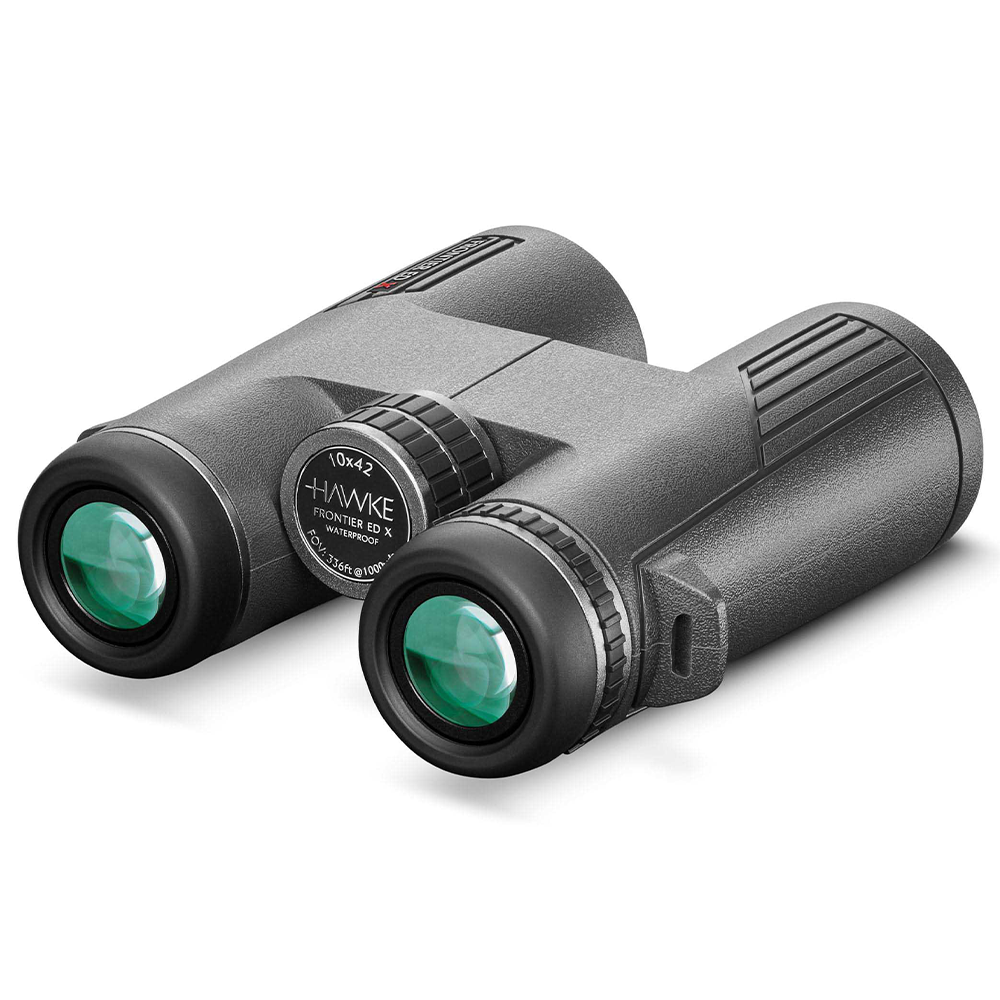
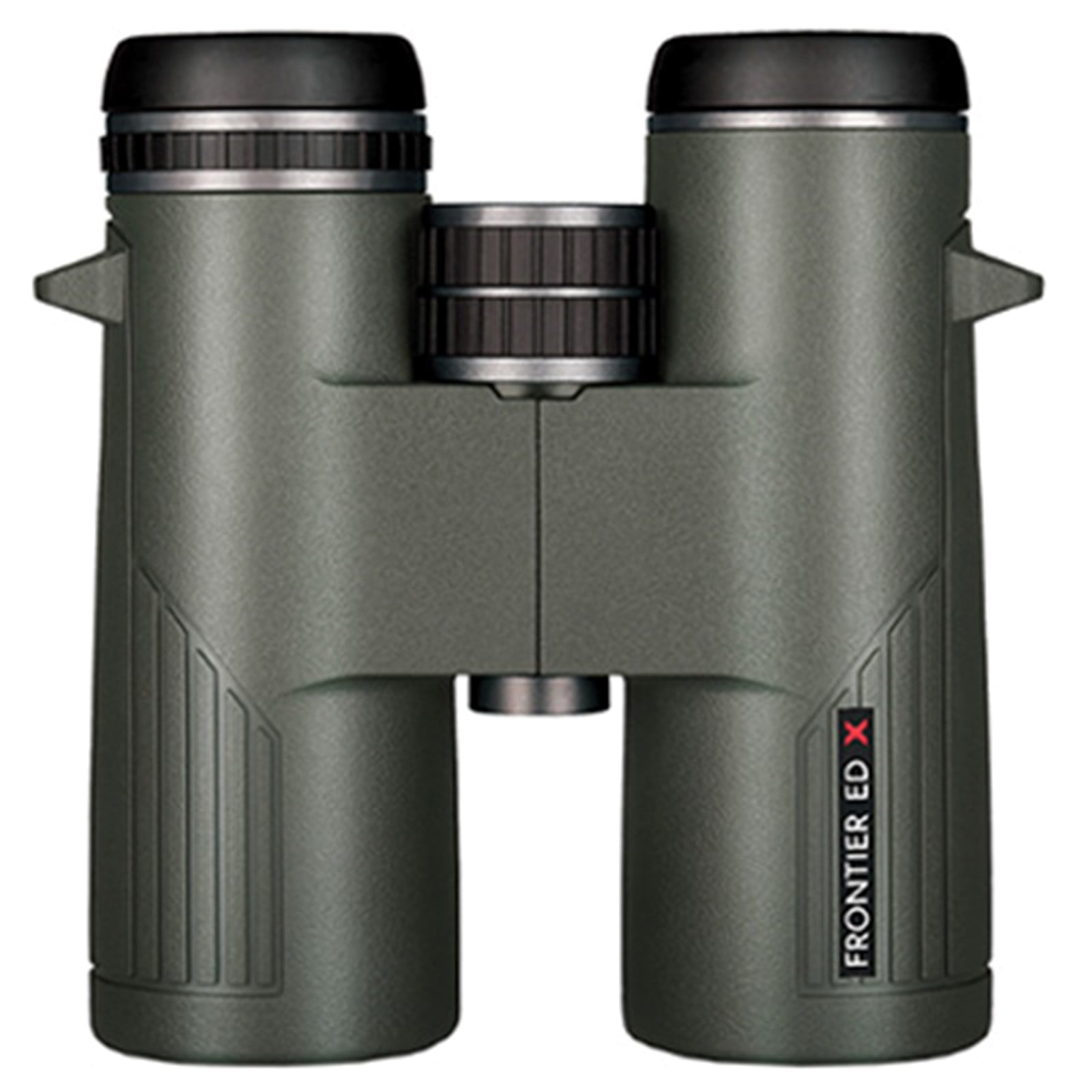
Quick take: The Hawke Frontier ED X 8x42 costs $20 less; the Hawke Frontier ED X 10x42 reaches farther (10x vs 8x); the Hawke Frontier ED X 8x42 has a wider field of view (426 vs 336 ft @ 1000 yds).
Field of view, to scale
Top-down view · drawn to true scale — no exaggeration
Which one to buy
Is 10x worth $20 and a narrower view? Within the Frontier ED X line, owners answer the same way from either side: the 8x42 is the safer pick for most people. The ED glass, magnesium chassis and dielectric prisms are shared, the weight is identical at 25.6 oz, and reviewers rate the optics equally. What changes is configuration.
The Hawke Frontier ED X 8x42 shows 426 ft at 1000 yards against 336, has 18mm of eye relief against 15mm and a 5.25mm exit pupil against 4.2mm, and focuses to 6.6 ft against 8.2. The eye relief gap is the decisive one for anyone in glasses. One experienced tester ranked the Hawke Frontier ED X 10x42 his least favorite of its rivals because the eye relief felt so tight, and owners advise glasses wearers to try it first or take the 8x42.
The 10x42 earns its place for raptors, distant shorelines and open-country hunting; one birder found it kept pace with his Nikon 10x42 SE on peregrines at height. Neither has field flatteners, and owners of each note the edges softening. Lab testers also found pincushion distortion and some coma in the 8x42's wide outer field, which matters more for stargazing than for birds. The accessories are a highlight on either, with a rigid case that owners rank among the best bundled at the price.
Hawke Frontier ED X 8x42
The safer pick for most birders and anyone in eyeglasses: wider, brighter, longer eye relief, and $20 cheaper.
Hawke Frontier ED X 10x42
Makes sense for open-country hunting, raptors and shorelines, provided you glass without eyeglasses.
| Spec | Hawke Frontier ED X 8x42 | Hawke Frontier ED X 10x42 |
|---|---|---|
| Approx. price | ~$400 | ~$420 |
| Use case | Birding | Hunting |
| Magnification | 8x | 10x |
| Objective | 42mm | 42mm |
| Exit pupil | 5.25mm | 4.2mm |
| Field of view | 426 ft @ 1000 yds | 336 ft @ 1000 yds |
| Eye relief | 18mm | 15mm |
| Close focus | 6.6 ft | 8.2 ft |
| Prism | Roof | Roof |
| Glass | ED | ED |
| Coating | Fully Multi-Coated | Fully Multi-Coated |
| Weight | 25.6 oz | 25.6 oz |
| Dimensions | 5.5 x 5.0 in | 5.5 x 4.8 in |
| Warranty | Lifetime | Lifetime |
Feature comparison
Hawke Frontier ED X 8x42
- ✓ED Glass
- ✓Phase-Corrected
- ✓Dielectric Coating
- ✓Waterproof
- ✓Fogproof
- ✗Image Stabilized
- ✓Tripod Adaptable
- ✗Magnesium Body
- ✓Locking Diopter
Hawke Frontier ED X 10x42
- ✓ED Glass
- ✓Phase-Corrected
- ✓Dielectric Coating
- ✓Waterproof
- ✓Fogproof
- ✗Image Stabilized
- ✓Tripod Adaptable
- ✗Magnesium Body
- ✓Locking Diopter
What birders say
Hawke Frontier ED X 8x42
- ✓Enormous field of view - among the very widest of any 8x42 on the market, a huge asset for scanning flocks and following birds in flight
- ✓Bright, colorful image that expert birding reviewers found holds up 'even in harsh lighting,' with an exceptionally flat measured transmission curve for faithful color
- ✓Very low chromatic aberration for the class - independent lab testing called the control 'a nice result' with fringing low even off-center
- ✓Magnesium chassis with metal focus wheel and metal eyepiece housings at a price where most rivals use plastic
- ✓18mm eye relief with smooth twist-up eyecups comfortably serves eyeglass wearers
- ✓Close focus of about 6.6 feet is very good for the class
- ✓The included hard case is a genuine standout - rigid, with both a full-length zipper and a magnetic quick-access flap
- ✓Multiple 'best under $500' awards and glowing verdicts from birding publications - a decorated pick at its price point
- ✗Edge sharpness falls away in the outer field - both expert birding reviews and lab testing flag the periphery as the optical weak point
- ✗Lab testing measured distinct pincushion distortion, one of its lowest-scoring categories
- ✗Coma builds in the outer field, so point sources near the edge stretch - a knock for casual stargazing
- ✗Noticeable brightness falloff (vignetting) at the extreme field edges in measurement testing
- ✗Some prospective buyers on birding forums specifically probe its glare resistance in low sun, a recurring question mark
- ✗Diopter doesn't lock - a small but conspicuous omission on an otherwise metal-clad build
- ✗Neck strap lacks quick-release clips, and the lens covers are generic
- ✗Published specs don't perfectly match independent measurements (field of view and weight both differ), which bothers detail-oriented buyers
Hawke Frontier ED X 10x42
- ✓Punches far above its price - expert reviewers scored the Frontier ED X line 87% and called it exceptional value against binoculars costing twice as much, and it has won budget-birding awards
- ✓Real-world tracking performance: one experienced birder watched rooftop peregrines at great height through a friend's 10x42 and matched what his Nikon 10x42 SE showed
- ✓ED glass keeps chromatic aberration extremely low - testers checking dark cables against bright sky found barely detectable fringing
- ✓Dielectric prism coatings (over 99% reflectance) and a neutral, uncolored image that owners describe as bright and sharp with real punch on dull days
- ✓Magnesium alloy chassis keeps it among the lighter metal-framed 42mm binoculars at roughly 25 oz
- ✓Smooth 1.5-turn focus wheel and twist-up eyecups that lock firmly in three stops and unscrew completely for cleaning - a feature borrowed from top-end Swarovski and Zeiss designs
- ✓Standout accessories for the price: a rigid clamshell case with magnetic clips and one of the best padded neoprene neck straps in the sub-$500 class
- ✓Owners who also own alpha glass say things like they can't imagine what an NL Pure offers to justify costing thousands more - plus a lifetime warranty for US buyers with decent service reports
- ✗Eye relief is the 10x42's weak spot at 15mm (versus 18mm on the 8x42) - one experienced tester called it his least favorite among sub-alpha competitors from Maven, Opticron, Kowa and Vortex specifically because the eye relief felt very tight
- ✗Field of view narrows to 6.4 degrees (336 ft) versus the 8x42's expansive 8.1 degrees
- ✗No field flattener lenses, so some softness and field curvature appear toward the edges
- ✗The rubber armor is on the thin side, prioritizing sleek looks over impact absorption
- ✗The diopter isn't lockable and can drift if knocked
- ✗Close focus is quoted at 2.5m and testers measured slightly longer - fine for birds, mediocre for butterflies
- ✗One tester found the image slightly less easy on the eye than classic competitors even while conceding comparable sharpness - eye placement takes some acclimatization
- ✗Made in China, which some owners note at this price, and the included cleaning cloth and lens covers are generic
Hawke Frontier ED X 8x42 vs Hawke Frontier ED X 10x42: common questions
Should glasses wearers choose the Hawke Frontier ED X 8x42 or the 10x42?▾
The 8x42. Owners say its 18mm of eye relief comfortably serves glasses wearers, while the 10x42's 15mm is that model's most cited weakness, with one experienced tester calling it very tight next to rivals.
Is the Hawke Frontier ED X 10x42 optically better than the 8x42?▾
No. Reviewers rate the two equally on optical quality, and both use the same ED glass and dielectric-coated prisms. The difference is configuration: the 10x42 trades field, exit pupil and eye relief for reach.