Hawke Endurance ED 10x42 vs Celestron TrailSeeker 8x42
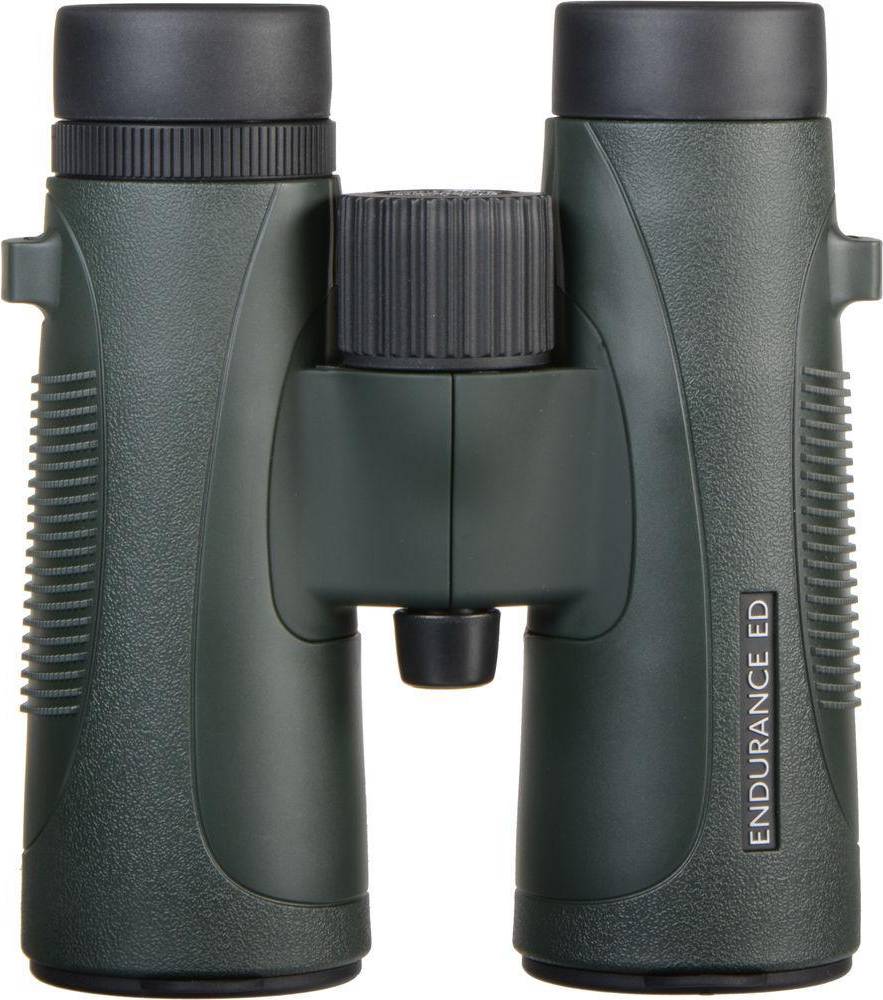
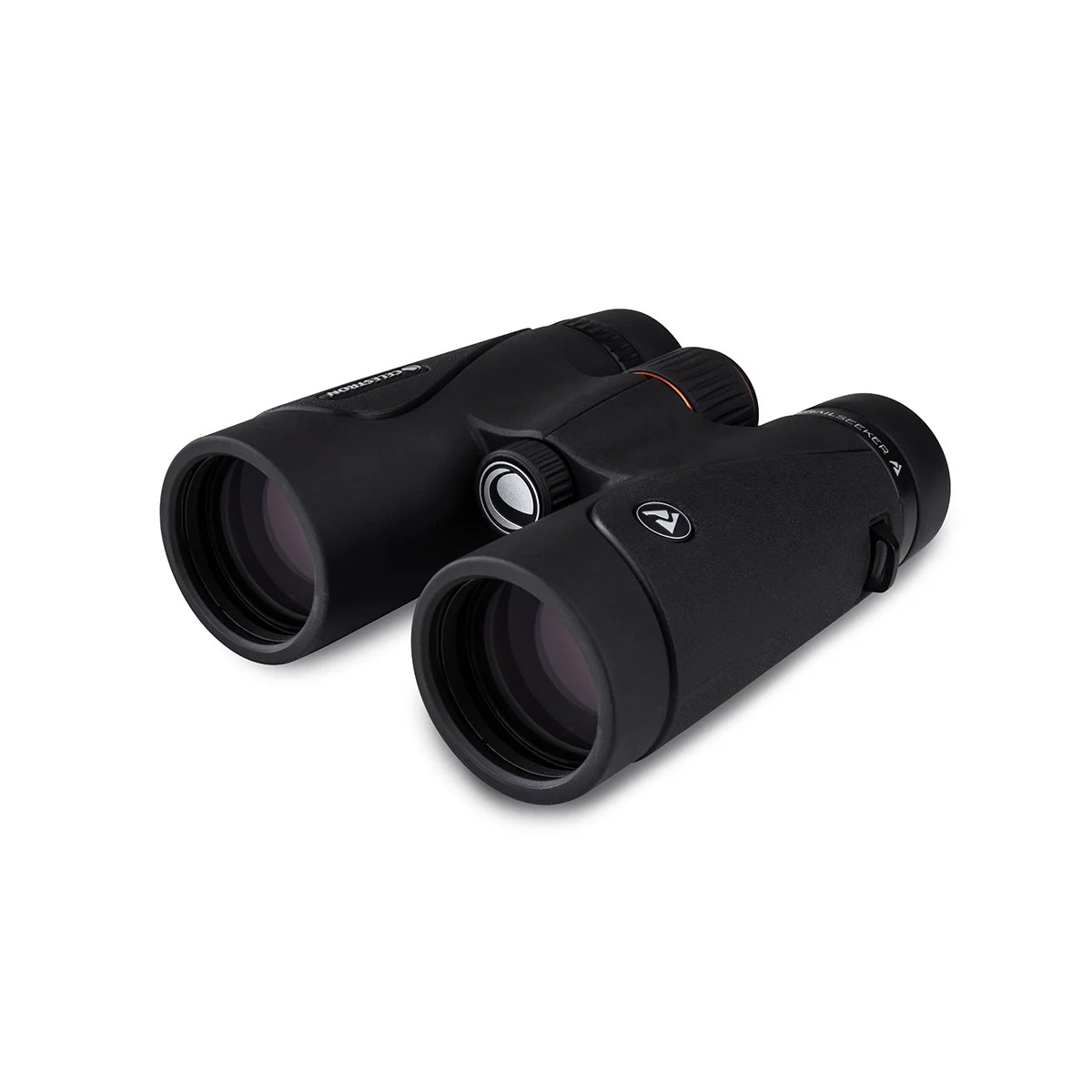
Quick take: The Celestron TrailSeeker 8x42 costs $10 less; the Hawke Endurance ED 10x42 reaches farther (10x vs 8x); the Celestron TrailSeeker 8x42 has a wider field of view (426 vs 330 ft @ 1000 yds).
Field of view, to scale
Top-down view · drawn to true scale — no exaggeration
Which one to buy
With the prices $10 apart, the warranty fine print could be a tiebreaker. Hawke's lifetime coverage on the Hawke Endurance ED 10x42 includes accidental damage, which its owners single out as rare at this price; the Celestron TrailSeeker 8x42 carries a limited lifetime warranty. Before that, though, comes a bigger choice: 10x with ED glass, or 8x with a much wider view.
The Endurance ED's case rests on its glass. Owners and testers report color fringing control that hangs with pricier binoculars, bright, true-to-life color in overcast weather, and only slight softening at the extreme edge. Its weak points are a 330 ft field that owners call average for a 10x42, 15mm of eye relief that is tight for glasses, and a focus wheel that arrives stiff and takes about two full turns from close focus to infinity.
The TrailSeeker answers with geometry. It shows 426 ft at 1000 yards, with 17mm of eye relief and a 5.25mm exit pupil against 4.2mm, in a magnesium body with phase- and dielectric-coated prisms. What it lacks is ED glass, the part that controls color fringing on backlit subjects. For woodland birding, glasses wearers and anyone new to binoculars, the Celestron's wider, easier view counts for more. For open-country glassing and gray-weather hunting, the Hawke's reach, color control and accident cover make it the stronger buy.
Hawke Endurance ED 10x42
Best for hunters and open-country glassers who want ED color control and a warranty that covers accidents, and who don't wear eyeglasses to glass.
Celestron TrailSeeker 8x42
For woodland birding and eyeglass wearers, the wider 426 ft view and 17mm eye relief make it the easier binocular to live with.
| Spec | Hawke Endurance ED 10x42 | Celestron TrailSeeker 8x42 |
|---|---|---|
| Approx. price | ~$330 | ~$320 |
| Use case | General Purpose | General Purpose |
| Magnification | 10x | 8x |
| Objective | 42mm | 42mm |
| Exit pupil | 4.2mm | 5.25mm |
| Field of view | 330 ft @ 1000 yds | 426 ft @ 1000 yds |
| Eye relief | 15mm | 17mm |
| Close focus | 6.6 ft | 6.5 ft |
| Prism | Roof | Roof |
| Glass | ED | Standard |
| Coating | Fully Multi-Coated | Fully Multi-Coated |
| Weight | 24.9 oz | 23.1 oz |
| Dimensions | 5.6 x 5.0 in | 5.5 x 5.1 in |
| Warranty | Lifetime | Limited Lifetime |
Feature comparison
Hawke Endurance ED 10x42
- ✓ED Glass
- ✓Phase-Corrected
- ✓Dielectric Coating
- ✓Waterproof
- ✓Fogproof
- ✗Image Stabilized
- ✓Tripod Adaptable
- ✗Magnesium Body
- ✗Locking Diopter
Celestron TrailSeeker 8x42
- ✗ED Glass
- ✓Phase-Corrected
- ✓Dielectric Coating
- ✓Waterproof
- ✓Fogproof
- ✗Image Stabilized
- ✓Tripod Adaptable
- ✓Magnesium Body
- ✗Locking Diopter
What birders say
Hawke Endurance ED 10x42
- ✓ED glass genuinely earns its badge at this price - expert testing found color fringing control on par with binoculars costing considerably more
- ✓Bright, true-to-life color rendition that holds up in dull overcast conditions, which is exactly where the ED glass advantage shows most
- ✓Lifetime warranty that includes accidental damage cover - a level of protection almost nobody else offers at $250
- ✓Lightweight magnesium chassis at around 24.9 oz makes it one of the lighter full-size 42mm binoculars in its bracket
- ✓Edge blurring is minimal for the class - reviewers found the sweet spot generous with only slight softening at the extreme edge
- ✓Smooth, grooved 31mm focus wheel that works well with gloves on
- ✓Hunters and shooters on multiple forums repeatedly describe it as priced well below comparable glass from bigger-name brands
- ✓Above-average accessory kit: semi-rigid carry case, tethered objective covers, and rain guard included
- ✗330 ft field of view is average for a 10x42 - class leaders in this bracket give you 340-360 ft
- ✗Focus wheel arrives slightly stiff out of the box and takes about two full turns from close focus to infinity, which slows fast target reacquisition
- ✗Diopter adjustment has no lock, though it does resist accidental movement
- ✗A thin line of color fringing is still visible on high-contrast edges - ED glass reduces it, but doesn't eliminate it
- ✗In bright midday light, reviewers found limited optical advantage over Hawke's cheaper Nature-Trek line - you're mostly paying for low-light and CA performance
- ✗The $250 bracket is brutally competitive: Vortex Diamondback HD and Nikon Monarch M5 fight for the same buyer
- ✗Neck strap is basic - no curved contour or quick-release clips like some rivals include
- ✗Rubber armor is on the thin, modest side for the price tier according to hands-on reviews
Hawke Endurance ED 10x42 vs Celestron TrailSeeker 8x42: common questions
Does the Hawke Endurance ED 10x42 or the Celestron TrailSeeker 8x42 work better with glasses?▾
The TrailSeeker, on paper. It has 17mm of eye relief against the Hawke's 15mm, and owners of the Hawke describe its eye relief as workable but not generous, with some glasses wearers losing the edge of the view.
Is the Hawke Endurance ED 10x42's ED glass worth giving up the TrailSeeker 8x42's wider field?▾
If you often view birds or game against bright sky or in gray weather, it can be, since owners and testers rate the Hawke's fringing control on par with pricier binoculars. But its 330 ft field against the TrailSeeker's 426 ft makes finding and following moving birds harder.