Celestron SkyMaster Pro 15x70 vs Celestron TrailSeeker 8x42
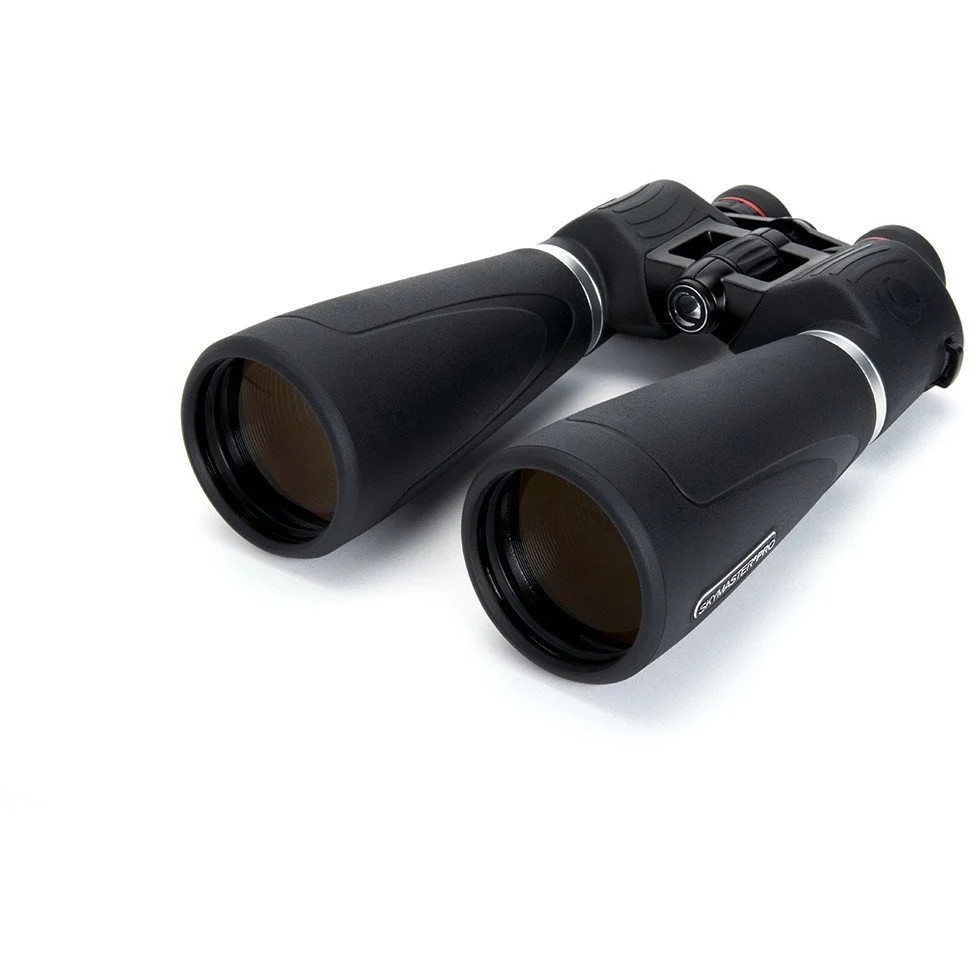
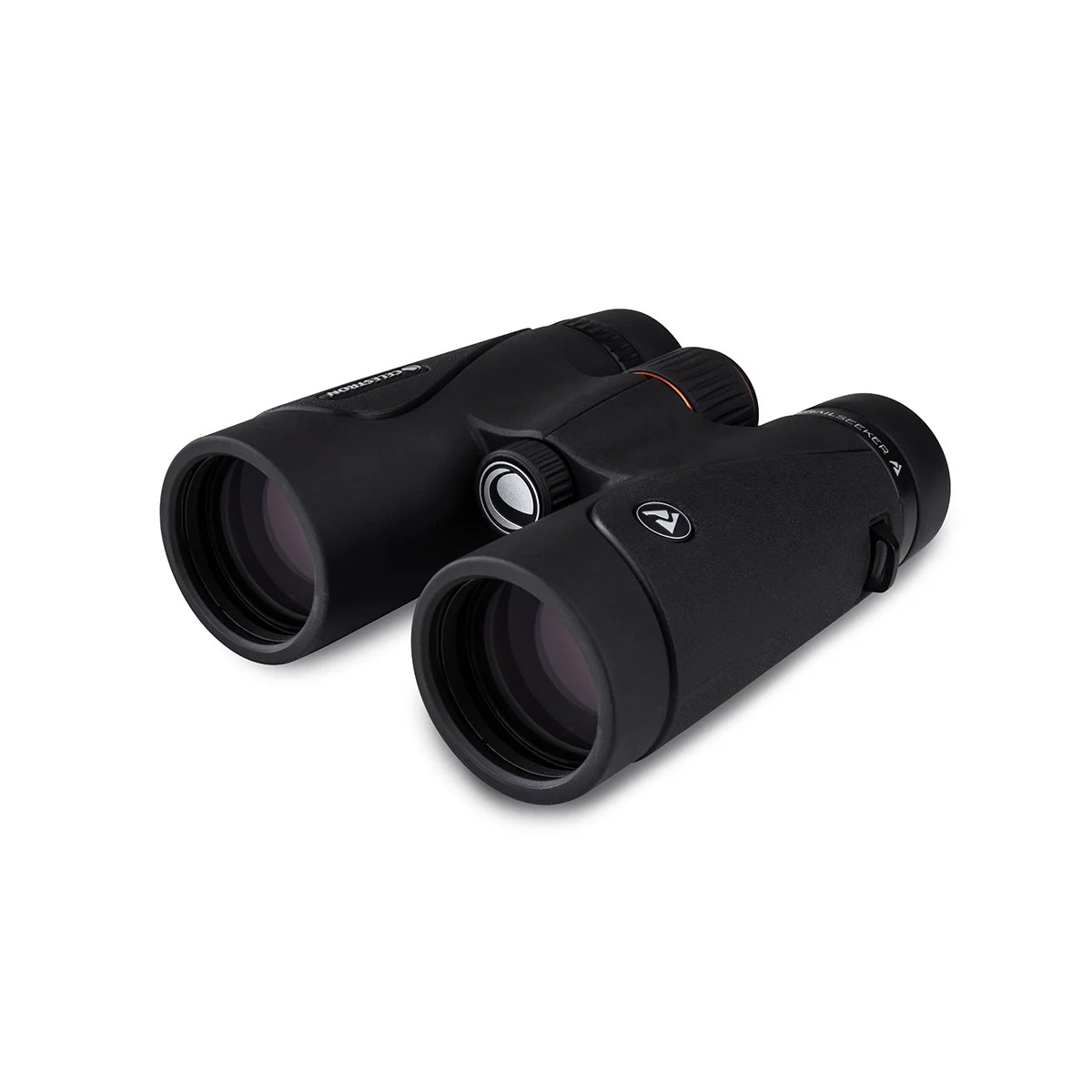
Quick take: The Celestron SkyMaster Pro 15x70 costs $40 less; the Celestron SkyMaster Pro 15x70 reaches farther (15x vs 8x); the Celestron TrailSeeker 8x42 has a wider field of view (426 vs 231 ft @ 1000 yds).
Field of view, to scale
Top-down view · drawn to true scale — no exaggeration
Which one to buy
Shopping these against each other usually comes down to one question: is the binocular for the night sky or for daytime walks? The Celestron SkyMaster Pro 15x70 is built for the first. Its 70mm objectives gather far more light than any 42mm, it weighs 51 oz, and it ships with a tripod adapter plus a removable rail for a red-dot finder. It won't focus closer than 49.2 ft, so anything near you is out.
The Celestron TrailSeeker 8x42 is the carry-everywhere option for $40 more. At 23.1 oz it hangs comfortably from a neck strap, its 426 ft field is nearly double the Pro's 231, and a 6.5 ft close focus covers garden birds and butterflies. Phase and dielectric coatings on the roof prisms keep the view bright, though this is the standard-glass TrailSeeker, not the ED version.
For a stargazer with a tripod, the extra aperture outweighs anything the 8x42 offers. For birding, hiking or travel, the 15x70 is the wrong tool however good its optics are, and the TrailSeeker is the one that will leave the house.
Celestron SkyMaster Pro 15x70
For astronomy on a tripod: 70mm of aperture, a finder rail and a waterproof body, and it costs less than the 8x42.
Celestron TrailSeeker 8x42
Best as the daytime, handheld binocular for birding, hiking and travel, where weight and a wide field matter more than light grasp.
| Spec | Celestron SkyMaster Pro 15x70 | Celestron TrailSeeker 8x42 |
|---|---|---|
| Approx. price | ~$280 | ~$320 |
| Use case | Astronomy | General Purpose |
| Magnification | 15x | 8x |
| Objective | 70mm | 42mm |
| Exit pupil | 4.6mm | 5.25mm |
| Field of view | 231 ft @ 1000 yds | 426 ft @ 1000 yds |
| Eye relief | 17mm | 17mm |
| Close focus | 49.2 ft | 6.5 ft |
| Prism | Porro | Roof |
| Glass | BaK-4 | Standard |
| Coating | Fully Multi-Coated | Fully Multi-Coated |
| Weight | 51 oz | 23.1 oz |
| Dimensions | 10.9 x 8.7 in | 5.5 x 5.1 in |
| Warranty | Limited Lifetime | Limited Lifetime |
Feature comparison
Celestron SkyMaster Pro 15x70
- ✗ED Glass
- ✗Phase-Corrected
- ✗Dielectric Coating
- ✓Waterproof
- ✓Fogproof
- ✗Image Stabilized
- ✓Tripod Adaptable
- ✗Magnesium Body
- ✗Locking Diopter
Celestron TrailSeeker 8x42
- ✗ED Glass
- ✓Phase-Corrected
- ✓Dielectric Coating
- ✓Waterproof
- ✓Fogproof
- ✗Image Stabilized
- ✓Tripod Adaptable
- ✓Magnesium Body
- ✗Locking Diopter
Celestron SkyMaster Pro 15x70 vs Celestron TrailSeeker 8x42: common questions
Can the Celestron TrailSeeker 8x42 handle stargazing instead of the SkyMaster Pro 15x70?▾
For casual sweeps of the Moon and bright star fields, yes, and its 5.25mm exit pupil keeps the view bright. It cannot match the light the SkyMaster Pro's 70mm objectives collect on faint clusters and nebulae, and 8x shows much less lunar detail than 15x.
Is the SkyMaster Pro 15x70 usable handheld like the TrailSeeker 8x42?▾
Not for long. At 51 oz and 15x, the SkyMaster Pro is meant to sit on a tripod using its built-in adapter, while the TrailSeeker at 23.1 oz is sized to be carried and held all day.