Celestron Nature DX 8x42 vs Kowa YF II 8x30
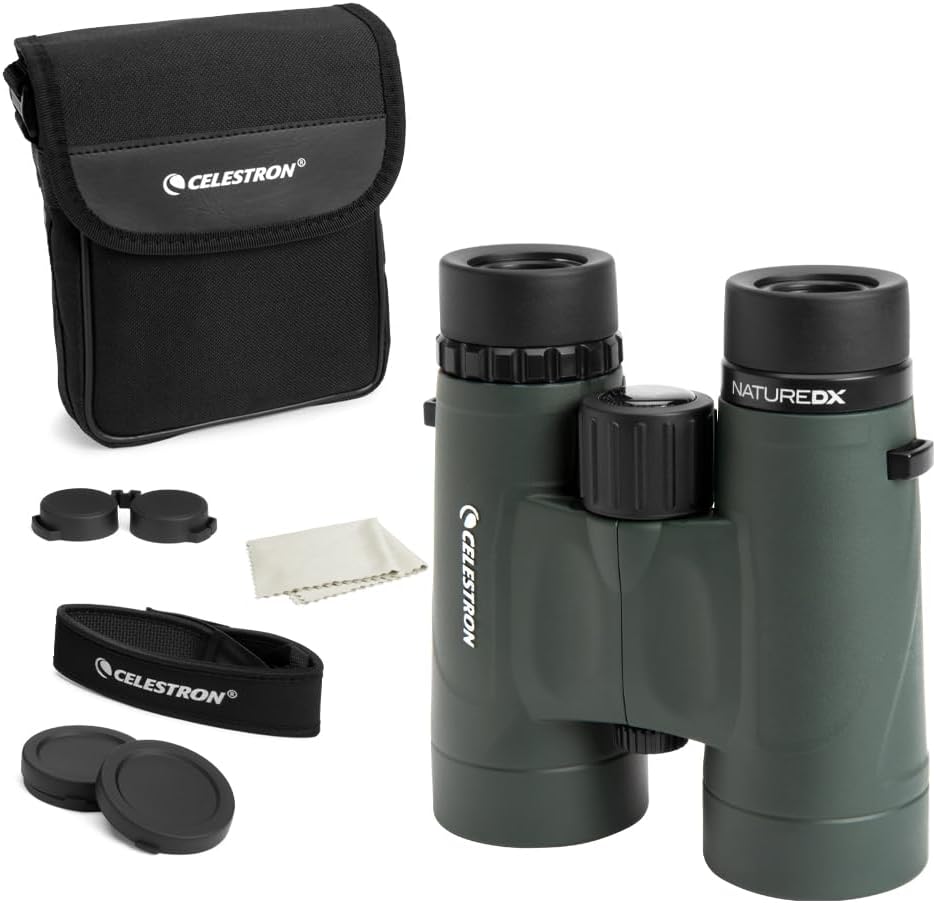
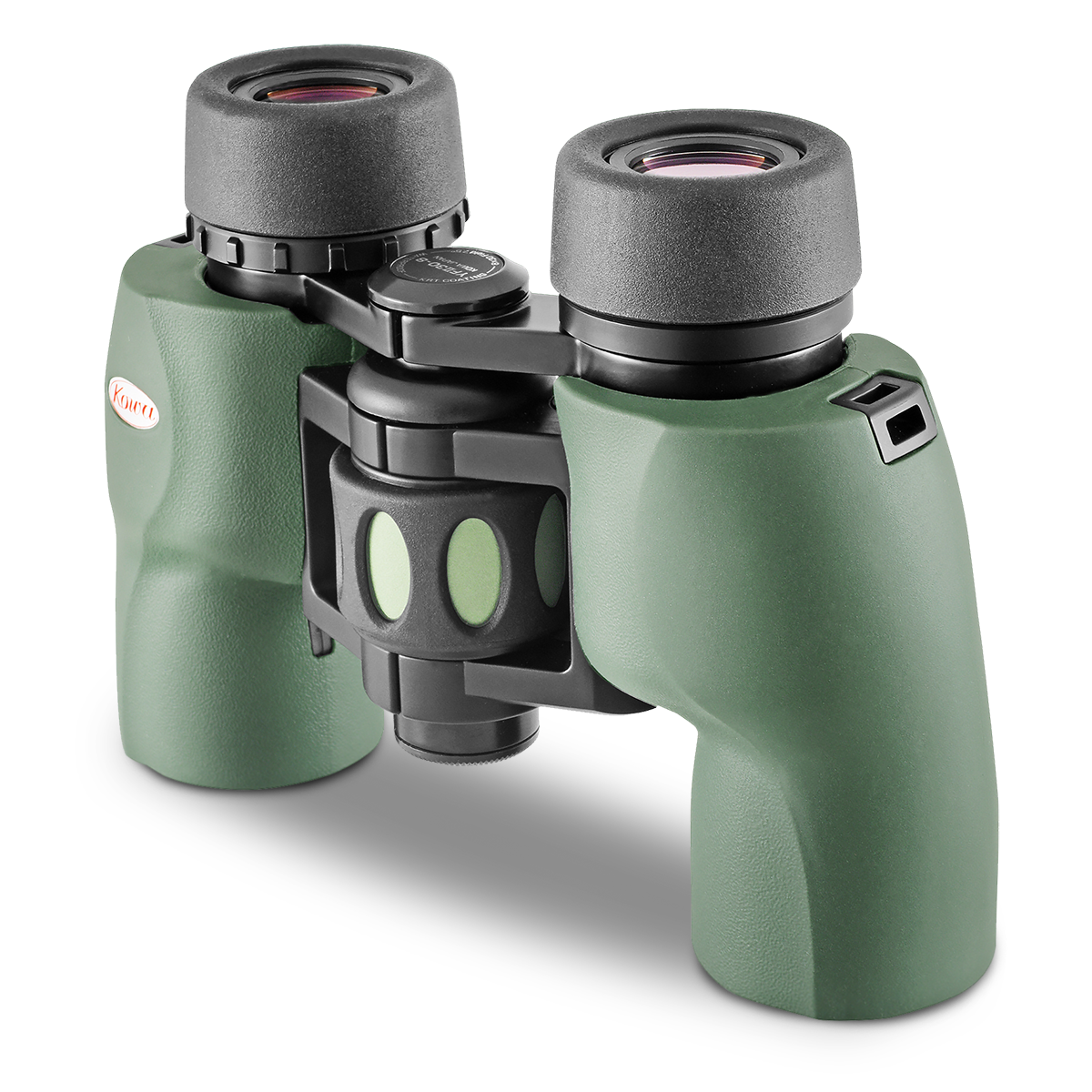
Quick take: The Kowa YF II 8x30 has a wider field of view (393 vs 388 ft @ 1000 yds); the Celestron Nature DX 8x42 gathers more light with a larger 42mm objective.
Field of view, to scale
Top-down view · drawn to true scale — no exaggeration
Which one to buy
An odd spec decides this for some families: the Kowa YF II 8x30's hinge closes to a 50mm interpupillary distance, so it fits children's faces that most adult binoculars can't, and owners recommend it constantly as a first binocular for kids. The catch is that it is discontinued, so you are buying remaining stock, while the Celestron Nature DX 8x42 is still sold at the same $149.
Optically the Kowa has a strong following. Owners describe a tack-sharp center with contrast and color that embarrass similarly priced roofs, the 3D depth of a porro, and a 393 ft field. At 16.7 oz against 24.9 oz it is far lighter, and it is waterproof and nitrogen purged with a hydrophobic lens coating. Its costs are a 3.75mm exit pupil against 5.25mm that dims at dawn and dusk, some glare against low sun, a bulkier porro shape, and a rated close focus of 16.4 ft, though testers measured it closer.
The Nature DX is the more rounded single binocular. Owners praise its 6.5 ft close focus for butterflies and feeder birds, its 388 ft view, waterproof sealing and 17.5mm of eye relief against the Kowa's 16mm. Its signature complaint is kidney-bean blackouts until you learn eye placement, plus soft edges and ordinary fringing.
For an adult's first or only binocular, the Nature DX is the safer buy: brighter at dusk, closer-focusing, easier with glasses and still in production. The Kowa is the one for a child, or for anyone who values a lighter, sharper daytime view and can still find one new.
Celestron Nature DX 8x42
The safer first or only binocular for adults: brighter at dusk, closer-focusing, better with glasses and still in production.
Kowa YF II 8x30
Best for children and small faces, or anyone wanting a light, sharp daytime porro, while new stock lasts.
| Spec | Celestron Nature DX 8x42 | Kowa YF II 8x30 |
|---|---|---|
| Approx. price | ~$149 | ~$149 |
| Use case | Birding | Birding |
| Magnification | 8x | 8x |
| Objective | 42mm | 30mm |
| Exit pupil | 5.25mm | 3.75mm |
| Field of view | 388 ft @ 1000 yds | 393 ft @ 1000 yds |
| Eye relief | 17.5mm | 16mm |
| Close focus | 6.5 ft | 16.4 ft |
| Prism | Roof | Porro |
| Glass | Standard | Eco-Glass |
| Coating | Fully Multi-Coated | Fully Multi-Coated |
| Weight | 24.9 oz | 16.7 oz |
| Dimensions | 5.3 x 5.0 in | 6.3 x 4.5 in |
| Warranty | Limited Lifetime | Limited Lifetime |
Feature comparison
Celestron Nature DX 8x42
- ✗ED Glass
- ✓Phase-Corrected
- ✗Dielectric Coating
- ✓Waterproof
- ✓Fogproof
- ✗Image Stabilized
- ✓Tripod Adaptable
- ✗Magnesium Body
- ✗Locking Diopter
Kowa YF II 8x30
- ✗ED Glass
- ✗Phase-Corrected
- ✗Dielectric Coating
- ✓Waterproof
- ✓Fogproof
- ✗Image Stabilized
- ✗Tripod Adaptable
- ✗Magnesium Body
- ✗Locking Diopter
What birders say
Celestron Nature DX 8x42
- ✓The most-recommended first birding binocular on forums for years - a huge owner base and near-universal 'best under $110' status
- ✓Outstanding 6.5-foot close focus - butterfly, dragonfly, and feeder watchers pick it over everything else at the price
- ✓Phase-coated BaK-4 prisms and fully multi-coated optics, specs that used to cost twice as much
- ✓Genuinely waterproof and nitrogen-purged - owners report years of wet-weather use without fogging
- ✓Wide, comfortable 7.4-degree field of view that makes finding and tracking birds easy for beginners
- ✓Compact, lightweight body with grippy armor that suits smaller hands better than porro rivals like the Aculon A211
- ✓Pleasing, slightly warm color rendition many owners prefer for birding
- ✓Backed by Celestron's limited lifetime warranty and a massive community of long-term owners for support
- ✗Kidney-bean blackouts are the signature complaint - eye placement is fussy until you learn the sweet spot
- ✗Not as bright as the best budget roofs at dawn and dusk - the Nikon Prostaff P3 edges it in low light
- ✗Edge softness is obvious in the outer 25-30% of the field
- ✗Chromatic aberration shows on high-contrast subjects; the ED version exists for a reason
- ✗Focus wheel on some units feels stiff or slightly uneven out of the box
- ✗Included case and strap are flimsy, and the case isn't waterproof even though the binocular is
- ✗Diopter adjustment is unlockable and easy to knock out of position
- ✗Occasional sample variation and collimation issues reported - buy from a retailer with easy returns
Kowa YF II 8x30
- ✓Genuinely sharp center field - reviewers describe the view as 'tack sharp' with contrast and color rendering that embarrasses similarly priced roof prisms
- ✓Classic porro-prism depth: the wide-set objectives give a 3D quality to the image that no budget roof can match
- ✓Wide 393 ft field of view (7.5 degrees) makes finding and tracking birds easy for beginners
- ✓Feathery 16.7 oz - one of the lightest mid-size binoculars anywhere, effortless for all-day carry
- ✓Interpupillary distance closes down to 50mm, so it fits kids and smaller faces - forums constantly recommend it as a first binocular for children
- ✓Fully waterproof and nitrogen-purged with Kowa's KR hydrophobic lens coating - real weather sealing is rare at this price
- ✓BaK-4 prisms and fully multi-coated optics, with a smooth, well-damped focus wheel and twist-up eyecups that lock firmly in place
- ✓Close focus measured around 2.9m in testing - far better than the conservative 5m spec, good enough for feeder watching
- ✗Some light leakage around the exit pupils can produce glare when viewing toward a low sun or in strong backlight
- ✗Mild field curvature softens the outer edges of that wide field
- ✗16mm eye relief works for most glasses wearers but is tight with thicker frames
- ✗30mm objectives and a 3.75mm exit pupil give up real brightness to an 8x42 at dawn and dusk
- ✗Minor internal reflections show up on bright light sources at night, so it's only a casual astronomy tool
- ✗Budget accessory kit - the case is roomy but has no exterior pockets, and the strap is basic
- ✗The traditional porro shape is bulkier to pack than a slim roof or reverse-porro compact
- ✗Light plastic-bodied build keeps weight down but doesn't feel as tank-like as metal-bodied porros of old
Celestron Nature DX 8x42 vs Kowa YF II 8x30: common questions
Is the Kowa YF II 8x30 or the Celestron Nature DX 8x42 better for a child?▾
The Kowa. Its hinge closes to a 50mm interpupillary distance, so it fits small faces, and at 16.7 oz it is light enough for small hands. Owners recommend it often as a first binocular for kids. It is discontinued, so check stock first.
Which is brighter at dusk, the Nature DX 8x42 or the Kowa YF II 8x30?▾
The Nature DX, with a 5.25mm exit pupil against the Kowa's 3.75mm. Kowa owners call theirs a fair-weather, daytime instrument that dims noticeably at dawn and dusk compared with an 8x42.
How close does the Kowa YF II 8x30 focus compared with the Nature DX 8x42?▾
The Kowa is rated at 16.4 ft, though testers measured it noticeably closer. The Nature DX focuses to 6.5 ft, and its owners pick it for butterflies and feeder birds for exactly that reason.