Celestron Nature DX 10x42 vs Celestron Nature DX ED 8x42
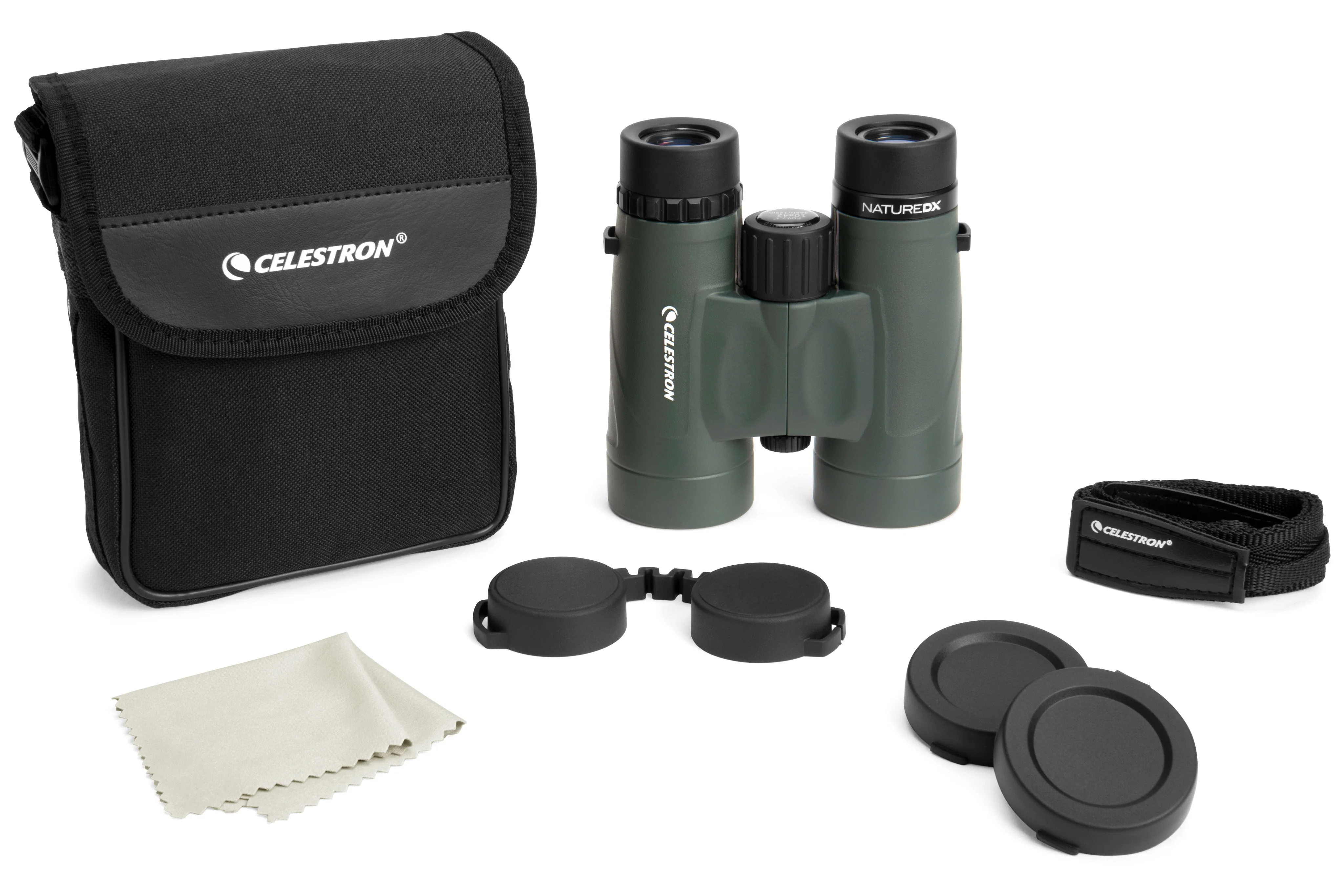
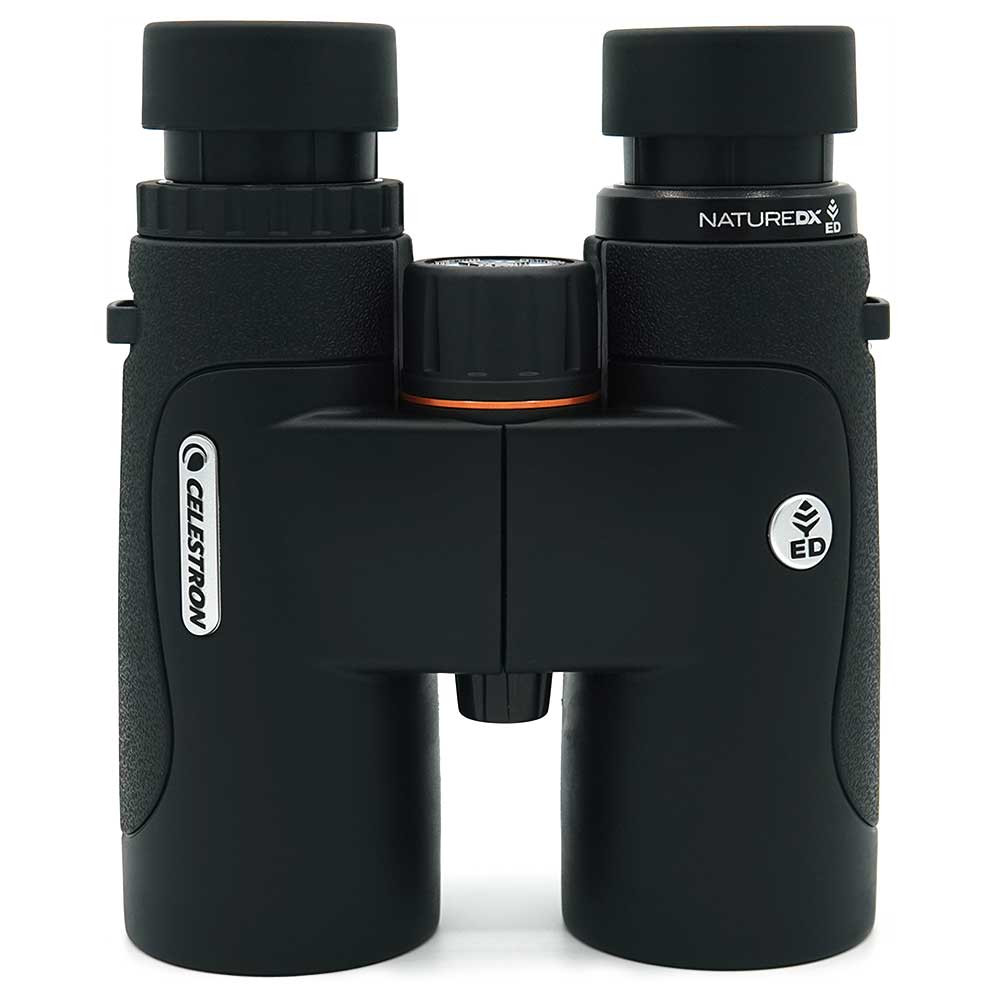
Quick take: The Celestron Nature DX 10x42 costs $73 less; the Celestron Nature DX 10x42 reaches farther (10x vs 8x); the Celestron Nature DX ED 8x42 has a wider field of view (393 vs 304 ft @ 1000 yds).
Field of view, to scale
Top-down view · drawn to true scale — no exaggeration
Which one to buy
The Celestron Nature DX ED 8x42 changes two things at once over the Celestron Nature DX 10x42, the glass and the magnification, and for $73 more both work in its favor. ED glass cleans up fringing on high-contrast subjects and, owners say, holds detail better in tricky light. The 8x format brings a 393 ft field against 304 ft, a 5.25mm exit pupil against 4.2mm, and 17.8mm of eye relief against 14mm. That last gap is the big one: 10x42 owners widely report vignetting and lost field with glasses, while ED owners call theirs one of the most eyeglass-friendly budget binoculars around.
The ED is not perfect. Its owners' recurring complaint is the eyecups, which testers found narrow, hard, loose and prone to collapsing, along with a sluggish focus wheel and detail falling apart on backlit birds. It is also the heavier one, 24.9 oz against 22.2 oz.
Owners of the 10x42 like its natural color, minimal fringing in daylight, smooth eyecups with an intermediate stop, and a precise if slow focus wheel, and the two share 6.5 ft close focus, waterproofing and a Limited Lifetime warranty. Its complaints are the ones the specs predict: tight eye relief, a narrow field for birds in flight, and dimming at dawn and dusk.
For birding, and for anyone in glasses, the ED 8x42 is the better binocular and worth the extra money. The 10x42 makes sense only for a budget-capped buyer who wants reach for open country and doesn't wear glasses.
Celestron Nature DX 10x42
Only for a budget-capped buyer without glasses who wants 10x reach for open country, stadiums or travel.
Celestron Nature DX ED 8x42
For birders and eyeglass wearers, the extra $73 buys ED glass, a much wider view and eye relief that works with glasses.
| Spec | Celestron Nature DX 10x42 | Celestron Nature DX ED 8x42 |
|---|---|---|
| Approx. price | ~$157 | ~$230 |
| Use case | General Purpose | Birding |
| Magnification | 10x | 8x |
| Objective | 42mm | 42mm |
| Exit pupil | 4.2mm | 5.25mm |
| Field of view | 304 ft @ 1000 yds | 393 ft @ 1000 yds |
| Eye relief | 14mm | 17.8mm |
| Close focus | 6.5 ft | 6.5 ft |
| Prism | Roof | Roof |
| Glass | Standard | ED |
| Coating | Fully Multi-Coated | Fully Multi-Coated |
| Weight | 22.2 oz | 24.9 oz |
| Dimensions | 5.5 x 5.0 in | 5.6 x 5.0 in |
| Warranty | Limited Lifetime | Limited Lifetime |
Feature comparison
Celestron Nature DX 10x42
- ✗ED Glass
- ✓Phase-Corrected
- ✗Dielectric Coating
- ✓Waterproof
- ✓Fogproof
- ✗Image Stabilized
- ✓Tripod Adaptable
- ✗Magnesium Body
- ✗Locking Diopter
Celestron Nature DX ED 8x42
- ✓ED Glass
- ✓Phase-Corrected
- ✗Dielectric Coating
- ✓Waterproof
- ✓Fogproof
- ✗Image Stabilized
- ✓Tripod Adaptable
- ✗Magnesium Body
- ✗Locking Diopter
What birders say
Celestron Nature DX 10x42
- ✓The default 'best cheap binocular' answer on birding forums — the Nature DX line is probably the most-recommended sub-$150 full-size binocular anywhere
- ✓Expert reviewers rate the line as one of the best values in its class, with build quality that 'looks and feels far more expensive than it actually is'
- ✓Colors render natural without artificial tints, and fringing is minimal unless you deliberately hunt for it at high-contrast edges
- ✓Phase-corrected BaK-4 prisms and fully multi-coated optics — features that were $300-binocular territory not long ago
- ✓Compact for a full-size 42mm at about 25 ounces, with finger indents and textured thumb areas that reviewers praise
- ✓Soft twist-up eyecups with an intermediate stop work smoothly, and the low-geared focus wheel allows precise fine-tuning even in gloves
- ✓Fully waterproof and nitrogen purged at a price where those features often get faked
- ✓6.5-foot close focus is genuinely good for casual butterfly and feeder viewing
- ✗Just 14mm of eye relief on the 10x42 — eyeglass wearers widely report vignetting and lost field, and it's the single biggest reason forum users steer glasses wearers to the 8x42 instead
- ✗304-foot field of view is narrow, making birds in flight and small fast passerines harder to find and track at 10x
- ✗Standard (non-ED) glass shows its limits in dim light — detail fades at dawn and dusk faster than the ED version or pricier rivals
- ✗4.2mm exit pupil dims the image earlier in the evening than the 8x42's
- ✗Polycarbonate chassis and no diopter lock — the diopter can drift, and scale markings are minimal
- ✗Included neck strap is thin and unpadded, and the soft case is lightly padded at best
- ✗Shallow objective lens recession offers less protection from rain and stray light than deeper-set designs
- ✗The 720-degree low-geared focus takes a lot of turning to run from close focus to infinity — precise, but slow when a bird pops up at a different distance
Celestron Nature DX ED 8x42
- ✓One of the cheapest routes to genuine ED glass — the standard forum answer to 'best binocular under $200' alongside the Vortex Crossfire HD
- ✓Cornell's All About Birds testers rated it a 'Solid Choice,' describing a very sharp image with good contrast and colorful, accurate rendering
- ✓Resolved subtle field marks in testing — warm yellow throat and fine contrasts on a Northern Parula — the kind of detail budget glass usually smears
- ✓BAK-4 prisms and optics that one test lab said rival models costing more than twice as much
- ✓Wide-ish 393-foot field of view and 17.8mm of eye relief — one of the most eyeglass-friendly budget binoculars around
- ✓Close focus measured around 7.6 feet in independent testing, fine for butterflies and feeder birds
- ✓Lighter than the average 8x42 despite the ED upgrade
- ✓Waterproof, nitrogen purged, and phase-coated — the full checklist at a price where corners usually get cut
- ✗Eyecups are the recurring complaint: testers found them narrow, hard against the eye, very loose in action, and prone to collapsing under pressure
- ✗Focus wheel described as sluggish — takes effort to get moving and to stop exactly where you want
- ✗Detail visibly suffers in backlit conditions; testers struggled with fine markings on backlit warblers
- ✗Low-light performance still trails mid-tier glass — one lab measured it noticeably dimmer than premium competitors at dusk
- ✗Unergonomic balance point and average construction feel noted by reviewers, with hinges less sturdy than higher-end options
- ✗Rubber armor feels lower-grade than pricier models
- ✗Included neck strap is basic non-padded webbing that testers called uncomfortable
- ✗Some testers found the body a bit narrow for larger faces, adding to daily-use discomfort
Celestron Nature DX 10x42 vs Celestron Nature DX ED 8x42: common questions
Is the Celestron Nature DX ED 8x42 worth $73 more than the Nature DX 10x42?▾
For most buyers, yes. You get ED glass, a 393 ft field against 304 ft, and 17.8mm of eye relief against 14mm. Owners of the 10x42 themselves point to the ED version for better dusk performance if the budget stretches.
Can I use the Nature DX 10x42 with glasses, or do I need the Nature DX ED 8x42?▾
The 10x42's 14mm of eye relief is its weakest spec, and owners in glasses commonly lose the outer field. The ED 8x42's 17.8mm lets most glasses wearers see the full view, so it is the one to get if you wear them.
What are the eyecup problems on the Celestron Nature DX ED 8x42?▾
Owners and testers describe them as narrow, hard against the eye, loose in action and prone to collapsing under pressure. Glasses wearers notice it less, since they don't press the cups into their faces, but others find it a daily annoyance.