Canon 10x42 L IS WP vs Zeiss SFL 8x30
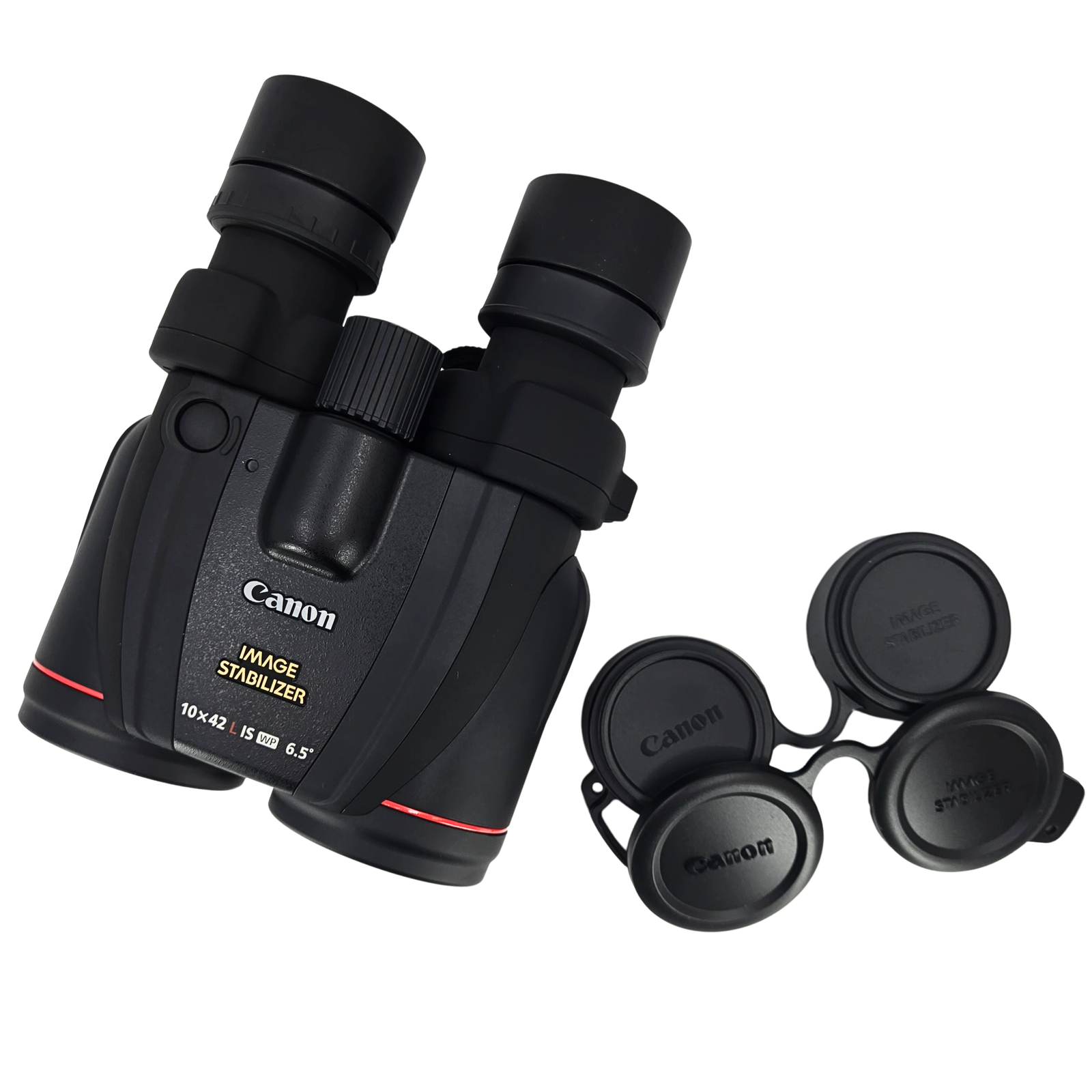
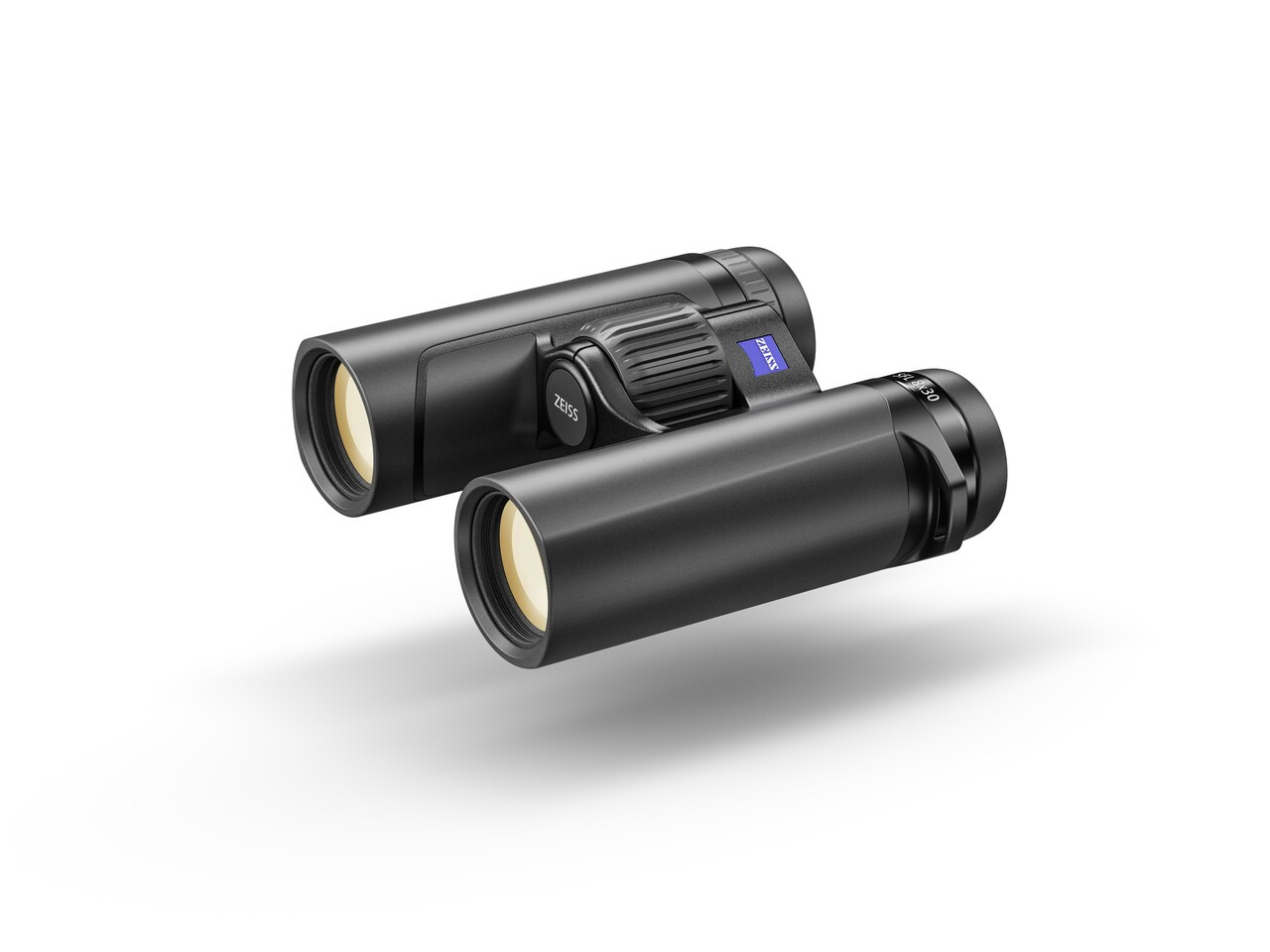
Quick take: The Zeiss SFL 8x30 costs $99 less; the Canon 10x42 L IS WP reaches farther (10x vs 8x); the Zeiss SFL 8x30 has a wider field of view (426 vs 340 ft @ 1000 yds).
Field of view, to scale
Top-down view · drawn to true scale — no exaggeration
Which one to buy
At 16.2 oz against 39.2 oz, the Zeiss SFL 8x30 weighs well under half what the Canon 10x42 L IS WP does, and that tells you most of what separates them. The Canon is about seeing the most detail; the Zeiss is about carrying a superb view all day. They are $99 apart.
Canon owners describe stabilization that simply stops 10x shake, revealing plumage, lunar craters and star pairs no unstabilized binocular holds steady, with center sharpness compared to the Swarovski EL and a field corrected nearly to the edge. It is fully waterproof. The costs are the weight, which owners say tires the neck within hours, hard rubber eyecups, eye relief that pinches glasses, a slow focuser, AA batteries that drain in the cold, and a 1 Year warranty on an electronic device.
SFL owners describe a 426 ft field against the Canon's 340 ft, tack-sharp centers, the best focuser in the compact class, 4.9 ft close focus, and an eye box comfortable enough that glasses wearers see the whole field with its 18mm of eye relief. Their complaints are edge chromatic aberration and softening outside the central part of the view, a 3.75mm exit pupil that fades before a 42mm in deep dusk, and a body so light it is harder to hold steady in wind. Zeiss backs it with a Transferable Lifetime warranty.
For birders who walk, travel or wear glasses, the SFL is the better binocular to own. The Canon earns its weight for sea watching, car birding and astronomy, where resolved detail matters more than comfort and you rarely carry it far.
Canon 10x42 L IS WP
Worth the weight for sea watchers, car birders and astronomers who want the most resolved detail from a handheld binocular.
Zeiss SFL 8x30
For birders who walk all day, travel or wear glasses: a wide, sharp, comfortable view at 16.2 oz with a lifetime warranty.
| Spec | Canon 10x42 L IS WP | Zeiss SFL 8x30 |
|---|---|---|
| Approx. price | ~$1,599 | ~$1,500 |
| Use case | Birding | Birding |
| Magnification | 10x | 8x |
| Objective | 42mm | 30mm |
| Exit pupil | 4.2mm | 3.75mm |
| Field of view | 340 ft @ 1000 yds | 426 ft @ 1000 yds |
| Eye relief | 16mm | 18mm |
| Close focus | 8.2 ft | 4.9 ft |
| Prism | Roof | Roof |
| Glass | HD | UHD |
| Coating | Fully Multi-Coated | ZEISS T* Multi-Layer |
| Weight | 39.2 oz | 16.2 oz |
| Dimensions | 5.9 x 5.1 in | 4.7 x 4.2 in |
| Warranty | 1 Year | Transferable Lifetime |
Feature comparison
Canon 10x42 L IS WP
- ✗ED Glass
- ✓Phase-Corrected
- ✓Dielectric Coating
- ✓Waterproof
- ✓Fogproof
- ✓Image Stabilized
- ✓Tripod Adaptable
- ✗Magnesium Body
- ✗Locking Diopter
Zeiss SFL 8x30
- ✗ED Glass
- ✗Phase-Corrected
- ✗Dielectric Coating
- ✓Waterproof
- ✓Fogproof
- ✗Image Stabilized
- ✗Tripod Adaptable
- ✓Magnesium Body
- ✗Locking Diopter
What birders say
Canon 10x42 L IS WP
- ✓Image stabilization genuinely transforms 10x viewing - press the button and the tremor vanishes, revealing lunar craters, star pairs, and feather detail that unstabilized glass simply can't hold steady enough to show
- ✓L-series optics with dual ED elements deliver center sharpness reviewers rate at true alpha level, drawing direct comparisons to the Swarovski EL
- ✓Exceptionally flat, well-corrected field - astronomy reviewers report 'stars stay stars to the field stop,' ranking it among the very best 10x42s for stargazing
- ✓False color is thoroughly suppressed, a major step over Canon's non-L stabilized models
- ✓Fully waterproof - unique among stabilized binoculars in its generation and a real differentiator for marine and foul-weather birding
- ✓Stabilizer runs near-silently with minimal artifacts, without the image 'jazzing' owners report on higher-magnification IS models
- ✓Works fine as a conventional binocular with the IS off, so dead batteries never end an outing
- ✓One owner summarized a common sentiment: 'best glass I've ever looked through in my life' - used pairs get snapped up fast
- ✗Heavy: about 2.4 pounds, nearly double some premium 10x42s - owners report neck fatigue after a few hours and choose lighter glass for long hikes
- ✗The hard rubber eyecups are the most complained-about feature, with entire forum threads devoted to fixing or replacing them
- ✗Eye relief is tight for eyeglass wearers, who report losing part of the field even with eyecups fully down
- ✗Slow focuser - about 2.25 turns to infinity makes tracking fast-moving birds frustrating
- ✗Runs on AA batteries that owners say drain quickly, especially in cold weather
- ✗The green IS indicator LED is bright enough to disturb night vision during stargazing sessions
- ✗Flat-field design produces a 'rolling ball' effect while panning that a minority of users find disorienting
- ✗It's an electronic device with a finite lifespan and repair-dependency - a long-term worry alpha-glass buyers don't have; lens caps fit poorly too
Zeiss SFL 8x30
- ✓Huge 426 ft field of view with genuinely excellent central sharpness - professional testers describe the image as bright, tack sharp, and free of any detectable color bias
- ✓Feather-light at about 16.4 oz - roughly 150g lighter than the Victory SF 8x32 - making it the compact that actually stays on your neck all day
- ✓The focuser is the consensus best in the compact class: forum owners rate it considerably better than the Nikon Monarch 8x30, Swarovski CL, Curio, and Kowa 8x33, with 1.4 smooth turns from close focus to infinity
- ✓Outstanding close focus - measured at about 4.5 ft by one review team - great for butterflies and feeder watching
- ✓Excellent glare suppression against the light and no rolling-ball effect when panning, a deliberate design outcome Zeiss engineered with published optics research in mind
- ✓Comfortable, forgiving eye box with enough eye relief for glasses wearers to see the entire field - one detailed reviewer called it the most comfortable compact he'd personally used
- ✓Wide 54-74mm interpupillary range plus grippy 'sticky' armor - fits small faces and small hands unusually well
- ✓Owners consistently praise the clean magnesium design as one of the best-looking binoculars made, with eyecups that unscrew for easy cleaning
- ✗Edge chromatic aberration is the most repeated complaint - dead branches against bright sky show significant lateral color near the field edge, and owners say at over $1,000 they expect better
- ✗The UHD glass is a deliberate step below the Victory SF's fluoride glass - expert testers rate overall CA control as fairly average for the price
- ✗Star testing reveals field curvature and edge softening outside roughly the central 60% - daytime views look clean but critical viewers notice bloating near the field stops
- ✗So light that it's harder to hold steady in strong wind than a full-size 8x42 - several owners flag that low mass cuts both ways
- ✗Thin armor and an exposed anodized metal bridge that can't be refinished if scratched - less rugged than the old Victory FL line it effectively replaces
- ✗Focus wheel feel varies by unit: some owners report a slight softness or play while others call theirs perfect - worth checking your sample
- ✗The screw-off eyecups can accidentally unscrew when twisting them up if not firmly seated
- ✗3.75mm exit pupil fades earlier at dusk than an 8x42, and it's made in Japan rather than Germany, which some owners raise regarding long-term service
Canon 10x42 L IS WP vs Zeiss SFL 8x30: common questions
Does the Canon 10x42 L IS WP show more detail than the Zeiss SFL 8x30?▾
Canon owners say its stabilization reveals detail that unstabilized glass cannot hold steady, and it has more magnification. The SFL counters with a wider, more comfortable view and a central image owners call tack sharp, but it cannot match a stabilized 10x for fine detail.
Which is better for eyeglass wearers, the Zeiss SFL 8x30 or the Canon 10x42 L IS WP?▾
The SFL. Owners say its 18mm of eye relief and forgiving eye box let glasses wearers see the whole field. Canon owners report losing part of the field with glasses even with the eyecups fully down.
How do the warranties compare on the Canon 10x42 L IS WP and the Zeiss SFL 8x30?▾
Canon's warranty is 1 year, and owners note the stabilizer is an electronic system whose long-term repair depends on parts availability. Zeiss covers the SFL with a transferable lifetime warranty, a much longer safety net.