Canon 10x42 L IS WP vs Canon 18x50 IS AW
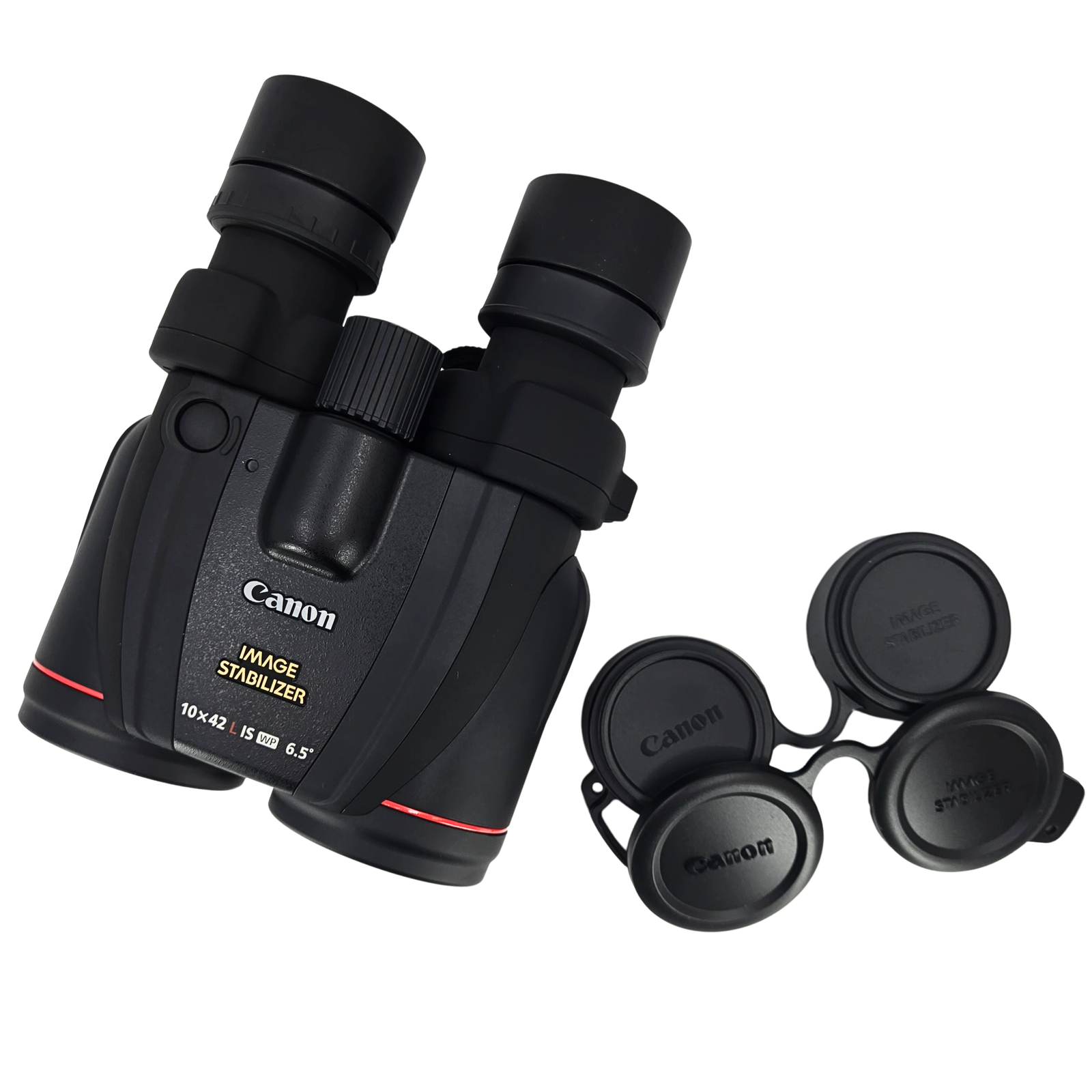
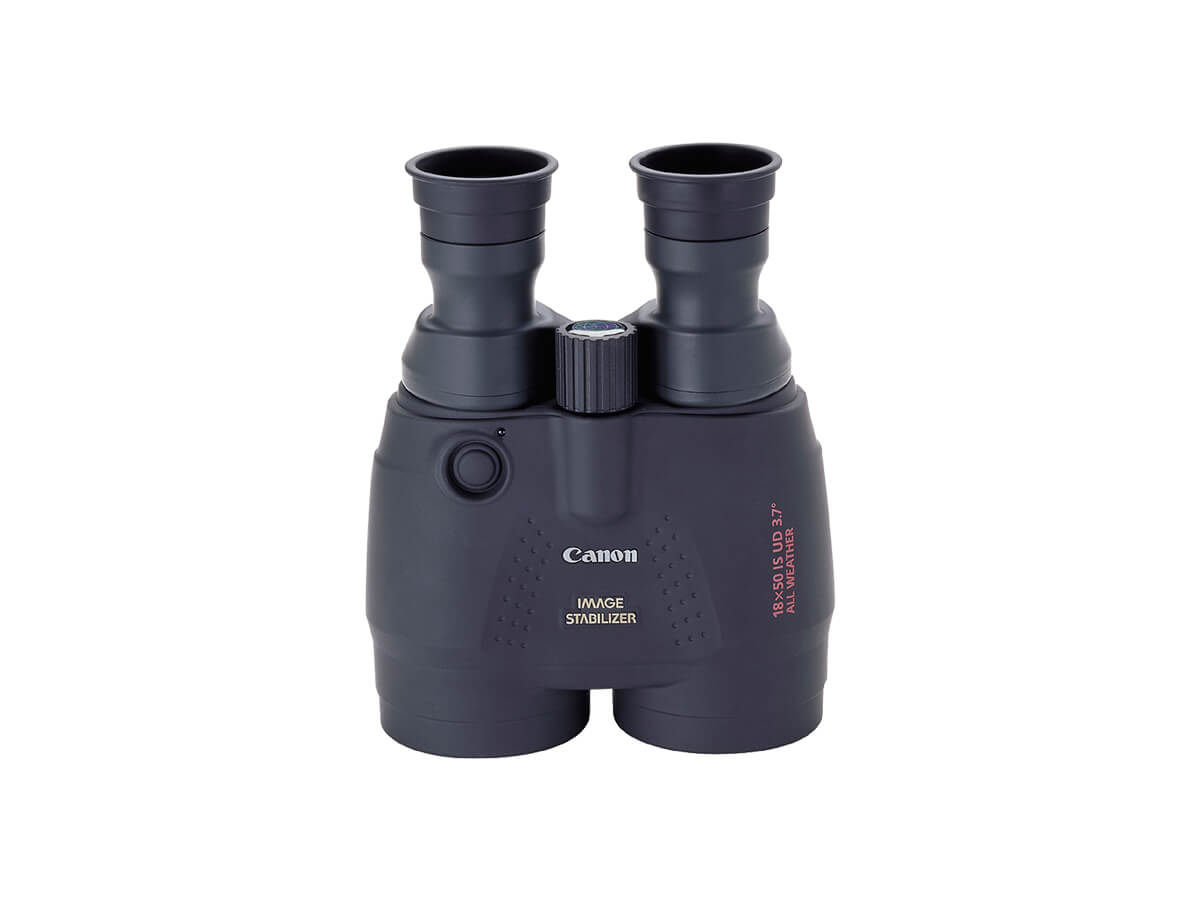
Quick take: The Canon 18x50 IS AW costs $50 less; the Canon 18x50 IS AW reaches farther (18x vs 10x); the Canon 10x42 L IS WP has a wider field of view (340 vs 194 ft @ 1000 yds).
Field of view, to scale
Top-down view · drawn to true scale — no exaggeration
Which one to buy
Canon 18x50 IS AW owners split in a way few binocular owners do: some call it a handheld spotting scope that resolves more than almost anything without a tripod, and others sell it in disappointment. The Canon 10x42 L IS WP draws no such divide; its owners treat it as a legend, and more than one calls it the best glass they've looked through. At $50 apart and within a few ounces of each other, that difference in temperament is the decision.
The 10x42 L is the easier instrument. Its stabilizer runs near-silently without artifacts, dual ED elements suppress false color almost completely, and its field stays corrected nearly to the edge, so astronomy owners rank it among the best 10x42s for the night sky. Its 340 ft field and 8.2 ft close focus make it a real birding binocular. The complaints are weight, at 39.2 oz, hard rubber eyecups that owners trade fixes for, eye relief that pinches glasses, a slow focuser and AA batteries that drain in the cold.
The 18x50 asks more of you. Its stabilization takes several seconds to settle and can stutter when panning, its 194 ft field and critical eye placement mean you need to know where your target is, depth of field at 18x demands constant refocusing, and owners measure eye relief closer to 10mm than the rated 15mm. In return, owners describe striking views of globular clusters and the Orion Nebula, and long-range birding no 10x can match. One owner reports 15 years of trouble-free use.
For most birders, and for anyone who wants one stabilized binocular, the 10x42 L is the safer buy, and the 18x50's own owners say as much. The 18x50 is a specialist's tool for long-range birding and handheld astronomy, worth it only if you will learn its quirks.
Canon 10x42 L IS WP
The better choice for birders and anyone wanting one stabilized binocular that also excels at astronomy, as long as you can carry 39.2 oz.
Canon 18x50 IS AW
For experienced long-range birders and stargazers who want spotting-scope reach without a tripod and will learn its quirks.
| Spec | Canon 10x42 L IS WP | Canon 18x50 IS AW |
|---|---|---|
| Approx. price | ~$1,599 | ~$1,549 |
| Use case | Birding | Astronomy |
| Magnification | 10x | 18x |
| Objective | 42mm | 50mm |
| Exit pupil | 4.2mm | 2.78mm |
| Field of view | 340 ft @ 1000 yds | 194 ft @ 1000 yds |
| Eye relief | 16mm | 15mm |
| Close focus | 8.2 ft | 20 ft |
| Prism | Roof | Porro |
| Glass | HD | Standard |
| Coating | Fully Multi-Coated | Fully Multi-Coated |
| Weight | 39.2 oz | 41.6 oz |
| Dimensions | 5.9 x 5.1 in | 7.5 x 5.9 in |
| Warranty | 1 Year | 1 Year |
Feature comparison
Canon 10x42 L IS WP
- ✗ED Glass
- ✓Phase-Corrected
- ✓Dielectric Coating
- ✓Waterproof
- ✓Fogproof
- ✓Image Stabilized
- ✓Tripod Adaptable
- ✗Magnesium Body
- ✗Locking Diopter
Canon 18x50 IS AW
- ✗ED Glass
- ✗Phase-Corrected
- ✗Dielectric Coating
- ✓Waterproof
- ✓Fogproof
- ✓Image Stabilized
- ✓Tripod Adaptable
- ✗Magnesium Body
- ✗Locking Diopter
What birders say
Canon 10x42 L IS WP
- ✓Image stabilization genuinely transforms 10x viewing - press the button and the tremor vanishes, revealing lunar craters, star pairs, and feather detail that unstabilized glass simply can't hold steady enough to show
- ✓L-series optics with dual ED elements deliver center sharpness reviewers rate at true alpha level, drawing direct comparisons to the Swarovski EL
- ✓Exceptionally flat, well-corrected field - astronomy reviewers report 'stars stay stars to the field stop,' ranking it among the very best 10x42s for stargazing
- ✓False color is thoroughly suppressed, a major step over Canon's non-L stabilized models
- ✓Fully waterproof - unique among stabilized binoculars in its generation and a real differentiator for marine and foul-weather birding
- ✓Stabilizer runs near-silently with minimal artifacts, without the image 'jazzing' owners report on higher-magnification IS models
- ✓Works fine as a conventional binocular with the IS off, so dead batteries never end an outing
- ✓One owner summarized a common sentiment: 'best glass I've ever looked through in my life' - used pairs get snapped up fast
- ✗Heavy: about 2.4 pounds, nearly double some premium 10x42s - owners report neck fatigue after a few hours and choose lighter glass for long hikes
- ✗The hard rubber eyecups are the most complained-about feature, with entire forum threads devoted to fixing or replacing them
- ✗Eye relief is tight for eyeglass wearers, who report losing part of the field even with eyecups fully down
- ✗Slow focuser - about 2.25 turns to infinity makes tracking fast-moving birds frustrating
- ✗Runs on AA batteries that owners say drain quickly, especially in cold weather
- ✗The green IS indicator LED is bright enough to disturb night vision during stargazing sessions
- ✗Flat-field design produces a 'rolling ball' effect while panning that a minority of users find disorienting
- ✗It's an electronic device with a finite lifespan and repair-dependency - a long-term worry alpha-glass buyers don't have; lens caps fit poorly too
Canon 18x50 IS AW
- ✓Resolves more detail than almost any other hand-holdable binocular on the market - 18x magnification plus stabilization is a combination nothing conventional can match
- ✓Genuinely sharp, high-contrast optics with UD glass and a flat field - reviewers compare the central image quality to Swarovski and Zeiss glass
- ✓Outstanding astronomy instrument - owners report remarkable hand-held views of globular clusters, M42, and the Ring Nebula, and reviewers call it the best suburban moon-viewing tool they've used
- ✓Excellent long-range birding weapon - one reviewer called the stabilized 18x 'lethal' for teasing distant warblers out of hedgerows no 10x could reach
- ✓All-weather (AW) construction with water resistance - unique among Canon's big stabilized models and usable in field conditions
- ✓Proven long-term reliability - one owner reported 15 years of use, including winters, without a single problem
- ✓Effectively replaces a small spotting scope - owners describe it as an easy-to-use, effective 'small spotter' without the tripod
- ✗Heavy at 41.6 oz - fatiguing to hold for extended sessions and firmly in 'is this still hand-holdable?' territory for some owners
- ✗Stabilization takes several seconds to fully settle and can look jerky when panning - a notably less refined IS behavior than newer Canon models
- ✗Effective eye relief measures closer to 10mm than the claimed 15mm, making the full field nearly unusable with eyeglasses
- ✗Very narrow 194 ft field of view with critical eye placement - experienced users describe it as 'for advanced users only'
- ✗Shallow depth of field at 18x demands constant refocusing, and the focus action is sensitive enough to overshoot
- ✗Visible chromatic aberration on silhouettes and high-contrast edges despite the UD element
- ✗Plastic exterior and flimsy case feel like consumer electronics rather than $1,700 optics, per multiple reviewers
- ✗Polarizing ownership experience - some buyers report disappointment and resell them, while others rave, suggesting a real learning curve and sample sensitivity
Canon 10x42 L IS WP vs Canon 18x50 IS AW: common questions
Is the Canon 18x50 IS AW too much magnification compared with the 10x42 L IS WP?▾
For many owners, yes. The 18x50's narrow 194 ft field, slow-settling stabilization and critical eye placement lead some to sell it, while others love the reach. The 10x42 L is far easier to use on birds that move.
Which is better for astronomy, the Canon 10x42 L IS WP or the 18x50 IS AW?▾
Both are praised. The 10x42 L keeps stars pinpoint nearly to the edge with negligible false color. The 18x50 shows more of globular clusters and nebulae thanks to its magnification, but owners say it takes longer to settle and is harder to aim.
Can I use the Canon 10x42 L IS WP or the 18x50 IS AW with glasses?▾
Both are difficult. 10x42 L owners say glasses wearers lose part of the field even with the eyecups down, and 18x50 owners measure usable eye relief closer to 10mm than the rated 15mm, which rules out most glasses.